 Beyond Nuclear International
Cracks in a nuclear reactor are never good. 370 is downright alarming
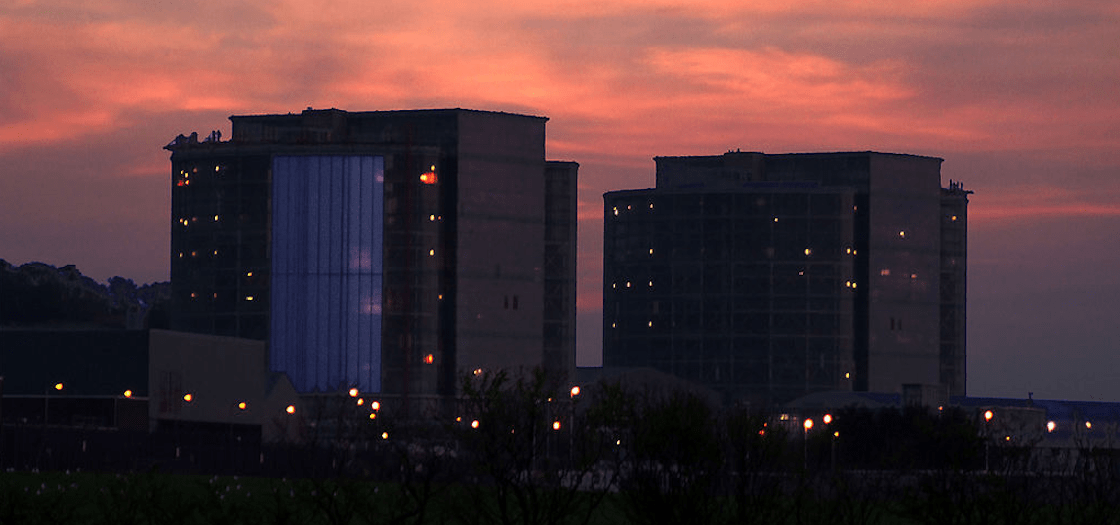
Note: since this story was first published, EDF has announced it will restart Hunterston B reactor 4 on April 30 and Hunterston B reactor on June 29, later than previously planned.
Clouds of radioactive contamination could fall out over Scottish cities
By Pete Roche
Residents living near one of Scotland’s two remaining operating nuclear power stations have been alarmed by proposals to re-start two reactors closed since March and October last year, both of which are showing a growing number of cracks in their graphite cores.
The reactors — at Hunterston B nuclear power station in Ayrshire, Scotland, about 35 miles from Glasgow — were shut down last year so the cracks could be inspected. But in November 2018, the investigative news site, The Ferret, revealed that more than 350 cracks had been discovered. The cracking issue has been known about since at least 2006 when cracks in the graphite bricks started to appear as a result of neutron bombardment during fission over many years.
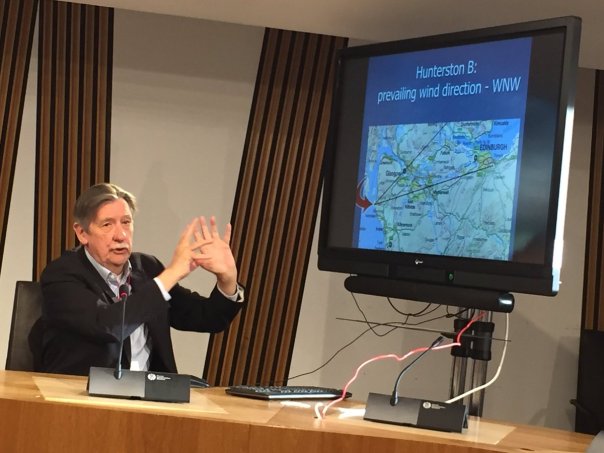
Dr. Ian Fairlie briefing the Scottish Parliament. (Photo: Rob Edwards/Twitter)
“Experts have warned that the cracks could lead to a “catastrophic accident” releasing clouds of radioactive contamination over Glasgow and Edinburgh,” wrote Rob Edwards on The Ferret news site. “But Hunterston’s operator, EDF Energy, insisted that the reactor was safe – and is bidding to relax safety standards so that it can be restarted.”
EDF insists that Reactor 4 will return at the end of March 2019 and Reactor 3 will be back online at the end of April, but these dates will depend on gaining permission from the Office for Nuclear Regulation (ONR), which is by no means certain.
Graphite moderator cracks cannot be repaired: if their number exceeds a certain limit, the reactor must be closed.
Fukushima child evacuee speaks out
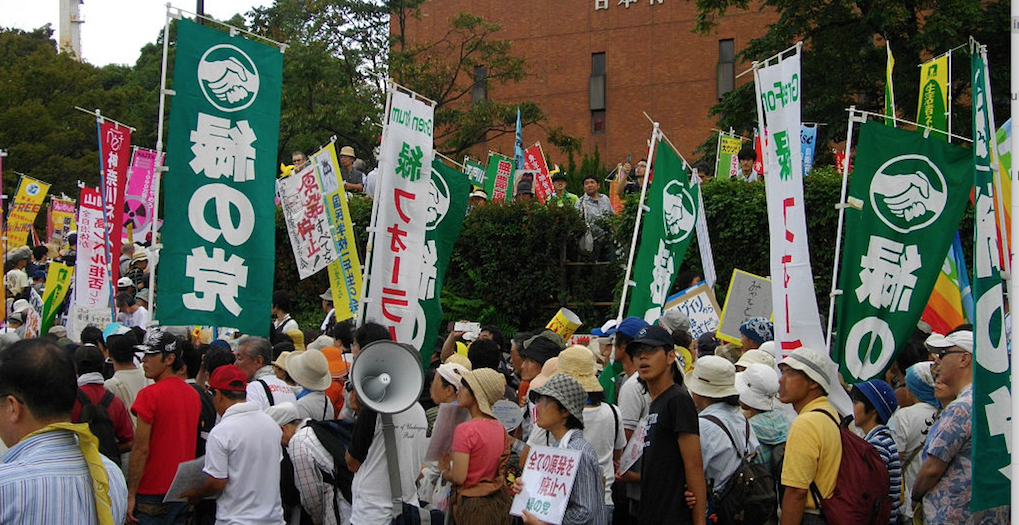
After “so much pain and sorrow”, a call to end nuclear power
By “Yumi”*
Dear citizens and friends,
My name is Yumi, I’m a high school student now living in Kyoto, Japan.
First, look at this photo of my scribbled note on a sheet of paper.
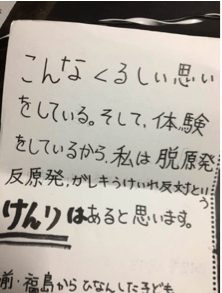
It reads, “I have been through so much pain and sorrow. So I have the RIGHT to speak out: ‘Zero nuclear power! No nukes! No bringing in radioactive contaminated waste!’ I am a child evacuee from the Fukushima nuclear disaster.”
I wrote it when I was an elementary school student soon after my mother and I were evacuated together from Fukushima to Kyoto.
In nearby communities my mother was crying out against nuclear power and telling the public how she had struggled to evacuate from the nuclear disaster.
At that time, being an elementary school student, I had no choice but to accompany her and listen to her speeches.
As a kid, her stories of the nuclear power accident were too difficult to understand, and to be honest, all a bit boring.
I remember a drawing pad and writing utensils I always used to take with me to pass the time drawing pictures.
A Fukushima vigil
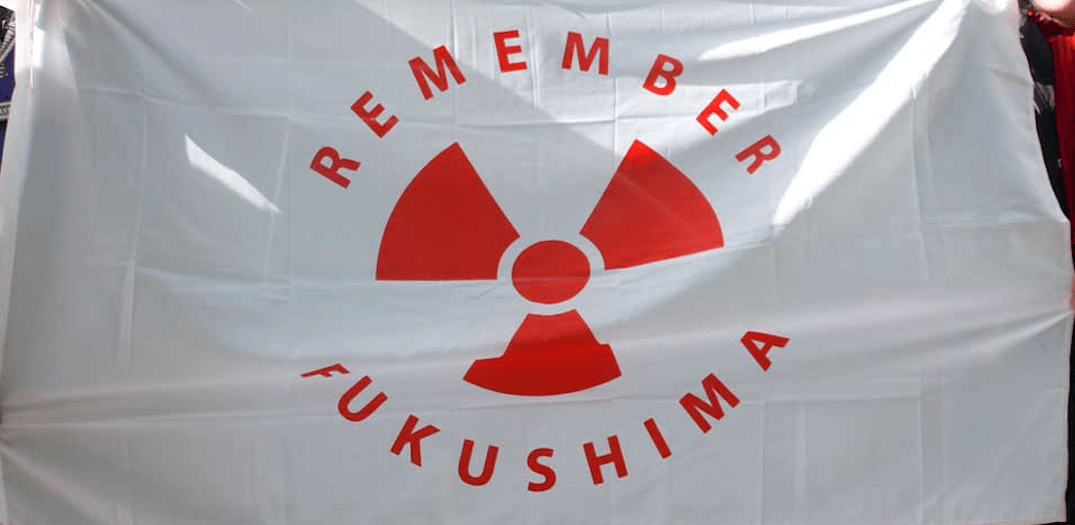
The mothers of Fukushima will join a series of events that urge the world to renounce nuclear power
By Linda Pentz Gunter
Every Friday morning, a group of Japanese residents living and working in the UK gather outside the Japanese Embassy in London, and in front of TEPCO’s London headquarters. They are there to remind their government, TEPCO, and the world, that the March 2011 Fukushima nuclear power disaster is not over and its consequences will reach far into the future.
Now, as we arrive at the eighth anniversary, the group, along with other UK partners, is preparing to hold its annual series of events to once again raise the profile of a disaster the nuclear industry would like us to forget and the Japanese government tries to pretend is over.
The group calls itself Japanese Against Nuclear UK (JAN UK) and, says its website, it was “formed on the 3rd August 2012 with a desire to better inform the public in the UK and Japan about the damage caused by nuclear power and to highlight the catastrophic effects of nuclear accidents, as well as to make the public aware to the continued failings and ongoing suffering from the Fukushima Daiichi nuclear accident and the consequences for Japan and the world.”

Protest at the UK Parliament. (Photo: JAN UK)
The colonial mindset that caused eternal pain
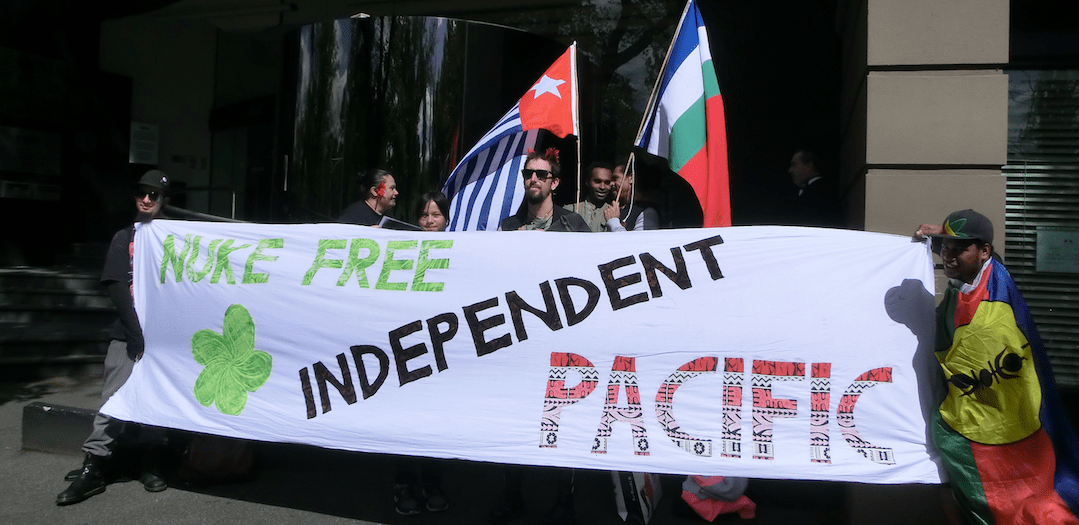
Remembering the Castle Bravo anniversary
By Peace Movement Aotearoa
March 1, last Friday was Nuclear Free and Independent Pacific Day — the 65th anniversary of the ‘Bravo’ nuclear bomb detonation by the United States close to the surface of Bikini Atoll, in the Marshall Islands, which blasted out a crater more than 200 feet deep and a mile across.
Particles of radioactive fallout from the blast landed on the island of Rongelap (100 miles away) to a depth of one and a half inches in places, and radioactive mist appeared on Utirik (300 miles away). The US navy did not send ships to evacuate the people of Rongelap and Utirik until three days after the explosion.
Fallout from this one nuclear weapon detonation spread over more than 7,000 square miles, and traces were detected throughout the Pacific, in India, Japan, the United States and Europe. The Marshallese, and other Pacific peoples subjected to more than 300 full scale nuclear bomb detonations in the Pacific — conducted by Britain, France and the US — were used as human guinea pigs in an obscene experiment to ‘progress’, the insane pursuit of nuclear weapons supremacy.
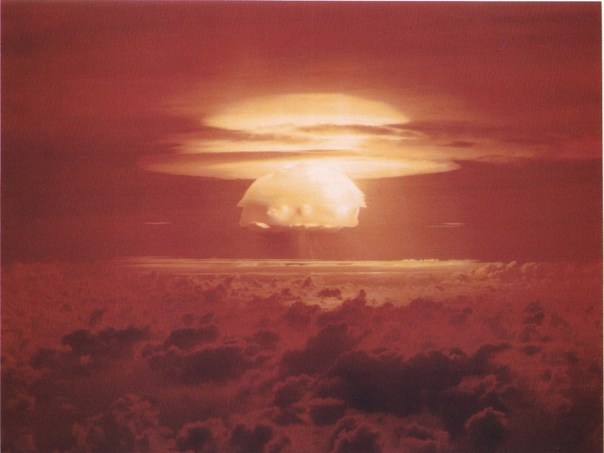
The massive Castle Bravo. (Photo: Federation of American Scientists/Creative Commons/Flickr)
Will the peace bell sound in the Koreas?
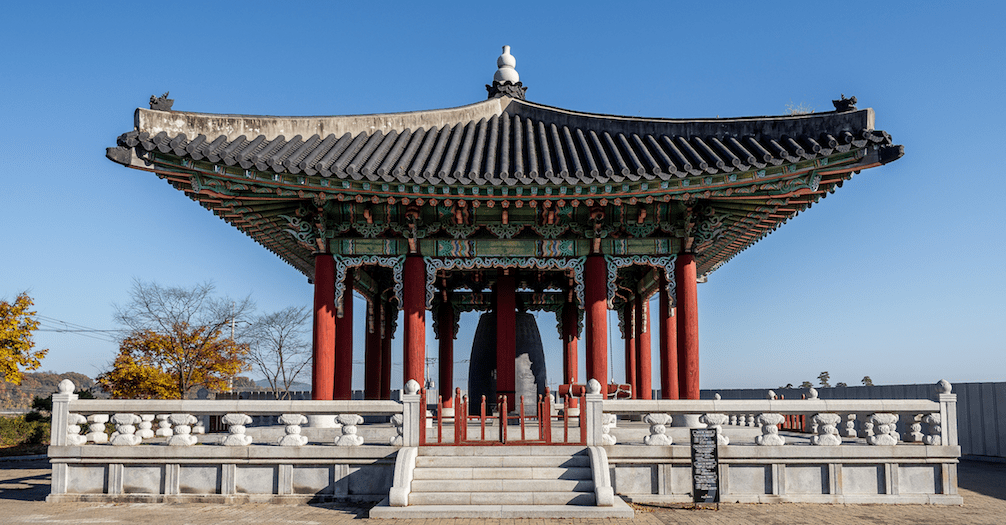
Can the two Koreas save Trump’s failure in Hanoi?
By Rebecca Johnson
Through aggressive rhetoric and miscalculations, nuclear war can happen by accident. As the Trump-Kim circus founders, escalating military action between India and Pakistan shows why global denuclearization is necessary.
This is how nuclear wars get started – two or more nuclear armed countries, a political flashpoint like Kashmir, an attack, a retaliation, mutual blame and threats, and then – whoosh – someone launches a nuclear weapon. Will it happen in South Asia? We have to hope not, but need to recognize that this latest military conflict between India and Pakistan has many of the ingredients that make nuclear war probable, sooner or later.
Meanwhile, the summit between US President Trump and North Korean leader Kim Jong-un has ended in failure, purportedly over sanctions, a frequently used weapon in US diplomacy. Trump was prepared for small reductions but Kim wanted more, as the price for dismantling North Korea’s nuclear programme. Their failure to make progress also carries a high price, along with renewed risks.
As Trump flies home to face allegations made by his former partners in crime, it will be up to Kim and the president of South Korea, Moon Jae-in, to take forward the regional security, denuclearization and peace treaty that Korean people ardently desire. Proposals from networks such as #KoreaPeaceNow and Women Cross DMZ provide ideas and support for making tangible progress. While US involvement is important, Trump’s problems cannot be allowed to block or derail these hopes.
Scottish tragedy could become an Australian one
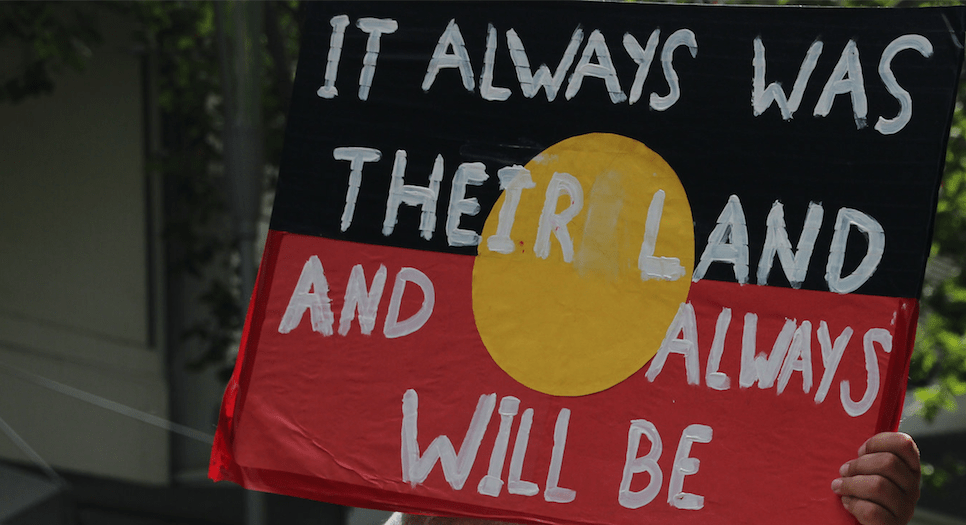
Aboriginal elder launches final appeal to stop Scotland sending nuclear waste to Australia
By Martin Williams
(Note: Since this article first appeared, The Ferret has revealed that expert advice sought by ministers stated that the Scottish Government could prevent the export of radioactive waste from the UK under a swap arrangement involving the Dounreay nuclear complex in Caithness.)
Some of the Aborigines who live in and around a sacred burial place in South Australia can still remember the clouds of poison that were the result of Britain’s nuclear bomb tests in the 1950s.
Many of the indigenous population claimed they were exposed to radiation as a result of the post-war atomic weapons tests in the desert and received compensation from the Australian government.
But a new kind of radiation could be heading to the remote sacred area of Wallerberdina – nuclear waste.
The concerns are centred over a spot 280 miles north of Adelaide, which has become a potential location for Australia’s first nuclear dump.
The movement of waste is part of a deal that returns spent fuel processed at the nuclear facility currently being decommissioned to its country of origin.
Despite campaigners’ efforts it has emerged that David Peattie, chief executive of the Nuclear Decommissioning Authority (NDA), has insisted that there can be no change.
And now Aboriginal elder Regina McKenzie has made a last-ditch direct appeal to the First Minister, Nicola Sturgeon, for help to halt Dounreay’s dumping plans, calling for her “not to be part of the cultural genocide of Australian Aboriginal people”.

