 Beyond Nuclear International
Dr. Martin Luther King Jr. wanted a nuclear weapons ban
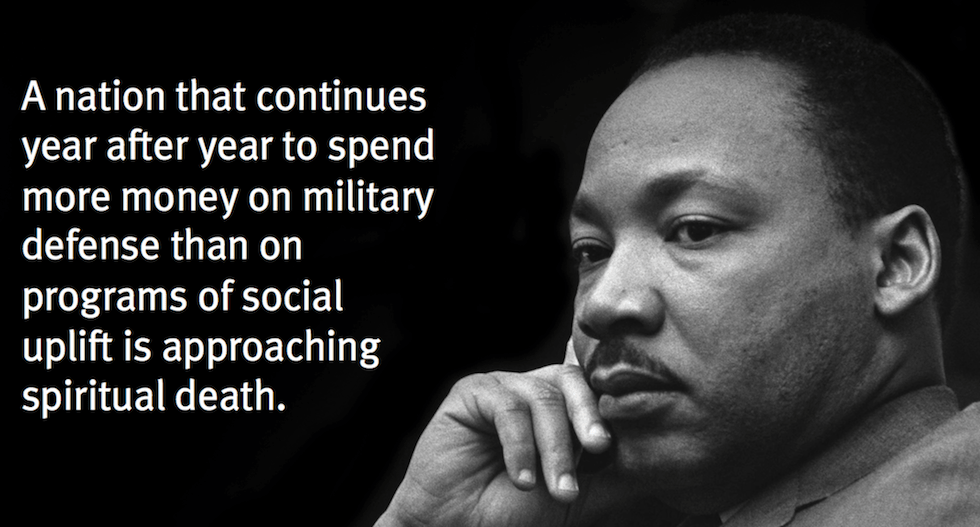
So did many other black Americans. Why did they vanish from the movement?
By Linda Pentz Gunter
In 1957, when asked his views on nuclear weapons, Dr. Martin Luther King, Jr. said: “I definitely feel that the development and use of nuclear weapons should be banned. It cannot be disputed that a full-scale nuclear war would be utterly catastrophic. Hundreds and millions of people would be killed outright by the blast and heat, and by the ionizing radiation produced at the instant of the explosion . . . Even countries not directly hit by bombs would suffer through global fall-outs. All of this leads me to say that the principal objective of all nations must be the total abolition of war. War must be finally eliminated or the whole of mankind will be plunged into the abyss of annihilation.”
Today, we remember in particular the life and achievements of King, one of the 20th century’s most resonant proponents of peace. The dark cloud of his assassination forever hangs over us. So, too, does the spectre of nuclear war. This latter drove many black Americans like King to oppose their development and use. One reason, may be surprising. But it forms part of the though-provoking thesis of Vincent J. Intondi’s scholarly but highly readable book, African Americans Against The Bomb.
The real Houston problem
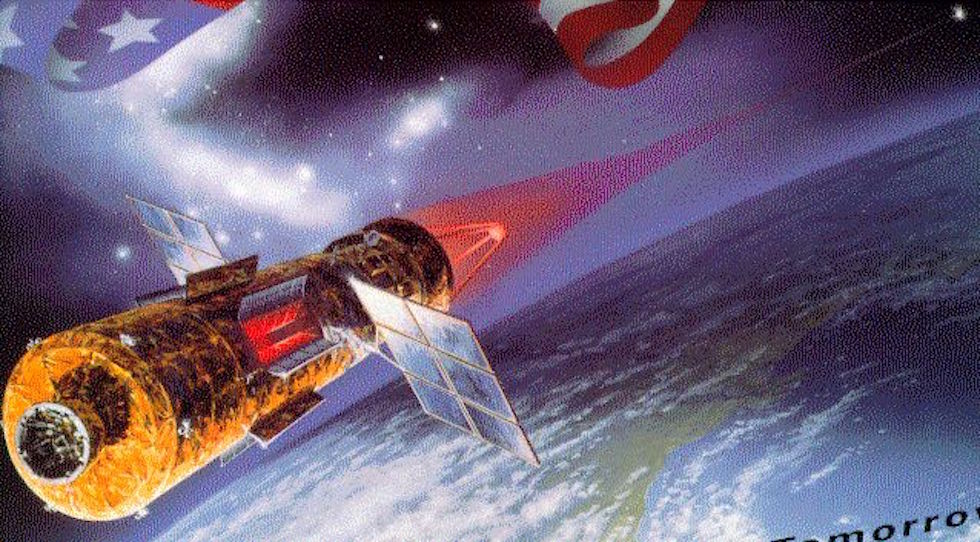
Apollo 13 had plutonium on board. Challenger’s next flight would have. Now Trump wants to fire plutonium-powered spacecraft to Mars. What could possibly go wrong?
By Linda Pentz Gunter
President Trump has announced that he wants the National Aeronautics and Space Administration (NASA) to “lead an innovative space exploration program to send American astronauts back to the moon, and eventually Mars.” But the risks such ventures would entail have scarcely been touched upon.
For those of us who watched Ron Howard’s nail-biter of a motion picture, Apollo 13, and for others who remember the real-life drama as it unfolded in April 1970, collective breaths were held that the three-man crew would return safely to Earth. They did.
What hardly anyone remembers now — and certainly few knew at the time — was that the greater catastrophe averted was not just the potential loss of three lives, tragic though that would have been. There was a lethal cargo on board that, if the craft had crashed or broken up, might have cost the lives of thousands and affected generations to come.
It is a piece of history so rarely told that NASA has continued to take the same risk over and over again, as well as before Apollo 13. And that risk is to send rockets into space carrying the deadliest substance ever created by humans: plutonium.
Now, with the race on to send people to Mars, NASA is at it again. Small fission reactors would be used to generate electricity on Mars to power essential projects in the dark. But first, such a reactor has to get to Mars without incident or major accident. And the spacecraft carrying it would also be nuclear-powered, adding monumentally to the already enormous risk.
Atomic legacy
Veteran claims three generations of family left with deformities due to nuclear test radiation exposure
By Luke Powell (reprinted with kind permission of the author and the Eastern Daily Press.)
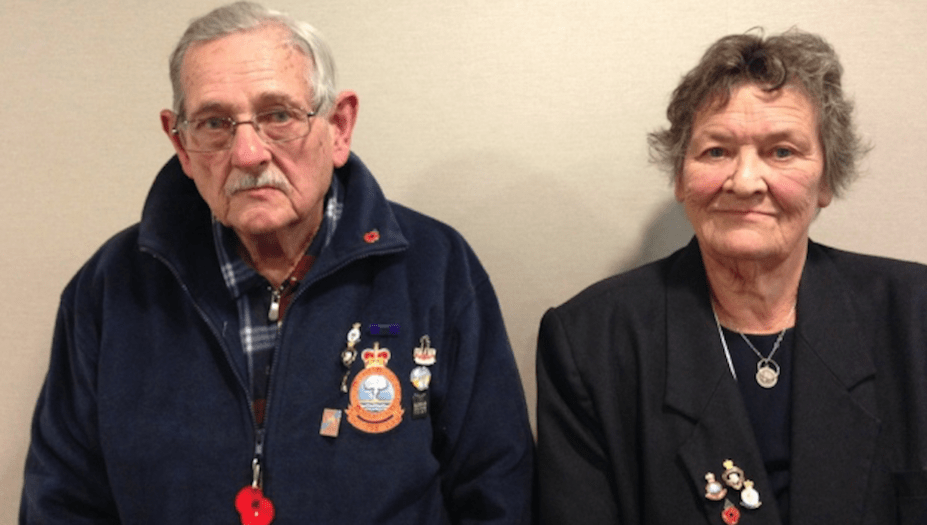
When Robert Fleming (pictured above with wife Jean) watched one of the world’s most powerful weapons detonate 60 years ago, little did he know of the lasting impact it would have on future generations.
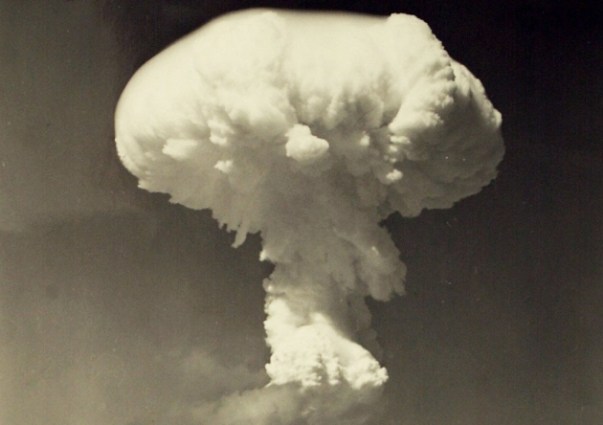
The Christmas Island bomb test. Photo: John Greenacre.
Aged just 24, the RAF serviceman was stationed on an island in the Pacific Ocean when Britain tested its first megaton-class thermonuclear bomb.
Now aged 83, he believes his prolonged exposure to radiation in the following weeks has led to deformities in three generations of his family.
He said his grandson and great grandson suffered problems with their genitals, while his youngest daughter was born with extra knuckles.
In total, he said eight members of his family – mostly grandchildren and great grandchildren – were born with severe health defects.
Rachel Carson and the silent environmentalists
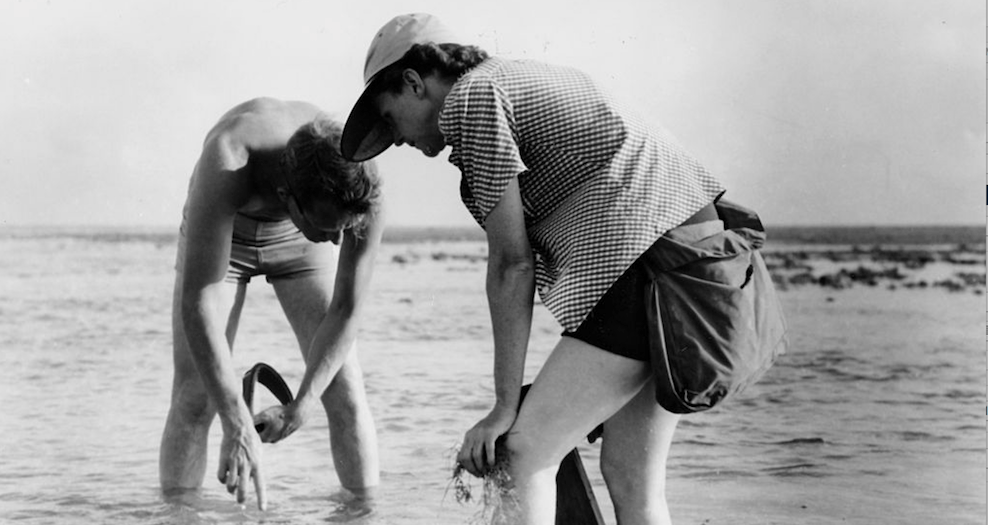
Rachel Carson spoke out against nuclear war. Why is the environmental movement so silent?
In late January, Bob Musil, president of the Rachel Carson Council, wrote an article for his organization’s newsletter, entitled: Rachel Carson and Nuclear War? The Pulse and Politics of the Environment, Peace, and Justice.
Referencing the most recent and alarming White House intentions to fund smaller and, by inference, more “usable” nuclear weapons, Musil urged the environmental community to join the disarmament movement, not the least because of the devastating environmental consequences for Planet Earth should any nuclear weapons ever be used again.
We reproduce a slightly edited version of his article here with kind permission from the author.
Rachel Carson and nuclear war? The Pulse and Politics of the Environment, Peace, and Justice
“In nature nothing exists alone.”
“The aim of science is to discover and illuminate truth. And that, I take it, is the aim of literature, whether biography or history… It seems to me, then, that there can be no separate literature of science.”
“If the Bill of Rights contains no guarantee that a citizen shall be secure against lethal poisons distributed either by private individuals or by public officials, it is surely only because our forefathers, despite their considerable wisdom and foresight, could conceive of no such problem.”
— Rachel Carson
Too little information clouds real impact of TMI

By Beyond Nuclear staff
The disaster at Unit 2 of the Three Mile Island (TMI) nuclear power plant near Harrisburg, Pennsylvania, began on March 28, 1979. Today, 39 years later, the reality, of what really happened, and how many people it harmed, remains cloaked in mystery and misinformation. Unlike the popular catchphrase, TMI is a story of too little information.
What happened?
The two unit Three Mile Island nuclear power plant sits on an island in the middle of the Susquehanna River, just ten miles southeast of Harrisburg, Pennsylvania. TMI Unit 2 was running at full power, but had been commercially operational for just 88 days when, at 4 A.M. on Wednesday, March 28, 1979, it experienced either a mechanical or electrical failure that caused the turbine-generator and the nuclear reactor to automatically shut down.
The pressure and temperature in the reactor began to increase, but when a relief valve on top of the reactor’s primary coolant pressurizer stuck open, malfunctioning instrumentation indicated that the valve had shut. While cooling water emptied out of the reactor, operators mistakenly reduced the amount of cooling water flowing into the core, leading to the partial meltdown.
Workers deliberately and repeatedly vented radioactive gas over several days to relieve pressure and save the containment structure. Then came fears of a hydrogen explosion. But by April 1, when President Jimmy Carter arrived at the site, that crisis had been averted, and by April 27 the now destroyed reactor was put into “cold shutdown.” TMI-2 was finished. But its deadly legacy was to last decades.
A US Nuclear weapons ban?
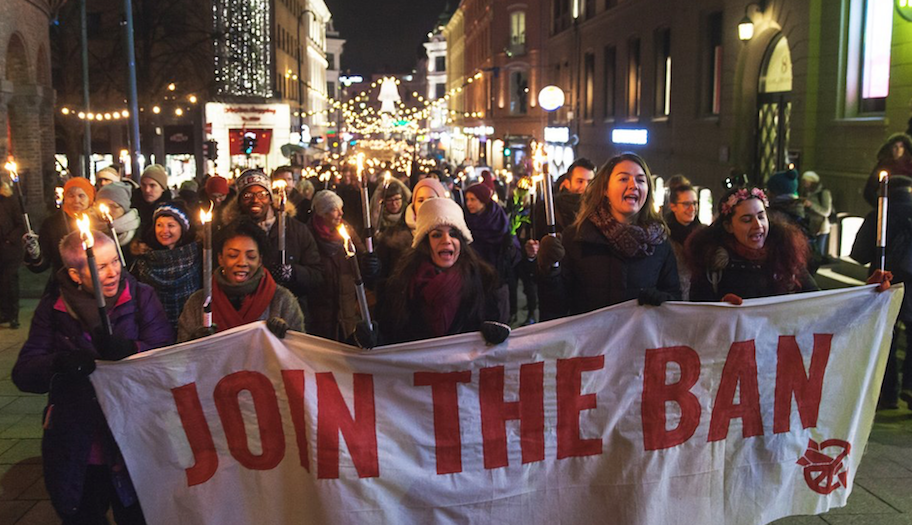
No problem, say energized organizers of Nuclear Ban US
By Linda Pentz Gunter
When you meet Vicki Elson and Timmon Wallis, they will tell you, without blinking, that they have one purpose: “the total elimination of all nuclear weapons from the face of the earth.”
In the wake of the UN Treaty on the Prohibition of Nuclear Weapons — signed, but not yet ratified by the mandatory 50 countries — Wallis and Elson are determined that the US should honor the treaty. Not that there is any hope that the US government, whether the White House or Congress, will do so. But we can, they insist. City by city, and even person by person.
On the website for their new campaign — Nuclear Ban US — the banner headline reads: “How to get rid of all nuclear weapons, not just ‘some,’ not just ‘theirs’ but every single one.”
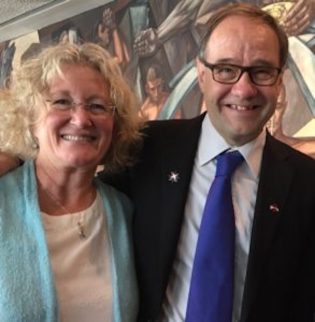
Vicki Elson and Timmon Wallis of Nuclear Ban US
And it will happen, says Wallis, without a shadow of hesitation or skepticism in his voice. He was speaking at a recent meeting with members of the Nuclear-Free Takoma Park Committee — a citizens’ advisory group for the City Council of Takoma Park, one of the first US cities to become a Nuclear-Free Zone (in 1983).
The committee’s role is to ensure the Maryland city, just outside Washington, DC, adheres to its ordinance that prohibits the city from doing business with industries and institutions engaged in the production of nuclear weapons and their components. The ordinance also bans production, transportation, storage, disposal and activation of nuclear weapons in the city, a less likely eventuality.
 Beyond Nuclear International