Beyond Nuclear International

The overblown hype of the nuclear “bros”

The pro-nuclear bros are intent on selling us small modular reactors, but their happy talk is rooted in misinformation, writes Ed Lyman

Even casual followers of energy and climate issues have probably heard about the alleged wonders of small modular nuclear reactors, or SMRs. This is due in no small part to the “nuclear bros”: an active and seemingly tireless group of nuclear power advocates who dominate social media discussions on energy by promoting SMRs and other “advanced” nuclear technologies as the only real solution for the climate crisis. But as I showed in my 2013 and 2021 reports, the hype surrounding SMRs is way overblown, and my conclusions remain valid today.

Unfortunately, much of this SMR happy talk is rooted in misinformation, which always brings me back to the same question: If the nuclear bros have such a great SMR story to tell, why do they have to exaggerate so much?

Alex Trembath (left) of the ardently pro-nuclear Breakthrough Institute, is one of the “nuclear bros” although he apparently rejects the label. (Photo: New America/Wikimedia Commons)

What Are SMRs?

SMRs are nuclear reactors that are “small” (defined as 300 megawatts of electrical power or less), can be largely assembled in a centralized facility, and would be installed in a modular fashion at power generation sites. Some proposed SMRs are so tiny (20 megawatts or less) that they are called “micro” reactors. SMRs are distinct from today’s conventional nuclear plants, which are typically around 1,000 megawatts and were largely custom-built. Some SMR designs, such as NuScale, are modified versions of operating water-cooled reactors, while others are radically different designs that use coolants other than water, such as liquid sodium, helium gas, or even molten salts.

To date, however, theoretical interest in SMRs has not translated into many actual reactor orders. The only SMR currently under construction is in China. And in the United States, only one company—TerraPower, founded by Microsoft’s Bill Gates—has applied to the Nuclear Regulatory Commission (NRC) for a permit to build a power reactor (but at 345 megawatts, it technically isn’t even an SMR).

The nuclear industry has pinned its hopes on SMRs primarily because some recent large reactor projects, including Vogtle units 3 and 4 in the state of Georgia, have taken far longer to build and cost far more than originally projected. The failure of these projects to come in on time and under budget undermines arguments that modern nuclear power plants can overcome the problems that have plagued the nuclear industry in the past.

The nuclear industry has pinned its hopes on SMRs primarily because some recent large reactor projects, including Vogtle units 3 and 4 (pictured) have taken far longer to build and cost far more than originally projected.

Regulators are loosening safety and security requirements for SMRs in ways which could cancel out any safety benefits from passive features.

Developers in the industry and the U.S. Department of Energy say that SMRs can be less costly and quicker to build than large reactors and that their modular nature makes it easier to balance power supply and demand. They also argue that reactors in a variety of sizes would be useful for a range of applications beyond grid-scale electrical power, including providing process heat to industrial plants and power to data centers, cryptocurrency mining operations, petrochemical production, and even electrical vehicle charging stations.

Here are five facts about SMRs that the nuclear industry and the “nuclear bros” who push its message don’t want you, the public, to know.

1. SMRs Are Not More Economical Than Large Reactors

In theory, small reactors should have lower capital costs and construction times than large reactors of similar design so that utilities (or other users) can get financing more cheaply and deploy them more flexibly. But that doesn’t mean small reactors will be more economical than large ones. In fact, the opposite usually will be true. What matters more when comparing the economics of different power sources is the cost to produce a kilowatt-hour of electricity, and that depends on the capital cost per kilowatt of generating capacity, as well as the costs of operations, maintenance, fuel, and other factors.

According to the economies of scale principle, smaller reactors will in general produce more expensive electricity than larger ones. For example, the now-cancelled project by NuScale to build a 460-megawatt, 6-unit SMR in Idaho was estimated to cost over $20,000 per kilowatt, which is greater than the actual cost of the Vogtle large reactor project of over $15,000 per kilowatt. This cost penalty can be offset only by radical changes in the way reactors are designed, built, and operated.

For example, SMR developers claim they can slash capital cost per kilowatt by achieving efficiency through the mass production of identical units in factories. However, studies find that such cost reductions typically would not exceed about 30%. In addition, dozens of units would have to be produced before manufacturers could learn how to make their processes more efficient and achieve those capital cost reductions, meaning that the first reactors of a given design will be unavoidably expensive and will require large government or ratepayer subsidies to get built. Getting past this obstacle has proven to be one of the main impediments to SMR deployment.

The levelized cost of electricity for the now-cancelled NuScale project was estimated at around $119 per megawatt-hour (without federal subsidies), whereas land-based wind and utility-scale solar now cost below $40/MWh.

Another way that SMR developers try to reduce capital cost is by reducing or eliminating many of the safety features required for operating reactors that provide multiple layers of protection, such as a robust, reinforced concrete containment structure, motor-driven emergency pumps, and rigorous quality assurance standards for backup safety equipment such as power supplies. But these changes so far haven’t had much of an impact on the overall cost—just look at NuScale.

So far, the NuScale SMR project has begun — and ended — as a piece of paper. (Photo: US NRC)

In addition to capital cost, operation and maintenance (O&M) costs will also have to be significantly reduced to improve the competitiveness of SMRs. However, some operating expenses, such as the security needed to protect against terrorist attacks, would not normally be sensitive to reactor size. The relative contribution of O&M and fuel costs to the price per megawatt-hour varies a lot among designs and project details, but could be 50% or more, depending on factors such as interest rates that influence the total capital cost.

Economies of scale considerations have already led some SMR vendors, such as NuScale and Holtec, to roughly double module sizes from their original designs. The Oklo, Inc. Aurora microreactor has increased from 1.5 MW to 15 MW and may even go to 50 MW. And the General Electric-Hitachi BWRX-300 and Westinghouse AP300 are both starting out at the upper limit of what is considered an SMR.

Overall, these changes might be sufficient to make some SMRs cost-competitive with large reactors, but they would still have a long way to go to compete with renewable technologies. The levelized cost of electricity for the now-cancelled NuScale project was estimated at around $119 per megawatt-hour (without federal subsidies), whereas land-based wind and utility-scale solar now cost below $40/MWh.

Microreactors, however, are likely to remain expensive under any realistic scenario, with projected levelized electricity costs two to three times that of larger SMRs.

2. SMRs Are Not Generally Safer or More Secure Than Large Light-Water Reactors

Because of their size, you might think that small nuclear reactors pose lower risks to public health and the environment than large reactors. After all, the amount of radioactive material in the core and available to be released in an accident is smaller. And smaller reactors produce heat at lower rates than large reactors, which could make them easier to cool during an accident, perhaps even by passive means—that is, without the need for electrically powered coolant pumps or operator actions.

However, the so-called passive safety features that SMR proponents like to cite may not always work, especially during extreme events such as large earthquakes, major flooding, or wildfires that can degrade the environmental conditions under which they are designed to operate. And in some cases, passive features can actually make accidents worse: For example, the NRC’s review of the NuScale design revealed that passive emergency systems could deplete cooling water of boron, which is needed to keep the reactor safely shut down after an accident.

In any event, regulators are loosening safety and security requirements for SMRs in ways which could cancel out any safety benefits from passive features. For example, the NRC has approved rules and procedures in recent years that provide regulatory pathways for exempting new reactors, including SMRs, from many of the protective measures that it requires for operating plants, such as a physical containment structure, an offsite emergency evacuation plan, and an exclusion zone that separates the plant from densely populated areas. It is also considering further changes that could allow SMRs to reduce the numbers of armed security personnel to protect them from terrorist attacks and highly trained operators to run them. Reducing security at SMRs is particularly worrisome, because even the safest reactors could effectively become dangerous radiological weapons if they are sabotaged by skilled attackers. Even passive safety mechanisms could be deliberately disabled.

Considering the cumulative impact of all these changes, SMRs could be as—or even more— dangerous than large reactors. For example, if a containment structure at a large reactor reliably prevented 90% of the radioactive material from being released from the core of the reactor during a meltdown, then a reactor five times smaller without such a containment structure could conceivably release more radioactive material into the environment, even though the total amount of material in the core would be smaller. And if the SMR were located closer to populated areas with no offsite emergency planning, more people could be exposed to dangerously high levels of radiation.

But even if one could show that the overall safety risk of a small reactor was lower than that of a large reactor, that still wouldn’t automatically imply the overall risk per unit of electricity that it generates is lower, since smaller plants generate less electricity. If an accident caused a 250-megawatt SMR to release only 25% of the radioactive material that a 1,000-megawatt plant would release, the ratio of risk to benefit would be the same. And a site with four such reactors could have four times the annual risk of a single unit, or an even greater risk if an accident at one reactor were to damage the others, as happened during the 2011 Fukushima Daiichi accident in Japan.

3. SMRs Will Not Reduce the Problem of What to Do With Radioactive Waste

The industry makes highly misleading claims that certain SMRs will reduce the intractable problem of long-lived radioactive waste management by generating less waste, or even by “recycling” their own wastes or those generated by other reactors.

First, it’s necessary to define what “less” waste really means. In terms of the quantity of highly radioactive isotopes that result when atomic nuclei are fissioned and release energy, small reactors will produce just as much as large reactors per unit of heat generated. (Non-light-water reactors that more efficiently convert heat to electricity than light-water reactors will produce somewhat smaller quantities of fission products per unit of electricity generated—perhaps 10 to 30%—but this is a relatively small effect in the scheme of things.) And for reactors with denser fuels, the volume and mass of the spent fuel generated may be smaller, but the concentration of fission products in the spent fuel, and the heat generated by the decay products—factors that really matter to safety—will be proportionately greater.

Therefore, entities that hope to acquire SMRs, like data centers that lack the necessary waste infrastructure, will have to safely manage the storage of significant quantities of spent nuclear fuel on site for the long term, just like any other nuclear power plant does. Claims by vendors such as Westinghouse that they will take away the reactors after the fuel is no longer usable are simply not credible, as there are no realistic prospects for licensing centralized sites where the used reactors could be taken for the foreseeable future. Any community with an SMR will have to plan to be a de facto long-term nuclear waste disposal site.

4. SMRs Cannot Be Counted on to Provide Reliable and Resilient Off-the-Grid Power for Facilities, Such as Data Centers, Bitcoin Mining, Hydrogen, or Petrochemical production

Despite the claims of developers, it is very unlikely that any reasonably foreseeable SMR design would be able to safely operate without reliable access to electricity from the grid to power coolant pumps and other vital safety systems. Just like today’s nuclear plants, SMRs will be vulnerable to extreme weather events or other disasters that could cause a loss of offsite power and force them to shut down. In such situations a user such as a data center operator would have to provide backup power, likely from diesel generators, for both the data center AND the reactor. And since there is virtually no experience with operating SMRs worldwide, it is highly doubtful that the novel designs being pitched now would be highly reliable right out of the box and require little monitoring and maintenance.

It very likely will take decades of operating experience for any new reactor design to achieve the level of reliability characteristic of the operating light-water reactor fleet. Premature deployment based on unrealistic performance expectations could prove extremely costly for any company that wants to experiment with SMRs.

5. SMRs Do Not Use Fuel More Efficiently Than Large Reactors

Some advocates misleadingly claim that SMRs are more efficient than large ones because they use less fuel. In terms of the amount of heat generated, the amount of uranium fuel that must undergo nuclear fission is the same whether a reactor is large or small. And although reactors that use coolants other than water typically operate at higher temperatures, which can increase the efficiency of conversion of heat to electricity, this is not a big enough effect to outweigh other factors that decrease efficiency of fuel use.

Some SMRs designs require a type of uranium fuel called “high-assay low enriched uranium (HALEU),” which contains higher concentrations of the isotope uranium-235 than conventional light-water reactor fuel. Although this reduces the total mass of fuel the reactor needs, that doesn’t mean it uses less uranium nor results in less waste from “front-end” mining and milling activities: In fact, the opposite is more likely to be true.

HALEU uranium dioxide fuel pellets fabricated by Idaho National Laboratory. (Photo: DOE)

If the nuclear bros have such a great SMR story to tell, why do they have to exaggerate so much?

One reason for this is that HALEU production requires a relatively large amount of natural uranium to be fed into the enrichment process that increases the uranium-235 concentration. For example, the TerraPower Natrium reactor which would use HALEU enriched to around 19% uranium-235, will require 2.5 to 3 times as much natural uranium to produce a kilowatt-hour of electricity than a light-water reactor. Smaller reactors, such as the 15-megawatt Oklo Aurora, are even more inefficient. Improving the efficiency of these reactors can occur only with significant advances in fuel performance, which could take decades of development to achieve.

Reactors that use uranium inefficiently have disproportionate impacts on the environment from polluting uranium mining and processing activities. They also are less effective in mitigating carbon emissions, because uranium mining and milling are relatively carbon-intensive activities compared to other parts of the uranium fuel cycle.

SMRs may have a role to play in our energy future, but only if they are sufficiently safe and secure. For that to happen, it is essential to have a realistic understanding of their costs and risks. By painting an overly rosy picture of these technologies with often misleading information, the nuclear bros are distracting attention from the need to confront the many challenges that must be resolved to make SMRs a reality—and ultimately doing a disservice to their cause.

Ed Lyman is director of Nuclear Power Safety at the Union for Concerned Scientists. This article was first published by Common Dreams and is republished under a Creative Commons license.

Headline photo: Bill Gates (right, pictured with Rick Perry) is one of the biggest nuclear bros of all. (Photo: DOE/Wikimedia Commons)

The opinions expressed in articles by outside contributors and published on the Beyond Nuclear International website, are their own, and do not necessarily reflect the views or positions of Beyond Nuclear. However, we try to offer a broad variety of viewpoints and perspectives as part of our mission “to educate and activate the public about the connections between nuclear power and nuclear weapons and the need to abandon both to safeguard our future”.

A vigil behind bars

Pair who protested US nuclear bombs in Germany serving time

By Susan Crane and Susan van der Hijden 

Here in Rohrbach prison we are awakened by the sounds of doves and other birds, giving the illusion that all is well in the world, until other sounds, keys rattling, doors being shut, and guards doing the morning body check, bring us back to reality.

We are sitting in a prison cell, 123 km from Büchel Air Force Base, where more than 20 U.S. nuclear bombs are deployed. 

At the moment, the runway at Büchel is being rebuilt to accommodate the new F-35 fighter jets that will carry the new B61-12 nuclear bombs that were designed and built in the U.S. 

Susan Crane (left) and Susan van der Hijden at a past peace camp at Büchel air base

The planning, preparation, possession, deployment, threat or use of these B61-bombs is illegal and criminal. The U.S., Germany and NATO know that each B61 nuclear bomb would inflict unnecessary suffering and casualties on combatants and civilians and induce cancers, keloid growth and leukemia in large numbers, inflict congenital deformities in unborn children and poison food supplies.

“We have no right to obey,” says Hannah Arendt. 

Although our actions might seem futile, we understand that it is our right, duty and responsibility to stand against the planning and preparation for the use of these weapons. They are illegal under the Non-Proliferation Treaty, which both Germany and the U.S. have signed and ratified, and under the the Hague Convention, the Geneva Convention and the Nuremberg Charter.

Read More

Why ‘no’ to NATO?

Alliance spreads nuclear weapons, nuclear energy and risk, writes David Swanson

Article 5 of the North Atlantic Treaty declares that NATO members will assist another member if attacked by “taking action as it deems necessary, including the use of armed force.” But the UN Charter does not say anywhere that warmaking is authorized for whoever jumps in on the appropriate side.

The North Atlantic Treaty’s authors may have been aware that they were on dubious legal ground because they went on twice to claim otherwise, first adding the words “Any such armed attack and all measures taken as a result thereof shall immediately be reported to the Security Council. Such measures shall be terminated when the Security Council has taken the measures necessary to restore and maintain international peace and security.” But shouldn’t the United Nations be the one to decide when it has taken necessary measures and when it has not?

The North Atlantic Treaty adds a second bit of sham obsequiousness with the words “This Treaty does not affect, and shall not be interpreted as affecting in any way the rights and obligations under the Charter of the Parties which are members of the United Nations, or the primary responsibility of the Security Council for the maintenance of international peace and security.” So the treaty that created NATO seeks to obscure the fact that it is, indeed, authorizing warmaking outside of the United Nations — as has now played out in Yugoslavia, Afghanistan, and Libya.

Secretary of Defense Lloyd J. Austin III at NATO headquarters, Brussels, Belgium, June 16, 2023. (DoD photo by U.S. Air Force Tech. Sgt. Jack Sanders/Wikimedia Commons)

While the UN Charter itself replaced the blanket ban on all warmaking that had existed in the Kellogg-Briand Pact with a porous ban plagued by loopholes imagined to apply far more than they actually do — in particular that of “defensive” war — it is NATO that creates, in violation of the UN Charter, the idea of numerous nations going to war together of their own initiative and by prior agreement to all join in any other member’s war. Because NATO has numerous members, as does also your typical street gang, there is a tendency to imagine NATO not as an illegal enterprise but rather as just the reverse, as a legitimizer and sanctioner of warmaking.

Read More

Conspiracies in the Congo

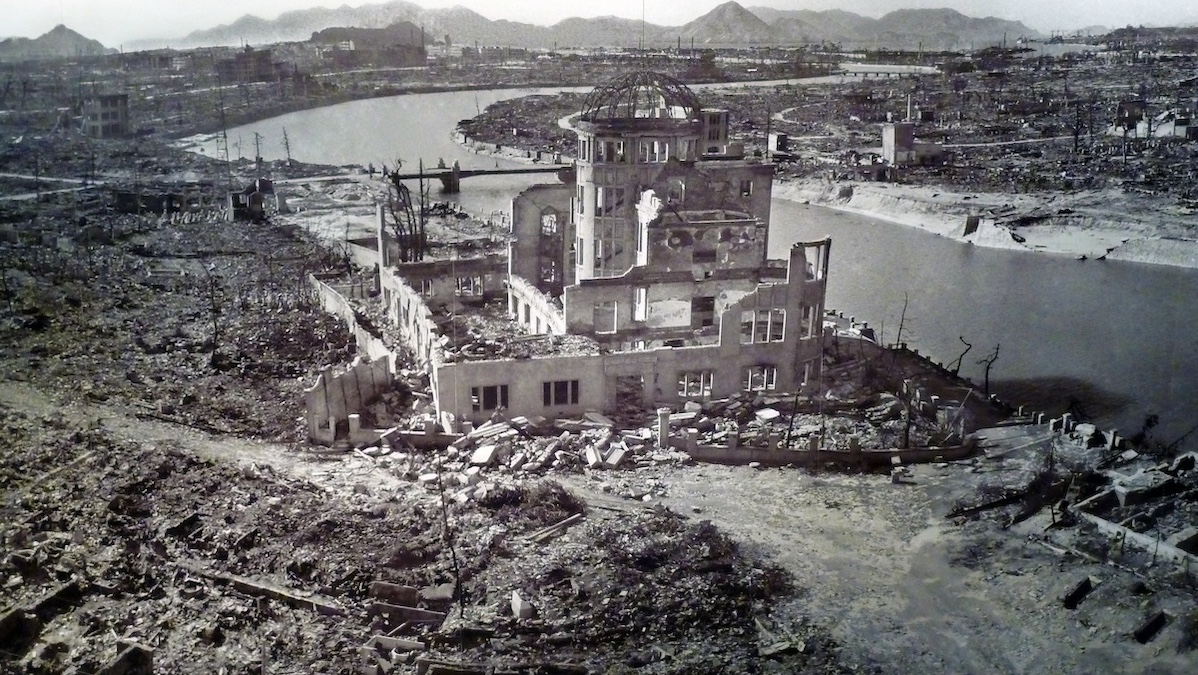
From the Hiroshima bomb to Israel’s nuclear weapons, the path leads back to Congo’s uranium, writes Linda Pentz Gunter

It involved the Democratic Republic of Congo (DRC); a Belgian mining company; a fictitious Liberian trading company; a German-named ship — the Scheersberg A; a Spanish crew; a German petrochemical official; an Italian paint company; an Israeli freighter; the Greek island of Crete; a Turkish port; and a confession made in Norway.

If this sounds like the plot for an elaborate work of fiction, it was — it formed the basis of Ken Follett’s 1979 thriller, Triple. But it was also all true.

The clandestine operation, which took place in November 1968, smuggled an estimated 200 tonnes of uranium yellowcake out of the DRC, transporting it to Israel. It was orchestrated by Mossad, the Israeli secret intelligence service and came to be known as Operation Plumbat, since the illicit cargo was marked as lead.

The scheme was set in motion when, after the 1967 Arab-Israeli War, France curtailed its weapons supplies to Israel and likely the uranium fuel as well needed for Israel’s Dimona reactor, believed then and still to be at the heart of the country’s nuclear weapons program. The operation concluded with an exchange of ships and cargos on the high seas, the Scheersberg A eventually docking empty in Turkey while the uranium, now aboard an Israeli freighter, made its way to Haifa and eventually to Dimona.

 Negev Nuclear Research Center at Dimona, photographed by American reconnaissance satellite KH-4 CORONA in 1968. (Wikimedia Commons)

The Plumbat operation was first exposed in April 1977 at a non-proliferation conference in Salzburg, Austria by Paul Leventhal, who went on to found the Nuclear Control Institute in 1981.

Read More

Dismantling the atomic lie

The forgotten faces on the uranium trail

What follows is an edited version of my talk given during the Nuclear Energy Conference 2021 entitled How to dismantle an atomic lie, hosted by Atomstopp from Linz, Austria. The presentation can also be viewed in the YouTube window in this article.

By Linda Pentz Gunter

My favorite piece of fictional writing of all time is the play for voices, Under Milk Wood by the Welsh writer, Dylan Thomas. It opens like this: “To begin at the beginning”.

If you want to put human faces to the story of nuclear power, you have to begin at the beginning. That’s why those who continue to promote nuclear power never begin at the beginning. Because if they do, they meet the faces of the people who are the first witnesses to the fundamentally anti-humanitarian nature of the nuclear age.

When we begin at the beginning, what do we find? We find uranium. We find people. And we find suffering.

When we begin at the beginning, we are on Native American land, First Nations land in Canada, Aboriginal land in Australia. We are in the Congo, now the site of a genocide with six million dead, the fighting mostly over mineral rights. We are walking on the sands of the Sahel with the nomadic Touareg. We are among impoverished families in India, Namibia, and Kazakhstan. 

We see black faces and brown faces, almost never white faces — although uranium mining also happened in Europe.

Mostly, we find people who already had little and now have lost so much more. We find people whose ancient beliefs were centered in stewardship of the Earth, whose tales and legends talk of dragons and rainbow serpents and yellow dust underground that must never be disturbed.

And yet, it was they who were forced to disturb the serpent —in Australia, in Africa, in Indian country. As they unearthed uranium — the lethal force that would become the fuel for nuclear weapons and nuclear power — they were being made to destroy the very thing they held sacred. And their lives were about to be destroyed by it, too.

We are seeing a genocide. Because a genocide is not just a massacre. A genocide is also the erasure of a people culturally. It is the destruction of a way of life, often also a language, a belief system.

It was at that moment, when we first dug uranium out of the ground, that nuclear power became a human rights violation. And it never ceases to be one, along the entire length of the uranium fuel chain, from uranium mining to processing, to electricity generation, to waste mismanagement.

Read More

Nuclear summer?

A Climate Cold War Between the US and China won’t solve anything

By G. F. Fuller

In his 2024 State of the Union Address, President Joe Biden told America, “I want competition with China, not conflict.” He went on to say that, by his doing, the U.S. is now “in a stronger position to win the conflict of the 21st century against China.” The U.S. is not at war, but Biden warns of conflict. He is talking, I believe, about climate change, and he is declaring America’s involvement in a New Cold War. His climate policies, governed by a metaphor of competition between the U.S. and China, bode terribly for the world’s future.

The conflict of the 21st century that Biden refers to has already begun, and the president’s conflation of climate policy and foreign policy reflects that. Biden’s Inflation Reduction Act marked the largest climate mitigation investment in American history, but its purpose was to serve as a shield for American workers in a trade war with China. While the bill subsidizes domestic green energy production and manufacturing in order to transition toward sustainability, its stated goal is to “advance America’s economic and foreign policy objectives.”

The U.S. has since moved to build up domestic manufacturing, invest in green technologies, and shelter American workers from Chinese efficiency. Weeks ago, Biden threatened to triple tariffs on Chinese steel and aluminum imports, and his treasury secretary called China’s excess of green energy exports “unacceptable from the U.S. point of view.” In the Climate Cold War, American profit matters more than global prosperity.

Another Cold War will gloss over the inequalities that have existed before and since the last one—and leave the world hotter too.

“China is not the enemy, and global warming isn’t either. It’s the corporations that make the planet hotter, and the structures they’ve built to get us hooked on fossil fuels.” (Photo: Frypie/Wikimedia Commons)
Read More