 Beyond Nuclear International
The choice to bomb Hiroshima and Nagasaki

Dehumanizing of “others” began but did not end with Japan
By Linda Pentz Gunter
The debate about whether the United States “needed” to drop atomic bombs on Japan will likely be waged indefinitely. Was it to end the war, save American lives, test the bomb or send a message to Stalin?
Amidst all the theories, some of which are disputed and a few disproven, one over-riding motivation remains: racism.
After the bombing of Pearl Harbor, a highly effective propaganda campaign was waged in the US to paint Japanese people as sub-human or worse. The Japanese were depicted as predators and vermin. During reporting from Iwo Jima, Time magazine, pronounced the Japanese people “ignorant” and went on speculate: “Perhaps he is human. Nothing. . . indicates it.”
Today, the posters and rhetoric in circulation then would be considered abhorrent hate speech. But in the 1940s, it instilled enough revulsion in the American public to justify the annihilation of at least 200,000 human beings in Hiroshima and Nagasaki.
And it was only the beginning. After World War II, the newly emergent atomic powers began testing their weapons of annihilation on Indigenous communities far away. The Americans bombed the Marshall Islanders; the British targeted Aboriginal lands in Australia and the islands of Micronesia; the French went to Algeria and then Polynesia; the Soviet Union chose Kazakhstan.
The Marshallese, like the Japanese before them, were characterized as subhuman. They were deliberately experimented on, to see what would happen to human beings living in a highly radioactive environment. This included returning the people of Rongelap to their atoll just three years after they were removed to make way for the enormous and disastrous Castle Bravo test on March 1, 1954. They were returned, because, said, Merril Eisenbud, director of the U.S. Atomic Energy Agency’s health and safety laboratory, “That island is by far the most contaminated place on Earth and it will be very interesting to get a measure of human uptake when people live in a contaminated environment.”
Much of this was celebrated by the US military brass. The Marshallese victims of atomic tests were brutally denigrated as uncivilized, albeit they were, conceded Eisenbud in one his most appalling statements, “more like us than mice”.

Courting controversy

Famed director misses the fact that further spending on nuclear power wastes billions of dollars that should go to renewables
By John Dudley Miller
Nuclear Now, the latest documentary from controversial writer/director Oliver Stone, argues that an undetermined large number of new nuclear power plants must be built quickly to power the world with clean energy, or it will not be possible to halt global warming at 2 degrees Celsius above preindustrial levels by 2050. If we exceed that limit, devastating climate changes will strike, causing killing heat, monster hurricanes, record-setting droughts, and the displacement of millions of people.
Over the years, Stone has drawn criticism for allegedly misstating historical facts in his movies (“Platoon,” “JFK,” “Natural Born Killers”), creating conspiracies where detractors claim there really were none. Appropriately, this new film begins by claiming a conspiracy against nuclear power. It asserts that nuclear has always been criticized unfairly, particularly by the oil industry, which it alleges has long exaggerated the harm that radiation from nuclear power plants causes.
The evidence the documentary presents to support its anti-nuclear conspiracy claim is thin and mixed: It tells viewers that in 1969 the CEO of the Atlantic Richfield oil company donated $200,000 to start Friends of the Earth, which is an anti-nuclear environmental group. The documentary calls that anti-nuclear bias.

But on the other hand, the next year the same man helped finance the first Earth Day, which was not and still is not anti-nuclear. That leaves it ambiguous whether his gift to Friends of the Earth was intended explicitly to oppose nuclear power or merely to support the environment.
Read MoreDo right by the whales
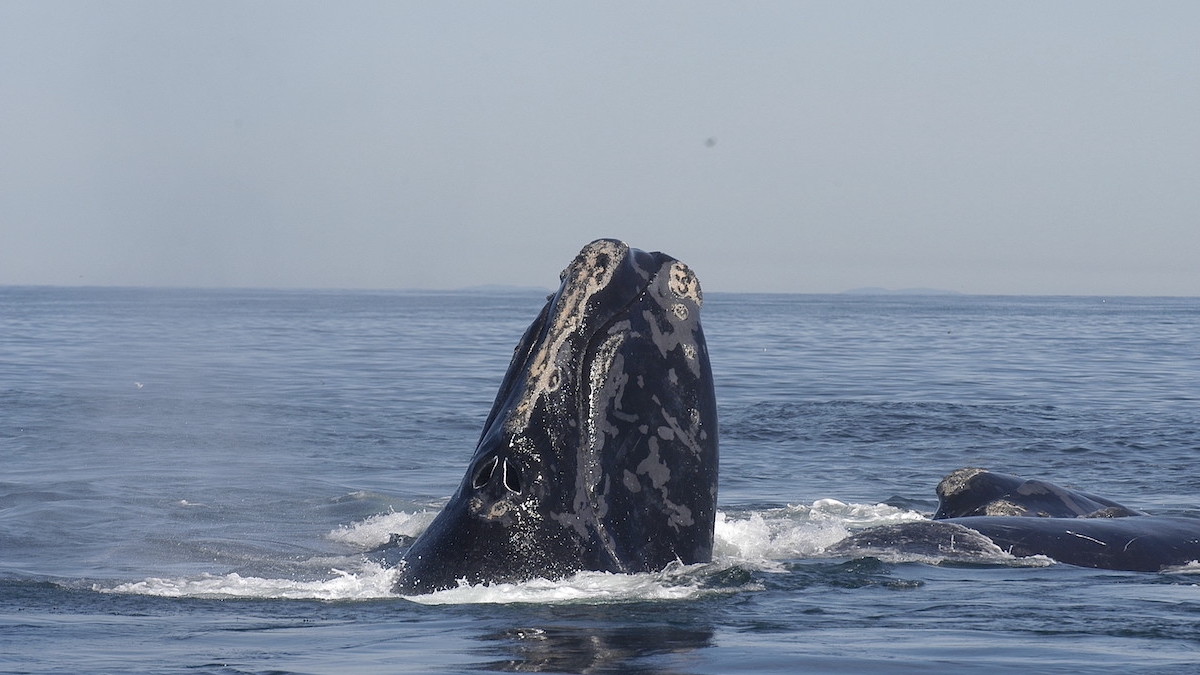
Nuclear sub base expansion ignores precious species; missiles could destroy us all
Background: The U.S. Navy has released a Draft Environmental Assessment for the homeporting of the Columbia Class submarines at Naval Submarine Base (NSB) Kings Bay.
The Navy proposes to establish facilities and functions at NSB Kings Bay to support the homeporting of Columbia Class submarines as replacements for the retiring Ohio Class submarines currently homeported at NSB Kings Bay. Under the Proposed Action, the Navy would construct eight facilities, modify five facilities, and demolish three facilities across three locations on NSB Kings Bay.
Facility changes and development activities would be phased over a period of five years and completed coincident to the first Columbia Class submarines in 2028.
Nuclear Watch South has prepared comments opposing this development. The following article is drawn from their statement and comments recently submitted to the U.S. Navy.
Georgia’s 100 miles of Atlantic Ocean coastline is a globally unique, fertile, and fragile marshland environment of barrier islands, freshwater tidal forests, maritime forests, and endangered longleaf pine forest. Georgia’s vast salt marshes support a staggering diversity of plant and animal life nurturing the eggs and hatchlings of countless sea creatures and providing significant nesting and migration habitat for 200 bird species.
Kings Bay, near the Georgia-Florida state line, is home base for six Trident submarines and deploys 25% of the U.S. nuclear arsenal. A Trident submarine is the most expensive and deadly nuclear weapons system on Earth. The only other nation to possess a similarly powerful system is the United Kingdom, a longtime United States ally. The Trident has been controversial since its inception as it upsets the so-called MAD (Mutually Assured Destruction) power balance, fueling a dangerous and costly international arms race.
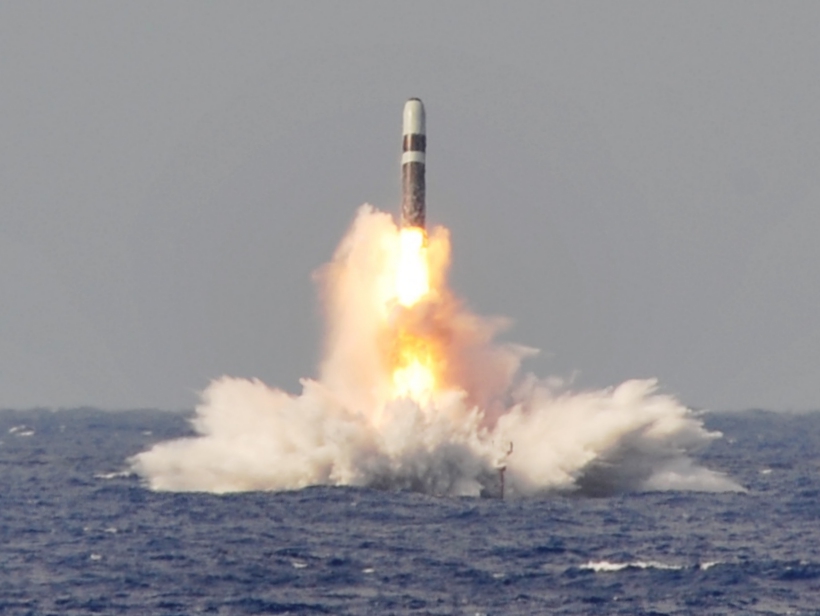
The Navy conducted an Environmental Impact Statement (EIS) in 1977 when Kings Bay Naval Submarine Base was first proposed. The EIS was performed to fulfill environmental and public accountability requirements of the newly instituted National Environmental Protection Act (NEPA) of 1969.
In 1979, construction began on Kings Bay. In 1984, it was first discovered that the base had unwittingly intruded upon the (previously unknown and apparently only) birthing waters for the critically endangered North Atlantic right whales in the Cumberland Sound.
Read More20 million tonnes of radioactive waste

Uranium tailings in Niger are blowing in the wind and poisoning the water
By Linda Pentz Gunter
Note: In late July, a military coup ousted Niger’s president, Mohamed Bazoum. Since then, those who have declared themselves in charge have announced a halt to uranium exports to France. France relies on Niger for around 17% of the uranium that fuels its troubled commercial reactor fleet (with Kazakhstan and Uzbekistan the main suppliers). Since Russia’s invasion of Ukraine, European countries have been wrestling with their uncomfortable dependence on Russian-sourced uranium supplies. The Russian mercenary group, Wagner, already has a strong presence in Africa, and one that is now growing.
The grey mountain looms, mirage-like, on the horizon of the uranium mining town of Arlit in Niger.
Except, this is the Sahel, and it’s not a real mountain. It’s a pile of radioactive uranium mine tailings, blowing around in the desert winds and dispersing into the air, soil, waterways and people’s bodies.
The “mountain” is part of a legacy of an estimated 20 million tonnes of radioactive waste left behind by the French mine owner, Areva, now known as Orano, which closed its Arlit uranium mines in March 2021.
A report on Radio France International described the situation this way: “Niger’s northern town of Arlit has been left wallowing in 20 million tonnes of radioactive waste after a uranium mine run by French company Orano (formerly Areva) closed down. People living in the area are exposed to levels of radiation above the limits recommended by health experts.”
This lethal legacy has been confirmed by the independent French radiological research laboratory — Commission de Recherche et d’Information Indépendantes sur la Radioactivité — known in international circles simply as CRIIRAD. The lab, and its director, Bruno Chareyron, have been studying the situation around uranium mines in Niger for years. In 2009 his lab measured the radioactive levels of the wastes at 450,000 Becquerels per kilogram.
In a recent video, CRIIRAD describes the waste pile— mostly radioactive sludges — as “a sword of Damocles hanging over the drinking water supply for more than 100,000 people.” (You can watch the video below, in French with English subtitles. If you understand French, you can also listen to the CRIIRAD podcast episodes on this topic on Spotify.)
A Tale of Two Directors

Nolan’s film soars but Stone’s is for the chop
By Linda Pentz Gunter
It’s A Tale of Two Directors. For one, it is certainly the best of times, for the other, probably the worst.
Each took a single book as their inspiration and adapted it into a film.
One film is about the bomb. The other is a bomb.
The first is a blockbuster drama that garnered unprecedented advance hype thanks to a weeks-long saturation publicity campaign. Now packing cinemas everywhere, it grossed $80.5 million in the US and Canada alone during its first weekend.
The other made a documentary that grossed, well, $9,814 in the US and Canada over its first weekend. The average audience size for that film is apparently between 6 to 8 people.
Both directors have bodies of work behind them that put them in the panoply of the greats. And both chose nuclear as their subject matter.

Unless you are living in a remote cave somewhere, you know by now that the first film is Oppenheimer, directed by Christopher Nolan. It’s essentially a dramatization of the life and career of J. Robert Oppenheimer, often referred to as the father of the atomic bomb.
Nolan’s film is based on the book American Prometheus: The Triumph and Tragedy of J. Robert Oppenheimer, a 2005 biography by Kai Bird and the late Martin J. Sherwin.
If you haven’t heard of the other film, you can be forgiven, as it’s clearly dying quietly in a corner. It’s a documentary called Nuclear Now, directed by Oliver Stone, and based on the book A Bright Future; How Some Countries Have Solved Climate Change and the Rest Can Follow, by Joshua S. Goldstein. (The fact that Goldstein suggests any country has “solved” climate change is your first clue as to its veracity.)
While the former film is a triumph of cinematic story telling and fine performances, the latter is by all accounts a dreary trudge along a well worn and totally discredited pro-nuclear power propaganda path.
Read MoreNix nuclear in the nutmeg state

Connecticut governor wrong to support bill funding unneeded nuclear
By Stanley Heller
Update: Since this article first appeared in the CT Mirror, Connecticut governor, Ned Lamont, has signed the bill that contains funding for nuclear power. It is republished here to deliver the arguments against this legislation being enacted in Connecticut.
What folly! Just as a dam necessary for cooling nuclear waste at Europe’s biggest nuclear power complex is blown up, members of the Connecticut legislature pass a bill that includes promotion of dangerous outmoded nuclear power.
Senate Bill 7 creates a “Council for Advancing Nuclear Energy Development” specifically packed with six positions for people who work in the nuclear energy industry. Their mission will be to discuss “advancements that are occurring in nuclear energy development.” They’ll study “small modular reactors, advanced nuclear reactors, [and] fusion energy facilities.”
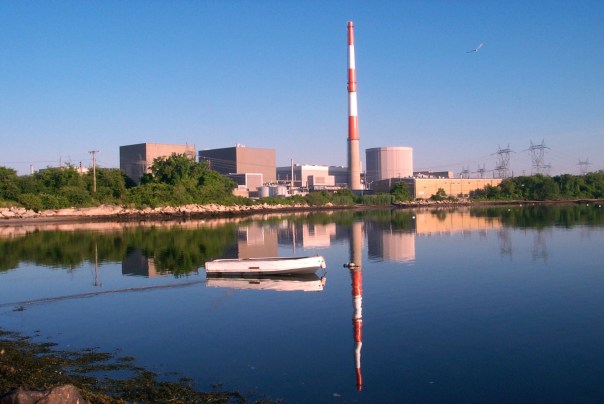
Rather than seek “advancement,” we should be figuring out how to phase out this technology. We see by the Ukraine example that parties at war do not respect what one would think would be totally obvious, the need to do nothing to harm the safety of nuclear power plants. Not that we expect warfare to break out in the U.S., but this country should lead in best practices so that countries where war is a lot more likely won’t go down the nuclear path and risk huge releases of nuclear contamination that spread world-wide.
Read More Beyond Nuclear International