 Beyond Nuclear International
High nuclear crimes don’t pay

Politicians and executives snared for their roles in bribery and racketeering schemes
By Linda Pentz Gunter
Breaking: On June 29, former Ohio Speaker of the House, Republican, Larry Householder, was handed down the maximum sentence of 20 years in prison for his role in the high crimes described below. His co-conspirator, Matt Borges, the former Ohio GOP Chairman, was sentenced on June 30 to five years in federal prison.
This is part one of a two-part story on bribery and corruption in the nuclear power realm and the questionable ethics of legal lobbying. The original article was published in its entirety in Capitol Hill Citizen, a print-only newspaper published by Ralph Nader. These articles are reproduced with kind permission of the editor. Part two will be published in the next few weeks. Capitol Hill Citizen comes out in print only. To subscribe or purchase single copies, click here.
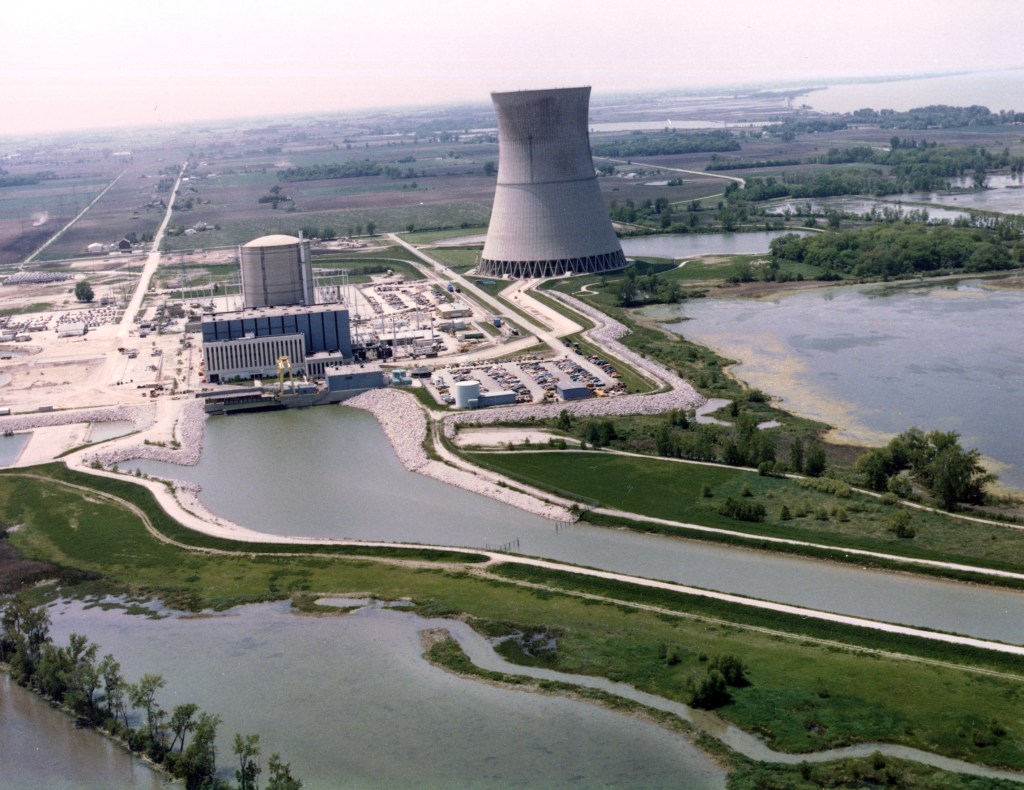
It all began when Ohio nuclear power plant owner, FirstEnergy, began “bleeding cash” in a desperate effort to keep its aging and uneconomical Davis-Besse and Perry nuclear power plants solvent.
The effort bankrupted FirstEnergy subsidiary, FirstEnergy Solutions, then owner of the two nuclear plants. The shareholders wanted out. FirstEnergy threatened to close the plants. But Ohio House Republican, Larry Householder, had other plans.
Householder concocted a nefarious scheme to extract $61 million from the failing company to ensure his re-election and that of enough political allies to guarantee his return to the House Speakership.
This, in turn, would secure enough votes to ensure passage of a $1.3 billion bailout bill, known as HB6, that would rescue the two nuclear plants along with struggling coal plants.
And it worked. For a while.
Read MoreComing together for peace

American, Russians, Ukrainians and Belarusians gather in Vienna to call for peace
By Medea Benjamin
During the weekend of June 10-11 in Vienna, Austria, over 300 people representing peace organizations from 32 countries came together for the first time since the Russian invasion of Ukraine to demand an end to the fighting. In a formal conference declaration, participants declared, “We are a broad and politically diverse coalition that represents peace movements and civil society. We are firmly united in our belief that war is a crime against humanity and there is no military solution to the current crisis.”
To amplify their call for a ceasefire, Summit participants committed themselves to organizing Global Weeks of Action—protests, street vigils and political lobbying—during the days of September 30-October 8.
Summit organizers chose Austria as the location of the peace conference because Austria is one of only a few neutral non-NATO states left in Europe. Ireland, Switzerland and Malta are a mere handful of neutral European states, now that previously neutral states Finland has joined NATO and Sweden is next in line. Austria’s capital, Vienna, is known as “UN City,” and is also home to the Secretariat of the OSCE (the Organization for Security and Cooperation in Europe), which monitored the ceasefire in the Donbas from the signing of the Minsk II agreement in 2015 until the Russian invasion of Ukraine in 2022.

Surprisingly, neutral Austria turned out to be quite hostile to the Peace Summit. The union federation caved in to pressure from the Ukrainian Ambassador to Austria and other detractors, who smeared the events as a fifth column for the Russian invaders. The ambassador had objected to some of the speakers, including world-renowned economist Jeffrey Sachs and European Union Parliament member Clare Daly.
Read MoreThere’s still time
We aren’t out of climate options but we must choose the right ones
By David Suzuki, Common Dreams
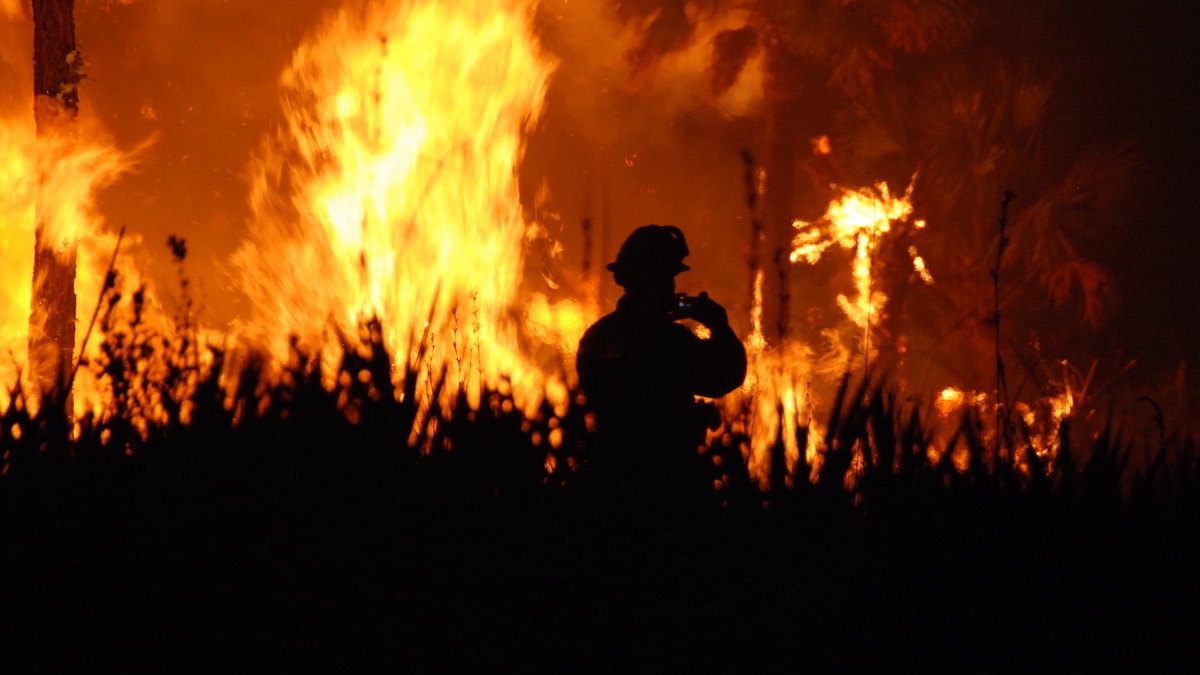
Cutting greenhouse gas emissions to keep the world from heating to catastrophic levels is entirely possible and would save money. Although emissions continue to rise, there’s still time to reverse course. Ways to slash them by more than half over the next seven years are readily available and cost-effective — and necessary to keep the global average temperature from rising more than 1.5 C.
The recent Intergovernmental Panel on Climate Change Sixth Assessment Report includes a chart that shows how. Compiled by the world’s top scientists using the most up-to-date research, it illustrates potential emissions reductions and costs of various methods.
At the top are wind and solar power, followed by energy efficiency, stopping deforestation and reducing methane emissions. Nuclear energy, carbon capture and storage and biofuels bring much poorer results for a lot more money.
Wind and solar together can cut eight billion tons of emissions annually — “equivalent to the combined emissions of the US and European Union today” and “at lower cost than just continuing with today’s electricity systems,” the Guardian reports.
Nuclear power and carbon capture and storage each deliver only 10 percent of the results of wind and solar at far higher costs. It’s telling that those less effective, more expensive pathways are the ones touted most often by government, industry and media people who are determined to keep fossil fuels burning or are resistant to power sources that offer greater energy independence.
Making buildings, industry, lighting and appliances more energy efficient could cut 4.5 billion tons of emissions a year by 2030 — and there’s no doubt that simply reducing energy consumption could add to that.
Because forests, wetlands and other green spaces sequester carbon, stopping deforestation could cut four billion tons a year by 2030, almost “double the fossil fuel emissions from the whole of Africa and South America today,” the Guardian reports.
Read MoreGermany launches next solar expansion
Technology will be a key power source going forward
News from Clean Energy Wire
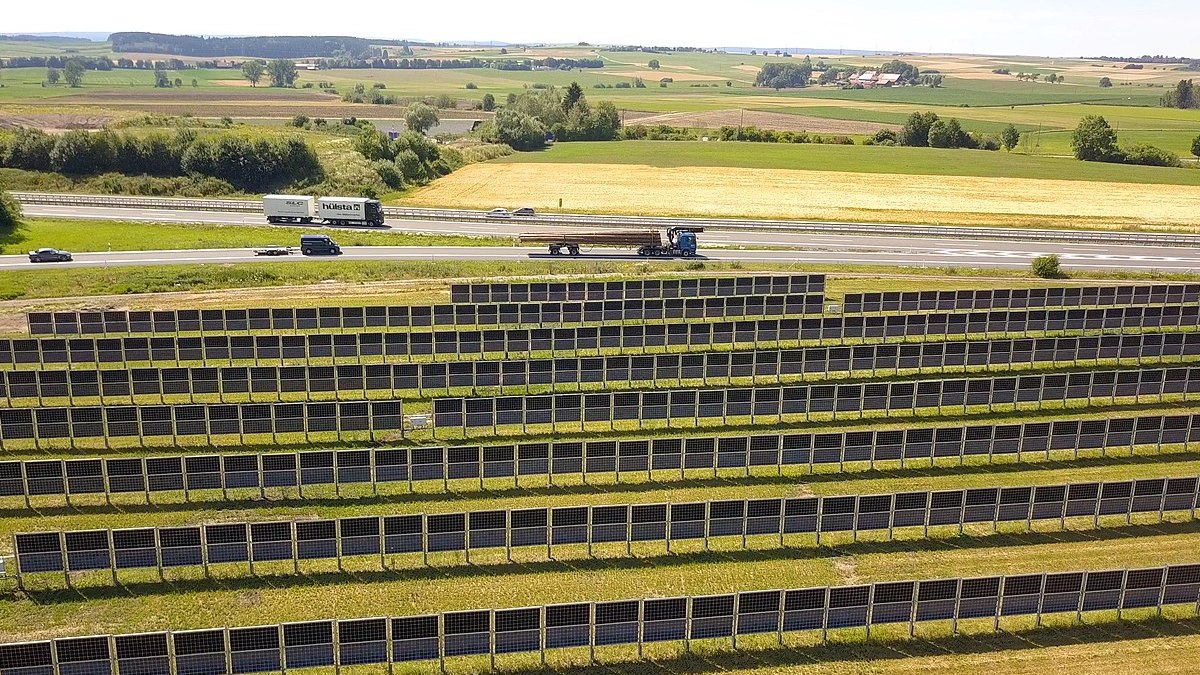
In a bid to greatly improve the roll-out of solar power in the next years, Germany’s government has put a strategy on the table aimed at simplifying regulation, unlocking new locations, and incentivizing investments in the technology.
At a press conference after the government’s second ‘Solar PV-Summit’ this year, economy and climate action minister Robert Habeck said the technology will be one of the key power sources of the future and greatly contribute to the goal of a share of 80 percent renewables in Germany’s electricity mix by 2030. Total capacity is planned to then be 215 gigawatts (GW), from about 63 GW in 2022.
“We see that the buildout is gaining traction,” Habeck said, adding that the 2023 goal of adding 9 GW capacity could well be surpassed by the end of the year and reach more than 10 GW. In the first three months of this year the solar industry already marked its most busy quarter ever by installing 2.7 GW of new capacity. The expansion target by 2026 is 22 GW per year.
“With the strategy we presented today we intend to greatly increase expansion speed once more and remove all brakes that so far have hindered a faster pace,” the Green Party politician added.
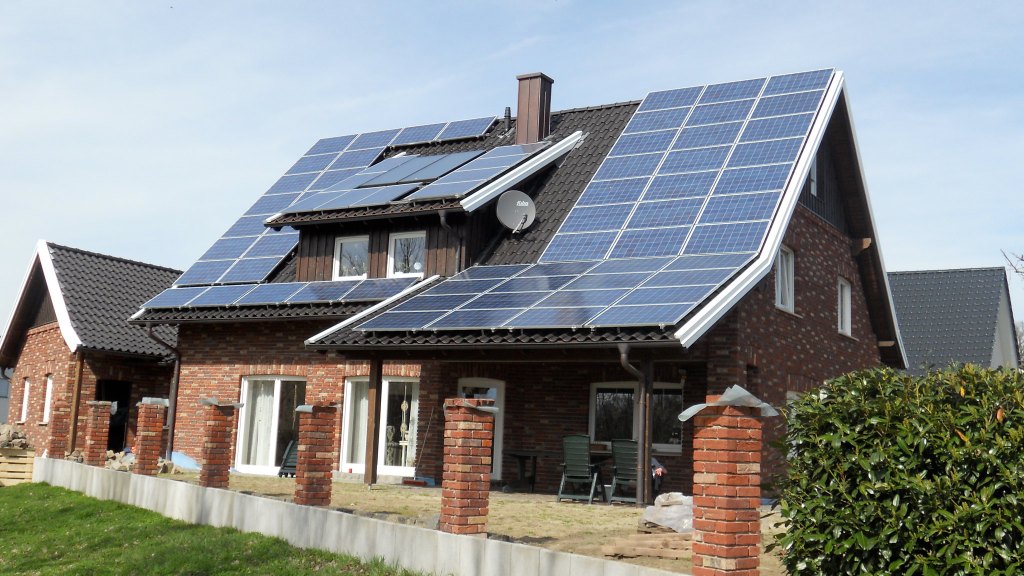
Carsten Körnig, head of industry lobby group BSW Solar, said the push by private homeowners in the energy crisis to become more independent regarding electricity supply had greatly helped boost expansion to record levels. Given the challenges arising from inflation and higher interest rates, it would now be necessary to also incentivise corporate users to invest in solar PV installations to uphold the positive trend.
Read More“Radioactive” is compelling viewing
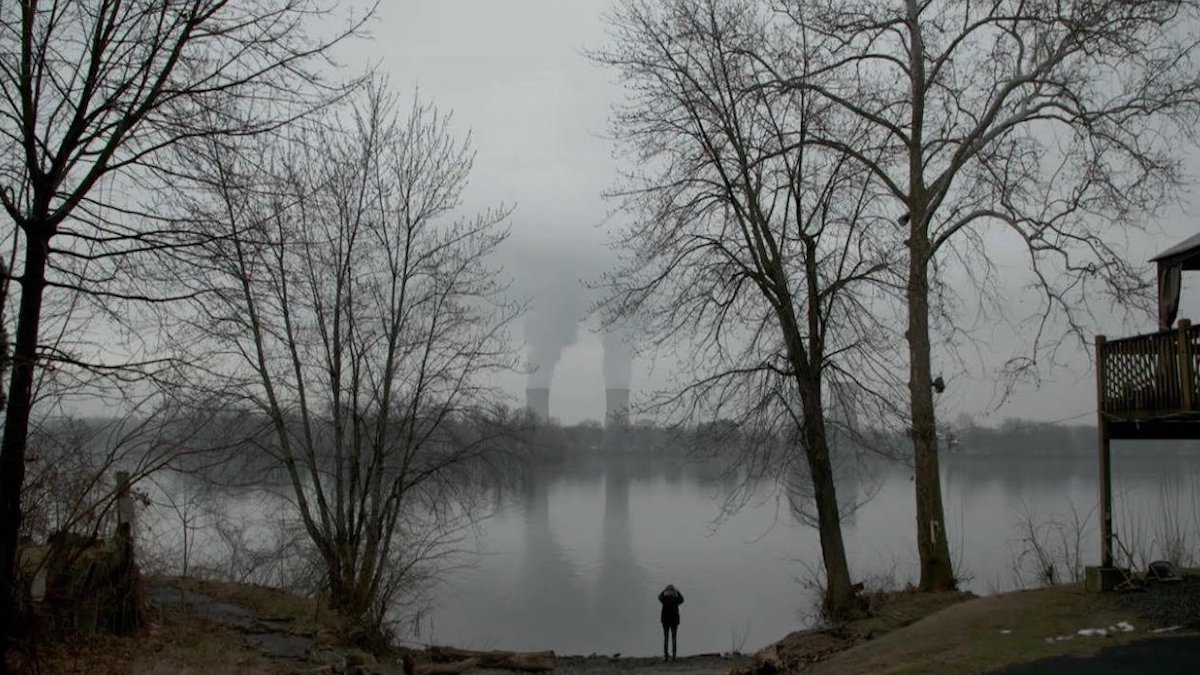
New film spotlights women’s experiences with the Three Mile Island nuclear accident
By Karl Grossman
Radioactive: The Women of Three Mile Island is the title of a newly-released documentary feature film directed, written and produced by award-winning filmmaker Heidi Hutner, a professor of environmental humanities at Stony Brook University, a “flagship” school of the State University of New York.
With greatly compelling facts and interviews, she and her also highly talented production team have put together a masterpiece of a documentary film.
It connects the proverbial dots of the 1979 Three Mile Island nuclear plant disaster—doing so brilliantly.
The documentary has already received many film awards and has had a screening in recent months in New York City—winning the “Audience Award for Best Documentary” at the Dances With Films Festival—and Harrisburg, Pennsylvania; Sarasota, Florida; Dubuque, Iowa; Long Island, New York; First Frame International Film Festival in New York City; the Environmental Film Festival in Washington D.C., and is soon the featured film at Kat Kramer’s #SHEROESForChange Film Festival in Los Angeles and the Cinequest Film Festival in San Jose, California, as well as the Uranium Film Festival in Rio de Janeiro in Brazil. And there will be tours across the U.S.
Resident after resident of the area around Three Mile Island is interviewed and tells of widespread cancer that has ensued in the years that have followed the accident—a cancer rate far beyond what would be normal. Accounts shared in the documentary are heartbreaking.
A whistleblower who had worked at the nuclear plant tells Hutner of the deliberate and comprehensive attempt by General Public Utilities, which owned TMI, to cover up the gravity of the accident and its radioactive releases, especially of cancer-causing Iodine-131 and Xenon 133.
An attorney, Lynne Bernabei, involved in litigation in the wake of the accident, says the Three Mile Island “cover-up was one of the biggest cover-ups in history.” Meanwhile, the U.S. Nuclear Regulatory Commission which is “supposed to protect the public” has then and since been just “interested in is promoting the [nuclear] industry. This is corrupt,” says attorney Joanne Doroshow, now a professor at New York Law School and director of the Center for Justice & Democracy. Many examples of this are presented.
Read MoreWe need this, for the children

US and Russia should join the nuclear ban treaty
By Ivana Nikolić Hughes
Near the end of his life, in fear of nuclear war erupting and engulfing the planet, President John F. Kennedy reportedly told friends: “I keep thinking of the children — not my kids or yours, but the children all over the world.”
Having been shaken and awakened by the Cuban Missile Crisis and just how close they had gotten to destroying the world, Kennedy and the Soviet Union’s Nikita Khrushchev negotiated the Partial Test Ban Treaty in 1963. It took only 12 days for them to come to agreement on what the treaty should entail.
Kennedy’s wisdom was supplemented by genuine care. Speaking about banning atmospheric nuclear tests, JFK said, “This treaty is for all of us. It is particularly for our children and our grandchildren, and they have no lobby here in Washington.” He went on to discuss consequences of nuclear testing, mentioning “children and grandchildren with cancer in their bones, with leukemia in their blood, or with poison in their lungs,” and noting that “malformation of even one baby — who may be born long after we are gone — should be of concern to us all.”
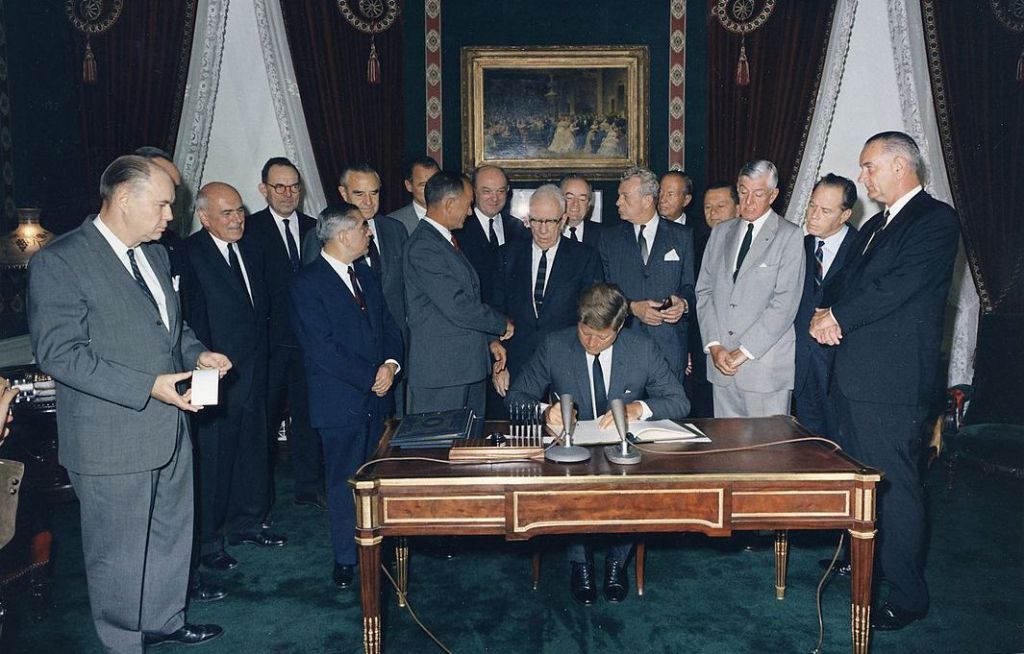
When Kennedy set off to make the treaty a reality, it looked like an impossible task. The Washington establishment was not interested in ending nuclear tests in the atmosphere. It was only through public pressure that U.S. senators started changing their minds, one by one. Following a two-month, nationwide campaign that drew widespread public support, the treaty was ratified by the Senate with an 80-19 vote.
Read More Beyond Nuclear International