 Beyond Nuclear International
Daniel Ellsberg is still fighting

Legendary whistleblower keeps giving in his final months
By Linda Pentz Gunter
Most of us who have been around long enough in this movement probably have their own Daniel Ellsberg story. With the 91-year old famous whistleblower’s recent announcement that he has terminal pancreatic cancer, with just months to live, many were re-telling theirs. It was an apt outpouring of admiration, respect and love. So much so, that April 24-30 is now Daniel Ellsberg Week.

My own Ellsberg story is reasonably prosaic. It was spring 1998, and I was newly-arrived in Washington, DC and also newly on the anti-nuclear beat. I had spent 20 years as a journalist, including in Los Angeles, where, for a brief time I had the theoretically enviable task of attending celebrity-studded parties and openings in order to prize a minimal nugget of prose from a sometimes reluctant Hollywood star.
Actually, I have to admit that most of those A-listers (and occasionally Bs) were incredibly accommodating and warm and down-to-earth. It was a job and one I enjoyed in an entirely unfangirlish way. But then I met Daniel Ellsberg.
He was standing off to the side at an activist pizza party in DC. I had just started a new job in an almost entirely unfamiliar field, working at the Safe Energy Communication Council. The event was — and still is (Covid permitting) — held annually by the activist group now called Alliance for Nuclear Accountability, but then still the Military Production Network. I didn’t recognize Ellsberg. Someone pointed him out. I was stunned. Daniel Ellsberg is here with us? At this humble event? Is it really him?
Thus I came to learn that one of the great heroes of our time, who was prepared to sacrifice a lifetime of freedom for a just cause, was indeed a man of quiet humility and one who has filled that lifetime that he views as some sort of unexpected bonus, with endlessly generous gifts of writing, insight, analysis and conviction.
Read MoreUK ignites new depleted uranium weapons debate

UK will send DU weapons to Ukraine prompting “nuclear” rhetoric from Russia
By Linda Pentz Gunter and Maria Arvaniti Sotiropoulou
On March 21, 2023 Britain confirmed that it was sending depleted uranium (DU) weapons to Ukraine , prompting a response from Russian president, Vladimir Putin, that, “If all this happens, Russia will have to respond accordingly, given that the west collectively is already beginning to use weapons with a nuclear component.”
Russian defense minister, Sergei Shoigu, warned that such steps moved us closer to a “nuclear collision.”
Days later, Putin announced he had made an arrangement with neighboring Belarus to station tactical nuclear weapons there.
According to ICAN, Putin “will start training Belarusian personnel to use them” and that “up to 10 Belarusian aircraft are already prepared to use these weapons and Russia would complete the construction of a storage facility for nuclear warheads in Belarus by July.”
The Belarus nuclear weapons deal was more likely a response to the continued expansion of NATO — with Finland now the newest member — rather than retaliation for Britain arming Ukraine with depleted uranium weapons.
However, there are many wrongs in this situation to unpack.
Possessing or threatening the use of nuclear weapons is a violation of the human rights that are embedded in the Treaty on the Prohibition of Nuclear Weapons. The use of depleted uranium weapons is also abhorrent, with compelling, if still somewhat anecdotal, evidence from the wars in the Balkans and Iraq/Kuwait to suggest these toxic exposures cause serious long-term health effects.
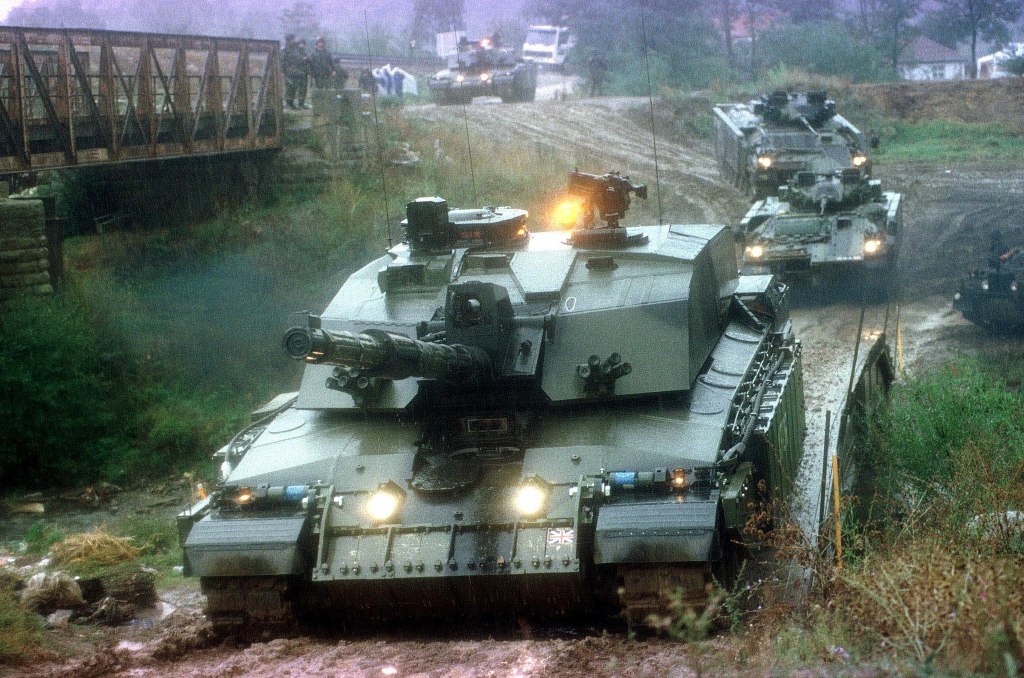
Despite Putin’s thinly veiled threat mount a nuclear response to DU weapons, the International Campaign to Ban Uranium Weapons (ICBUW) points out that this would be disproportionate because “DU projectiles are not nuclear weapons at all, but conventional weapons of high chemical-radiological toxicity and harmfulness.”
Adds Dr. Frank Boulton of the British IPPNW affiliate, MEDACT: “Much if not most of the toxicity of DU is biological rather than radiological (DU is a heavy metal with biological effects similar to that of lead)”.
The US and NATO used around 980,000 rounds of uranium shells in Iraq and Kuwait, 10,800 in Bosnia, 31,000 in Kosovo , another 7,000 in S. Serbia and Montenegro, and an unknown number in Afghanistan, while Russia also used such weapons in Chechnya.
Read More83 Hiroshimas
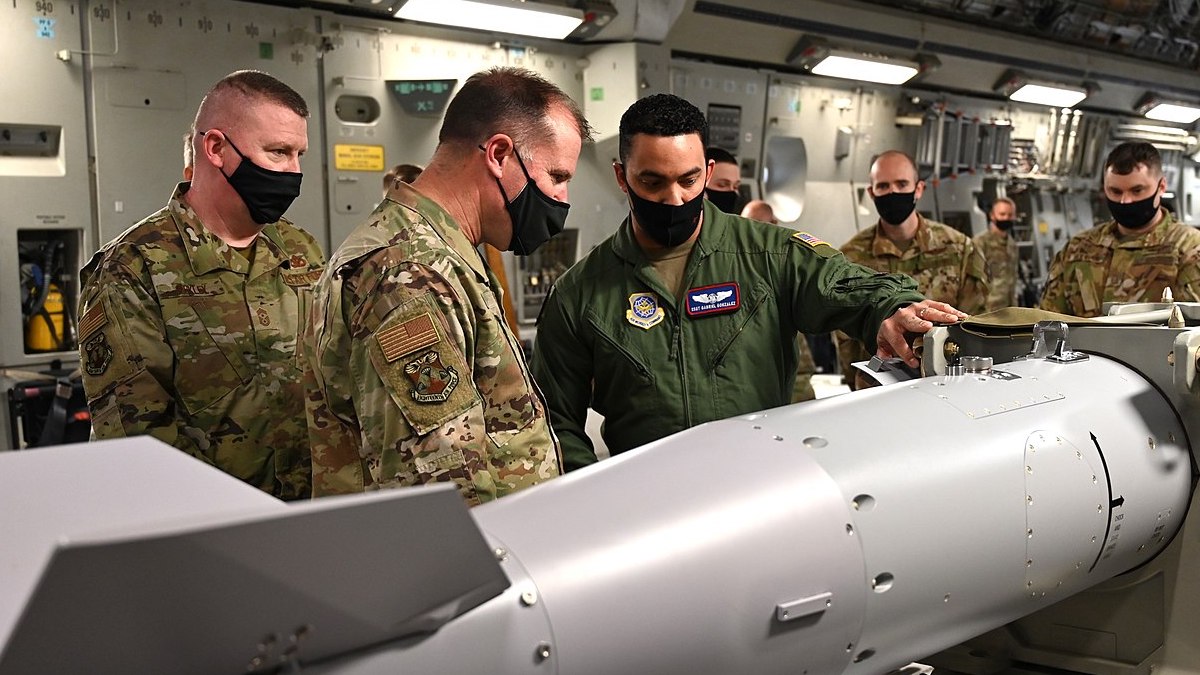
American B61-12 nuclear bombs head to Europe
Since last December, the United States has begun to replace its nuclear weapons on European soil with more modern ones. It is replacing the B61-3, B61-4 and B61-7 thermonuclear bombs with the B61-12, which has become the main US and NATO air-launched nuclear weapon.
Boeing designed the bomb’s new guided-tailkit, giving it additional maneuverability and the appearance of more precision. But, it’s a nuclear weapon, and has different yields, from 0.3kt to 50kt. These bombs can detonate beneath the Earth’s surface, increasing their destructiveness against underground targets to the equivalent of a surface-burst weapon with a yield of 1,250 kilotons––the equivalent of 83 Hiroshima bombs.
These nuclear weapons are coming to Europe in a time of heightened nuclear tension on the continent, and even as the majority of people in European host countries want to remove nuclear weapons and join the Treaty on the Prohibition of Nuclear Weapons.
Combined with the lack of transparency around nuclear sharing, this moment raises questions about whether citizens in the host states would agree to be complicit if these weapons are ever used. Even if the bombs are American and the US retains launch authority, they would most likely be dropped by Europeans. If the US decides to use its nuclear weapons located in Germany, the warheads are loaded onto German planes and a German pilot drops them.
ICAN is a broad, inclusive campaign, focused on mobilizing civil society around the world to support the specific objective of prohibiting and eliminating nuclear weapons.
Share this video to spread the word about these new nuclear weapons and join the movement to eliminate them.
$16-million-a-second and no electricity

Exorbitant fusion project is obsolete and might even be inoperable
By Linda Pentz Gunter
As defined by World Nuclear News, the international fusion project known as ITER, exists “to prove the feasibility of fusion as a large-scale and carbon-free source of energy. The goal of ITER is to operate at 500 MW (for at least 400 seconds continuously) with 50 MW of plasma heating power input. It appears that an additional 300 MWe of electricity input may be required in operation. No electricity will be generated at ITER.”
Four hundred seconds. No electricity.
ITER, which stands for International Thermonuclear Experimental Reactor, is a collaboration between 35 countries that was first conceived in 1985 and formally agreed to on November 21, 2006. Construction began in 2010 at the Cadarache nuclear complex in southern France.
The official seven group founding members of ITER are China, the European Union (then including the UK, which remains in the project), India, Japan, Korea, Russia and the United States.
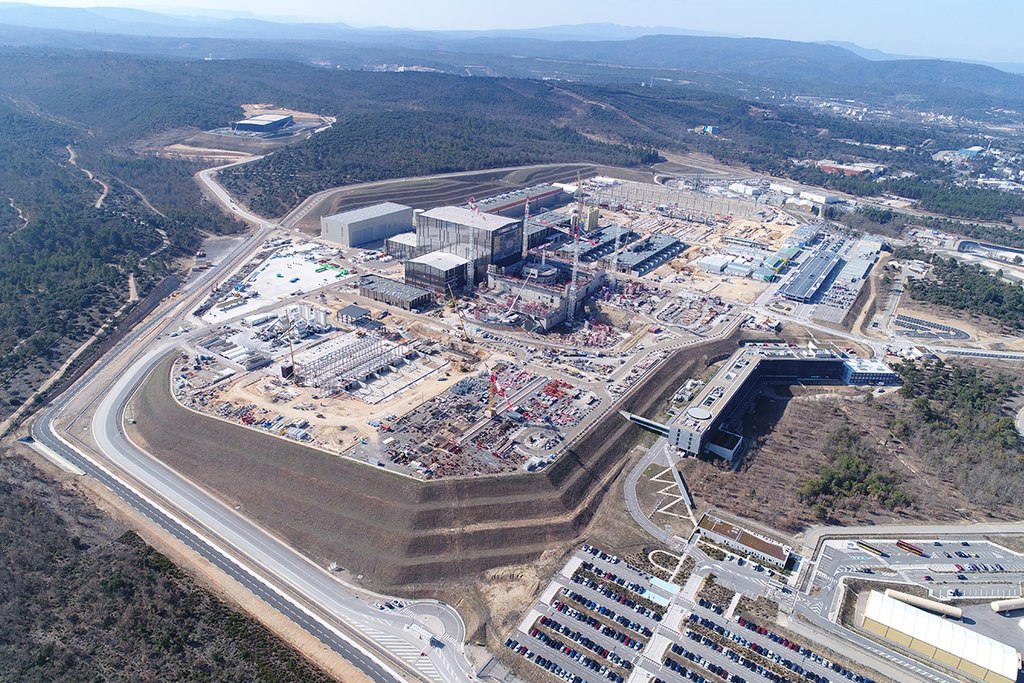
By the time ITER is actually operational — if it ever is — it will have gobbled up billions of dollars. Currently, those cost estimates range wildly between the official ITER figure of $19-23 billion (likely a gross under-estimate) and the U.S. Department of Energy’s (DOE) current estimate of $65 billion.
The starting price when the project began was around $6.3 billion.
If the DOE numbers are right, then those 400 seconds will cost $16.25 million a second. Just to prove that fusion power is possible. Without actually delivering anything practical at all to anyone.
Whatever the costs, they are too high to be remotely justifiable, given the end product and the far more compelling and essential competing needs of the world right now.
Read MoreA Cold War Legacy
What’s lurking in U.S. groundwater?
By Mark Olalde, Mollie Simon and Alex Mierjeski, video by Gerardo del Valle, Liz Moughon and Mauricio Rodríguez Pons
This story was originally published by ProPublica.
ProPublica is a Pulitzer Prize-winning investigative newsroom. Sign up for The Big Story newsletter to receive stories like this one in your inbox.
In America’s rush to build the nuclear arsenal that won the Cold War, safety was sacrificed for speed.
Uranium mills that helped fuel the weapons also dumped radioactive and toxic waste into rivers like the Cheyenne in South Dakota and the Animas in Colorado. Thousands of sheep turned blue and died after foraging on land tainted by processing sites in North Dakota. And cancer wards across the West swelled with sick uranium workers.
The U.S. government bankrolled the industry, and mining companies rushed to profit, building more than 50 mills and processing sites to refine uranium ore.
But the government didn’t have a plan for the toxic byproducts of this nuclear assembly line. Some of the more than 250 million tons of toxic and radioactive detritus, known as tailings, scattered into nearby communities, some spilled into streams and some leaked into aquifers.
Congress finally created the agency that now oversees uranium mill waste cleanup in 1974 and enacted the law governing that process in 1978, but the industry would soon collapse due to falling uranium prices and rising safety concerns. Most mills closed by the mid-1980s.
When cleanup began, federal regulators first focused on the most immediate public health threat, radiation exposure. Agencies or companies completely covered waste at most mills to halt leaks of the carcinogenic gas radon and moved some waste by truck and train to impoundments specially designed to encapsulate it.
But the government has fallen down in addressing another lingering threat from the industry’s byproducts: widespread water pollution.

Regulators haven’t made a full accounting of whether they properly addressed groundwater contamination. So, for the first time, ProPublica cataloged cleanup efforts at the country’s 48 uranium mills, seven related processing sites and numerous tailings piles.
At least 84% of the sites have polluted groundwater. And nearly 75% still have either no liner or only a partial liner between mill waste and the ground, leaving them susceptible to leaking pollution into groundwater. In the arid West, where most of the sites are located, climate change is drying up surface water, making underground reserves increasingly important.
ProPublica’s review of thousands of pages of government and corporate documents, accompanied by interviews with 100 people, also found that cleanup has been hampered by infighting among regulatory agencies and the frequency with which regulators grant exemptions to their own water quality standards.
The result: a long history of water pollution and sickness.
Reports by government agencies found high concentrations of cancer near a mill in Utah and elevated cancer risks from mill waste in New Mexico that can persist until cleanup is complete. Residents near those sites and others have seen so many cases of cancer and thyroid disease that they believe the mills and waste piles are to blame, although epidemiological studies to prove such a link have rarely been done.
“The government didn’t pay attention up front and make sure it was done right. They just said, ‘Go get uranium,’” said Bill Dixon, who spent decades cleaning up uranium and nuclear sites with the state of Oregon and in the private sector.
Tom Hanrahan grew up near uranium mills in Colorado and New Mexico and watched three of his brothers contract cancer. He believes his siblings were “casualties” of the war effort.
“Somebody knew that this was a ticking atomic bomb,” Hanrahan said. “But, in military terms, this was the cost of fighting a war.”
A Flawed System
When a uranium mill shuts down, here is what’s supposed to happen: The company demolishes the buildings, decontaminates the surrounding soil and water, and encases the waste to stop it from leaking cancer-causing pollution. The company then asks the Nuclear Regulatory Commission, the lead agency monitoring America’s radioactive infrastructure, to approve the handoff of the property and its associated liability to the Department of Energy’s Office of Legacy Management for monitoring and maintenance.
ProPublica’s analysis found that half of the country’s former mills haven’t made it through this process and even many that did have never fully addressed pollution concerns. This is despite the federal government spending billions of dollars on cleanup, in addition to the several hundred million dollars that have been spent by companies.
Often, companies or agencies tasked with cleanup are unable to meet water quality standards, so they request exemptions to bypass them. The NRC or state agencies almost always approve these requests, allowing contaminants like uranium and selenium to be left in the groundwater. When ingested in high quantities, those elements can cause cancer and damage the nervous system, respectively.
The DOE estimates that some sites have individually polluted more than a billion gallons of water.
Bill Dam, who spent decades regulating and researching uranium mill cleanup with the NRC, at the DOE and in the private sector, said water pollution won’t be controlled until all the waste and contaminated material is moved. “The federal government’s taken a Band-Aid approach to groundwater contamination,” he said.
The pollution has disproportionately harmed Indian Country.
Six of the mills were built on reservations, and another eight mills are within 5 miles of one, some polluting aquifers used by tribes. And the country’s last conventional uranium mill still in operation — the White Mesa Mill in Utah — sits adjacent to a Ute Mountain Ute community.
So many uranium mines, mills and waste piles pockmark the Navajo Nation that the Environmental Protection Agency created a comic book superhero, Gamma Goat, to warn Diné children away from the sites.
NRC staff acknowledged that the process of cleaning up America’s uranium mills can be slow but said that the agency prioritizes thoroughness over speed, that each site’s groundwater conditions are complex and unique, and that cleanup exemptions are granted only after gathering input from regulators and the public.
“The NRC’s actions provide reasonable assurance of adequate protection of public health and safety and the environment,” David McIntyre, an NRC spokesperson, said in a statement to ProPublica.
“Cleanup Standards Might Suddenly Change”
For all the government’s success in demolishing mills and isolating waste aboveground, regulators failed to protect groundwater.
Between 1958 and 1962, a mill near Gunnison, Colorado, churned through 540,000 tons of ore. The process, one step in concentrating the ore into weapons-grade uranium, leaked uranium and manganese into groundwater, and in 1990, regulators found that residents had been drawing that contaminated water from 22 wells.
The DOE moved the waste and connected residents to clean water. But pollution lingered in the aquifer beneath the growing town where some residents still get their water from private wells. The DOE finally devised a plan in 2000, which the NRC later approved, settling on a strategy called “natural flushing,” essentially waiting for groundwater to dilute the contamination until it reached safe levels.
In 2015, the agency acknowledged that the plan had failed. Sediments absorb and release uranium, so waiting for contamination to be diluted doesn’t solve the problem, said Dam, the former NRC and DOE regulator.
In Wyoming, state regulators wrote to the NRC in 2006 to lambast the agency’s “inadequate” analysis of natural flushing compared to other cleanup options. “Unfortunately, the citizens of Wyoming may likely have to deal with both the consequences and the indirect costs of the NRC’s decisions for generations to come,” the state’s letter said.
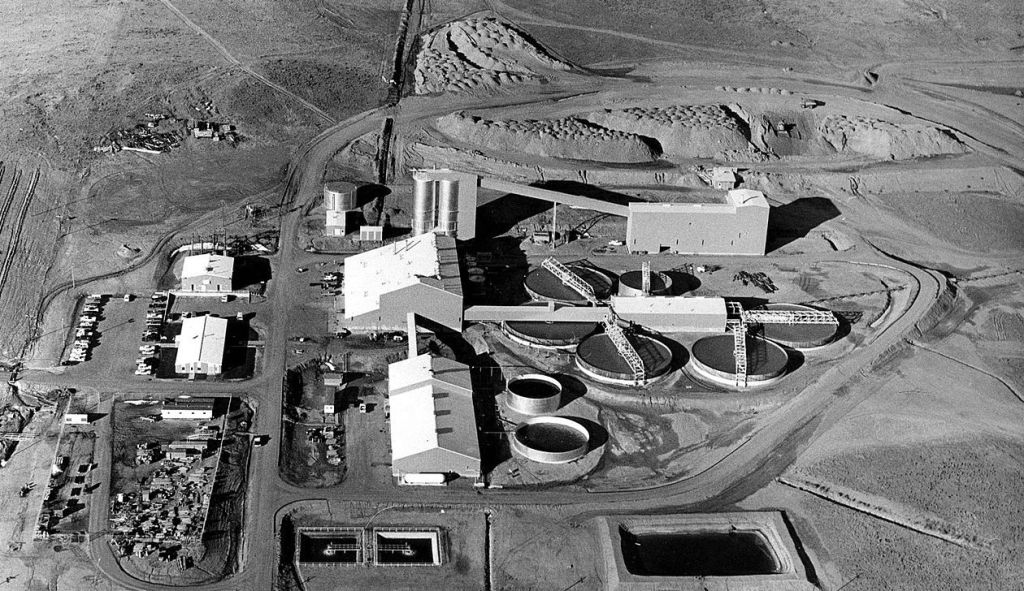
ProPublica identified mills in six states — including eight former mill sites in Colorado — where regulators greenlit the strategy as part of a cleanup plan.
When neither water treatment nor nature solves the problem, federal and state regulators can simply relax their water quality standards, allowing harmful levels of pollutants to be left in aquifers.
County officials made a small area near the Gunnison mill off-limits to new wells, and the DOE suggested changing water quality standards to allow uranium concentrations as much as 475 times what naturally occurred in the area. It wouldn’t endanger human health, the agency said, because people wouldn’t come into contact with the water.
ProPublica found that regulators granted groundwater cleanup exemptions at 18 of the 28 sites where cleanup has been deemed complete and liability has been handed over to the DOE’s Office of Legacy Management. Across all former uranium mills, the NRC or state agencies granted at least 34 requests for water quality exemptions while denying as few as three.
“They’re cutting standards, so we’re getting weak cleanup that future generations may not find acceptable,” said Paul Robinson, who spent four decades researching the cleanup of the uranium industry with the Southwest Research and Information Center, an Albuquerque-based nonprofit. “These great mining companies of the world, they got away cheap.”
NRC staffers examine studies that are submitted by companies’ consultants and other agencies to show how cleanup plans will adequately address water contamination. Some companies change their approach in response to feedback from regulators, and the public can view parts of the process in open meetings. Still, the data and groundwater modeling that underpin these requests for water cleanup exemptions are often wrong.
One reason: When mining companies built the mills, they rarely sampled groundwater to determine how much contamination occurred naturally, leaving it open to debate how clean groundwater should be when the companies leave, according to Roberta Hoy, a former uranium program specialist with the Wyoming Department of Environmental Quality. She said federal regulators also haven’t done enough to understand certain contaminants at uranium mills.
In one recent case, the NRC fined a mining company $14,500 for incomplete and inaccurate groundwater modeling data. Companies use such data to prove that pollution won’t spread in the future. Freeport-McMoRan, the corporation that owns the fined mining company, did not respond to a request for comment.
At a 2013 conference co-hosted by the NRC and a mining trade group, a presentation from two consultants compared groundwater modeling to a sorcerer peering at a crystal ball.
ProPublica identified at least seven sites where regulators granted cleanup exemptions based on incorrect groundwater modeling. At these sites, uranium, lead, nitrates, radium and other substances were found at levels higher than models had predicted and regulators had allowed.
McIntyre, the NRC spokesperson, said that groundwater models “inherently include uncertainty,” and the government typically requires sites to be monitored. “The NRC requires conservatism in the review process and groundwater monitoring to verify a model’s accuracy,” he said.
Water quality standards impose specific limits on the allowable concentration of contaminants — for example, the number of micrograms of uranium per liter of water. But ProPublica found that the NRC granted exemptions in at least five states that were so vague they didn’t even include numbers and were instead labeled as “narrative.” The agency justified this by saying the groundwater was not near towns or was naturally unfit for human consumption.
This system worries residents of Cañon City, Colorado. Emily Tracy, who serves on the City Council, has lived a few miles from the area’s now-demolished uranium mill since the late 1970s and remembers floods and winds carrying mill waste into neighborhoods from the 15.3-million-ton pile, which is now partially covered.
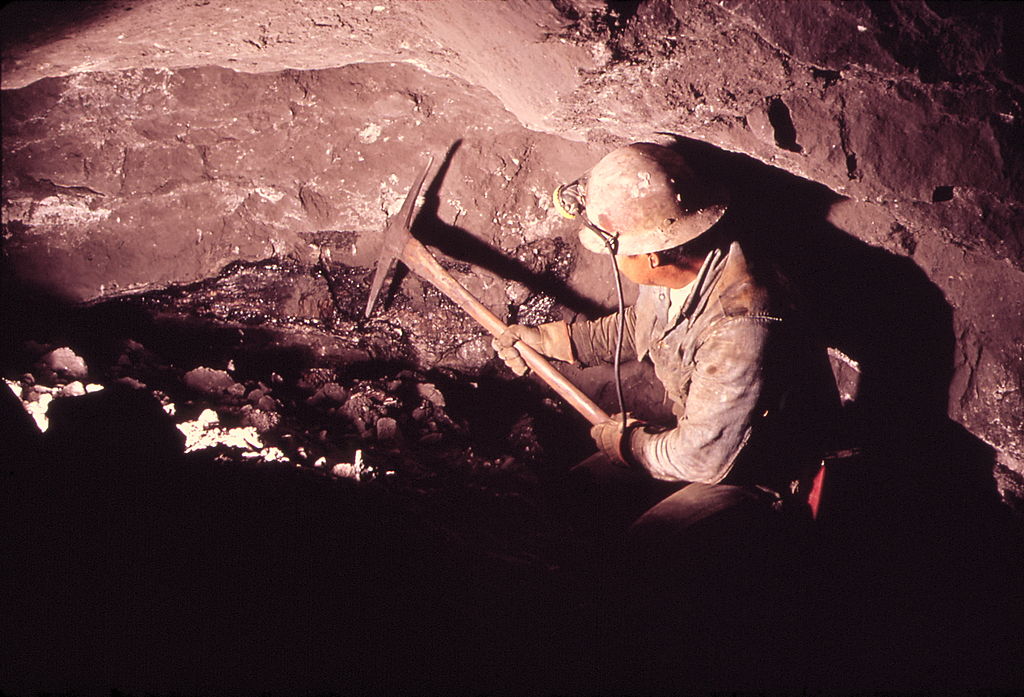
Uranium and other contaminants had for decades tainted private wells that some residents used for drinking water and agriculture, according to the Department of Health and Human Services. The company that operated the mill, Cotter Corp., finally connected residents to clean water by the early 1990s and completed cleanup work such as decontaminating soil after the EPA got involved. But the site remains without a final cleanup plan — which the company that now owns the site is drafting — and the state has eased water quality standards for molybdenum, a metal that uranium mining and milling releases into the environment.
“We have great concerns about what it might look like or whether cleanup standards might suddenly change before our eyes,” Tracy said.
Jim Harrington, managing director of the site’s current owner, Colorado Legacy Land, said that a final cleanup strategy has not been selected and that any proposal would need to be approved by both the EPA and the state.
Layers of Regulation
It typically takes 35 years from the day a mill shuts down until the NRC approves or estimates it will approve cleanup as being complete, ProPublica found. Two former mills aren’t expected to finish this process until 2047.
Chad Smith, a DOE spokesperson, said mills that were previously transferred to the government have polluted groundwater more than expected, so regulators are more cautious now.
The involvement of so many regulators can also slow cleanup.
Five sites were so contaminated that the EPA stepped in via its Superfund program, which aims to clean up the most polluted places in the country.
At the Homestake mill in New Mexico, where cleanup is jointly overseen by the NRC and the EPA, Larry Camper, a now-retired NRC division director, acknowledged in a 2011 meeting “that having multiple regulators for the site is not good government” and had complicated the cleanup, according to meeting minutes.
Homestake Mining Company of California did not comment on Camper’s view of the process.
Only one site where the EPA is involved in cleanup has been successfully handed off to the DOE, and even there, uranium may still persist above regulatory limits in groundwater and surface water, according to the agency. An EPA spokesperson said the agency has requested additional safety studies at that site.
“A lot of people make money in the bureaucratic system just pontificating over these things,” said William Turner, a geologist who at different times has worked for mining companies, for the U.S. Geological Survey and as the New Mexico Natural Resources Trustee.
If the waste is on tribal land, it adds another layer of government.
The federal government and the Navajo Nation have long argued over the source of some groundwater contamination at the former Navajo Mill built by Kerr-McGee Corp. in Shiprock, New Mexico, with the tribe pointing to the mill as the key source. Smith of the DOE said the department is guided by water monitoring results “to minimize opportunities for disagreement.”
Tronox, which acquired parts of Kerr-McGee, did not respond to requests for comment.
All the while, 2.5 million tons of waste sit adjacent to the San Juan River in the town of 8,000 people. Monitoring wells situated between the unlined waste pile and the river have shown nitrate levels as high as 80 times the limit set by regulators to protect human health, uranium levels 30 times the limit and selenium levels 20 times the limit.
“I can’t seem to get the federal agencies to acknowledge the positions of the Navajo Nation,” said Dariel Yazzie, who formerly managed the Navajo Nation Environmental Protection Agency’s Superfund Program.
At some sites, overlapping jurisdictions mean even less cleanup gets done.
Such was the case near Griffin, North Dakota, where six cows and 2,500 sheep died in 1973; their bodies emitted a blue glow in the morning light. The animals lay near kilns that once served as rudimentary uranium mills operated by Kerr-McGee. To isolate the element, piles of uranium-laden coal at the kilns were “covered with old tires, doused in diesel fuel, ignited, and left to smolder for a couple of months,” according to the North Dakota Geological Survey.
The flock is believed to have been poisoned by land contaminated with high levels of molybdenum. The danger extended beyond livestock. In a 1989 draft environmental assessment, the DOE found that “fatal cancer from exposure to residual radioactive materials” from the Griffin kilns and another site less than a mile from a town of 1,000 people called Belfield was eight times as high as it would have been if the sites had been decontaminated.
But after agreeing to work with the federal government, North Dakota did an about-face. State officials balked at a requirement to pay 10% of the cleanup cost — the federal government would cover the rest — and in 1995 asked that the sites no longer be regulated under the federal law. The DOE had already issued a report that said doing nothing “would not be consistent” with the law, but the department approved the state’s request and walked away, saying it could only clean a site if the state paid its share.
“North Dakota determined there was minimal risk to public health at that time and disturbing the grounds further would create a potential for increased public health risk,” said David Stradinger, manager of the Radiation Control Program in the North Dakota Department of Environmental Quality. Contaminated equipment was removed, and the state is reevaluating one of the sites, he said.
“A Problem for the Better Part of 50 Years”
While the process for cleaning up former mills is lengthy and laid out in regulations, regulators and corporations have made questionable and contradictory decisions in their handling of toxic waste and tainted water.
More than 40 million people rely on drinking water from the Colorado River, but the NRC and DOE allowed companies to leak contamination from mill waste directly into the river, arguing that the waterway quickly dilutes it.
Federal regulators relocated tailings at two former mills that processed uranium and vanadium, another heavy metal, on the banks of the Colorado River in Rifle, Colorado, because radiation levels there were deemed too high. Yet they left some waste at one former processing site in a shallow aquifer connected to the river and granted an exemption that allowed cleanup to end and uranium to continue leaking into the waterway.
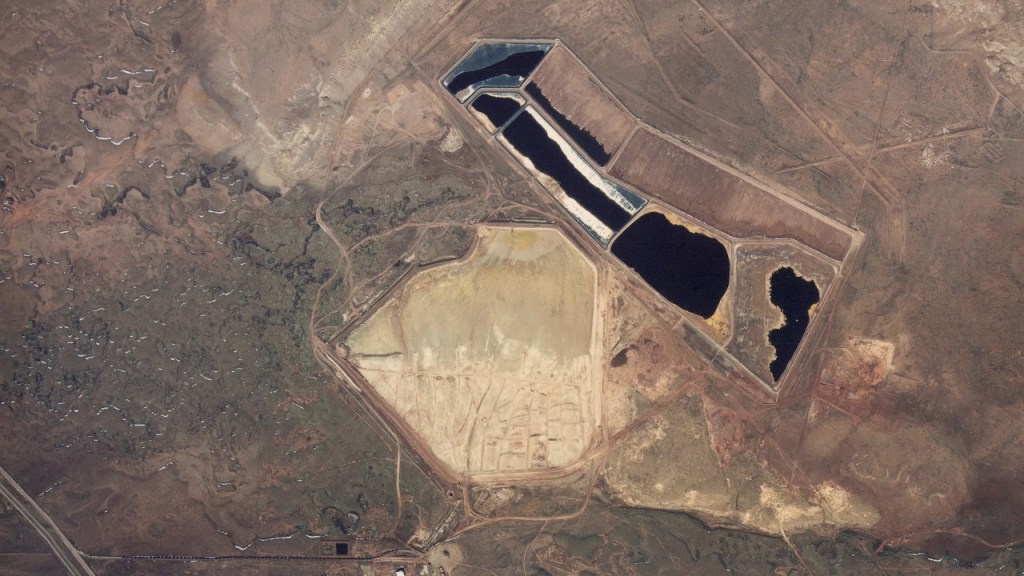
For a former mill built by the Anaconda Copper Company in Bluewater, New Mexico, the NRC approved the company’s request to hand the site off to the DOE in 1997. About a decade later, the state raised concerns about uranium that had spread several miles in an aquifer that provides drinking water for more than 15,000 people.
The contamination hasn’t reached the wells used by nearby communities, and Smith, the DOE spokesperson, said the department has no plans to treat the uranium in the aquifer. It’s too late for much more cleanup, since the DOE’s Office of Legacy Management’s mission is to monitor and maintain decommissioned sites, not clean them. Flawed cleanup efforts caused problems at several former mills after they were handed off to the agency, according to a 2020 Government Accountability Office report.
“Uranium has been overplayed as a boom,” said Travis Stills, an environmental attorney in Colorado who has sued over the cleanup of old uranium infrastructure. “The boom was a firecracker, and it left a problem for the better part of 50 years now.”
“No Way in Hell We’re Going to Leave This Stuff Here”
Mining companies can’t remove every atom of uranium from groundwater, experts said, but they can do a better job of decommissioning uranium mills. With the federal government yet to take control of half the country’s former mills, regulators still have time to compel some companies to do more cleanup.
Between 1958 and 1961, the Lakeview Mining Company generated 736,000 tons of tailings at a uranium mill in southern Oregon. Like at most sites, uranium and other pollution leaked into an aquifer.
“There’s no way in hell we’re going to leave this stuff here,” Dixon, the nuclear cleanup specialist, remembered thinking. He represented the state of Oregon at the former mill, which was one of the first sites to relocate its waste to a specially engineered disposal cell.
A local advisory committee at the Lakeview site allowed residents and local politicians to offer input to federal regulators. By the end of the process, the government had paid to connect residents to a clean drinking water system and the waste was moved away from the town, where it was contained by a 2-foot-thick clay liner and covered with 3 feet of rocks, soil and vegetation. Local labor got priority for cleanup contracts, and a 170-acre solar farm now stands on the former mill site.
But relocation isn’t required. At some sites, companies and regulators saw a big price tag and either moved residents away or merely left the waste where it was.
“I recognize Lakeview is easy and it’s a drop in the bucket compared to New Mexico,” Dixon said, referring to the nation’s largest waste piles. “But it’s just so sad to see that this hasn’t been taken care of.”
This article is an original to Propublica which published it on December 3, 2022. ProPublica articles are made available under the Creative Commons.
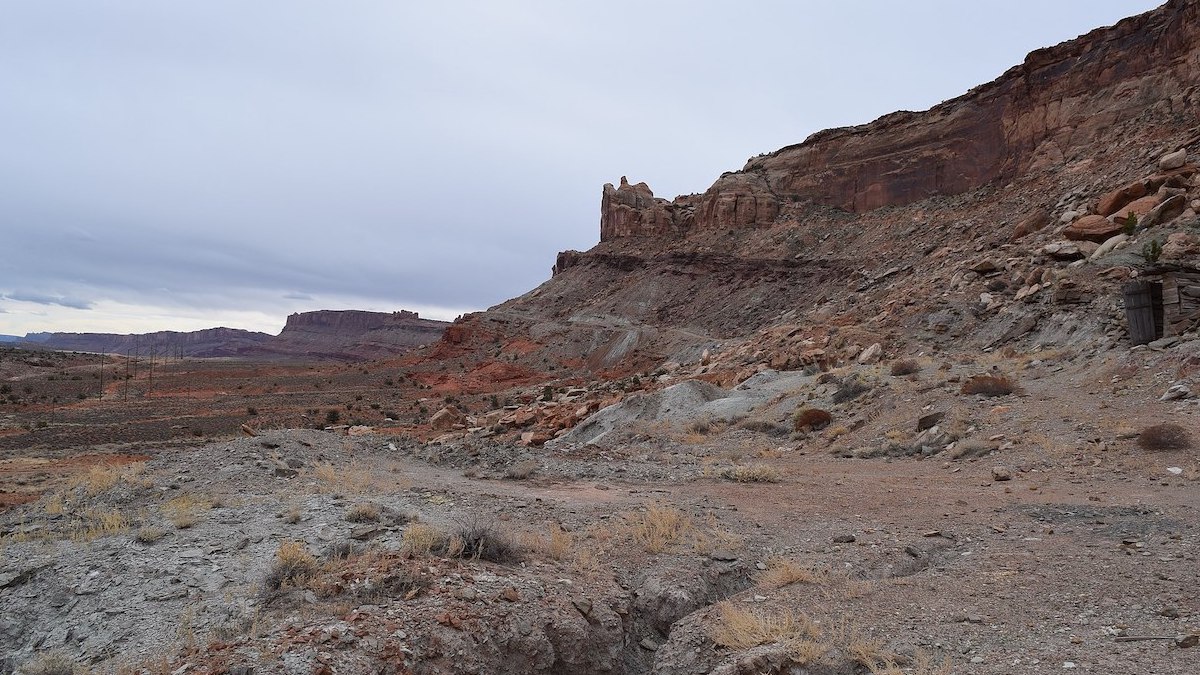
Headline photo of abandoned uranium mine tailings in Utah by Foreade/Wikimedia Commons.
The opinions expressed in articles by outside contributors and published on the Beyond Nuclear International website, are their own, and do not necessarily reflect the views or positions of Beyond Nuclear. However, we try to offer a broad variety of viewpoints and perspectives as part of our mission “to educate and activate the public about the connections between nuclear power and nuclear weapons and the need to abandon both to safeguard our future”.
What nuclear disarmament leadership should look like
Time to chart a new path before disaster strikes
By Robert Dodge and Sean Meyer
President Vladimir Putin’s recent announcement that Russia was suspending its participation in the New START Treaty—the last remaining nuclear arms control agreement between the United States and Russia—is the latest, stark reminder of the nuclear brink on which the world finds itself. This is on the heels of repeated reckless threats from Putin and other Russian officials to use nuclear weapons in Ukraine and at a time of rapidly deteriorating relations with China.
In short, the risk of nuclear war is all too real, perhaps greater than it has been since the Cuban Missile Crisis in 1962. It’s well past time for the United States, Russia, and the rest of the world’s nuclear powers to revitalize global nuclear disarmament efforts and take concrete steps to prevent nuclear war.
For its part, Congress has a very important role and voice in championing nuclear risk reduction and disarmament. Unfortunately, very few members have made this existential threat to humanity the priority it needs to be. That needs to change before the unthinkable happens.

Since the end of the Cold War, nuclear weapons issues have tended to be far from the public’s mind except in moments of crisis. It’s been easier for most people to ignore the problem, feeling there is little they can do about it, and to go on about their lives. But we voters elect presidents and members of Congress to lead, to take responsibility, to grapple with and to solve difficult problems, including those the public is not particularly focused on nor understands, like the threat posed by nuclear weapons.
And here’s today’s reality: in less than one hour, billions of people could be killed because of an accident, miscalculation, or one person making a very bad decision. Last August, a landmark scientific study laid bare shocking truths about the potential consequences if even a small percentage of the world’s 13,000+ nuclear weapons are detonated over cities. The result would be catastrophic, with the ensuing climate disruption starving and killing hundreds of millions, even billions, of people and effectively ending human civilization as we know it. A large-scale nuclear conflict between the U.S. and Russia could lead to the deaths of up to 75% of the world’s population.
Read More Beyond Nuclear International