 Beyond Nuclear International
Don’t dump on us
Pacific Islanders, marine scientists, urge Japan not to dump Fukushima radioactive water into ocean
By Linda Pentz Gunter
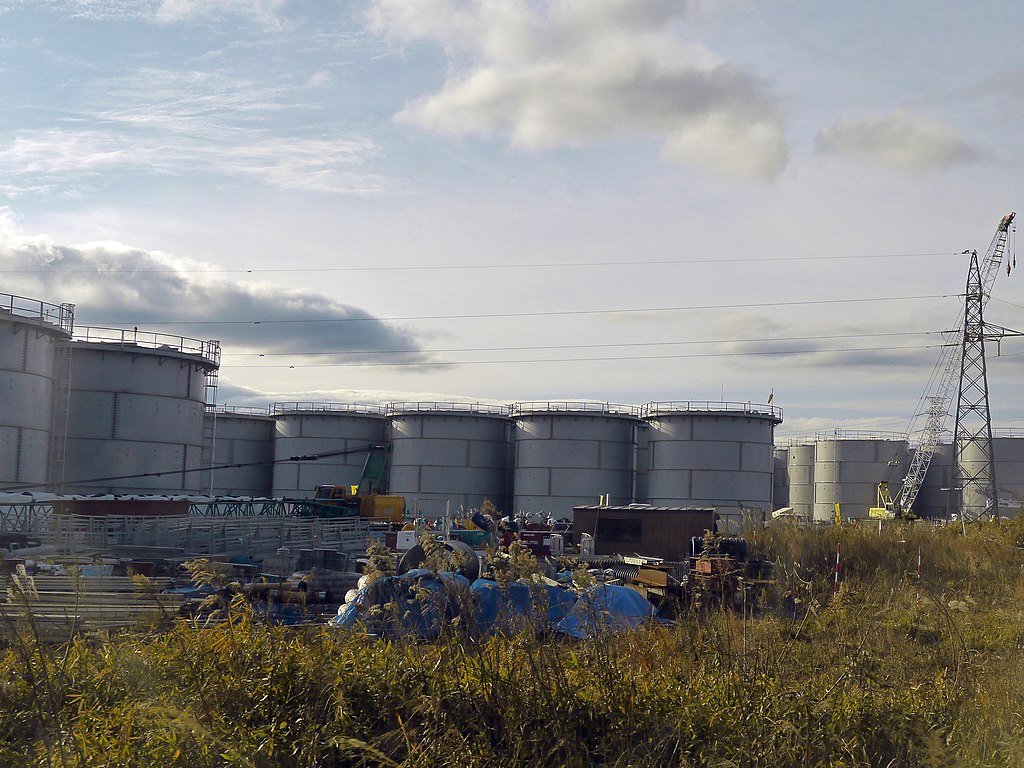
The nuclear power industry has a long history of disproportionately impacting people of color, Indigenous communities and those living in the Global South. As Japan prepares to dump more than 1 million tonnes of radioactive water from its stricken Fukushima-Daiichi nuclear power plant site into the Pacific Ocean some time this year, history is about to repeat itself.
To remind us of that — and to warn against this reckless and entirely unnecessary action (Japan could and should expand the cask storage pad on site and keep storing the radioactive water there) — the leader of the Pacific Islands Forum (PIF) has spoken out.
In a recent column in the UK daily newspaper, The Guardian, Henry Puna wrote that “continuing with ocean discharge plans at this time is simply inconceivable”, given how directly it once again discriminates against — and will likely seriously harm the health of — the peoples of the Pacific. Puna took care to remind readers “that the majority of our Pacific peoples are coastal peoples, and that the ocean continues to be an integral part of their subsistence living.”
Going forward with the dump without further study and serious consideration of viable alternatives, would, Puna said, mean that “the region will once again be headed towards a major nuclear contamination disaster at the hands of others.” Victims of years of atomic testing, Pacific Islanders are rightly not ready to be dumped on yet again.
Read MoreMapping the atomic tests
Interactive map tells the story of nuclear weapons tests and their toll
From the International Campaign to Abolish Nuclear Weapons (ICAN)
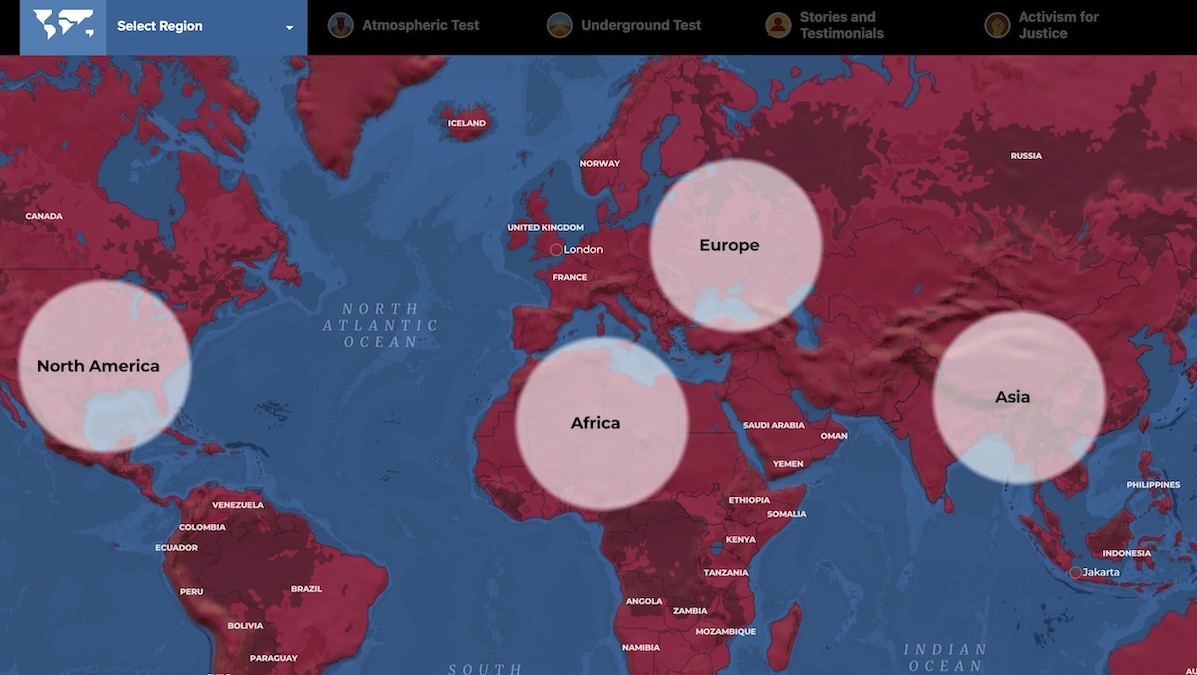
During the First Meeting of States Parties to the TPNW, ICAN launched a new interactive resource to discover the (hi)stories of nuclear weapons testing.
On the new website you can discover an interactive map as an educational tool to provide an overview of what we know about the impacts of nuclear weapons use and testing of the over 2,000 nuclear weapons detonated since 1945, featuring dozens of survivor testimonies and stories of their activism for justice.
For example, you can learn about the story of Dr. Enver Thoti Bughda, a medical surgeon and Uyghur rights activist from Xinjiang China. After exposing the devastating effects of nuclear tests on the local population in the Lupnur region, he was compelled to leave China and seek political asylum in the UK where he continues to promote awareness of the shocking consequences of the nuclear tests.
Or listen to the stories of the Tularosa Basin Downwinders Consortium, who are fighting for restitution for the harm they suffered from the Trinity Nuclear Test in New Mexico, US.

Or you can watch the stories of people affected by the nuclear weapons tests conducted by the United States in the Marshall Islands assembled by students from the Marshall Islands Students Association in Suva, Fiji.
Moreover, the website also answers the most important questions about nuclear weapons testing, such as how many nuclear weapons have been used or tested and how the Treaty on the Prohibition of Nuclear Weapons addresses the legacies of nuclear weapons testing and use.
We hope that this resource will be useful to many of you to both dive more into the stories of survivors, and pass these stories on.
Read MoreExposed
The most polluted place in the United States
By Tara Lohan
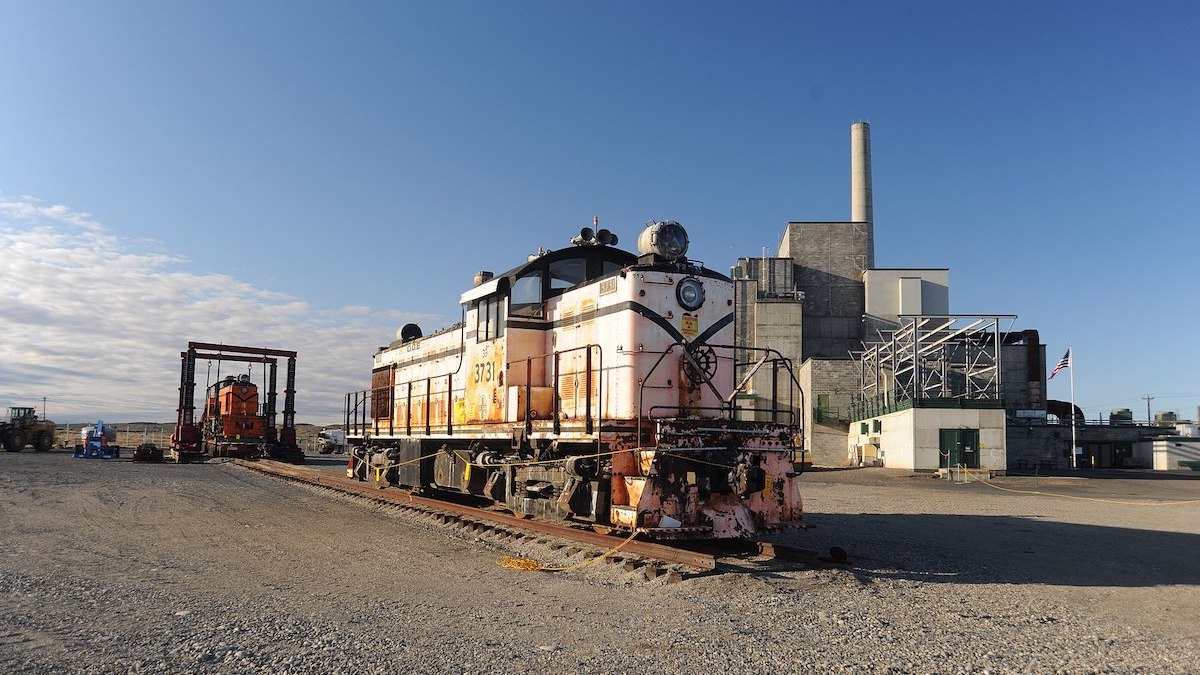
The most polluted place in the United States — perhaps the world — is one most people don’t even know. Hanford Nuclear Site sits in the flat lands of eastern Washington. The facility — one of three sites that made up the government’s covert Manhattan Project — produced plutonium for Fat Man, the atomic bomb dropped on Nagasaki during World War II. And it continued producing plutonium for weapons for decades after the war, helping to fuel the Cold War nuclear arms race.
Today Hanford — home to 56 million gallons of nuclear waste, leaking storage tanks, and contaminated soil — is an environmental disaster and a catastrophe-in-waiting.
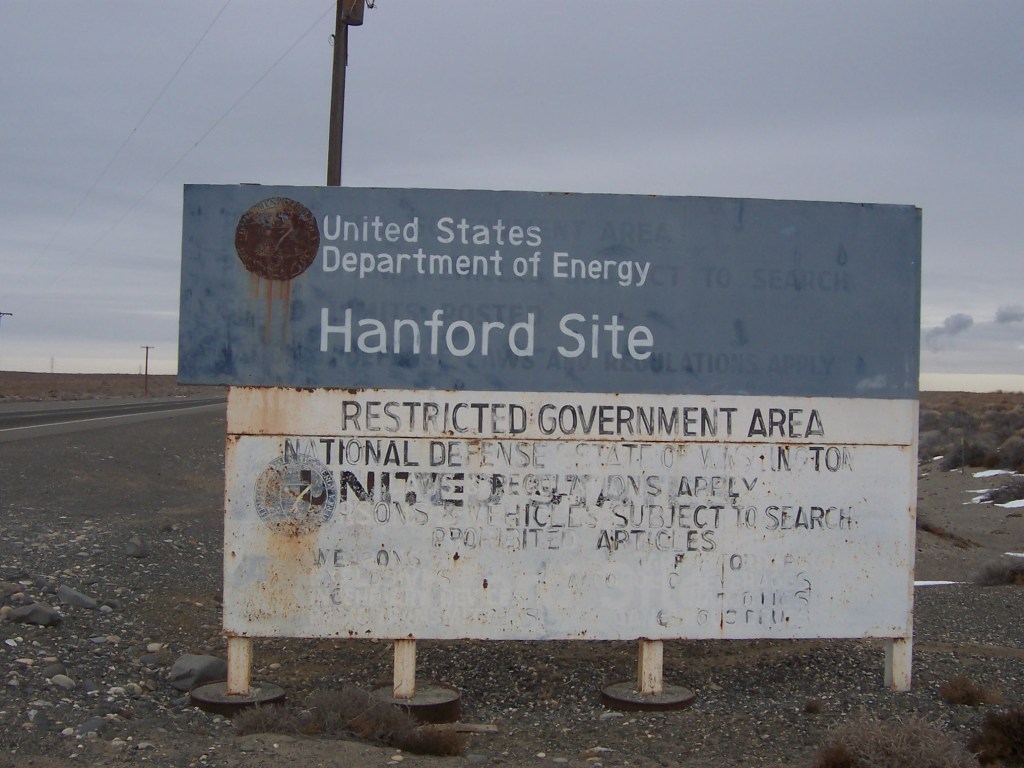
It’s “the costliest environmental remediation project the world has ever seen and, arguably, the most contaminated place on the entire planet,” writes journalist Joshua Frank in the new book, Atomic Days: The Untold Story of the Most Toxic Place in America.
It’s also shrouded in secrecy.
Frank has worked to change that, beginning with a series of blockbuster investigations published in Seattle Weekly a decade ago. Atomic Days offers an even fuller picture of the ecological threats posed by Hanford and its failed remediation.
The Revelator spoke with him about the environmental consequences, the botched cleanup operation, and what comes next.
Read MoreAn unacceptable risk to children

Standards don’t protect them and studies dismiss them
By Linda Pentz Gunter
In a peer reviewed article published in the British Medical Journal Pediatrics Open in October, my Beyond Nuclear colleague, Cindy Folkers and I, reviewed the studies currently available that look at the impact on children from radiation exposures caused by the nuclear power sector.
In particular, we looked at the disproportionately negative impact on children living in disadvantaged communities, primarily those of color. As we wrote in the article:
“From uranium mining and milling, to fuel manufacture, electricity generation and radioactive waste management, children in frontline and Indigenous communities can be disproportionately harmed due to often increased sensitivity of developing systems to toxic exposures, the lack of resources and racial and class discrimination.”
At about the same time, and as if to confirm our hypothesis, the story of the Jana elementary school in Missouri began to break.
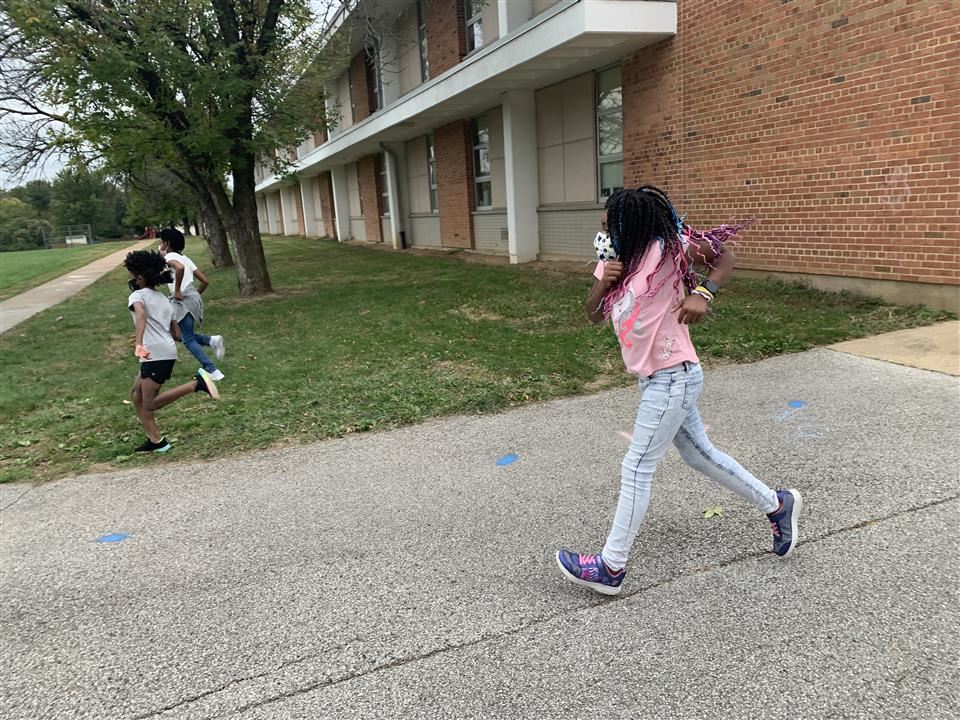
The school is in a predominantly Black community in northern St. Louis and the US army corps of engineers had been called in to assess radioactivity found in classrooms, playgrounds and on sports fields at the school after findings of unacceptable levels of radioactivity on the premises were revealed in an independent report conducted by Dr. Marco Kaltofen, President of Boston Chemical Data Corporation.
The radioactive contamination found at the school was, as the report described it, “consistent with the radioactive legacy uranium processing wastes notoriously found in the heavily contaminated Coldwater Creek in North St. Louis County, MO, and in low-lying areas subject to flooding from the creek.”
The report concluded that “radiological contamination exists at unacceptable levels (greater than 5.0 net pCi/g as alpha radiation) at the Jana School property.”
Read MoreFrom the fossil fuel frying pan into the fission fire

Another smokescreen that obscures real climate solutions
By Linda Pentz Gunter
They’ve given it a snappy little acronym, one that is perhaps supposed to masquerade as a sort of scientific-sounding calculus — C2N. After the failure of the much-trumpeted “nuclear renaissance” that never was, the nuclear lobby and its federal lackeys have come up with another PR clunker — Coal 2 Nuclear (hence, C2N). In reality, this is less C2N than CPR for an ailing nuclear power industry.
Unfortunately, to arrive at this dangerously out-of-touch scheme, our tax dollars had to be wasted on yet another U.S. Department of Energy (DOE) report. Its conclusion was that, “hundreds of U.S. coal power plant sites could convert to nuclear power plant sites, adding new jobs, increasing economic benefit, and significantly improving environmental conditions.”
Notice the word “could” though. Not “will”. Because it’s more of the same aspirational irrationality that is driving the small modular reactor fantasy in the first place, the version of nuclear power that would supposedly dot the defunct coal plant landscapes.
The DOE study was conducted by Argonne National Laboratory, Idaho National Laboratory, and Oak Ridge National Laboratory. Their self-interested conclusions then, come as no surprise.
C2N is enough to make you despair — or confirm your pre-existing suspicions — that our leadership is blind and deaf to the reality of the climate emergency we are facing. They are truly mired in the mud of outdated thinking, clinging to failed and foolish energy plans that have long been supplanted by demonstrably better, faster, cheaper, safer and more workable options, ergo renewable energy, energy efficiency and conservation.

“More than 3 million of the 7.8 million jobs in the US energy sector are in areas aligned to America’s goal of being carbon neutral by 2050”, reported the World Economic Forum in July 2022. “This means renewable energy jobs in 2021 accounted for around 40% of total energy jobs.”
But no, the DOE would rather spend decades dangling before depressed coal communities the false promise of “new jobs” and “economic benefits” in a phantom new nuclear sector. It’s a con and the worst form of betrayal and guess whose fingerprints are all over this?
With C2N, Senator Joe Manchin of West Virginia (Democrat in name only and with his pockets full of coal money), is throwing his most deprived constituents under a petroleum-powered bus. He is leading those who need work today down a long and winding road to C2N that will deliver little if anything and nothing anytime soon.
All of this is in line with a collective madness that appears to have taken over significant swaths of human society. In November, UN General Secretary, António Guterres, desperate to steer us away from our final precipice, issued his most strident and urgent warning yet:
“We are in the fight of our lives and we are losing … And our planet is fast approaching tipping points that will make climate chaos irreversible,” Guterres said. “We are on a highway to climate hell with our foot on the accelerator.”
He was speaking at the opening of the COP27 UN climate summit in Egypt, or the “COP-out” as some cynics prefer to call it, given the abject failure of these annual meetings to ensure enforcement of the pledges made, albeit most are still woefully inadequate.
Read MoreIt’s all about the bomb
Why civilian nuclear power is merely a cover for producing more nuclear weapons
By Alfred Meyer
The Zaporizhzhia Nuclear Power Station in southeastern Ukraine, Europe’s largest nuclear power plant, has the world’s attention right now, and rightly so. For the first time in history, six nuclear reactors and thirty-seven years’ worth of high-level nuclear waste are in the middle of a battlefield in an active war zone—one artillery shell, on site or off, could interrupt the control and cooling of the operational reactor, or the cooling of the waste in storage, leading to a catastrophic release of radiation that could spread throughout the Northern Hemisphere. How in the world can nuclear power reactors be considered clean and safe sources of electricity?
Russia, a nuclear-armed nation that invaded Ukraine on February 24, 2022, has said that it would use nuclear weapons if needed. And strong allies of Ukraine—the United States, the United Kingdom, and France, all NATO members—are also armed with nuclear weapons.
You likely are aware of what has happened in the weeks since this magazine went to press, and whether or not the world is in the midst of another major radioactive disaster, as happened at Fukushima in Japan in 2011, Chernobyl in northern Ukraine in 1986, and Three Mile Island in the United States in 1979. I assume that if you are reading this, nuclear weapons have not been used in the war in Ukraine. So how has the world ended up in such an existentially threatening situation? Why does the nuclear enterprise have the world’s future so tightly in its grip?
The short answer: nuclear weapons. It is all about the bomb.
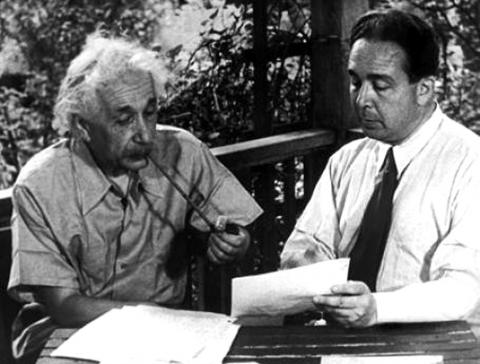
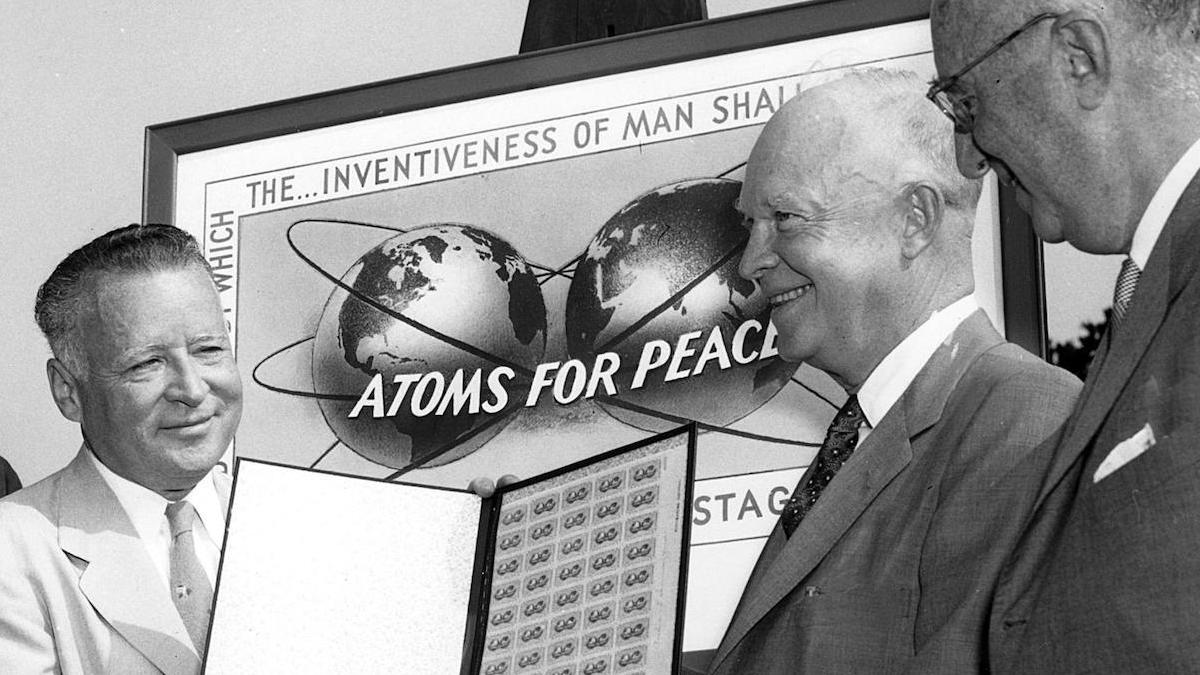
In 1939, Albert Einstein wrote to President Franklin D. Roosevelt urging him to pursue nuclear research in the United States. It was crucial, Einstein wrote, to counter Germany’s efforts to harness the magic of radioactivity and develop a super weapon. A few years later, the Manhattan Project was born in secrecy in 1942. A sprawling and tightly controlled academic, military, industrial, and governmental infrastructure was built to accommodate an entirely new industry equal in size to the American automobile industry at the time. Secrecy was so thorough that when Vice President Harry Truman ascended to the presidency on April 12, 1945, upon Roosevelt’s sudden death, he was unaware that the atomic bomb program even existed, much less that it was on the verge of testing a plutonium weapon in July.