 Beyond Nuclear International
Spoiler alert: deterrence doesn’t work
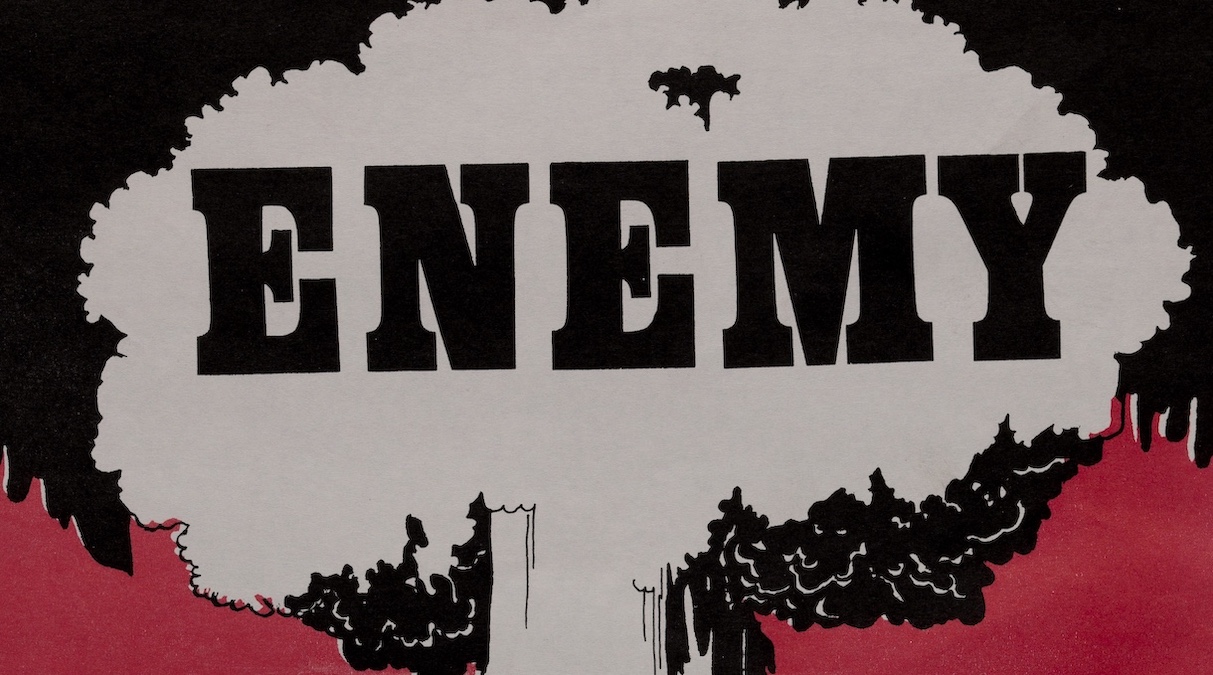
‘A House of Dynamite’ reminds us there are no good choices after a nuclear launch, writes Linda Pentz Gunter
Warning: This article contains spoilers in connection to the film, A House of Dynamite. If you have not seen the film, you are advised to read no further (and to watch the film).
Upon the abrupt ending of Kathryn Bigelow’s new drama, A House of Dynamite, the three bros in the row in front of us at the cinema all exclaimed in unison, “Whaaaat??” They had expected the film to have an ending; a resolution; a big bang for their fourteen bucks. “Congratulations” I remember uttering under my breath, “you just missed the entire point of the movie.”
A House of Dynamite is not about seeing things blow up. It is about realizing that once things are about to blow up, there is no right decision anyone can make, not even the President of the United States. (In case you haven’t seen the film, an omission you should immediately remedy, it features three versions of the same 18-minute span during which US military, officials and the US president must respond to a single nuclear missile headed for Chicago.)

The editorial pages of the Washington Post, which have become a compliant mouthpiece for the paper’s owner, Trump-supporting billionaire Jeff Bezos, couldn’t wait to nitpick at the film, desperate to find “inaccuracies.” The US president, they complained, played by Idris Elba, would not have been “alone on Marine One with one military aide” when faced with deciding what to do about the missile.
Really? Chicago is about to be obliterated and this is what niggled at them? Doubtless the scene was done this way for dramatic effect. Their other gripe was that the greeting between the president and his deputy national security advisor was too formal. Perhaps the Post had to cling to these trivial pursuits because when it comes to the things of substance in the film, almost everyone familiar with how such a scenario would play out has called many of the depictions in it by and large chillingly accurate.
All of this was simply the Post’s way of navigating toward the central thesis of its editorial — entitled How to live in our nuclear ‘House of Dynamite — that “only deterrence, not disarmament, can actually keep the peace” and that “Mutually assured destruction works.” Houston, we’ve had a problem!
Read MoreUS conducts its ICBM test

Although not carrying a nuclear warhead, the test is still provocative, say Defuse Nuclear War and Tri-Valley CAREs
In the early morning hours of November 5th, Vandenberg Space Force Base launched a Minuteman III missile, the current intercontinental ballistic missile (ICBM) ground-based nuclear warhead delivery system in roughly 400 underground silos across five states that would target US adversaries in a full-scale nuclear war.
This ICBM test, which landed roughly 30 minutes later at Kwajalein Atoll in the Marshall Islands, is one of several that occur at Vandenburg every year — as they have for many decades. According to the Space Force Press Release, today’s test “validates” the “reliability, operational readiness, and accuracy of the ICBM system.” While these tests are launched without the nuclear warhead, the purpose is to practice nuclear war fighting and these tests are just as provocative to US adversaries as their nuclear-capable missile tests are to us.
This launch has an increased gravitas, as it comes hardly a week after the President used his social media platform to make a confusingly provocative announcement that, “Because of other countries’ testing programs, I have instructed the Department of War to start testing our nuclear weapons on an equal basis.”

Exactly what was meant by the President’s vague statement has been debated in the days since. The President could not have been referencing other countries conducting explosive nuclear tests, because no nation except North Korea has conducted an explosive nuclear test this century.
The reference to “equal basis” with other “countries testing programs” has been thought to be in reference to nuclear weapon delivery system tests, which have been conducted by both Russia and China. But as today’s launch displays, these delivery system tests are nothing new, and the United States has long tested all of the delivery vehicles in its triad, including today’s ICBM test.
If the US were to resume explosive nuclear testing, Russia and others have already signaled they will follow. This reckless move would break a 30-year taboo that has kept the world safer. If the US resumes testing, it won’t just poison the air: it could destroy decades of progress toward preventing nuclear war.
Read MoreTrump threatens to resume nuclear testing
But does that word (testing) mean what he thinks it means?
By Linda Pentz Gunter
Editor’s Note: The Department of Energy has since clarified that there will be no nuclear explosions of actual nuclear weapons and that it is “systems” not weapons that the US will be testing. Nevertheless, the original social media posting by Trump once more raised the specter of another insane nuclear arms race, arguably one we are already in.
US President Donald Trump says the US will start testing nuclear weapons again, a statement that has raised alarm in the peace movement and in nations across the world. According to news reports, Trump told reporters on Air Force One that “We’ve halted many years ago, but with others doing testing I think it’s appropriate to do so.”
Which other countries he is referring to — and exactly what kind of testing — remain opaque since none of the major nuclear weapon states have tested atomic weapons since the 1990s. However, both Russia and the United States have continued to test nuclear missile delivery systems. Russia also recently tested a nuclear-capable torpedo and cruise missile. However, none of these activities constitute actual nuclear weapons testing.
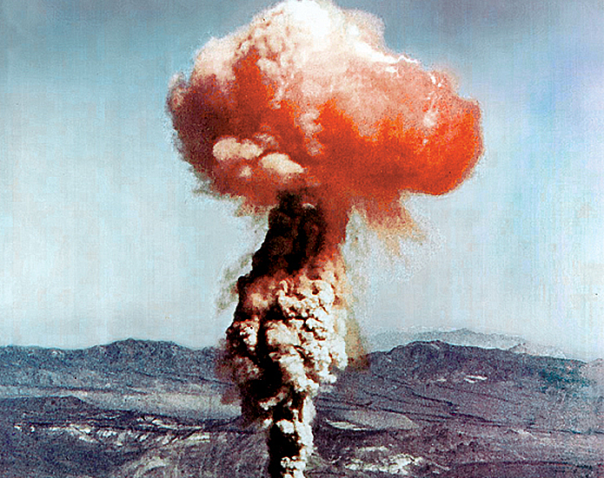
Nevertheless, Trump’s pronouncements prompted headlines around the world, raising concerns of further global destabilization. “If the US restarts testing its nuclear weapons, this will accelerate a new nuclear arms race,” Campaign for Nuclear Disarmament general secretary Sophie Bolt, told the Morning Star.
“I think a decision to resume nuclear testing would be extremely dangerous and would do more to benefit our adversaries than the United States,” Corey Hinderstein, vice president for studies at the Carnegie Endowment for Nuclear Peace, said on National Public Radio.
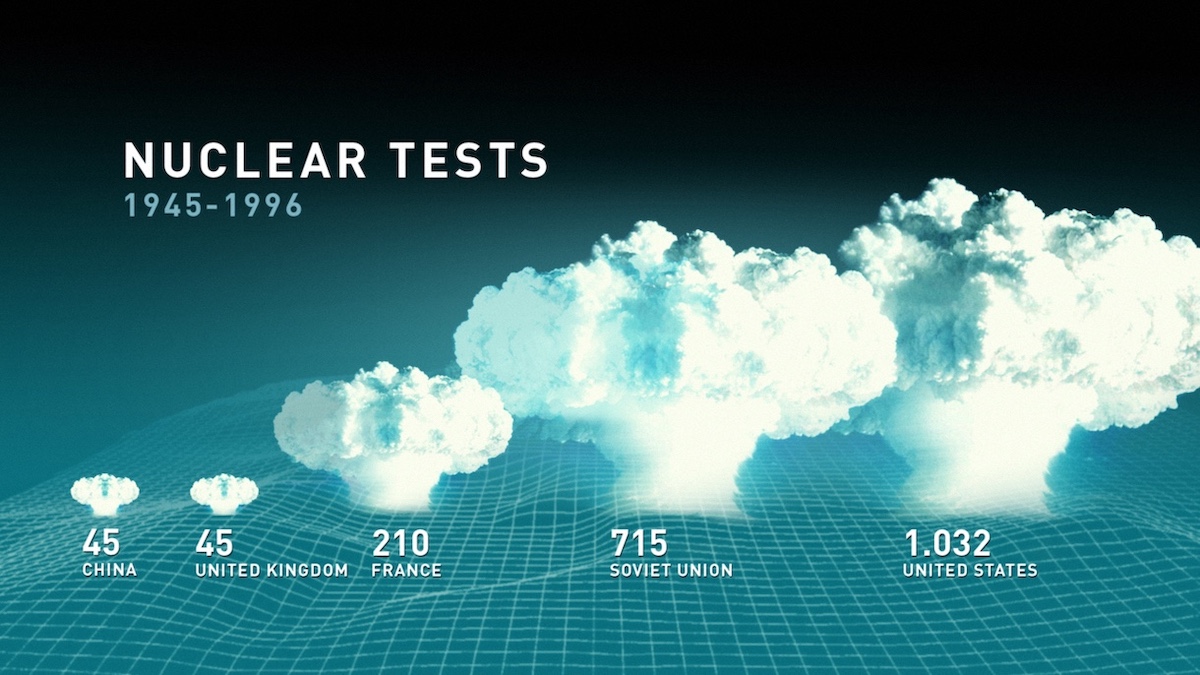
Russia last tested nuclear weapons in 1990, China in 1996 and India and Pakistan in 1998. Britain halted in 1991 and France in 1996. Only North Korea has tested since then, in 2017.
“Previous nuclear testing has left a catastrophic legacy of harm across the planet and caused devastating health impacts — cancer, birth defects, displacement, trauma — and poisoned land and water for generations,” said the International Campaign to Abolish Nuclear Weapons in a statement. ICAN won the Nobel Peace Prize in 2017. “The world has seen enough suffering caused by nuclear explosions and repeating those crimes would be indefensible.”
Read MoreThree women who speak for peace
Danaka Katovich interviewed three elders of the anti-nuclear movement about the still present threat of nuclear war
Dear young people who have never experienced war, ‘Wars begin covertly. If you sense it coming, it may be too late.’”—Takato Michishita, survivor of the bombing of Nagasaki.
On a rainy Saturday afternoon in the Catskill Mountains where New Yorkers went for the summer to escape the city heat, Alice Slater’s mother took her to go see a movie in town. It was late summer in 1945, and the second World War had just ended. Alice remembers parading around the Catskills town a few weeks earlier as everyone celebrated the end of the war. When I asked her when she first became aware of nuclear weapons, the first thing she thought to tell me was about her trip to the theater with her mom. Instead of trailers before the movies, they used to show news reels. The mushroom cloud over Hiroshima projected across the screen, and Alice asked her mom, “What is that?”
“That’s a wonderful new weapon, and now all the boys would come home,” her mom answered.
Between what they showed on the screen and what her mom had told her, at that moment Alice had no real idea what a nuclear bomb was, or what it did to the people it was used on. It was only a mushroom cloud, and the mushroom cloud meant the war was over.

Seventeen years later, Alice was a young mom who had moved to the suburbs of New York City. Her husband was working for CBS, and one day he didn’t come home—he had to stay at work to deal with breaking news for a handful of days. The world had just found out that the Soviet Union, bringing us to the height of the Cold War between Washinton and Moscow, put nukes just 90 miles off the coast of the United States in Cuba.
Read MoreRoll up, roll up for your free plutonium

Trump is preparing a dangerous giveaway to struggling commercial nuclear startups, writes Linda Pentz Gunter
Imagine you are a commercial nuclear reactor startup company but you just can’t quite start up because there’s one little problem. Your “new” reactor design needs a special kind of fuel. And that fuel requires a particular ingredient: plutonium.
Plutonium is the trigger component of a nuclear bomb. The countries that developed nuclear weapons — as well as those that have reprocessed irradiated reactor fuel in order to separate the plutonium from uranium — have massive surplus piles of plutonium left over, an ever-present security threat.
Now imagine that a former board member of one of those struggling startup companies, Oklo, is Chris Wright, the current US Secretary of Energy in the Trump government. Lo and behold, all of a sudden, that same carnival barker who passes for a US president is offering your former company plutonium for free from a stockpile of close to 20 metric tons or more.
The White House has announced that it will begin revealing its lucky free plutonium recipients on December 31 based on applications received by the US Department of Energy by November 21, according to Reuters. The news agency put the plutonium surplus amount at 19.7 metric tons, although the Trump administration has suggested it has 25 tons to spare.

That amount, according to a letter sent to the Trump administration by one senator — Ed Markey — and two representatives— Don Beyer, John Garamendi — all Democrats — is enough for at least 2,000 nuclear bombs.
Dishing out plutonium “to private industry for commercial energy use,” the trio wrote in their September 10 letter, “goes against long-standing, bipartisan US nuclear security policy. It raises serious weapons proliferation concerns, makes little economic sense, and may adversely affect the nation’s defense posture.”
Read MoreFurious French fairies challenge nuclear plans

Frogtifa is just catching on in Portland, but French protesters have used street theatre for years. This summer’s anti-nuclear actions were no exception, reports Reseau sortir du nucléaire
Editor’s note: In her forthcoming book — No To Nuclear. Why Nuclear Power Destroys Lives, Derails Climate Progress and Provokes War — to be published by Pluto Press next March, Linda Pentz Gunter describes the creative resistance of French protesters, including the anti-nuclear movement. “The French anti-nuclear movement,” she writes, “has engaged in protests that deliver considerable numbers, abundant creativity — and sometimes a lot of useful tractors as well. France also has a long theatrical tradition, and French anti-nuclear activists have invariably embraced that as well. They understand that street theater is an attention-getter. They also know it makes protesting a lot more fun.” The chapter features the “goat ZAD” mobilized by the Piscine Nucléaire Stop collective. Since then, they have “escalated,” as sortir du nucléaire describes in this article.
From July 18 to 20, 2025, in La Hague, “HARO” made its grand debut: three days of meetings and mobilization around nuclear waste and local communities. Nearly a thousand people from the Cotentin region and elsewhere responded to the call of the Piscine Nucléaire Stop collective to participate in round tables, workshops, concerts, screenings, hikes, and, of course, the big demonstration by the Fées furieuses (Furious Fairies). The event took place in a festive atmosphere of determination.

The name of the event set the tone: derived from Norman customary law, the interjection “Haro” was used to demand justice, even in the face of powerful oppressors. In the Cotentin Peninsula, it is Orano [owner of the La Hague reprocessing facility] that is attempting to impose its Aval du Futur mega-project.
The event, located on the La Hague plateau in a field lent by local farmers committed to the anti-nuclear cause, offered a breathtaking view of the Orano plant, when the fog didn’t interfere with the festivities. The typical La Hague weather did not discourage participants who had come from all over France to take part in meetings against waste, nuclear power, and the nuclear chain, with an intersectional approach.
Read More Beyond Nuclear International