 Beyond Nuclear International
After the meltdown
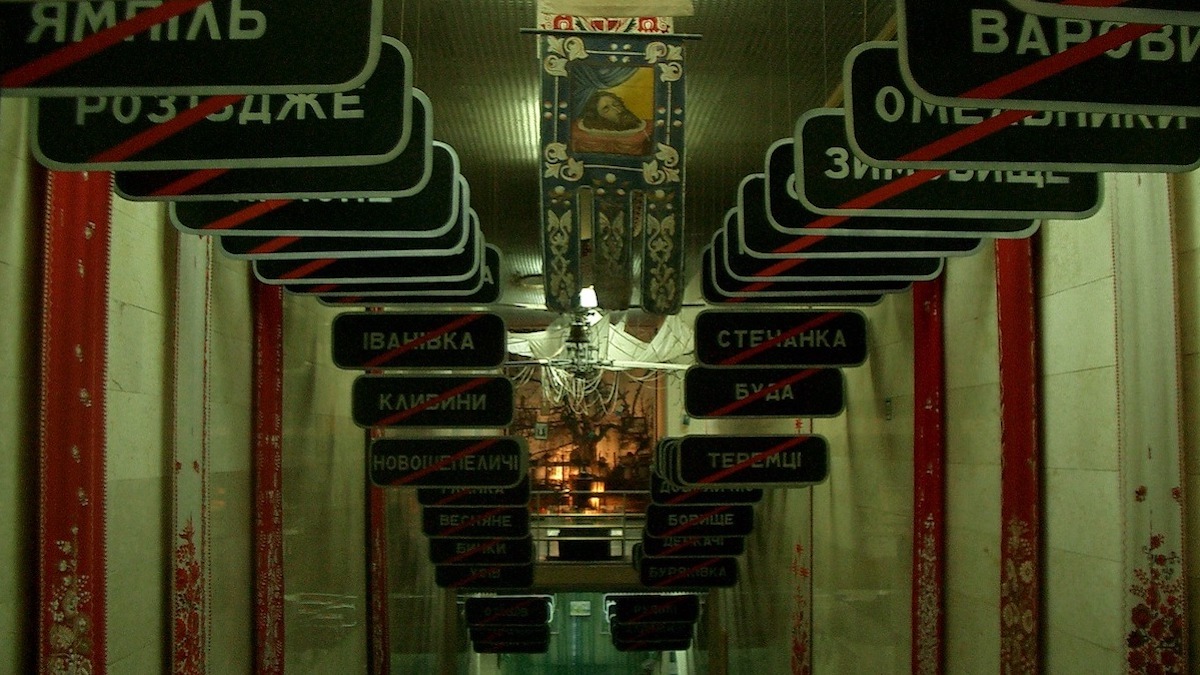
Reactors in a war zone and potential health consequences
By Cindy Folkers, Beyond Nuclear (US) and Dr Ian Fairlie, CND (UK)
Nuclear power plants are vulnerable to meltdown at any time, but they are especially vulnerable during wars, such as we are seeing in Ukraine, as evidenced by Russian attacks on the six-reactor Zaporizhizhia nuclear power facility and on the closed nuclear facility at Chornobyl.
Media articles often dwell on the conditions that could spark a meltdown, but attention should also be paid to the possible human health consequences. We answer some questions about the short-term and long-term consequences for human health of a radiological disaster at a nuclear power plant.
What happens at a reactor during a major nuclear power disaster?
The main dangers would arise at the reactor and at its irradiated fuel pool. Loss of power can result in both of these draining down, as their water contents leaked or boiled away. This would expose highly radioactive fuel rods, resulting in meltdowns and explosions as occurred at Fukushima in Japan in 2011, where large amounts of radioactivity were released into the environment.
Explosions, as happened at both Chornobyl and Fukushima, eject radioactive nuclides high into the atmosphere, so that they travel long distances downwind via weather patterns, such as winds and rain. The result is radioactive fallout over large areas, as occurred at Chornobyl and Fukushima. The map below, from the European Environment Agency, shows that the dispersion and deposition of caesium-137 (Cs-137) from the Chornobyl catastrophe in Ukraine in 1986 was far-reaching — covering 40% of the land area of Europe, as it followed weather patterns over the 10-day period of the accident.

Contrary to what many people think, the radioactive fallout from Chornobyl reached the UK (2,500 km away) in 1986 as also shown in the above map.
Read MoreNuclear dependence
Europe must cut off Russian nuclear supply routes
From Ecodefense, Russia
Europe needs a plan in place for cutting ties with Russia’s nuclear giant Rosatom, says 2021 Right Livelihood Award winner and co-chairman of Ecodefense Vladimir Slivyak.
With the European Union tightening its sanctions against Russia, banning Russian imports of oil, gas, and coal has emerged as one powerful tool to starve the Kremlin’s war machine of funding it needs to continue its brutal aggression in Ukraine.
But one other major source of Russia’s revenue in Europe has largely remained unnoticed: Russia’s supplies of nuclear fuel and services to European nuclear power plants.
Seeking to close this gap in Europe’s concerted action against the war in Ukraine and to provide a comprehensive picture of the union’s reliance on Russian nuclear technology, environmentalists Patricia Lorenz, of Friends of the Earth Europe, and Vladimir Slivyak, a 2021 Right Livelihood Award laureate and co-chairman of the Russian environmental group Ecodefense, jointly presented over Zoom Russian Grip on EU Nuclear Power – an overview of Russia’s businesses and supply chains serving the European nuclear market.
The report comes on the heels of the European Parliament’s resolution demanding a full embargo on Russian nuclear fuel as well as oil, gas, and coal, and as Moscow’s war reveals the terrifyingly irresponsible actions at the hands of Russian troops at or near the sites of Ukraine’s nuclear power plants.
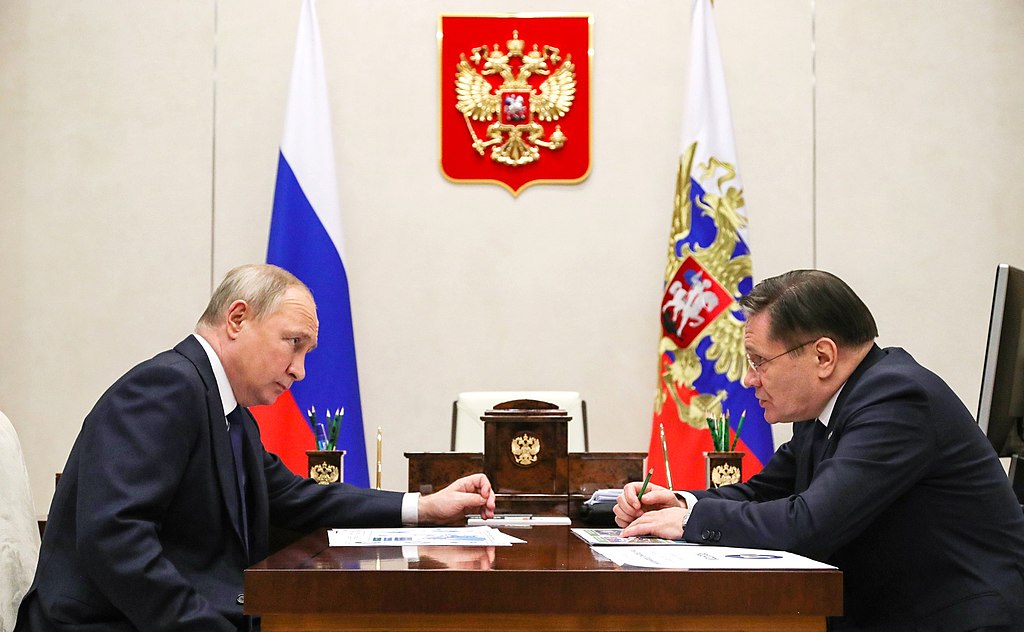
Through its uranium-producing mines, the fuel manufacturing subsidiary TVEL, and a number of other enterprises – including the German firm NUKEM and the Czech-based Škoda JS – as well as ties with France’s Framatome, Russia’s nuclear giant Rosatom earns billions supplying uranium, fuel assemblies, and maintenance, storage and transport services to nuclear companies and power plants in European countries. This includes fuel deliveries to Soviet-built nuclear power plants in Ukraine.
Read MoreTritium isn’t harmless
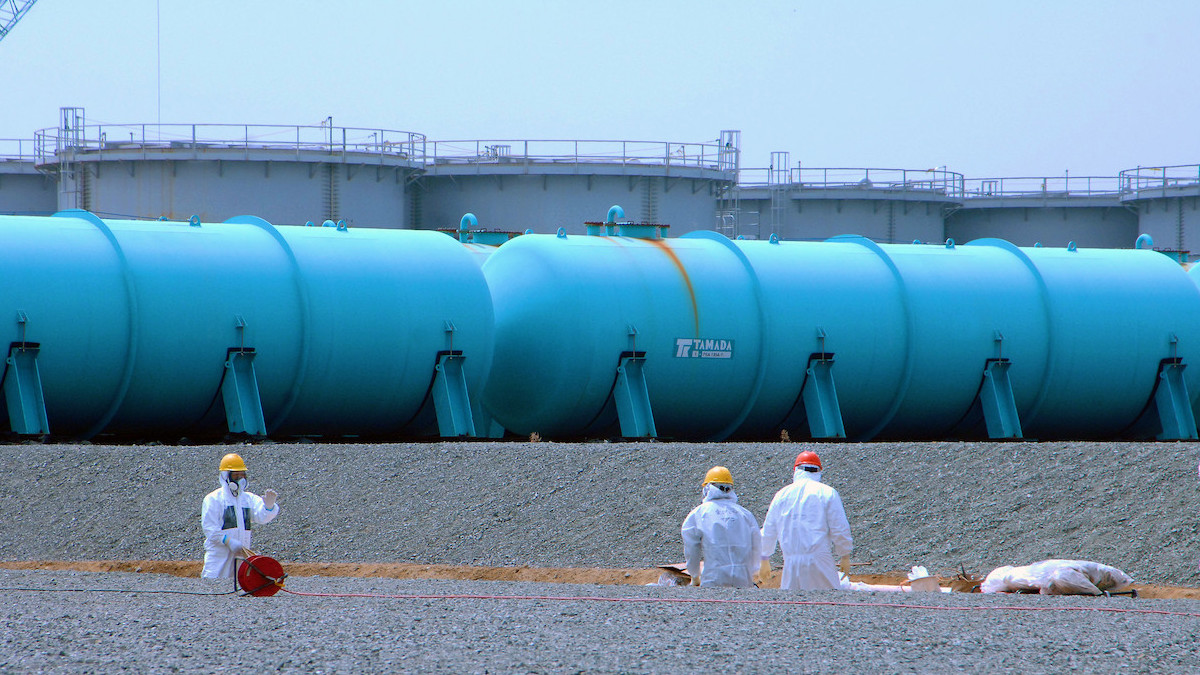
Japan plan to dump tritiated water into the ocean comes with big risks
On May 18, Japan’s Nuclear Regulation Authority gave its initial approval for Tokyo Electric Power to release radioactive water from the destroyed Fukushima nuclear power plant into the Pacific Ocean, claiming that there are no safety concerns. But science disagrees with this conclusion. In a September 2019 blog entry, now updated by the author, Dr. Ian Fairlie looks at the implications of dumping largely tritiated water into the sea and whether there are any viable alternatives.
By Ian Fairlie
At the present time, over a million tonnes of tritium-contaminated water are being held in about a thousand tanks at the site of the Fukushima Daichi nuclear power station in Japan. This is being added to at the rate of ~300 tonnes a day from the water being pumped to keep cool the melted nuclear fuels from the three destroyed reactors at Fukushima. Therefore new tanks are having to be built each week to cope with the influx.
These problems constitute a sharp reminder to the world’s media that the nuclear disaster at Fukushima did not end in 2011 and is continuing with no end in sight.
Recently TEPCO / Japanese Government have been proposing to dilute, then dump, some or all of these tritium-contaminated waters from Fukushima into the sea off the coast of Japan. This has been opposed by Japanese fishermen and environment groups.

There has been quite a media debate, especially in Japan, about the merits and demerits of dumping tritium into the sea.
Read MorePeace action for Mother’s Day
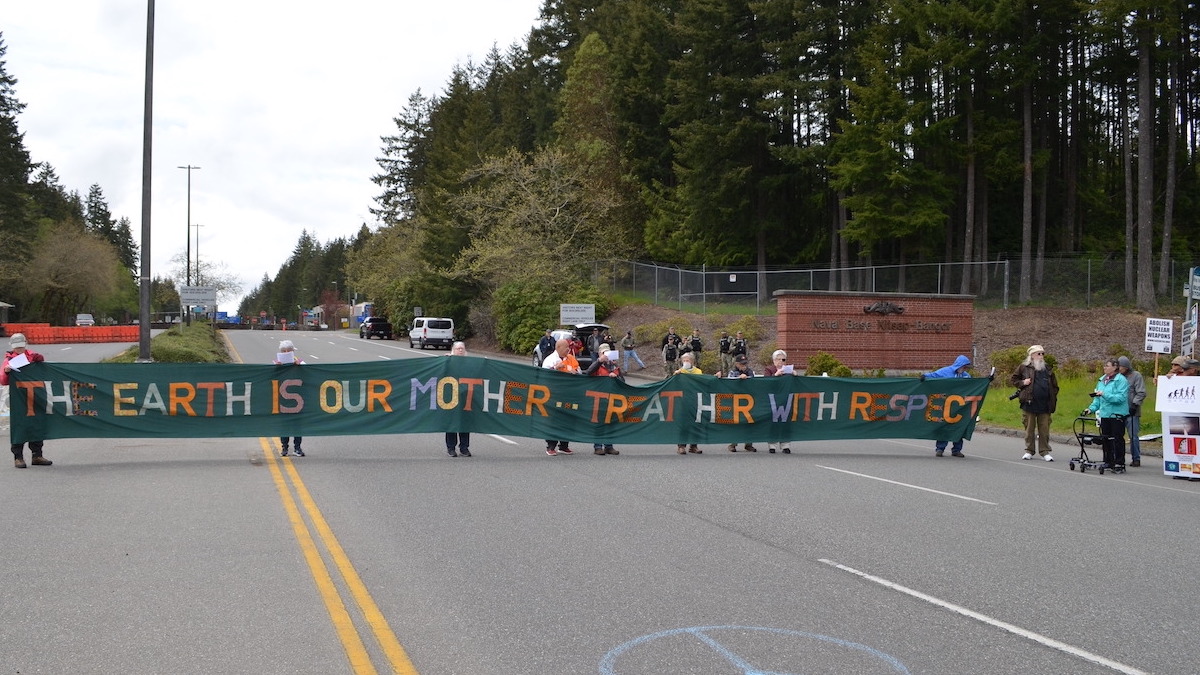
Nine people cited in a demonstration at Trident nuclear submarine base at Bangor, WA
By Leonard Eiger and Glen Milner
Over 50 people were present on May 7 at the demonstration against Trident nuclear weapons at the Bangor submarine base. Nine demonstrators blocked the main highway entrance into the base for about 10 minutes and were cited by the Washington State Patrol.
At around 2:15 pm, on the day before the May 8, 2022 celebration of Mother’s Day, the nine demonstrators entered the highway carrying a large banner stating, “THE EARTH IS OUR MOTHER—TREAT HER WITH RESPECT” and blocked all incoming traffic at the Main Gate at Naval Base Kitsap-Bangor. They were removed from the highway by the Washington State Patrol.
All nine demonstrators were cited for violating RCW 46.61.250, Pedestrians on roadways, and released at the scene.
Those cited by the Washington State Patrol: Brenda McMillan and Caroline Wildflower of Port Townsend; Margarita Munoz of Seattle; Sue Ablao of Bremerton; Carolee Flaten of Hansville; Rev. Gilberto Perez of Bainbridge Island; Ramon Nacanaynay of Shoreline; Michael “Firefly” Siptroth of Belfair; and Tom Rogers of Poulsbo, WA.
Mother’s Day in the United States was first suggested in 1872 by Julia Ward Howe as a day dedicated to peace. Howe saw the effects on both sides of the Civil War and realized destruction from warfare goes beyond the killing of soldiers in battle.
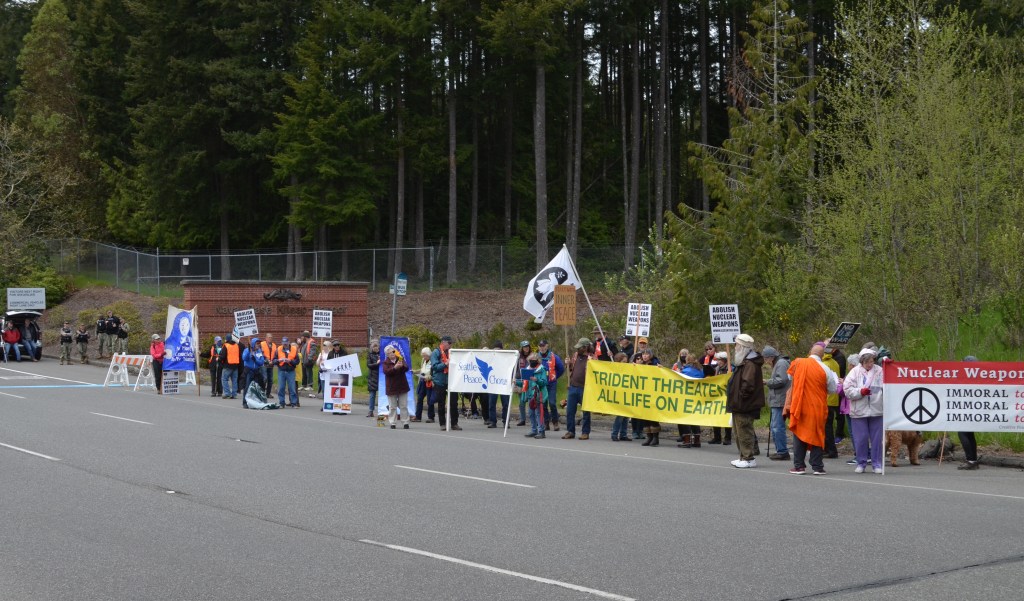
Earlier, on Saturday morning, a tribute was held for Robert C. Aldridge, peacemaker and guiding inspiration for Ground Zero and Trident resistance who passed away on April 29. Statements for Robert Aldridge were read from Shelley Douglass and Jim Douglass.
Shelley Douglass stated, “This campaign began with a Trident designer, and a conscientious family making a decision to resist, together. That’s why, from the very beginning, this campaign has seen Trident workers as potential partners in the work. It’s why we leafleted for so long, why we try to build relationships and community across fences and lines. It’s why so many people who once disagreed have become part of the community.”
Read MoreUS atomic bombs back in Britain?
Move puts UK on front line in a NATO/Russia war
By Kate Hudson
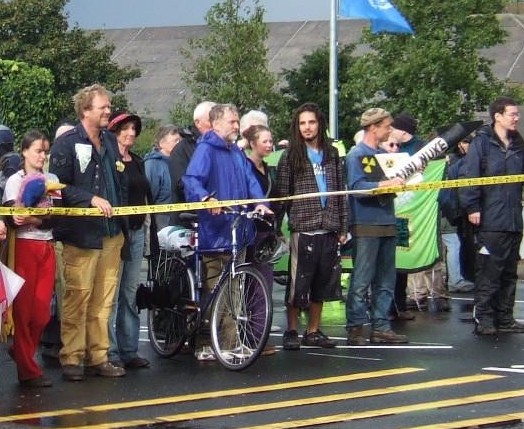
News that US nuclear weapons may already be back in Britain, at RAF/USAF Lakenheath in East Anglia, makes Britain once again a forward nuclear base for the US in Europe.
110 US/NATO free-fall B61 nuclear bombs were removed from Lakenheath in 2008, following sustained protest at the base by CND and the Lakenheath Action Group. US nuclear bombs had been located there since 1954.
Their return – assigned to NATO – will increase global tensions and put Britain on the front line in a NATO/Russia war. B61s have continued to be sited in five other countries across Europe – Belgium, Germany, the Netherlands, Italy and Turkey – in spite of strong opposition within some of the ‘host’ countries.
Now the UK has been added to the US’s list of European sites in line for infrastructure investment for storing ‘special weapons within secure sites and facilities’. Special weapons mean nuclear weapons and this is happening in the context of increasing tension with Russia and the current escalating war.
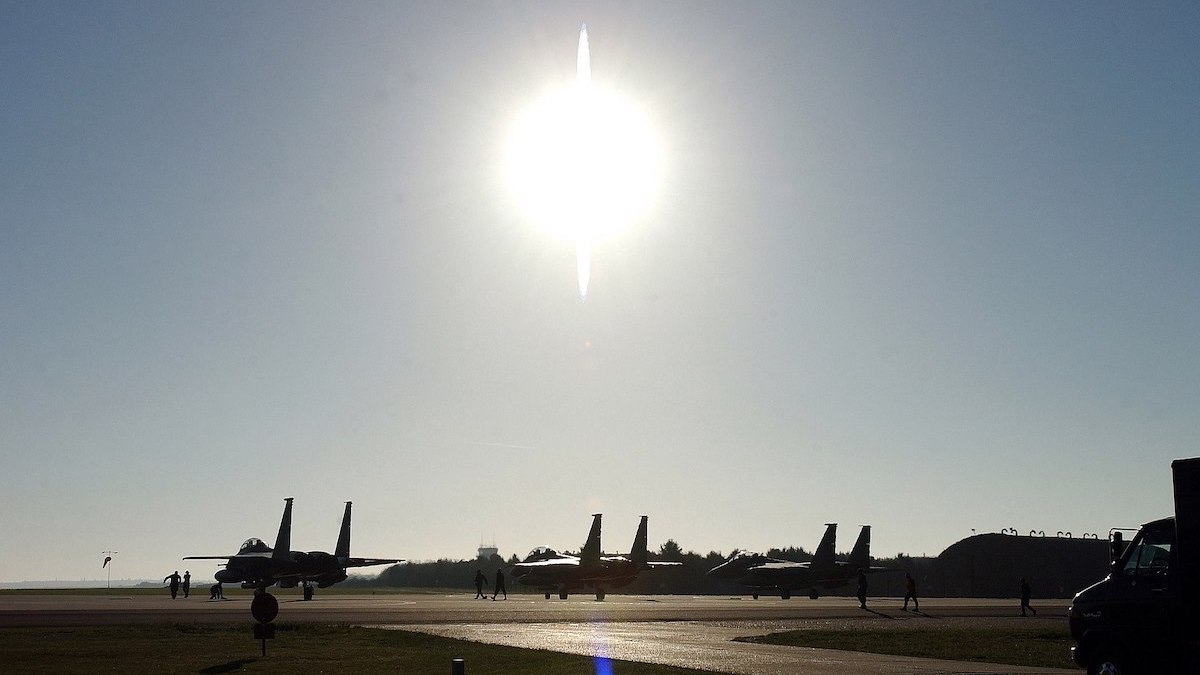
Since the weapons were removed in 2008, the empty storage vaults for the weapons have been on ‘caretaker’ status, but reports of nuclear exercises at Lakenheath increase the likelihood that nuclear weapons are back, or on their way; the base currently hosts F-15E fighter-bombers with nuclear capability but these are being replaced by the new nuclear- capable F-35A Lightning. The first of these new fighter- bombers arrived in December 2021.
Within the next year US/NATO nuclear bases in Europe will also receive the new B61-12 guided nuclear bomb which is entering full-scale production in the US.
Read MoreDoomed
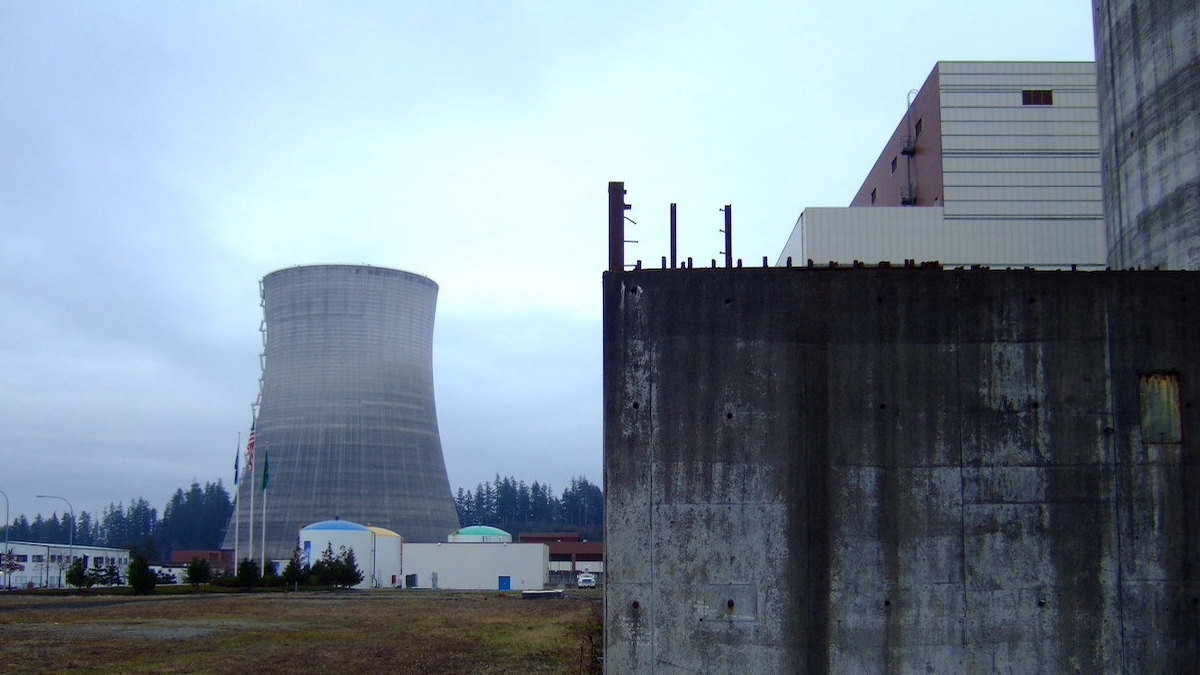
New nuclear won’t make the cut in Washington State
By Roger Lippman
It was 108 degrees in the shade in Seattle last June; the climate emergency now has the attention of the usually temperate Puget Sound area. The following December’s cold snap may also have to do with climate-related disruptions that climatologists tell us are weakening the polar vortex. As the crisis grows, it attracts the nuclear industry’s purveyors of false solutions, with a barrage of calls for further investment in nuclear power.
As I write, nuclear promoters are trying to sell a group of small municipal utilities, the Utah Associated Municipal Power Systems (UAMPS), on a “new, improved” nuclear technology, known as small modular nuclear reactors.
Supposedly the reactors will be mass produced, but first they must be proven in the field, at high startup cost. Who will want to be the first to put up money that can never be recovered in electricity sales? Predictably, the project has already struggled with delays, design changes, and escalating cost projections.
Of the initial subscribers, about 10 have reduced their commitments or pulled out altogether in the past year and a half. That just leaves the rubes, who have signed up for only a quarter of the project’s electrical output.
An effective approach to climate change requires the quickest and cheapest choices to reduce carbon emissions. Nuclear power, the slowest and most expensive, takes time and resources away from the available solutions, namely energy efficiency, solar, and wind power.

Furthermore, with rising sea levels and the wildfires that have already been a threat to the Hanford nuclear reservation in Eastern Washington, the climate crisis poses a threat to nuclear power itself.
Climate conditions simply do not lend themselves to slow, dangerous and expensive new nuclear technology, and yet the drumbeat goes on, and at our expense.
Read More Beyond Nuclear International