 Beyond Nuclear International
Telling the truth
Parade of false climate solutions betrays global south
Statement from Global Campaign to Demand Climate Justice
Organizations can sign on and endorse the below statement here.
As social movements and civil society organisations, we exist to uphold the centrality of life, people and planet, and fight until we win a better existence for all. It is our duty to tell the truth about the world we all share and the crises that engulf us. This is the truth about COP26.
Even before it began, COP26 was presented as a resounding success. Those of us who could find a way around the vaccine apartheid, “hostile environment”, constantly changing quarantine rules, challenges of visa processing, and exhorbitant prices which made the ‘most inclusive summit in history’ the most exclusionary ever, found ourselves locked out of the negotiations. Meanwhile the fossil fuel industry and other merchants of misery had a red carpet welcome, and made up the single largest delegation at COP26. We came to Glasgow and found ourselves in Davos, policed heavily while the criminals were feted.

For days we were force-fed long pronouncements, speeches and declarations from so-called world leaders in government and business, who descended in their private jets and broke the rules the rest of us were expected to comply with to tell us to applaud them. But being honest we must say these statements are delusions – a distraction from the truth, and a dangerous one at that. For the richest countries, the relationship between affirmation and action doesn’t exist. The ugly reality is that developed countries are all in favour of climate action — as long as they don’t have to do much of the work themselves.
Year after year we have tried to intervene as these negotiations drift further away from their purpose. The process, stacked as it is in favour of the powerful, has not led to binding commitments to keep temperatures below 1.5 degrees Celsius and the redistribution of resources to ensure a just transition, but instead to flexible and voluntary “contributions” misaligned with science and divorced from justice. Across three decades in this process we have witnessed polluters’ great escape, an historic shifting of burden from rich to poor, from those who created these injustices to those upon whom these injustices are forced. There may be some language in some texts that have been the smallest of victories but 26 consecutive COPs have in practice ignored the need to pay the outrageous historical debt owed to the global south by the global north.
Instead there is an endless parade of false solutions, empty promises and fake, opportunistic announcements empty in their content and dangerous in their implications. Marked by corporate capture, the very talks that are meant to foster global collaboration to address climate change have now become the main vehicle for corporate and government “greenwashing.”
Read MoreA symphony for Rachel Carson

At nearly 90, piano jazz legend, Marian McPartland, paid tribute in music to the famed environmentalist
By Linda Pentz Gunter
It’s always a joy to come across extraordinary women. Rachel Carson was certainly one; Marian McPartland, longtime host of the NPR program, Piano Jazz, another.
Who would have thought there was a connection between them? It was therefore another joy to discover that there very much was.
Aside from being a wonderfully talented jazz pianist, McPartland was also an environmentalist. And so, a few months before her 90th birthday, with her show still on the air, McPartland set down an improvised piece of piano music in tribute to Carson. (McPartland hosted Piano Jazz from 1978 until her retirement in 2011. She died in 2013 at 95. NPR retired the show in 2018.)
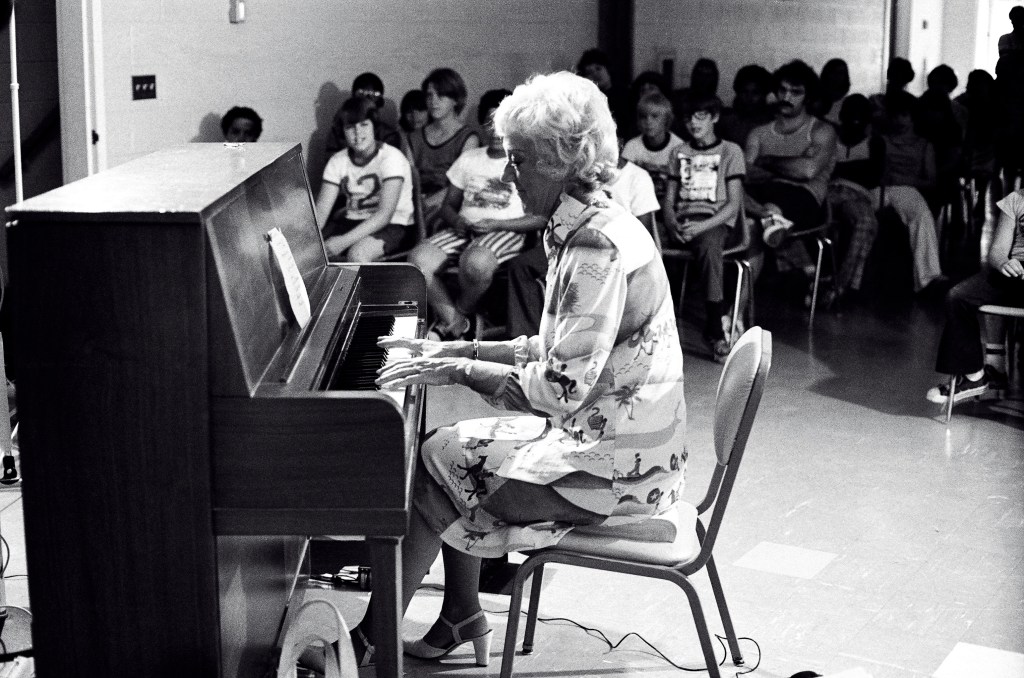
For McPartland, as for many of us, Silent Spring, Carson’s breakout 1962 masterpiece, was a work of seminal importance. And it was to honor Carson and that book that McPartland composed what became her symphony, A Portrait of Rachel Carson. The orchestration was arranged by New Zealand pianist, Alan Broadbent.
McPartland premiered the work on November 15, 2007 with the University of South Carolina Symphony Orchestra, herself on piano. At the time, she was enduring considerable medical challenges, and announced before the performance that “I can’t walk. I’m in miserable pain. But at the piano, I don’t feel a thing.”
Read MoreNuclear can’t deliver on climate
Nuclear energy cannot meaningfully contribute to a climate-neutral energy system say German scientists
By Ben Wealer et al., Scientists for Future
In light of the accelerating climate crisis, nuclear energy and its place in the future energy mix is being debated once again. Currently its share of global electricity generation is about 10 percent. Some countries, international organizations, private businesses and scientists accord nuclear energy some kind of role in the pursuit of climate neutrality and in ending the era of fossil fuels. The IPCC, too, includes nuclear energy in its scenarios.
On the other hand, the experience with commercial nuclear energy generation acquired over the past seven decades points to the significant technical, economic, and social risks involved. This paper reviews arguments in the areas of “technology and risks,” “economic viability,” ’timely availability,” and “compatibility with social-ecological transformation processes.”
Technology and risks: Catastrophes involving the release of radioactive material are always a real possibility, as illustrated by the major accidents in Three Mile Island, Chernobyl, and Fukushima. Also, since 1945, countless accidents have occurred wherever nuclear energy has been deployed. No significantly higher reliability is to be expected from the SMRs (“small modular reactors”) that are currently at the planning stage. Even modern mathematical techniques, such as probabilistic security analyses (PSAs), do not adequately reflect important factors, such as deficient security arrangements or rare natural disasters and thereby systematically underestimate the risks.
Moreover, there is the ever-present proliferation risk of weapon-grade, highly enriched uranium, and plutonium. Most spent fuel rods are stored in scarcely protected surface containers or other interim solutions, often outside proper containment structures. The safe storage of highly radioactive material, owing to a half-life of individual isotopes of over a million years, must be guaranteed for eons. Even if the risks involved for future generations cannot be authoritatively determined today, heavy burdens are undoubtedly externalized to the future.
Read MoreWhat happened at COP26?

And what next?
By Claire James
The short answers to these questions are simple: in the face of escalating climate breakdown, COP26 did little to shift our trajectory away from catastrophe, away from business-as-usual and towards curbing fossil fuel use. Rich countries have refused to step up and meet their obligations to those who have done the least to cause the climate crisis.
In the words of Greta Thunberg, more “blah, blah, blah”.
And as for what comes next, of course we go on fighting to keep the chance of staying beneath 1.5C alive.
The long version? After two weeks with a flurry of announcements, greenwash, struggles over seemingly minor details of text, and anger from civil society massed on the streets of Glasgow, it’s worth unpacking some of the details of what was really agreed, or not. How does the jargon translate into real world outcomes, literally of life and death? In these details we can see beneath the media spin and glossy announcements the brutal realities of power, money, and neocolonialism.
1.5C ‘on life support’
As the window of opportunity is closing to stay within 1.5C heating and avoid the worst climate catastrophe, where are we left after COP26?
Under the Paris climate deal, nations had to submit updated voluntary commitments to climate action (known as nationally determined contributions or NDCs) before the talks. Unsurprisingly, these are generally lacking in substance or urgency. Many lack clear delivery plans and delay meaningful change until after 2030. Climate Action Tracker’s useful analysis finds that even with all new pledges for 2030, we will still emit roughly twice as much in 2030 as required for 1.5C.
They estimate if all current pledges for emissions cuts by 2030 are met, this gives only a 50% chance of staying below 2.4C.

Of course 1.5C itself is no ‘safe level’. Many areas have already experienced devastating wildfires, floods, hurricanes and heatwaves at 1.1C. These, in combination with longer-term impacts such as drought, disproportionately affect countries who have done least to cause the problem and have fewest resources to deal with them.
Read MoreExplosive renewable energy growth in US
Renewables are 87.6% of new U.S. generating capacity
By Ken Bossong
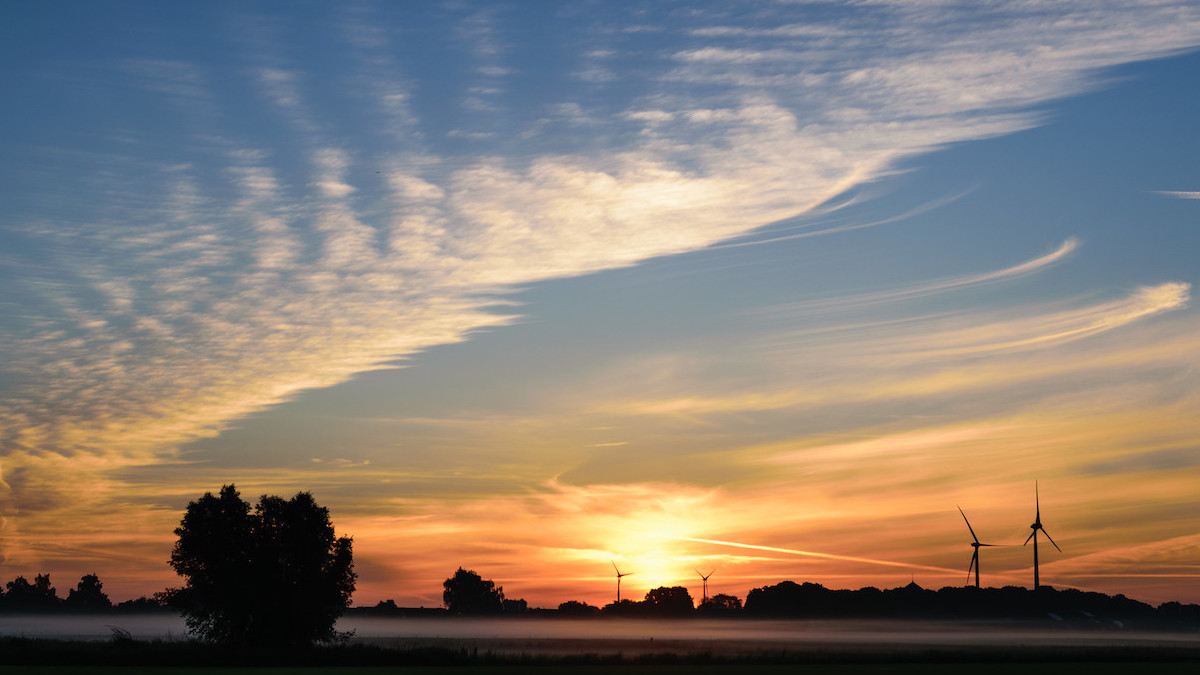
According to a review by the SUN DAY Campaign of data recently released by the Federal Energy Regulatory Commission (FERC), solar, wind, and other renewable energy sources (i.e., biomass, geothermal, hydropower) dominated new U.S. electrical generating capacity additions during the first three-quarters of 2021. [1]
FERC’s latest monthly “Energy Infrastructure Update” report (with data through September 30, 2021) reveals that renewable energy sources accounted for 87.61% — or 16,665 megawatts (MW) — of the 19,022 MW of new capacity added during the first nine months of the year. Solar led the capacity additions with 8,410 MW, followed closely by wind (8,188 MW). Compared to the first nine months of 2020, new solar capacity additions are 38.28% higher while those from wind are 34.19% higher. There were also small additions in 2021 by hydropower (28 MW), geothermal (25 MW), and biomass (14 MW).
Most of the balance was provided by natural gas (2,327 MW) coupled with very small contributions from oil (19 MW) and coal (11 MW).
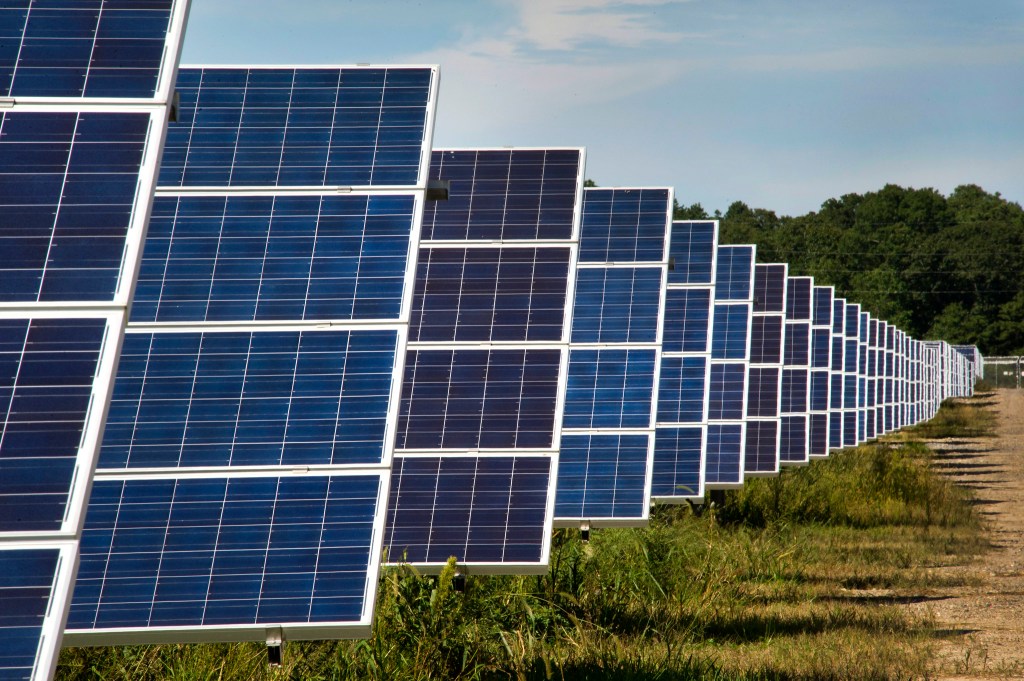
Renewables now provide more than a quarter (25.39%) of total U.S. available installed generating capacity — a share significantly greater than that of coal (18.88%) and more than three times that of nuclear power (8.32%). [1] By comparison, a year ago, renewables’ share was only 23.28%. Five years ago, it was 18.46% and a decade earlier it was 14.11%.
That growth is almost entirely attributable to a nearly three-fold increase in wind’s share of installed generating capacity and a 37-fold increase in solar’s share. Wind is now more than a tenth (10.52%) of the nation’s generating capacity (up from 3.79% in September 2011) while utility-scale solar has surpassed five percent (5.14%) — up from 0.14% in September 2011 … and that does not include distributed (e.g., rooftop) solar. [2]
Read MoreOne chance

That’s all we have to get Vermont Yankee cleanup right
By Raymond Shadis
COVID-19 has reduced the hustle and bustle, letting us think about what is important — or, more correctly, reset our priorities. This is no small thing; in fact, a culture-quake may be necessary before we can adopt the entirely new relationship with nature that must happen if we are to stave off climate change.
To go from environmental thinking globally to acting locally, let’s consider that one of Vermont’s natural, historical treasures — 130 acres of Connecticut River waterfront in the little town of Vernon — is being scarified, dug up, and heaped with demolition debris.
The demolition of Vermont Yankee is being done on schedule and on budget by a subsidiary of NorthStar, a demolition company noted for speed and precision in taking down large buildings, two recently in midtown Manhattan.

But NorthStar and most stakeholders seem to forget that decommissioning is not primarily about how fast and how cheaply you can tear down buildings.
It is about the safe, careful, detailed removal of enough carcinogenic, mutagenic, and teratogenic radioactive contaminants to the point that agreed-upon residual radiation levels will allow open, worry-free access to the site.
The way the U.S. Nuclear Regulatory Commission puts it in its federal regulations (posted at nrc.gov), decommissioning is “the safe removal of a facility from service and reduction of residual radioactivity to a level that permits termination of the NRC license.”
“As one of the conditions for an operating license, the NRC requires the licensee to decommission the nuclear plant after it ceases power operations,” the regulations say. “This requirement is based on the need to reduce the amount of radioactive material at the site to ensure public health and safety as well as protection of the environment.”
Read More Beyond Nuclear International