 Beyond Nuclear International
Renewable not radioactive
Our shared energy future should serve human needs
Joint organizational statement released prior to the COP26 Climate Summit
The latest Intergovernmental Panel on Climate Change (IPCC) report highlights the growing climate crisis and the energy challenges we face. We need an urgent global shift to clean and renewable energy and national governments need to actively facilitate and manage the transition from reliance on fossil fuels and nuclear to renewable energy.
This global transition to clean, safe, nature-friendly renewable energy is already underway and is generating employment and opportunity. Growing this based on principles of environmental and social justice, equity, diversity, resilience and the rights and interests of communities and our environment will provide skilled and sustainable jobs, economic activity and reliable electricity access around the world.
Every dollar invested in nuclear power makes the climate crisis worse by diverting investment from renewable energy technology. Nuclear is increasingly unsafe and unreliable in a warming world with more frequent shutdowns and an inability to operate safely under changed climate conditions.

From nuclear weapons tests to radioactive waste facilities the nuclear industry has a history of displacing, disrupting and damaging the health and rights of workers and communities. Indigenous peoples face a disproportionate burden and risk from the nuclear industry as mining and waste storage primarily affects their lands and they are often not consulted, compensated or respected.
Read MoreNot making sense

Yes, Australia is buying a fleet of nuclear submarines. But nuclear-powered electricity must not come next
By Ian Lowe, Griffith University
The Australian federal government has announced a landmark defence pact with the United States and United Kingdom that involves this nation acquiring nuclear-powered submarines. The question of nuclear submarines in Australia has been bubbling along for some time – and with it, whether we should also develop a nuclear energy sector.
Prime Minister Scott Morrison insisted the defence deal did not mean Australia would look to develop a civil nuclear capability.
But there is strong support within Coalition ranks for a homegrown nuclear power industry. And the Minerals Council of Australia on Thursday quickly pointed out the “opportunity” the submarine announcement created for expanding nuclear technology in Australia.

The submarine announcement is sure to trigger a new round of debate on whether nuclear energy is right for Australia. But let’s be clear: the technology makes no sense for Australia, economically or politically, and would not be a timely response to climate change.
A twin discussion
The topics of nuclear submarines and nuclear energy are often discussed in tandem.
The technology is similar: the energy source for a nuclear submarine is basically a miniature version of that for a power station. And a similar supply chain is needed for mining and processing uranium, fuelling the reactor and managing waste. That also means both technologies require similar skills and regulatory frameworks.
The Minerals Council of Australia chief executive Tania Constable on Thursday responded to the submarine announcement, pointing out the apparent synergies with nuclear power:
Read MoreThis is an incredible opportunity for Australia’s economy – not only will we develop the skills and infrastructure to support this naval technology, but it connects us to the growing global nuclear power industry and its supply chains.
Now that Australia is acquiring nuclear submarines which use small reactors, there is no reason why Australia should not be considering [small modular reactors] for civilian use.
Diné groups seek justice
Appeal ruled “admissible” by Inter-American Commission on Human Rights
By Valerie Rangel
History of the Diné Territory
Both the Crown Point and Church Rock communities lie within the area of northwestern New Mexico traditionally used and occupied by the Diné. According to Navajo cosmology, the Diné emerged from a series of worlds into the current world. When First Man and First Woman emerged, they formed the four sacred mountains with soil from the previous world. This area is considered the cradle of Diné civilization and the birthplace of several important Diné deities.
Water is Life
Water is the lifeblood of the planet. Access to a clean environment is vital to the continuation of language and culture for Indigenous communities. The Diné have distinct cultural and spiritual ties to the land, and the environment provides subsistence within their traditional homeland. The Diné worldview is that all things are interrelated and interdependent; to exploit or destroy any aspect of creation is to harm one’s self and the balance and harmony of Hózhó.
Environmental Injustice
The Navajo Nation hosts 520 abandoned uranium mines and three uranium mills that are Superfund sites. These sites have contaminated billions of gallons of groundwater and countless acres of land, and are the cause of significant illnesses and death in the indigenous communities located nearby.
On July 16, 1979, the largest nuclear accident in U.S. history occurred at the United Nuclear Corporation (UNC) mill site, when the earthen dam to the pond holding UNC Mill uranium tailings was breached. The spill released over 1,000 tons of radioactive mill waste and 93 million gallons of acidic radioactive tailings solution into the Puerco River and traveled downstream through the Navajo Nation to the community of Sanders, AZ. The negative consequences of this spill are still being felt today by residents in the immediate vicinity and in surrounding communities.
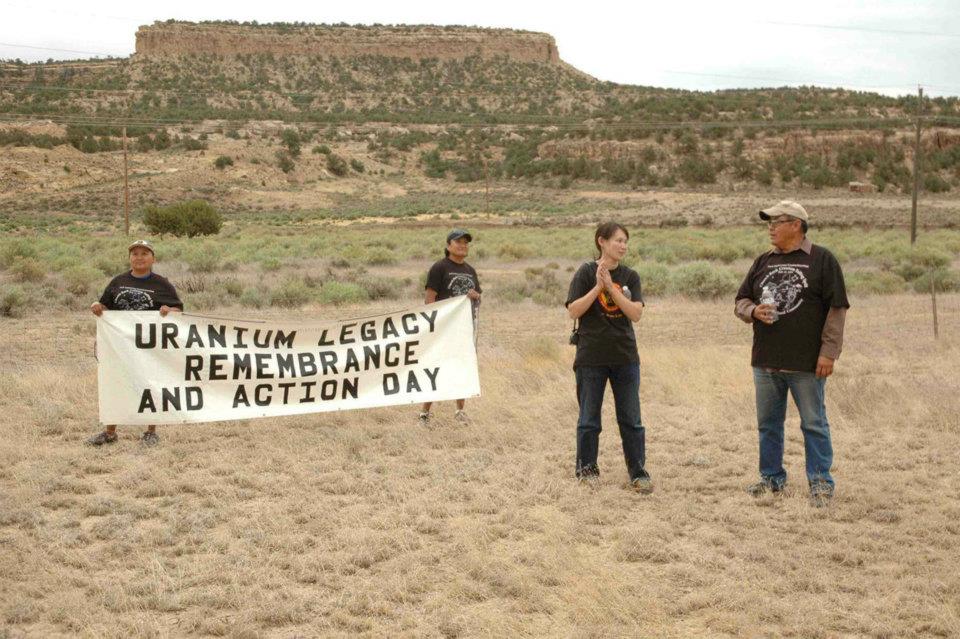
Despite the ongoing public health and environmental crises that have resulted from the State’s failure to reasonably regulate the uranium mining and milling industry in the past, the State continues to license uranium operations that it acknowledges will contaminate natural resources within the Navajo Nation.
In 1998, the Nuclear Regulatory Commission (NRC) granted a source and byproduct materials license to Hydro Resources, Inc. (“HRI”) to conduct uranium mining, using in situ leach technology, at four sites in the Navajo communities of Church Rock and Crownpoint in northwestern New Mexico.
Read MoreNuclear submarine deal needlessly raises tensions
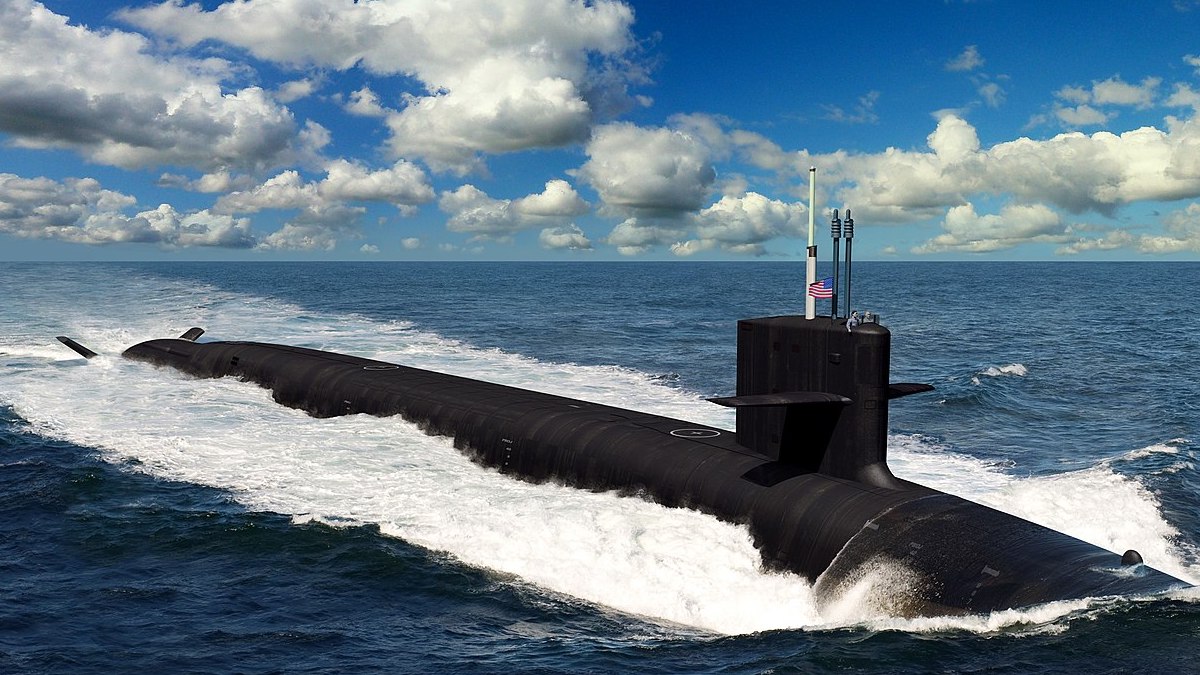
Proposed US/UK nuclear-powered submarines for Australia jeopardise health while escalating an arms race no one can win
Joint statement by International Physicians for the Prevention of Nuclear War and its affiliates in Australia, UK and USA: Medical Association for Prevention of War (Australia); Medact (UK); Physicians for Social Responsibility (USA)
Physicians in the countries involved in the proposal announced on 16 September for Australia to acquire nuclear-powered submarines with UK and US assistance are concerned this plan will jeopardise global health and security. Under this proposal, Australia would become the seventh country to use nuclear propulsion for its military vessels, and the first state to do so which does not possess nuclear weapons, or nuclear power reactors. These submarines are to be armed with sophisticated long-range missiles including US Tomahawk cruise missiles. These submarines would increase tensions and militarisation across Asia and the Pacific region, fuel an arms race and risk deepening a new cold war involving China.
The wrong decision at the wrong time
Humanity is in the midst of a major pandemic, and facing twin existential threats of dire urgency — global heating and the growing danger of nuclear war. People everywhere desperately require our leaders to work together to address these major challenges, which can only be solved cooperatively.
Beginning on November 1, the UN Climate Change Conference will be held in Glasgow, when leaders have a choice to condemn humanity to cascading climate catastrophe, or step up and take the decisive and ambitious actions needed to drastically reduce greenhouse gas emissions and keep warming within 1.5 degrees. COVID vaccines are still out of reach for most of the world’s poor people. If ever there was a time to build goodwill and focus on cooperation to complex global problems rather than escalate military confrontation, that time is now.
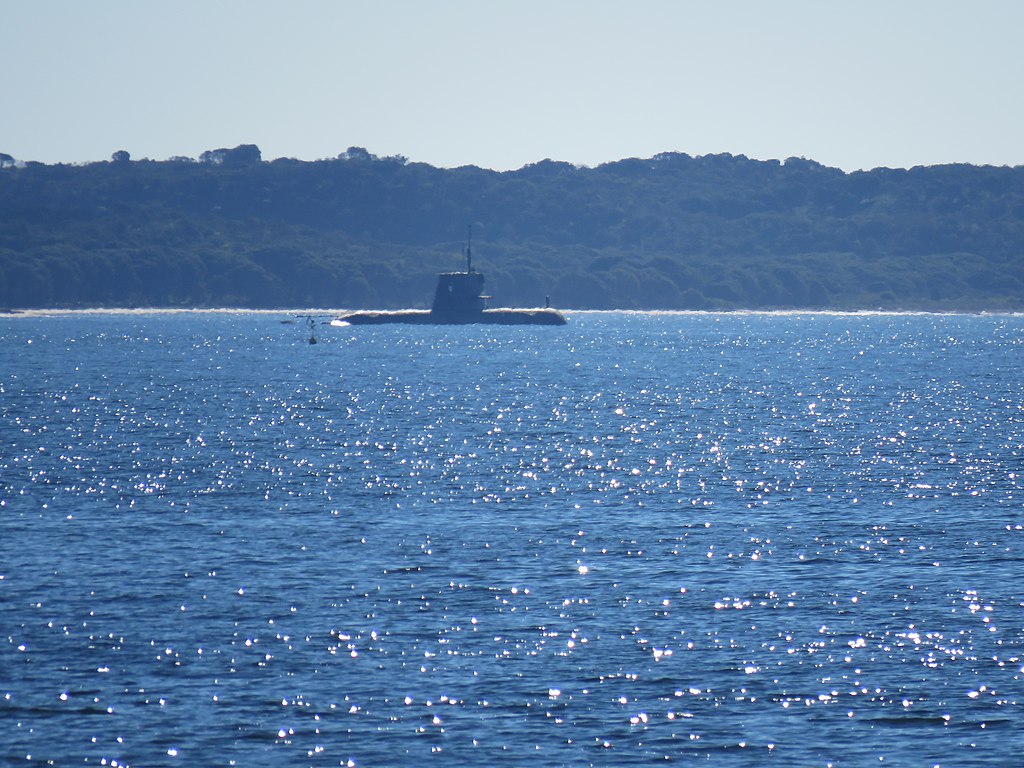
Our leaders should be focussing their energies not on escalating a new cold war arms race with China, but on building peaceful cooperation to address urgent shared threats with the government of the world’s most populous and largest greenhouse gas emitting nation.
Instead, this plan will raise tensions, make cooperation more difficult, drive proliferation of ever more destructive weapons, divert vast resources needed to improve health and well-being and stabilise our climate, and increase the risks of a slide to armed conflict between the world’s most heavily armed states, risking nuclear escalation in which there can be no winners.
Read More“Low-carbon” misses the point

Arguments favoring nuclear power as a climate “solution” are fundamentally misframed
By Amory B. Lovins
The view that climate protection requires expanding nuclear power has a basic flaw in its prevailing framing: it rarely if ever relates climate-effectiveness to cost or to speed—even though stopping climate change requires scaling the fastest and cheapest solutions. By focusing on carbon but only peripherally mentioning cost and speed, and by not relating these three variables, this approach misframes what climate solutions must do.
The climate argument for using nuclear power assumes that since nuclear power generation directly releases no CO2, it can be an effective climate solution. It can’t, because new (or even existing) nuclear generation costs more per kWh than carbon-free competitors—efficient use and renewable power—and thus displaces less carbon per dollar (or, by separate analysis, per year): less not by a small margin but by about an order of magnitude (factor of roughly ten). As I noted in an unpublished 17 Aug letter to The New York Times:
…[The Times’s 14 August] editorial twice extols “wind, solar and nuclear power” as if all three had equal climate benefits. They don’t. New electricity costs 3–8 (says merchant bank Lazard) or 5–13 (says Bloomberg New Energy Finance) times less from unsubsidized wind and solar than from nuclear power. Renewables thus displace 3–13 times more fossil-fueled generation per dollar than nuclear, and far sooner. Efficiency is even cheaper, beating most existing reactors’ operating costs. Competing or comparing all options…saves more carbon.
Thus nuclear power not only isn’t a silver bullet, but, by using it, we shoot ourselves in the foot, thereby shrinking and slowing climate protection compared with choosing the fastest, cheapest tools. It is essential to look at nuclear power’s climate performance compared to its or its competitors’ cost and speed. That comparison is at the core of answering the question about whether to include nuclear power in climate mitigation.
The record-breaking failures of nuclear power

TVA’s Bellefonte cancelation is just the latest in a long line of nuclear debacles
By Linda Pentz Gunter
The Tennessee Valley Authority could likely rightfully claim a place in the Guinness Book of World Records, but it’s not an achievement for which the federally-owned electric utility corporation would welcome notoriety.
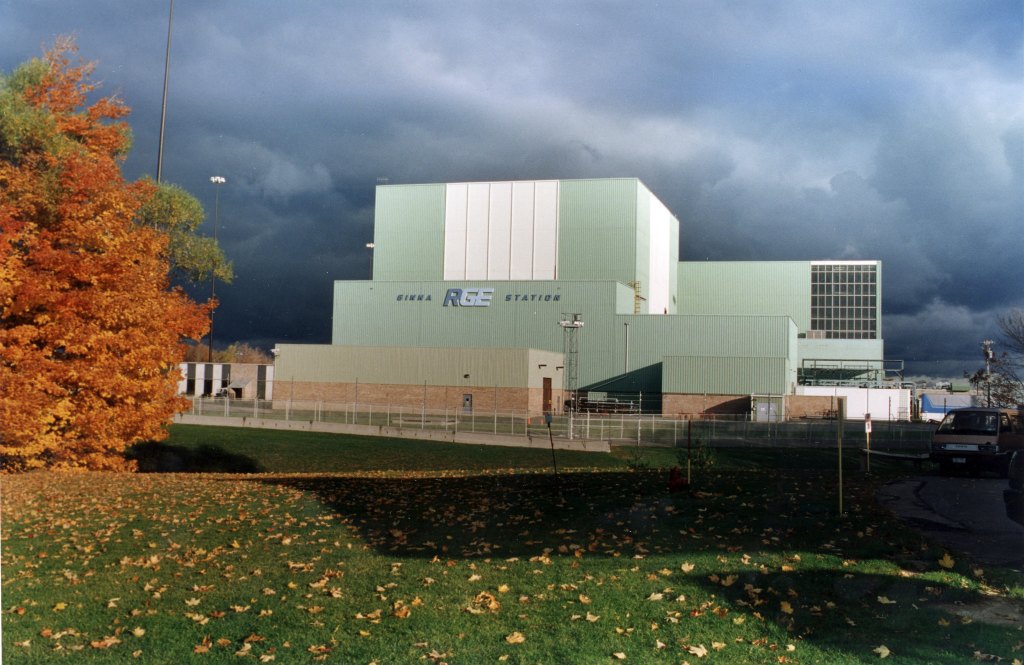
After taking a whopping 42 years to build and finally bring on line its Watts Bar Unit 2 nuclear power reactor in Tennessee, TVA just broke its own record for longest nuclear plant construction time. However, this time, the company failed to deliver a completed nuclear plant.
Watts Bar 2 achieved criticality in May 2016, then promptly came off line due to a transformer fire three months later. It finally achieved full operational status on October 19, 2016, making it the first United States reactor to enter commercial operation since 1996.

Now, almost five years later, TVA has announced it has abandoned its unfinished two-reactor Bellefonte nuclear plant in Alabama, a breathtaking 47 years after construction began.
TVA was apparently happy to get out of the nuclear construction business, because, as the Chattanooga Times Free Press reported, the company “did not see the need for such a large and expensive capacity generation source.” No kidding!
Read More Beyond Nuclear International