 Beyond Nuclear International
Fukushima recovery plagued with setbacks
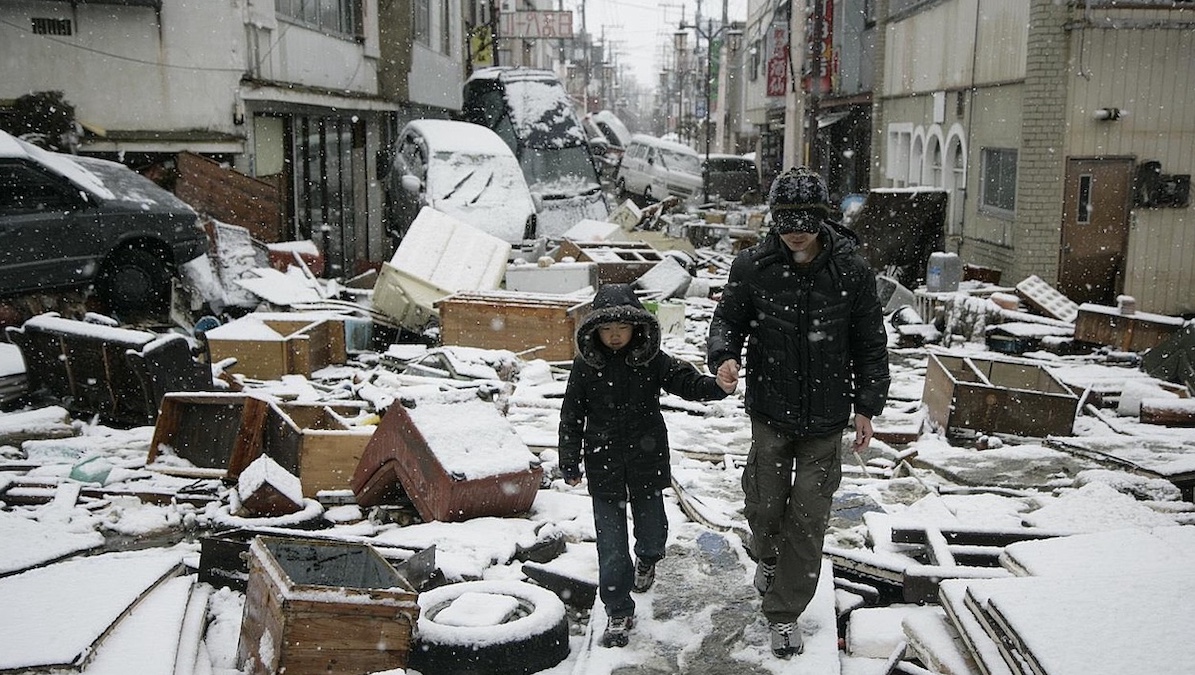
Melted fuel, radioactive soil and a struggling fishing industry are some of the lingering legacies of the Fukushima nuclear disaster, writes John LaForge
Japan is one of the most earthquake-prone areas in the world, and the regular quakes raise traumatic memories of the March 11, 2011, record-breaker that left 19,000 dead and smashed the six-reactor Fukushima-Daiichi site. This summer, a magnitude 5.5 quake struck just off Japan’s southeast Tokara coast on July 3; a mag. 4.2 quake hit east of Iwaki, in Fukushima Prefecture July 12; and a mag. 4.1 quake shook the same area July 25.
In late July, a mighty 8.8-magnitude quake struck Avacha Bay in Russia’s Far East, triggering tsunami warnings and evacuations across the entire Pacific Rim. The U.S. Geological Survey said the earthquake was one of the strongest ever recorded.
The owner/operator of the wrecked reactor complex, Tokyo Electric Power Co., evacuated its entire staff of 4,000 in response to warnings of a possible nine-foot tsunami, after first halting its pumping of radioactive wastewater into the Pacific.
Elsewhere in Japan, over 1.9 million people were urged to evacuate the eastern seaboard, and a 4-foot tsunami wave did strike north of Fukushima at Iwate Prefecture, some 1,090 miles from Avacha Bay, site of the major Russian earthquake.
China partially lifts ban on Japanese seafood imports
China “conditionally resumed” the importation of Japanese seafood products on June 30 ⸺ except from the 10 prefectures closest to the Fukushima disaster site ⸺ after conducting water sample inspections off the coast of the site. Beijing had banned all such imports from Japan as a protest and precaution, following the 2023 start of deliberately discharging large volumes of radioactively contaminated cooling water into the Pacific Ocean.

The 2023 ban was imposed to “comprehensively prevent the food safety risks of radioactive contamination caused by the discharge of nuclear wastewater from Fukushima into the sea,” China’s General Administration of Customs said then. Shocked by Japan’s action, Beijing’s Foreign Ministry added that the discharge was an “extremely selfish and irresponsible act,” which would “push the risks onto the whole world (and) pass on the pain to future generations of human beings,” the Agence France-Presse reported.
Read MoreRead this book!

Nuclear is Not the Solution is a fluid read that makes a convincing case against continued and further use of nuclear power in an age of climate crisis, writes Linda Pentz Gunter
A couple of months ago, Ralph Nader sent around a recommended list of books to read as we wile away those idle days of summer — haha if only! It was a suitably grim line-up, given the times we are living in.
More homework, I remember thinking with dread, looking at the already expanding row of “the end is nigh” books on my shelves about nobody’s favorite subject but ours —all things nuclear.
So I confess I haven’t yet read Nuclear War: A scenario (although Paul Gunter has, so I count that as checked off — why do we both need to invite nightmares?) I never quite finished Daniel Ellsberg’s The Doomsday Machine, confessions of a nuclear war planner, either, brilliant though it is. But I will. I AM reading Timmon Wallis’s excellent new book, Nuclear Abolition. A scenario, and that review is now in the queue.
A few of the other waiting books are “tomes” that threaten to be a “trudge”, the worst aspect of obligatory reading. Worthy yes, important yes, but hard work nevertheless.
An exception to this was Kate Brown’s 2019 book, Manual For Survival, a Chernobyl Guide to the Future that, despite its subject matter — or maybe because of it — read like a thriller, a non-fiction page-turner that felt more like an addictive novel. The book is a tome, but decidedly not a trudge.

Neither tome nor trudge is M.V. Ramana’s new book, Nuclear Is Not The Solution, The Folly of Atomic Power in the Age of Climate Change. I must confess that I read Ramana’s book some time ago — in other words, immediately upon receipt — because I knew it was going to be a riveting read as well as an essential primer.
Then I got enmeshed in completing my own book — No To Nuclear. Why Nuclear Power Destroys Lives, Derails Climate Progress and Provokes War (to be published by Pluto Press next March and for which Ramana provided some invaluable feedback). Consequently, this review is inexcusably late.
I could stop here and just say “Read This Book!” But it’s important to say why it’s essential reading.
Read MoreSouth Carolina’s dormant nuclear volcanoes
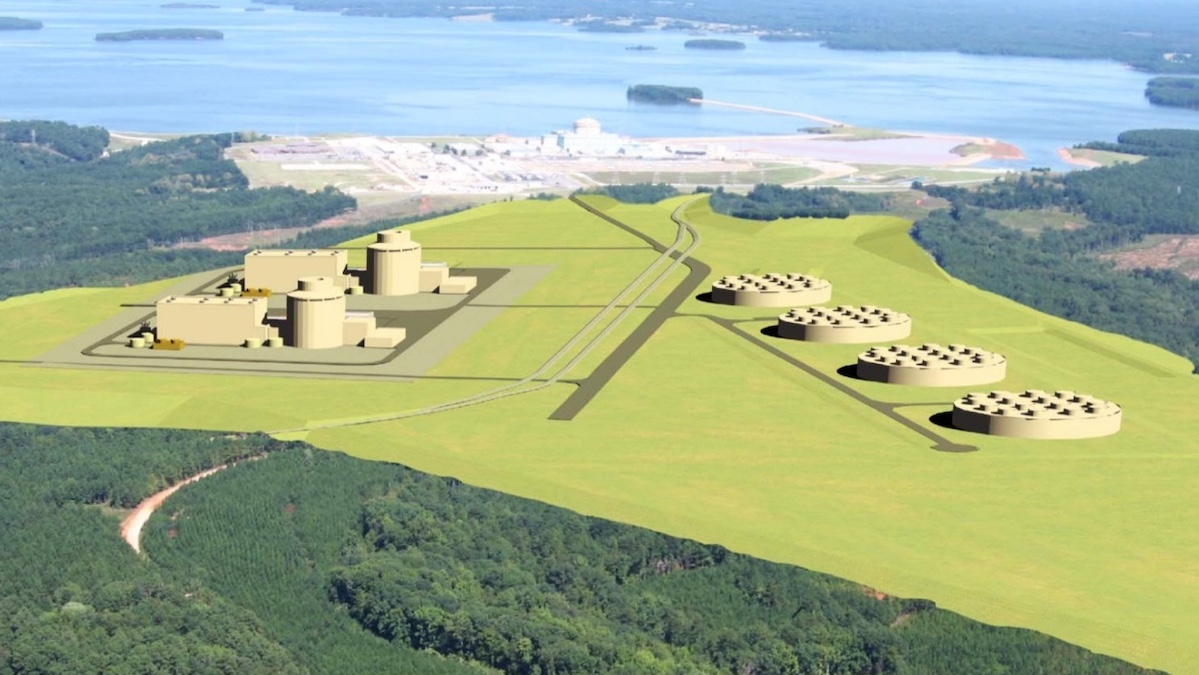
Resuming construction of the abandoned V.C. Summer reactors is rife with challenges, says a new report from Savannah River Site Watch
The proposal to restart the failed nuclear reactor construction project in South Carolina faces a host of unexamined challenges, according to a just-released report. The report, prepared by the nuclear policy expert who led the intervention against the project since its inception in 2008 through its collapse and termination in the face of ratepayer outrage 2017, outlines major stumbling blocks to the revival of the nation’s most shocking failure of a nuclear reactor construction project in the United States in the 21stcentury.
The V.C. Summer project involved the botched attempt by now-defunct South Carolina Electric & Gas (SCE&G) to construct two large Westinghouse AP1000 nuclear reactors 2 – units 2 & 3 – 25 miles north of Columbia, South Carolina. Over $10 billion was wasted on the construction of project.
Its abrupt termination was one of the most impactful and costly nuclear construction-project collapses in U.S. history, which was the death knell for the so-called “nuclear renaissance” in the U.S. Customers were hit hard and are still left holding the bag with nothing in return for a reported $2 billion payment so far, for financing costs, an amount that grows daily. Though far-fetched, project restart is now being discussed.
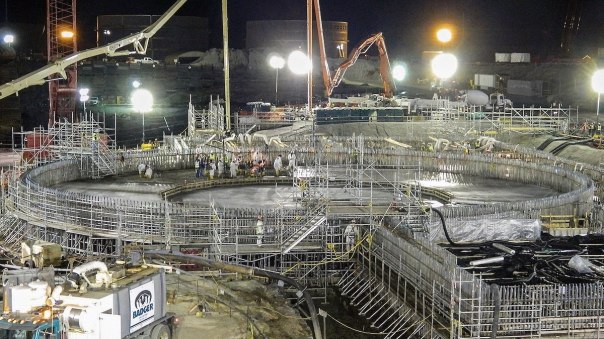
The report – presenting 14 unanalyzed challenges to the restart idea and prepared by the Columbia-based public-interest, non-profit group Savannah River Site Watch – is titled Economic, Technical and Regulatory Challenges Confound Restart of the Terminated V.C. Summer Nuclear Reactor Construction Project in South Carolina.
The 24-page report was written by Tom Clements, director of SRS Watch, who led interventions before the PSC by the environmental group Friends of The Earth beginning in 2008 and running through the bankruptcy of SCE&G and its takeover by Dominion Energy South Carolina in January 2019.
“As the public was so abused during the V.C Summer construction project, they now deserve a voice in raising concerns about proposals concerning rebirth of the project in which they still have financial ownership and that’s for whom this report speaks” said Clements. “We reveal in the report that Dominion ratepayers are right now paying 5.22% of the bill for the terminated project and are paying, since 2019, an additional $2.8 billion over 20 years. The restart effort could once again saddle customers with additional massive costs if VCSummer 2.0 proceeds.”
Read MorePunishing India but still paying Russia

Trump slapped tariffs on India for importing Russian oil, but the US imports even more uranium from Russia and its allies, writes Linda Pentz Gunter
On August 6 we learned that US president Trump would raise tariffs on India to 50 percent. The decision was announced in yet another White House executive order, which was ostensibly about punishing Russia, proclaiming that “the actions and policies of the Government of the Russian Federation continue to pose an unusual and extraordinary threat to the national security and foreign policy of the United States.”
Instead, the punitive measures were directed toward India because, the order says, “the Government of India is currently directly or indirectly importing Russian Federation oil.”
Although Trump had already been on his tariff rampage for quite some time, this was, nevertheless, a somewhat surprising strike at one of the United States’s largest trading partners.

The reason Trump gave for increasing tariffs was that India was still importing 38 percent of its crude oil from Russia and that “they don’t care how many people in Ukraine are being killed by the Russian War Machine”. Worse still, railed Trump, India was selling some of the oil on the open market “for profits”.
Needless to say, none of this passes the credibility test since successful profiteers are high on the list of people Trump admires and he himself has no interest in the beleaguered people of Ukraine — or anywhere else —including right here at home in the United States. And didn’t he just tell us during their meeting in Alaska that Russian president, Vladimir Putin is his friend? “I’ve always had a fantastic relationship with President Putin, with Vladimir,” Trump said.
So why punish India for its dealings with Russia and not China, for example, a far bigger importer of Russian oil?
Read MoreProfiting corporations while penalizing the public

Changes in Indian law would allow commercial nuclear power plants to proliferate, warns the National Alliance of Anti-Nuclear Movements
The National Alliance of Anti-nuclear Movements (NAAM), India, is opposing attempts by the Indian government to smooth the way for private contractors to proliferate nuclear power plants across the country, already eased by a ridiculously small limited liability cap for plant operators in the event of a major accident (much like the Price-Anderson Act in the United States).
NAAM has submitted a memorandum to political parties, parliamentarians, activists and civil society members to oppose the Modi government’s plans to dilute the provisions of the Atomic Energy Act, 1962 and Civil Liability for Nuclear Damage Act, 2010. What follows is the text of their memorandum:
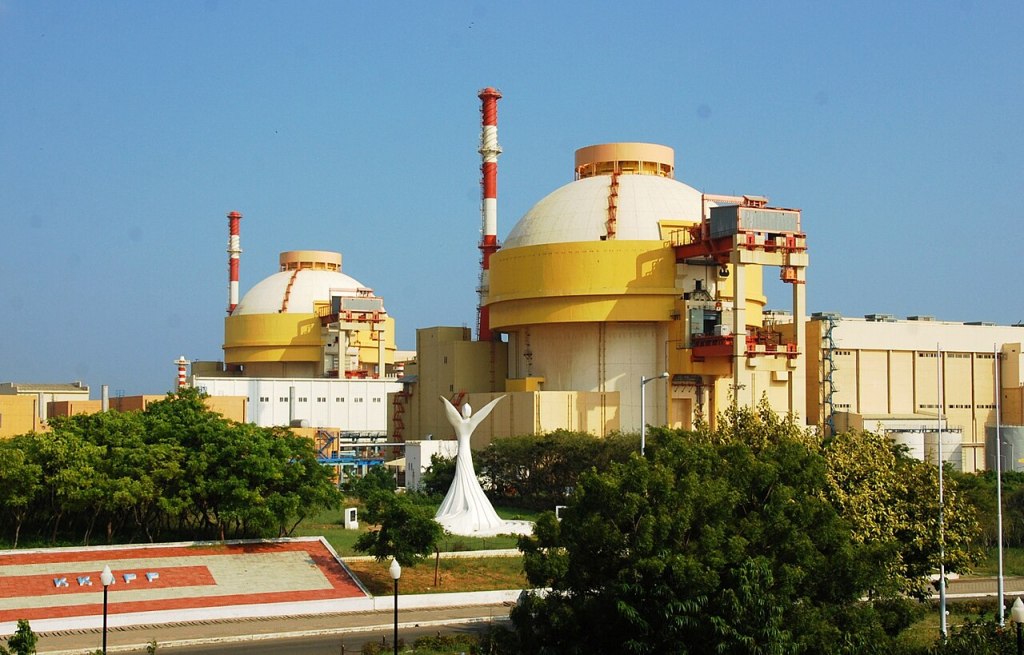
The Indian government headed by the Bharatiya Janata Party, is planning to amend the Atomic Energy Act, 1962, and the Civil Liability for Nuclear Damage Act, 2010, in order to facilitate private companies’ participation in the construction and development of nuclear reactors in India, and to fetch foreign direct investments for the nuclear industry.
According to Section 3 of the Atomic Energy Act, 1962, the “Central Government shall have power” “to produce, develop, use and dispose of atomic energy either by itself or through any authority or Corporation established by it or a Government company and carry out research into any matters connected therewith;” “to manufacture or otherwise produce any prescribed or radioactive substance;” “to buy or otherwise acquire, store and transport any prescribed or radioactive substance;” and “to dispose of such prescribed or radioactive substance.”
Read MoreThe jellyfish are the symptom
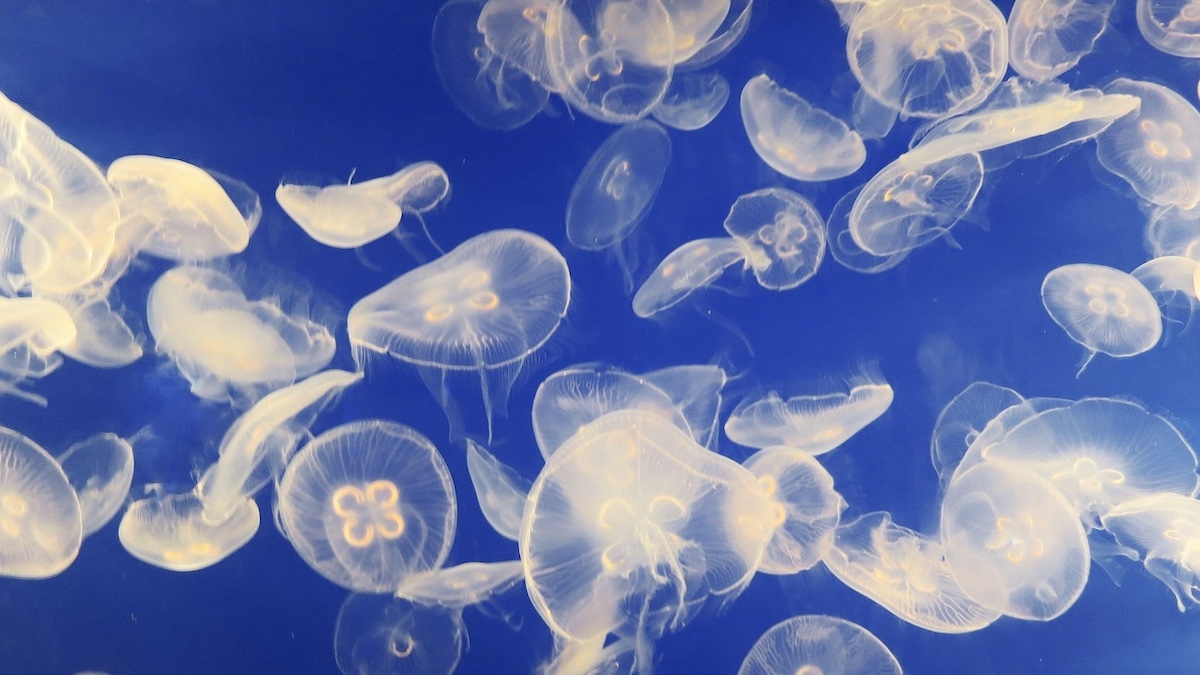
The cure is ending the use of nuclear power, which takes an immense toll on wildlife and the environment, writes Linda Pentz Gunter
A swarm of jellyfish that recently brought four of the six reactors at the Gravelines nuclear power plant in France to a halt, made widespread headlines but, as some reports have noted, this isn’t exactly a new phenomenon. The remaining two reactors were already offline for maintenance.
As the Guardian reported, “The Torness nuclear plant in Scotland, which is also owned by EDF, was forced to shut for a week in 2021 after jellyfish clogged the seaweed filters on its water intake pipes, a decade after jellyfish shut the plant for a week in 2011.”
But Paul Gunter and I first noted the phenomenon back in 2001 when we released our investigative report, Licensed to Kill: How the nuclear power industry destroys endangered marine wildlife and ocean habitat to save money.
We learned then that jellyfish were a hazard at nuclear plants that use the once-through cooling water system — the kind that don’t use cooling towers — as they can impede the rapid flow of intake water, which then reduces the efficiency of the plant. That, in turn, reduces profits.
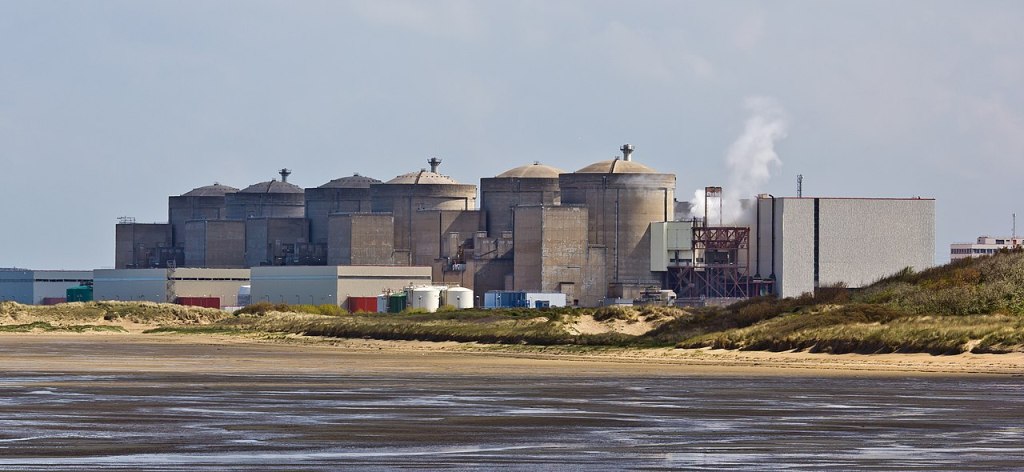
Swarms of jellyfish, responding to warmer waters caused by climate change, are likely to become an ever greater and more frequent hazard as waters continue to warm due to our inadequate efforts to tackle the climate crisis effectively or in time.
But why are jellyfish a problem for nuclear power plants in the first place?
The once-through cooling system draws cooling water into the plant, usually through an intake pipe and at considerable velocity, in order to first convey heat from the reactor core to the steam turbines and then to remove and dump the surplus heat from the steam circuit.
Read More Beyond Nuclear International