 Beyond Nuclear International
The science is in: Nuclear is out
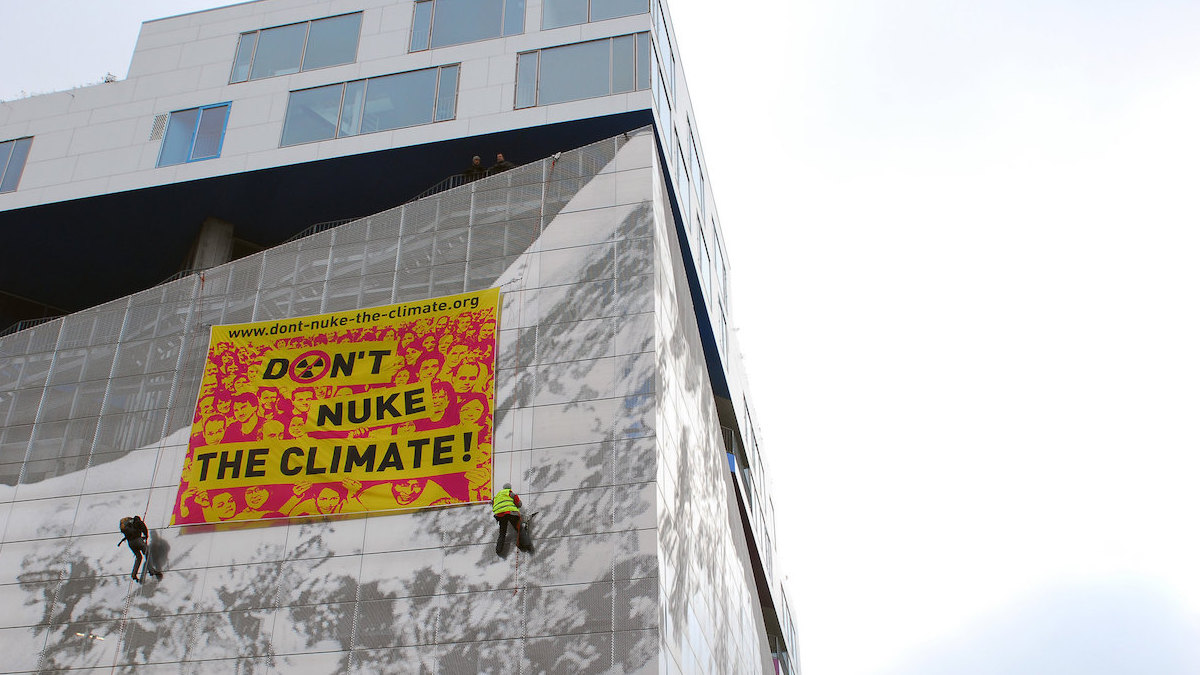
Every dollar wasted on nuclear is a dollar not invested in renewables
By Tim Judson and Luis Hestres
We’ve known for a long time that nuclear energy is a false solution to climate change. Not only are the health and environmental impacts of nuclear power intolerable, but it also gobbles up investments we should be making in clean and safe renewable energy.
Now, a new study by researchers at the University of Sussex in the UK brings us the latest and most robust evidence of these facts.
The study, published last week in Nature Energy, considers three hypotheses: Firstly, that emissions decline the more a country adopts nuclear power; secondly, that emissions decline the more a country adopts renewables; and thirdly, that nuclear and renewables are ‘mutually exclusive’ options that tend to crowd each other out at an energy system level. The hypotheses were tested against 25 years’ worth of electricity-production and emissions data from 123 countries.
The result? Investment in nuclear is mostly negatively correlated with decreases in carbon emissions, while investment in renewables was positively correlated with such decreases across the board. In other words, countries that invested in nuclear didn’t see emission reductions but countries that invested in renewables did.
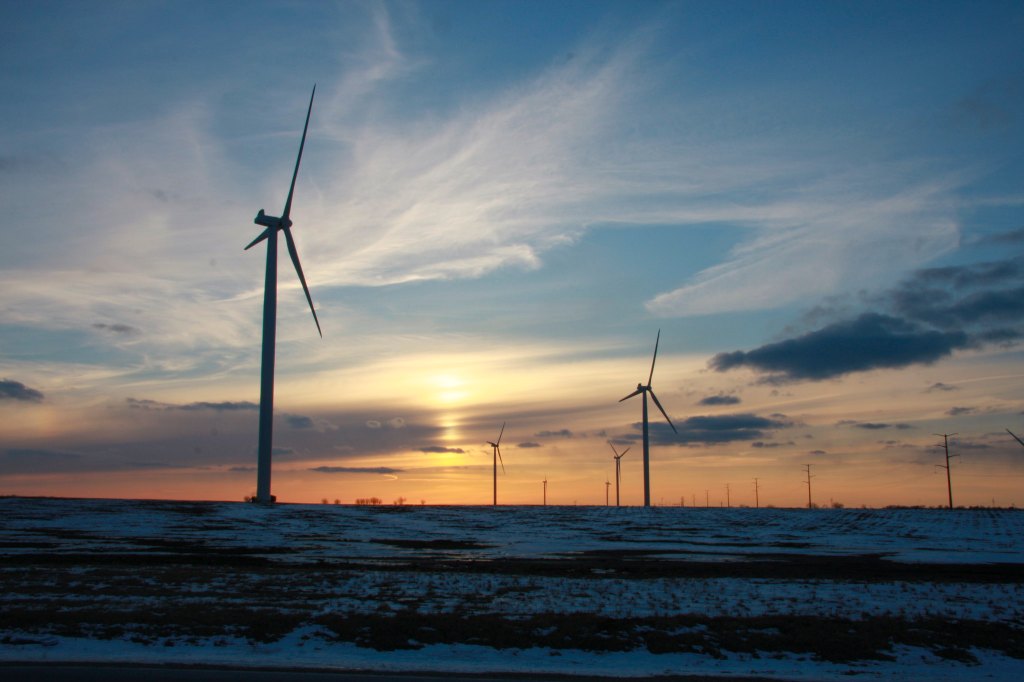
The only exceptions were higher per-capita GDP countries, which saw some decreases in emissions while investing in nuclear—but countries with lower per-capita GDP didn’t. But this last finding didn’t take into account the costs associated with nuclear waste storage and cleanup, the dangers of nuclear accidents, or the fact that those reductions might have been deeper if renewables had been chosen.
Read MoreDear “President-elect Biden”
Please start with the easiest problem to solve
Editor’s note: The author’s assumption that Joe Biden will be elected president is of course his own.
By Alan Robock
Here is a letter I intend to mail in November. But I want you to know about it now, to bring up an issue that is crucial to consider before you vote, and which has not received enough attention.
Dear President-Elect Biden,
I’m so happy that you were elected because in January you can start to address major problems in America. But before you deal with the COVID-19 pandemic, racism, immigration, gun violence, and climate change, all of which are very important, I recommend that first you take immediate steps to lower the danger of nuclear war. You will be Commander in Chief, and there are several first steps you can take immediately to make the world safer.
In the early 1980s, I was one of the American and Russian scientists who, working together, discovered that in a war between the U.S. and the Soviet Union smoke from fires ignited by nuclear explosions would block out the Sun, producing instant climate change, turning the Earth cold, dark and dry, killing plants and preventing agriculture for at least a year, producing global famine.
As I described in a New York Times op-ed on Feb. 11, 2016, this nuclear winter theory was accepted by presidents Ronald Reagan and Mikhail Gorbachev and was instrumental in ending the nuclear arms race. But although the Russian and American nuclear arsenals have decreased, our research shows they can still produce a nuclear winter.
Furthermore, there are seven other nuclear nations now: China, Britain, France, India, Pakistan, Israel and North Korea. Even a nuclear war between two with much smaller arsenals, such as India and Pakistan (one of the scariest scenarios, given continued conflict over Kashmir), could produce global climate change unprecedented in recorded human history and major impacts on the world food supply.
Read MoreGoodbye Moon

Fly me to the moon, but don’t put reactors there
By Linda Pentz Gunter
Not content to desecrate our terrestrial landscape with hundreds of thousands of tons of nuclear waste — much piled up with nowhere to go, the rest released to contaminate our air, water and soil — humankind, in all its folly, now plans to do the same to the Moon. And, eventually to Mars.
While our species’ insatiable scientific curiosity has undoubtedly led to some beneficial inventions, it has also drawn us inexorably towards our own downfall. Our zeal to create the atomic bomb ignored logic, ethics, consequences and the fundamentals of human rights.
The bomb brought us so-called civil nuclear power reactors, the ugly and irresponsible spawn of a weapon that leaves us perched perpetually on the precipice of extinction. But there is nothing “civil” about nuclear power.
At the dawn of the nuclear energy age, not a thought was given to the legacy of deadly radioactive waste it would produce. That can was kicked summarily down the road. Now we are far down that road and no solution has been arrived at, while we ignore the one obvious one: stop making more of it!
So now comes the news that the US wants to put nuclear power reactors on the Moon.

In the news stories that followed the announcement, replete with the usual excitement about space exploration (never mind the cost and bellicose implications) there was not one single mention of the radioactive waste these reactors would produce.
The problem, like the waste itself, will simply be kicked into some invisible crater on the dark side of the Moon.
Read MoreCelebrating Sister Ardeth Platte
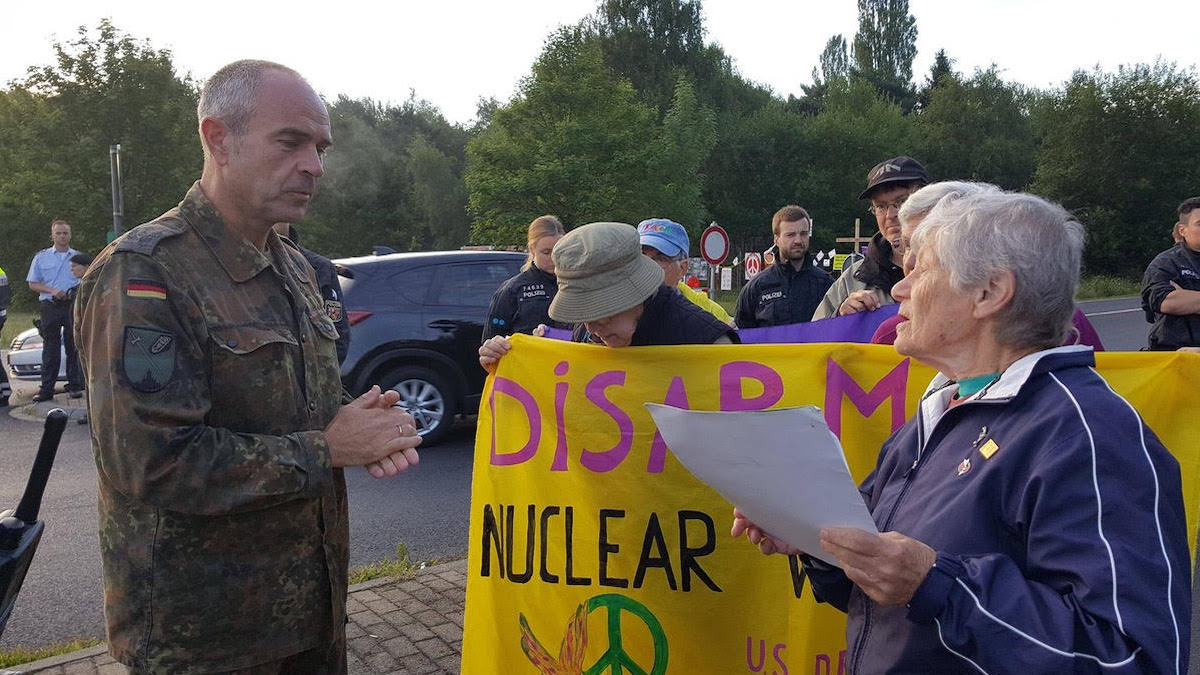
Anti-nuclear activist and ‘peacemaker in a hostile world’
By Carole Sargent
To Sister Ardeth Platte, who died on Sept. 30 at 84, antinuclear activism was a form of public worship.
Explaining to a federal judge in 2002 how she – alongside protest companions Sister Carol Gilbert and Sister Jackie Hudson – entered a Colorado nuclear base, tapped on a silo with a hammer and used their own blood to smear a cross on a 100-ton missile lid, Platte said: “Every movement of our body was a liturgy.”
It didn’t stop the court from sending her to prison for obstructing national defense and damaging government property. But Platte wasn’t traumatized by her 41-month sentence or any other she had served. By 2017 she and Gilbert estimated they had spent more than 15 years total behind bars and been arrested about 40 times, by their own tally.
“I was in long enough to see so many deaths, suicides. One woman guard went home from work, put a gun to her head and killed herself. Another man committed suicide by hanging right on the prison grounds,” Platte said in our unpublished 2017 interview. I came to know Platte and Gilbert while living with Sacred Heart sisters they knew at Anne Montgomery House in Washington, D.C.
No emergency planning zones for SMRs?
NRC commissioner warns against “flimsy” rule that could extend to current reactor fleet
By Jeff Baran
Note: Beyond Nuclear is hosting a webinar on SMRs with leading experts: M.V. Ramana, Simons Chair in Disarmament and Global Security, University of British Columbia; Kerrie Blaise, Staff Lawyer, Canadian Environmental Law Association (CELA); Ed Lyman, Director of Nuclear Power Safety, Union of Concerned Scientists. The webinar is co-hosted by the Coalition for Responsible Energy Development in New Brunswick and CELA and will include contributions from Gordon Edwards and David Lowry. The webinar takes place on October 21 at 2pm Eastern time. Click here to register. A recording of the webinar will be available on YouTube. More information on SMRs can also be found in the Beyond Nuclear pamphlet.
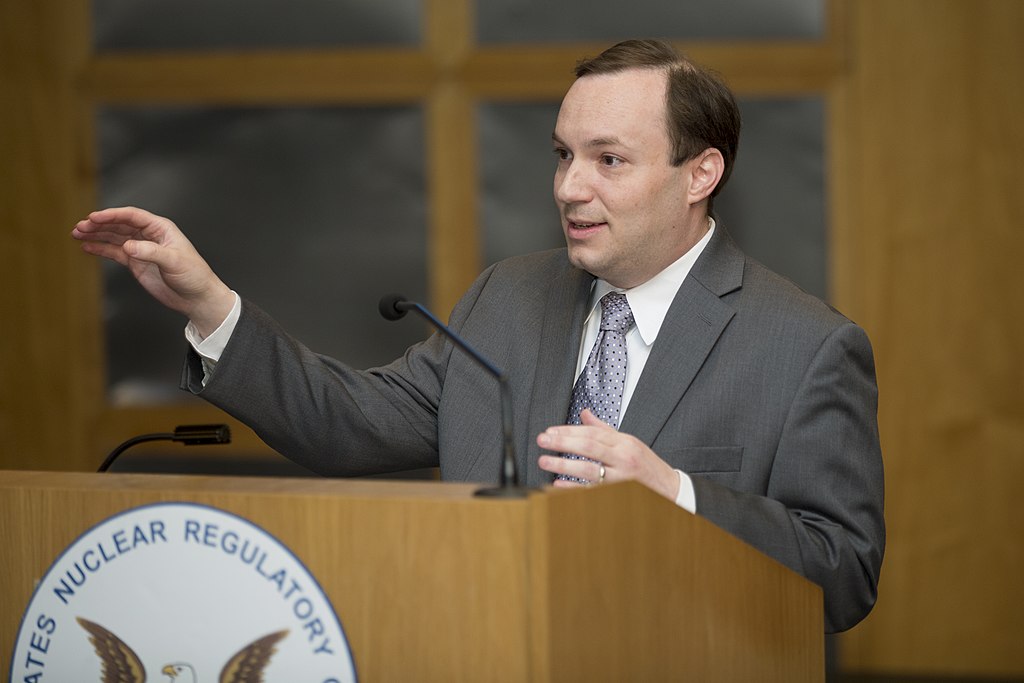
In a 3-1 vote by NRC Commissioners on December 17, 2019, Proposed Rule: Emergency Preparedness for Small Modular Reactors and Other New Technologies (SECY-18-0103) was accepted. The Rule would eliminate the need for Emergency Planning Zones and dedicated offsite emergency planning for Small Modular Reactors. The lone dissenting vote came from NRC Commissioner Jeff Baran. These are his comments.
For the last 40 years, NRC has required emergency planning zones, or EPZs, (Emergency Planning Zones) around nuclear power plants “to assure that prompt and effective actions can be taken to protect the public in the event of an accident.” Every one of the 96* operating large light-water reactors in the country has a plume exposure pathway EPZ that extends about 10 miles around the site with dedicated offsite radiological emergency plans and protective actions in place to avoid or reduce radiation dose to the public during an accident. An ingestion exposure pathway EPZ with a radius of 50 miles around each of these sites is designed to avoid or reduce dose from consuming food and water contaminated by a radiological release.
The EPZs and dedicated radiological emergency plans are meant to provide multiple layers of protection – or defense-in-depth – against potential radiological exposure. Other NRC requirements are focused on preventing or mitigating a radioactive release. The emergency planning regulations are there to provide another layer of defense in case a release occurs despite those safety requirements.
In other words, EPZs and radiological emergency planning are designed to address low-probability, high-consequence events. The Federal Emergency Management Agency (FEMA) assesses the adequacy of the offsite emergency plans, and NRC regulations require licensees to hold offsite emergency preparedness drills at each plant at least once every 2 years to practice implementing the plans.
Under this proposed rule, emergency planning for small modular reactors (SMRs) and non-light-water reactors would be flimsy by comparison. Instead of a 10-mile plume exposure pathway EPZ, these reactors would have EPZs that encompass only areas where the projected dose from “credible” accidents could exceed 1 rem. An EPZ extending only to the site boundary is explicitly permitted under this methodology.
Read MoreA bridge to nowhere
New Brunswick must reject small modular reactors
By Gordon Edwards and Susan O’Donnell
Note: Beyond Nuclear is hosting a webinar on SMRs with leading experts: M.V. Ramana, Simons Chair in Disarmament and Global Security, University of British Columbia; Kerrie Blaise, Staff Lawyer, Canadian Environmental Law Association (CELA); Ed Lyman, Director of Nuclear Power Safety, Union of Concerned Scientists. The webinar is co-hosted by the Coalition for Responsible Energy Development in New Brunswick and CELA and will include contributions from Gordon Edwards and David Lowry. The webinar takes place on October 21 at 2pm Eastern time. Click here to register. A recording of the webinar will be available on YouTube. More information on SMRs can also be found in the Beyond Nuclear pamphlet.
On June 26, the Canadian federal government ended the Environmental Assessment of a proposed radioactive waste storage facility beside Lake Huron, after Ontario Power Generation (OPG) withdrew its proposal to build it. OPG decided to terminate the project after the Saugeen Ojibway Nation, on whose unceded territory the facility would be located, voted on January 31 not to support the project, which had been under consideration for 15 years.
What to do with radioactive waste remains a significant challenge for all nuclear reactor operators, including the two new nuclear projects currently supported by NB Power and the New Brunswick government. Recently, more than 100 groups across Canada, including nine in New Brunswick, signed a letter to the federal minister of Natural Resources asking to suspend all decisions about radioactive waste disposal until Canada has a sufficient radioactive waste policy in place.
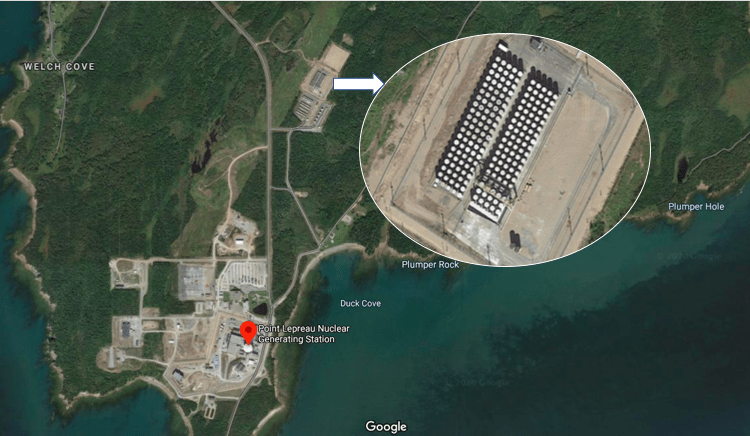
Nuclear energy produces dangerous irradiated nuclear fuel and a host of other radioactive waste materials requiring safe storage for hundreds of thousands of years. Globally, no facility for permanent safe storage of irradiated fuel has been licensed to operate, and several facilities for storing non-fuel radioactive wastes have experienced setbacks costing billions of dollars to rectify.
In New Brunswick, the proposed new reactors (so-called “small modular nuclear reactors” or SMNRs) will create irradiated fuel even more intensely radioactive per kilogram than waste currently stored at NB Power’s Point Lepreau Nuclear Generating Station. The non-fuel radioactive wastes will remain the responsibility of the government of New Brunswick, likely requiring the siting of a permanent radioactive waste repository somewhere in the province.
Read More Beyond Nuclear International