 Beyond Nuclear International
Making Waves

The rebirth of the Golden Rule
From LABRATS
March 1 is Nuclear Victims Remembrance Day, the 67th commemoration of the 1954 US Castle Bravo test, the largest nuclear explosion, which had disastrous consequences for the people of the Marshall Islands and beyond.
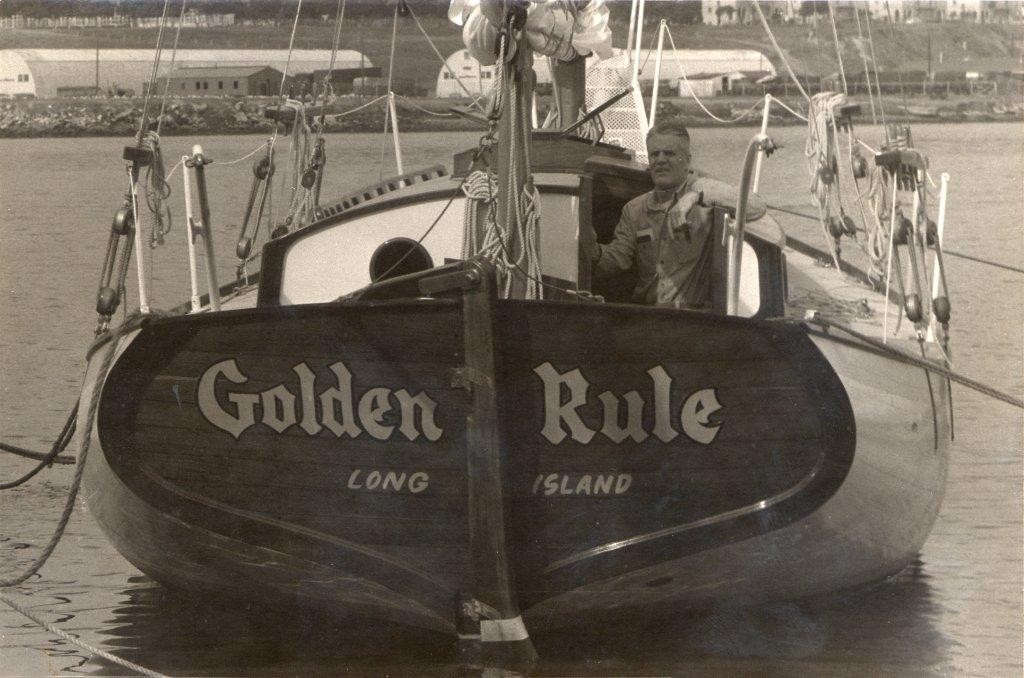
The Golden Rule is a project of Veterans For Peace. They aim to advance Veterans For Peace opposition to nuclear weapons and war, and to do so in a dramatic fashion. They have recovered and restored the original peace ship, the Golden Rule, that set sail in 1958 to stop nuclear testing in the atmosphere, and which inspired the many peace makers and peace ships that followed.
The reborn Golden Rule is sailing once more, to show that nuclear abolition is possible, and that bravery and tenacity can overcome militarism.
The Golden Rule was the very first of the environmental and peace vessels to go to sea. In 1958, a crew of anti-nuclear weapons activists set sail aboard her in an attempt to interpose themselves and the boat between the U.S. Government and its atmospheric testing of nuclear weapons in the Marshall Islands in the Pacific Ocean.
At that time both the U.S. and the Soviet Union were conducting aboveground tests of very large nuclear weapons, which produced readily detectable clouds of radioactive fallout that wafted around the planet. Radiation contamination began to turn up in cows’ and mothers’ milk. Public concern grew, and for the first time many middle-class Americans began to wonder if their government knew what it was doing.
In 1958, the Golden Rule sailed from San Pedro, California toward the U.S. nuclear test zone at Eniwetok atoll in the Marshall Islands, but she never made it that far. The first time out of San Pedro Capt. Albert Bigelow, George Willoughby, William Huntington and David Gale were aboard. A week into the voyage the starboard jaw of the gaff broke.
The repair was done, but a gale, the worst in twenty years, quickly followed. As the crew reported, “David Gale was gravely ill. It was several days since he had even tried to eat or drink and we had given up trying to tell him to do so.” Twice the Coast Guard offered help and could have taken him to shore. Ultimately, Bigelow made the decision to turn back, knowing that the effort to stop the atomic tests might be sacrificed. They made it back to San Pedro two weeks after starting.
Read MoreLet’s hear it for Granola Park!
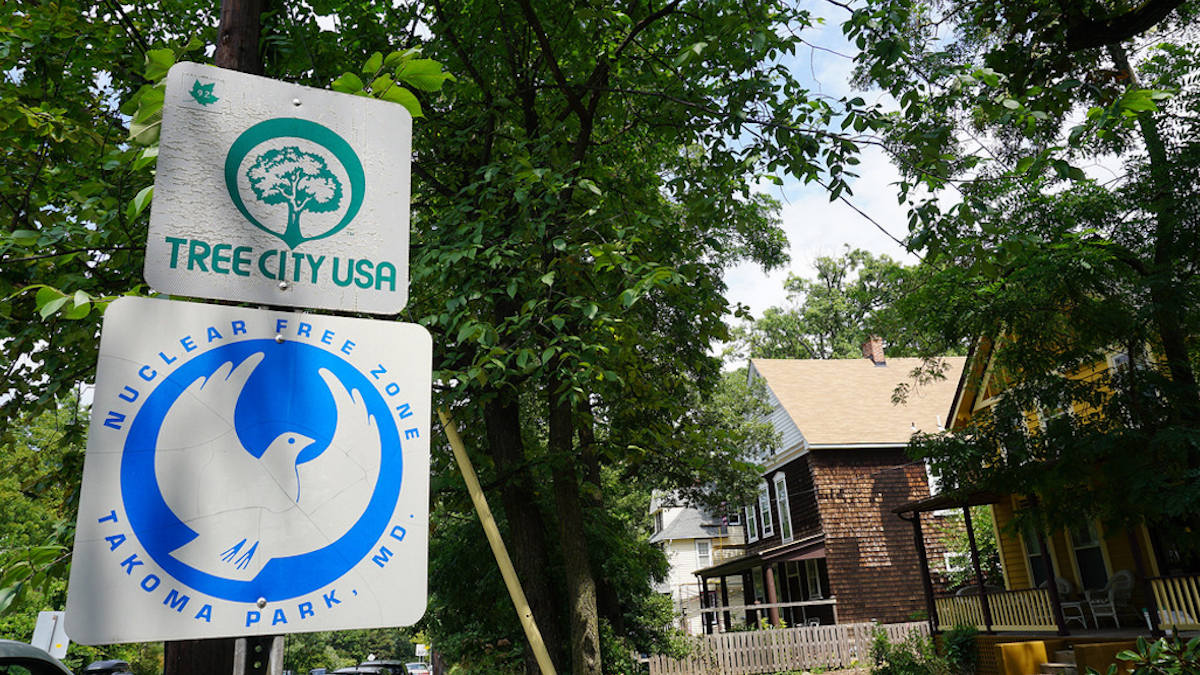
Impeachment hero Jamie Raskin lives here, but Takoma Park has long been famous
By Linda Pentz Gunter
I’ll admit that I have an ambivalent relationship with granola. Perhaps that is because my first introduction to it was muesli, which is basically chopped cardboard. My husband routinely buys granola, which languishes on larder shelves and eventually is tossed (by me) to grateful birds and squirrels. Let’s just say it’s not my breakfast of champions.
But if eating granola makes us the good guys then, well, bring it on!
Takoma Park, Maryland, where Beyond Nuclear is headquartered, is frequently described — or, more accurately, mocked — in the press as “Granola Park”. (Sister organization, Nuclear Information and Resource Service, is also based in Takoma Park.)
Our left-leaning Takoma Park citizenry are aging, “crunchy” hippies (in reality only 11% of Takoma Park residents are over 65). And eccentrics.

Okay, this latter is admittedly hard to refute. We had a resident roving rooster now immortalized in bronze downtown; a cat who rode with its owner on a motorbike, replete with its own leather helmet; an animal rights activist who carried a dead fox in a trap around town to make his point; and of course our very own blind, peace-sign carrying Peace Delegate.
The Utne Reader once admiringly anointed Takoma Park as “the leftiest ‘burb in America” (take that Berkeley!) Early on, “The People’s Republic of Takoma Park”, as we are also known, had a socialist mayor. Three of President Obama’s top advisors lived here, two of whom biked to the White House.
Indeed, Granola Park is a welcome hotbed of “good guys” — just over 17,000 of us in all. These include citizens and non-citizens, old and young, men and women, black, white and brown, straight, gay and trans, and state as well as national politicians.
Read MoreWhen the US nuked Spain
34 years later, those forced to clean up the mess get their day in court
By John LaForge
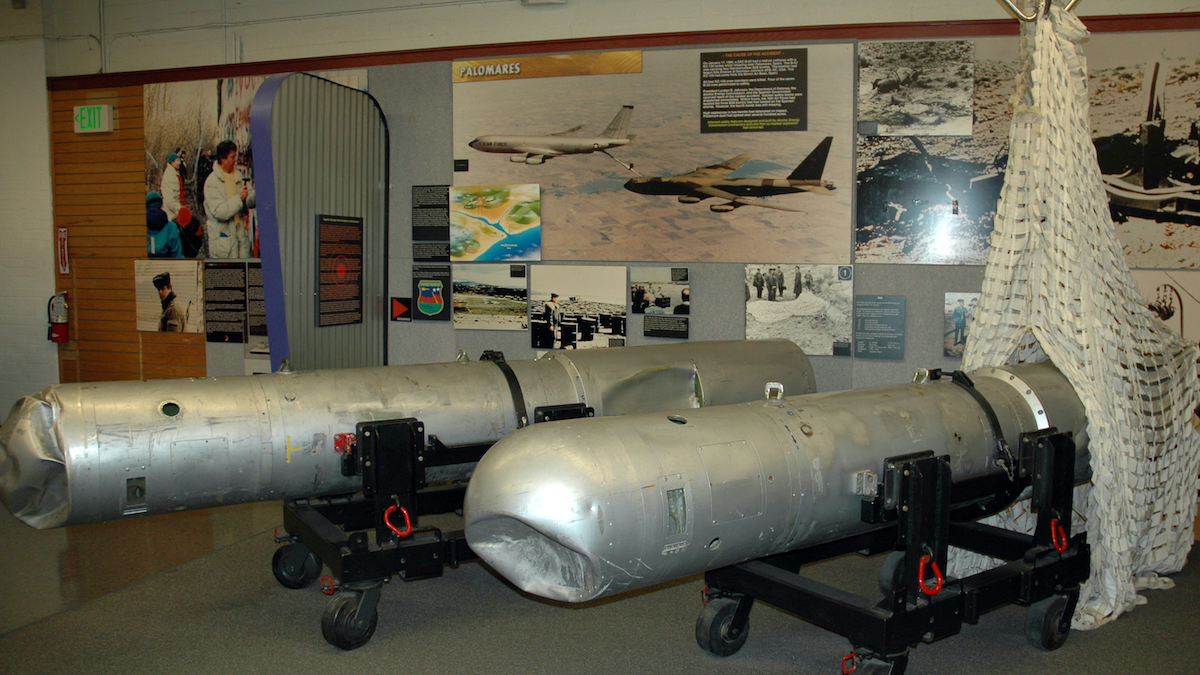
Air force veterans exposed to plutonium after a first-ever US nuclear weapons disaster in Spain have won extremely rare recognition as a class in a lawsuit against the Department of Veterans Affairs.
On Jan. 17, 1966, an air force B-52 bomber exploded over the village of Palomares, Spain during a routine airborne refueling. Seven airmen were killed and the bomber’s four hydrogen bombs were thrown to the earth. Conventional explosives (not the nuclear warheads) in two of the bombs detonated in massive explosions, one right in the village, gouging huge, plutonium-covered craters and spewing as much as 22 pounds of pulverized plutonium dust over houses, streets and farm fields.
On June 19, 2016, the New York Times published a 4,500-word investigative report about the lawsuit filed in the Court of Appeals for Veterans Claims by chief master sergeant Victor Skaar (USAF, Rt.). Skaar, who was 30 at the time, was part of a clean-up team, dubbed Operation Moist Mop, assigned to the disaster response. A throng of some 1,700 soldiers were put to surveying 400 acres and washing the inside and outside of village buildings. Over a period of 80 days they filled 4,810 barrels with plutonium-contaminated soil and loaded the drums aboard a ship bound for disposal stateside.
Two years after Skaar retired in 1981, he came down with a blood disorder called leukopenia. He’s been trying ever since to have the illness recognized as service-related. In a phone interview, Skaar told Nukewatch that dozens of the veterans contaminated during the clean-up are also sick. If their claims can be established in court, they would be eligible for free health care and a disability pension.
Read MoreIllegal and opposed
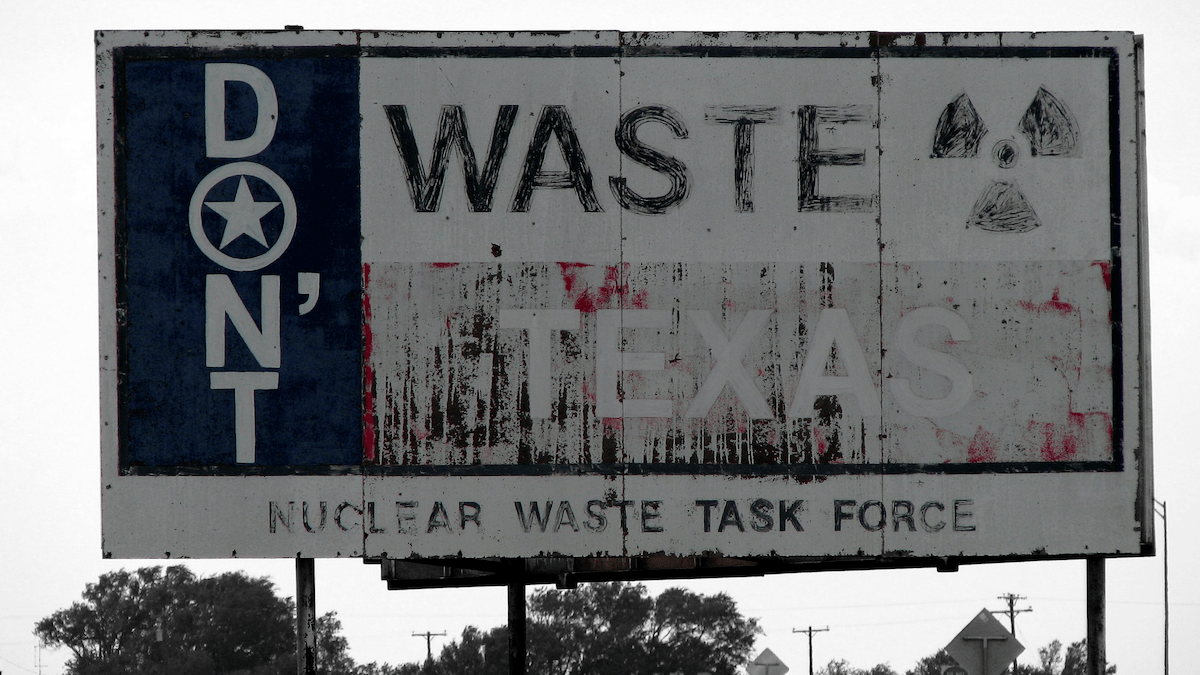
Beyond Nuclear files suit to stop massive radioactive waste dump
Beyond Nuclear has filed suit in federal court to prevent the U.S. Nuclear Regulatory Commission (NRC) from licensing a massive “consolidated interim storage facility” (CISF) for highly radioactive waste in Andrews County, West Texas.
In its Petition for Review filed in the U.S. Court of Appeals for the District of Columbia Circuit, Beyond Nuclear asked the Court to dismiss the NRC licensing proceeding for a permit to build and operate a CISF proposed by Interim Storage Partners (ISP), a business consortium. ISP plans to use the facility to store 40,000 metric tons of highly radioactive irradiated fuel generated by nuclear reactors across the U.S., (also euphemistically known as “used” or “spent” fuel), amounting to nearly half of the nation’s current inventory.
The irradiated fuel would be housed on the surface of the land, on the site of an existing facility for storage and disposal of so-called “low-level radioactive waste” (LLRW). The LLRW facility is owned and operated by Waste Control Specialists (WCS). WCS and Orano (formerly Areva) comprise ISP. ISP’s CISF is located about 0.37 miles from the New Mexico border, and very near the Ogallala Aquifer, an essential source of irrigation and drinking water across eight High Plains states.
The Beyond Nuclear petition charges that orders issued by the NRC in 2018 and 2020 violate federal law by contemplating that the U.S. government will become the owner of the irradiated fuel during transportation to and storage at the ISP facility. Under the Nuclear Waste Policy Act, the government is precluded from taking title to irradiated fuel unless and until a repository is licensed and operating. No such repository has been licensed in the U.S. The U.S. Department of Energy’s (DOE) most recent estimate for the opening of a geologic repository is the year 2048 at the earliest.
In its 2020 decision, in which the NRC rejected challenges to the license application, the NRC Commissioners admitted that the Nuclear Waste Policy Act would indeed be violated if title to irradiated fuel were transferred to the federal government so it could be stored at the ISP facility. But they refused to remove the proposed license provision which contemplates federal ownership of the irradiated fuel.
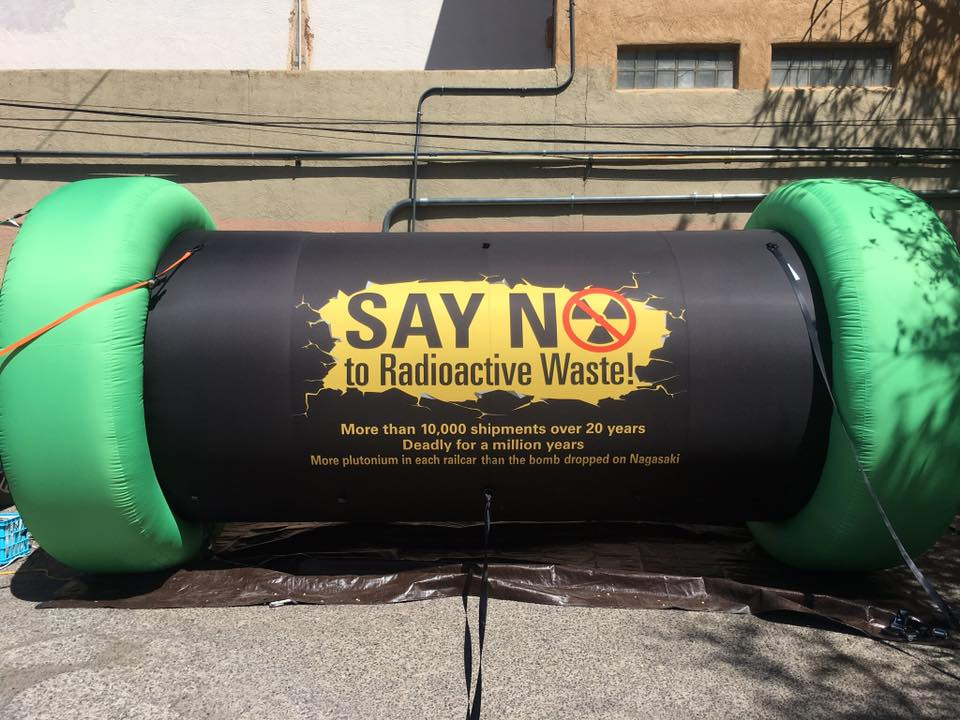
Instead, they ruled that approving ISP’s application would not directly involve NRC in a violation of federal law – according to the NRC, that violation would occur only if DOE acted on the approved license – and therefore they could approve it, despite the fact the provision is illegal. The NRC Commissioners also noted with approval that “ISP acknowledges that it hopes Congress will change the law to allow DOE to enter storage contracts prior to the availability of a repository” (December 17, 2020 order, page 5).
Read MoreA grim reality

Living longterm in radioactively contaminated areas damages our health
By Cindy Folkers
A growing body of evidence supports a grim reality: that living in radioactively contaminated areas over multiple years results in harmful health impacts, particularly during pregnancy.
This is borne out in a recent study by Anton V. Korsakov, Emilia V. Geger, Dmitry G. Lagerev, Leonid I. Pugach and Timothy A. Mousseau, that shows a higher frequency of birth defects amongst people living in Chernobyl-contaminated areas (as opposed to those living in areas considered uncontaminated) in the Bryansk region of Russia.
Because the industry and governments are pushing to spend more money on new nuclear reactors — or to keep the old ones running longer — they have been forced to come up with a deadly workaround to surmount the strongest argument against nuclear power: its potential for catastrophic accidents.

Even the nuclear industry and the governments willing to do its bidding understand that you cannot really clean up after a nuclear catastrophe. For example, in Japan, where the March 2011 nuclear disaster has left lands radioactively contaminated potentially indefinitely, there is an attempt to mandate that people return to live in these areas by claiming there are no “discernible” health impacts from doing so.
Bodies that are supposed to protect health and regulate the nuclear industry, including the U.S. Environmental Protection Agency, the International Commission on Radiological Protection and Nuclear Regulatory Commission are raising recommended public exposure limits, considering halting evacuations from radiation releases, and encouraging people to live on, and eat from, contaminated land.
Read MoreNo nukes in Asia…or anywhere

Groups call for a nuclear power ban and no radioactive water dump at Fukushima
By No Nukes Asia Forum Japan • Citizens’Nuclear Information Center • Friends of the Earth Japan
On the 10th Anniversary of the Fukushima nuclear disaster, groups in Japan have initiated an international signature campaign against the discharge of contaminated water and calling for the discontinuation of nuclear power plants now! Please join this campaign by signing the petition.
The Japanese government is planning to release Fukushima’s radioactive contaminated water into the ocean. Japanese citizens, from Fukushima Prefecture and beyond, are strongly opposed to this plan.
The Fukushima Prefecture Fishermen’s Association, with the backing of the Fishermen’s Association from all over Japan, have submitted an opinion of opposition to the government. The Fukushima Prefecture Agricultural Cooperatives and Forestry Associations along with 43 local governments in Fukushima Prefecture also participated in this campaign, and 450,000 citizens from across Japan have signed a petition against the government plan.
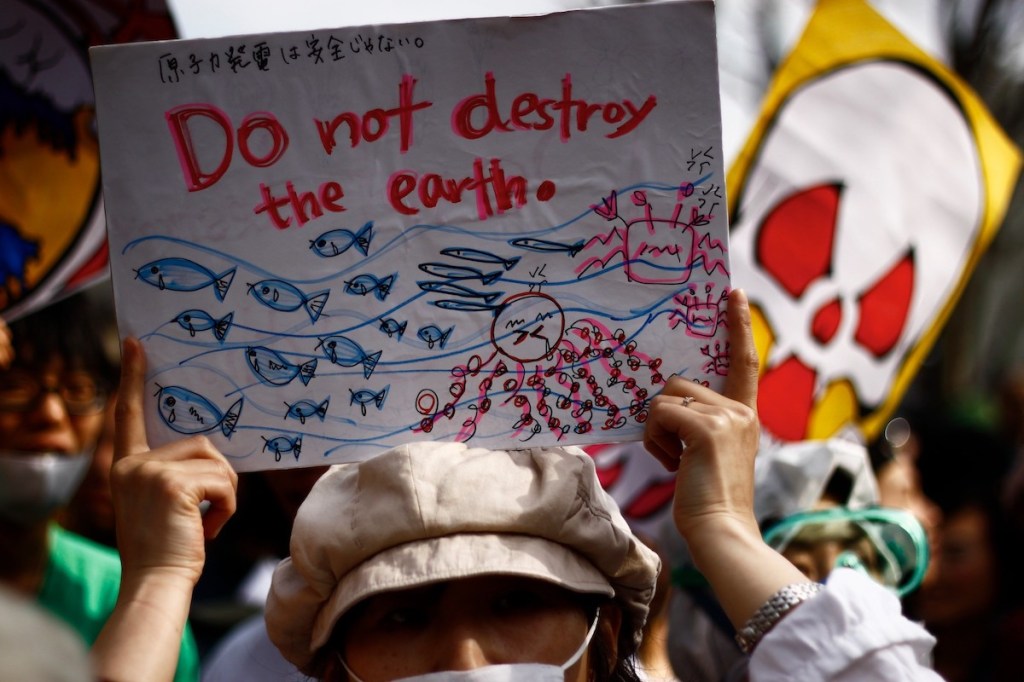
The threat of the release of contaminated water has triggered much concern and opposition among citizenry overseas as well, including those from neighboring countries.
Contaminated water from Japan’s Fukushima nuclear plant has already exceeded 1.24 million tons. We are deeply concerned about the adverse effects the water will have on the human body by way of consuming fish and shellfish, which are staples in the region’s diet.
We demand the Japanese government keep the contaminated water stored in the tanks until the water’s levels of radioactivity are significantly reduced. The government could also adopt mortar-induced radioactive waste solidification technology.
Read More
