 Beyond Nuclear International
When a Dene lantern shone in Hiroshima

A 1998 Dene delegation to Japan thanked Hibakusha for “holding up a shining light” to peace
By Linda Pentz Gunter
Sometimes the best therapy for trauma, is to return to the scene and make amends. In more academic realms, this is referred to as ‘reparations.’ For the suffering individual, it is a proven antidote to post traumatic stress disorder, commonly known as PTSD.
Thus, American veterans of the war in Vietnam have returned there to engage in works of charity, care and rebuilding, assuaging both the pain of atrocities witnessed but also those they may have participated in. Trauma is also guilt, and guilt can be eased by forgiveness and by actions for good.
Reparations and apologies are built into some cultures, including that of the Indigenous Dene people of Canada, who believe that healing requires circles to be closed in order to allow for reconciliation. And so it came about that, in August 1998, a delegation of 10 Dene went to Hiroshima and Nagasaki, 53 years after the deadly atomic bombings, to attend the annual peace ceremonies there. And to make amends.
Decades after the Hiroshima and Nagasaki bombings, the Dene learned that uranium mined from their land had been used in the atomic bombs dropped on those cities. It was necessary, therefore, to travel there in person.
“It’s a justice issue for them,” explains Dene activist, Cindy Kenny-Gilday. “They have to make amends of some kind. So they have to go to the surviving relatives of the Japanese people and say ‘this is the way it happened.’ And in telling that story, heal themselves.”
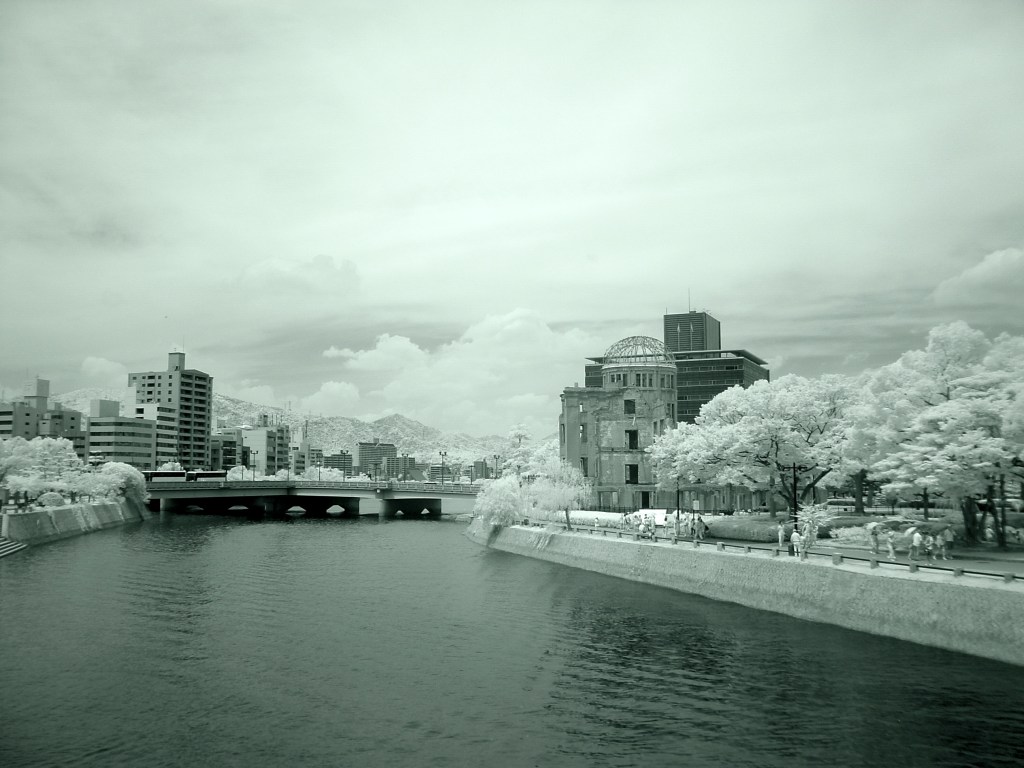
Canada should acknowledge its role in the A bomb
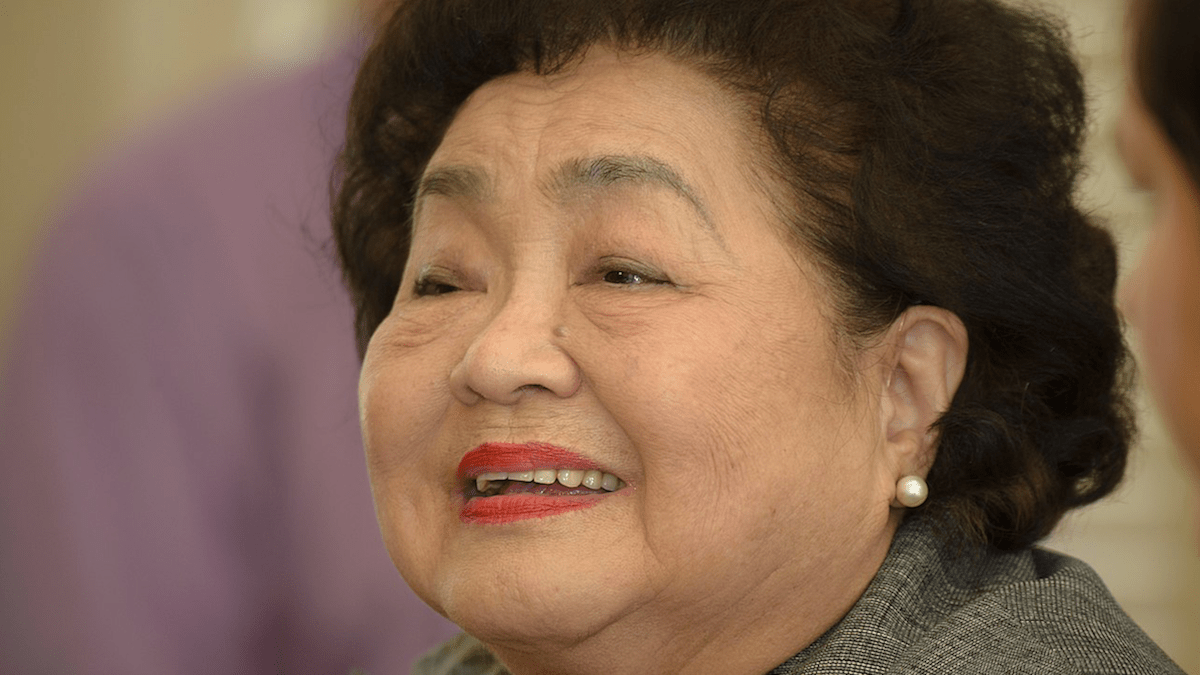
Nobel Laureate, Setsuko Thurlow, asks Trudeau for a “statement of regret”
Toronto’s Setsuko Thurlow—a survivor of the atomic bombing of Hiroshima—has urged Prime Minister Justin Trudeau to acknowledge the extensive Canadian government involvement in the creation of the first atom bombs that destroyed Hiroshima and Nagasaki on August 6 and 9, 1945. She requested that the Prime Minister issue a statement of regret for the immense deaths and suffering inflicted on the two cities and asked that Canada ratify the UN Treaty on the Prohibition of Nuclear Weapons. Her actions and this article come courtesy of Anton Wagner and the Hiroshima Nagasaki Day Coalition.
The full text of Setsuko Thurlow’s appeal to the Prime Minister is posted on the Hiroshima Nagasaki Day Coalition website, with the background brief, “Canada and the Atom Bomb” she submitted to Justin Trudeau along with her letter.
Thurlow submitted her appeal to the prime minister three weeks before the 75th anniversary of the first American test of an atom bomb in the New Mexico desert on July 16, 1945. It was made of plutonium, the same weapon used against Nagasaki three weeks later. Hiroshima was destroyed by an atom bomb made from uranium. By the end of 1945, over 140,000 people had perished in the nuclear strike against Hiroshima, which Thurlow witnessed as a thirteen-year old. Another 70,000 died in the atomic bombing of Nagasaki.
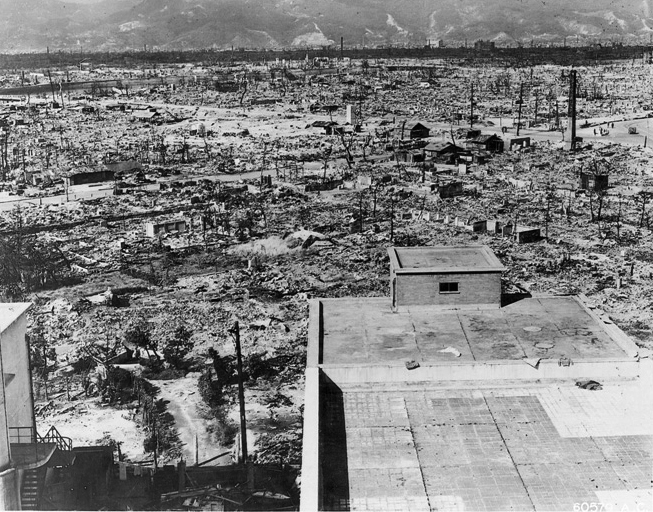
Thurlow jointly accepted the Nobel Peace Prize on behalf of the International Campaign to Abolish Nuclear Weapons in 2017. Thirty-eight countries have ratified the UN Ban Treaty. But it needs twelve more nations to ratify for the treaty to become international law. Canada could break the ratification logjam stopping the Treaty from coming into force.
Read MoreThe big spender we don’t need

Trump administration plans vast expansion of military budget
By Lawrence Wittner
In late May of this year, President Donald Trump’s special envoy for arms control bragged before a Washington think tank that the U.S. government was prepared to outspend Russia and China to win a new nuclear arms race. “The president has made clear that we have a tried and true practice here,” he remarked. “We know how to win these races and we know how to spend the adversary into oblivion.”
This comment was not out of line for a Trump administration official. Indeed, back in December 2016, shortly after his election, Trump himself proclaimed that the United States would “greatly strengthen and expand” the U.S. government’s nuclear weapons program, adding provocatively: “Let it be an arms race. We will outmatch them at every pass and outlast them all.”
In a fresh challenge to Russia and China, delivered in October 2018, Trump again extolled his decision to win the nuclear arms race, explaining: “We have more money than anybody else, by far.”
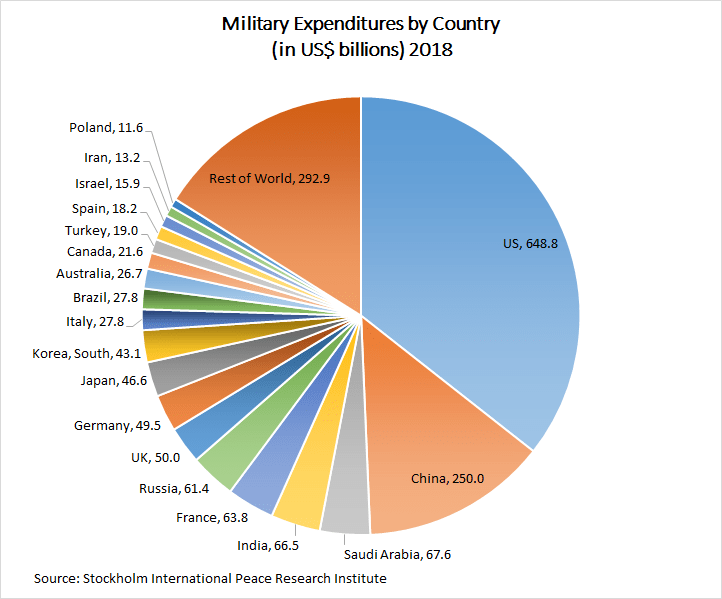
And, in fact, the Trump administration has followed through on its promise to pour American tax dollars into the arms race through a vast expansion of the U.S. military budget. In 2019 alone (the last year for which worldwide spending figures are available), federal spending on the U.S. military soared to $732 billion. (Other military analysts, who included military-related spending, put the figure at $1.25 trillion.)
As a result, the United States, with about 4 percent of the world’s population, accounted for 38 percent of world military spending. Although it’s certainly true that other nations engaged in military buildups as well, China accounted for only 14 percent of global military spending that year, while Russia accounted for only 3 percent. Indeed, the United States spent more on its military than the next 10 countries combined.
Read MoreNucleargate in Ohio
Huge criminal racketeering conspiracy orchestrated reactor bailouts
By Linda Pentz Gunter
It’s been a bit of a Watergate week for nuclear power, with individuals in two states arrested for criminally defrauding the public to keep nuclear power alive. In Ohio, it was public officials, believed to be backed by nuclear company money, who illegally orchestrated a massive subsidy. In South Carolina, it was the arrest of an energy company official who has pled guilty to a $9 billion nuclear fraud. This week, we feature the Ohio story. Next week, it will be South Carolina’s turn.
If you were going to pull someone out of central casting to play a thuggish villain, you would choose Larry Householder. But he wouldn’t need any acting skills.
On July 21, Householder, along with four others, was arrested for his alleged involvement in what amounts to the biggest criminal racketeering conspiracy in Ohio history. Somehow it’s not a surprise that it revolved around pots of money to keep two aging and unaffordable nuclear power plants open.
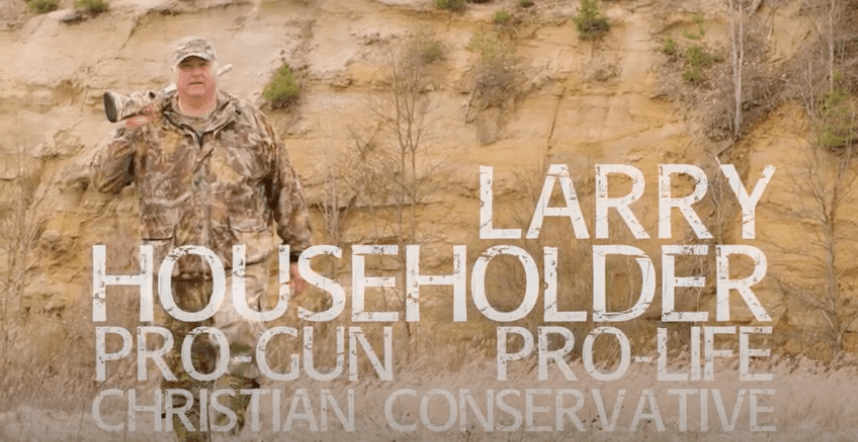
While Householder may physically embody everyone’s idea of a gangster, it’s not his official profession. He is — and presumably that will soon be a “was” — the Speaker of the Ohio House of Representatives.
The scheme is laid bare in an 81-page criminal complaint. It was busted open by a year-long, detailed and covert investigation by the US Attorney’s office and the FBI, and involves the flow of $61 million of dark money directed toward activities that would ensure the passage of legislation in Ohio guaranteeing the bailout of the Davis-Besse and Perry nuclear reactors to the tune of $1.5 billion. The subsidy is being funded via a surcharge on electricity customers.
The bill, known as HB6, also slashed mandates for wind and solar energy and eliminated energy efficiency requirements. It was, as David Roberts described it on Vox just after the bill passed in July 2019, “the worst piece of legislation in the 21st century” and “the most counterproductive and corrupt piece of state energy legislation I can recall in all my time covering this stuff.”
FirstEnergy Solutions, the then owner of the plants, had threatened their closure if the subsidy was not forthcoming.
Read MoreA dark legacy

Western Shoshone land stolen for nuclear weapons tests and waste dump
By Ian Zabarte
Shoshone land was illegally seized by the U.S government, breaking a historic treaty, first for the atomic test site in Nevada, and then for the planned — but still canceled — Yucca Mountain high-level radioactive waste dump. Throughout, the Shoshone people have paid a terrible price.
As a Shoshone, we always had horses. My grandfather always told me, “Stop kicking up dust.” Now I understand that it was because of the radioactive fallout.
To hide the impacts from nuclear weapons testing, Congress defined Shoshone Indian ponies as “wild horses.” There is no such thing as a wild horse. They are feral horses, but the Wild Horse and Burrow Acts of 1971 gave the Bureau of Land Management (BLM) the affirmative act to take Shoshone livestock while blaming the Shoshone ranchers for destruction of the range caused by nuclear weapons testing.
My livelihood was taken and the Shoshone economy destroyed by the BLM. On the land, radioactive fallout destroyed the delicate high desert flora and fauna, creating huge vulnerabilities where noxious and invasive plant species took hold.
Nuclear weapons testing at the Nevada National Security Site has left a dark legacy of radiation exposure to Americans downwind from the battlefield of the Cold War. Among the victims are the Shoshone people, who, by no fault of our own, were exposed to radiation in fallout from more than 924 nuclear tests.
The Shoshone people never consented to the nuclear weapons testing.
Mapping uranium
What is it? Where does it come from? And who, if anyone, benefits?
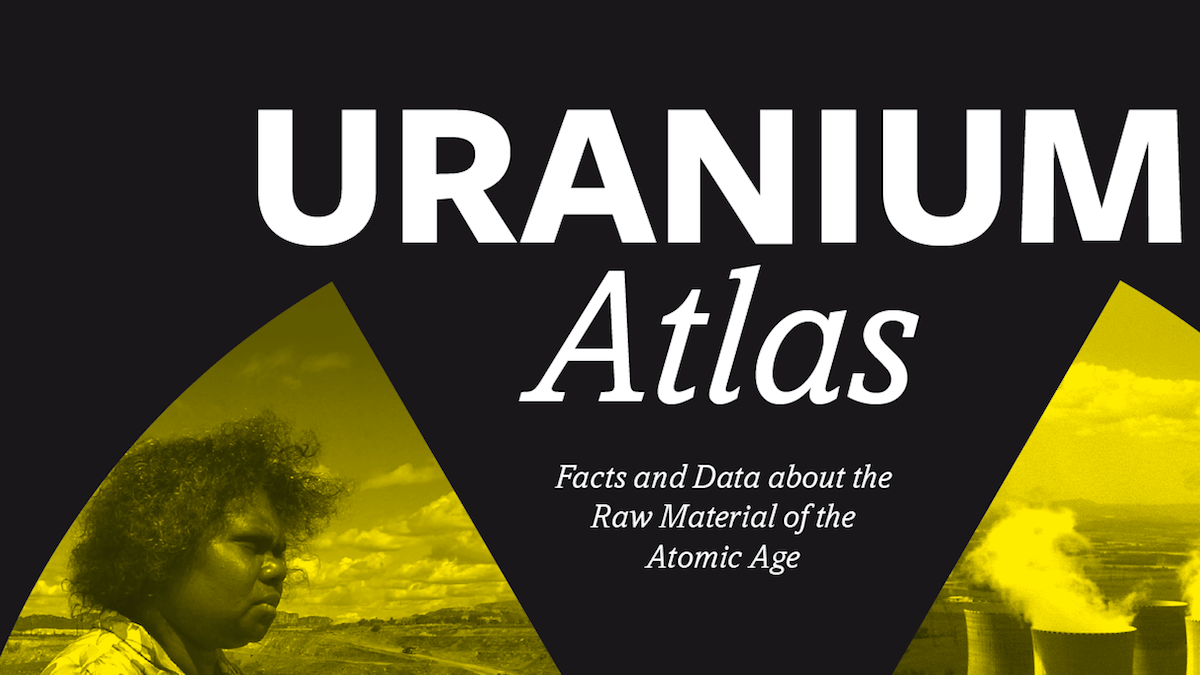
This week marks the official launch of the Uranium Atlas, English edition, with new and expanded content. Beyond Nuclear was part of the editorial team, which includes the Nuclear Free Future Foundation, (which earlier published a German language edition) the Rosa Luxemburg Stiftung and IPPNW Germany. Beyond Nuclear is grateful for the generous support from Honor the Earth, which sponsored the printing and distribution costs for North American readers of the Uranium Atlas.
The Uranium Atlas is, as its title suggests, a collection of maps indicating everywhere that uranium was — or is still — extracted and used. It effectively maps the journey of uranium, from mining and milling to the production of electricity and nuclear bombs, the testing and use of the latter, and the unsolved and unending problem of the radioactive waste left at the end of this (mis)use.

Over the course of 21 concise, two-page chapters we see where uranium was mined — almost exclusively on Indigenous lands; who was in harm’s way during atomic tests — almost exclusively communities of color; and where nuclear industries want to dump their waste — in the case of North America and Australia, once again on indigenous lands.
Read More Beyond Nuclear International