 Beyond Nuclear International
India uranium mines radiate disaster
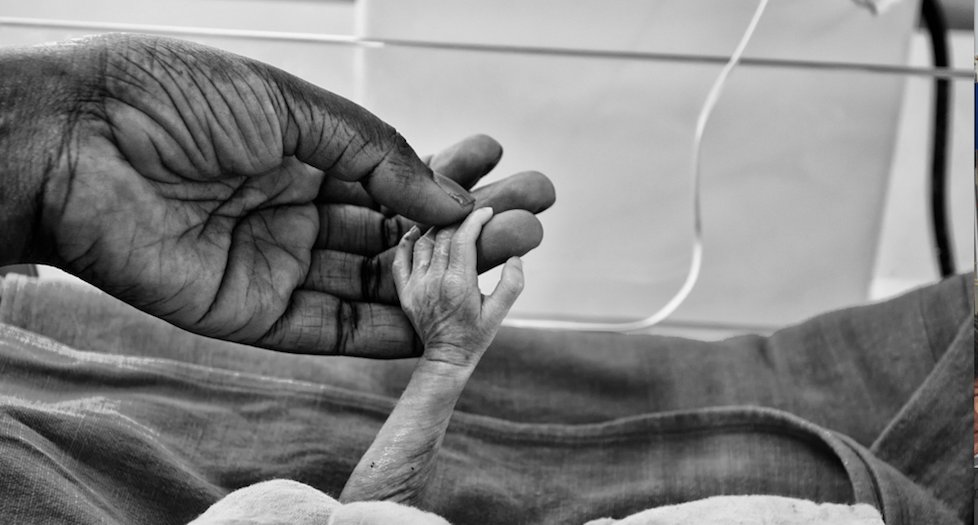
Villagers of Jaduguda say radiation from uranium mines is impairing their children
By Amita Bhaduri (article originally published by India Water Portal)
The body of Guria Das looked like that of a three-year-old when she passed away at the age of 13. Guria was born in 1999 with a condition that constrained her growth. Her father, Chhatua Das recounts how Guria, unable to speak or move, communicated with him and his wife through gestures; a language that only the three of them could comprehend. Born in Jaduguda, in Purbi Singhbhum district in Jharkhand, Guria was one of the many children who succumbed to the health complications from excessive radiation from the uranium mines.
By 2012, Guria’s bone structure was deteriorating and the local doctors gave up hope. Das, an auto driver, grieves that he was unable to afford his daughter’s treatment during her last days. There were conflicting diagnoses by the doctors; some suspected jaundice, others said Guria was suffering from skeletal distortions and stunted growth and some others held a rare genetic condition as responsible. “With each passing day, her backbone became stiffer, while her eyes continued to hold a lot of emotion till the end. We could only give supporting medicines but lost her as I could not arrange even Rs 3000 for her blood transfusion,” says Das.

Guria Das, who died at 13 but was the size of a 3-year old. Uranium-related health hazards are endemic in Jaduguda.
Uranium Corporation of India Limited (UCIL), a public sector unit, has been scraping tons of uranium ore annually out of six mines spread across the hills in Jaduguda. Uranium mined from here is used in making fuel pellets that fire the reactors in nuclear power plants.
The (nearly) 90-year old man who climbed out the window and got a nuclear weapons ban
By Linda Gunter
With the 2017 ICAN Nobel Peace Prize win and UN nuclear weapons ban, we have celebrated the advent of youth to the cause. But we must not forget or dismiss the elders who got us here.
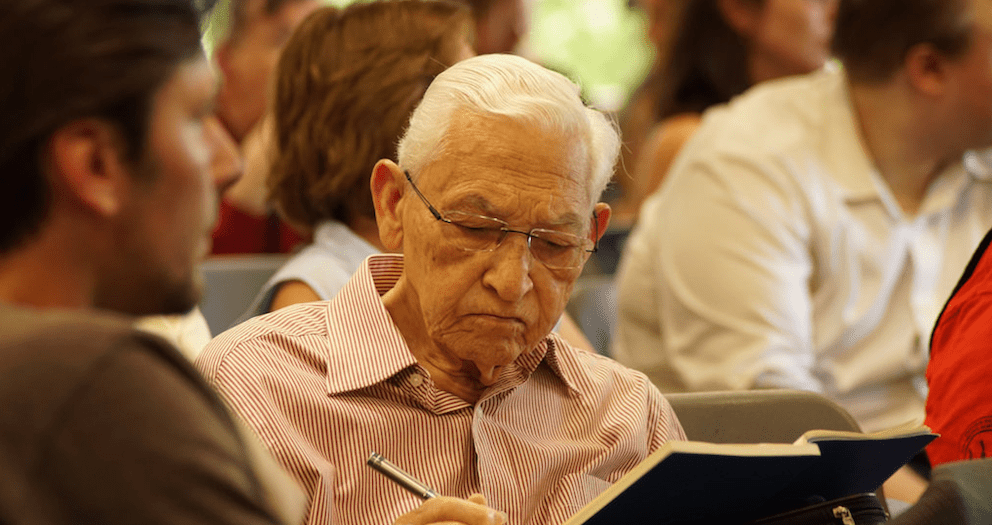
Beatrice Fihn, the executive director of ICAN, whom we profiled earlier, is very much the welcome fresh face of today’s nuclear weapons ban movement. But she is not the ICAN founder. That honor lies with 87-year old Dr. Ron McCoy, a Malaysian physician. (Headline photo of McCoy at the campaigners’ meeting by Xanthe Hall (IPPNW/ICAN).
A retired OB/GYN, McCoy participated in the numerous meetings that were the run-up to the successful negotiation of the UN nuclear weapons ban. His compadres were mostly in their 30s. And he was as much a part of the action, as well as the inspiration, that secured the ban.
This was never more apparent than at a meeting held at a charming little villa in Geneva, used for breakout sessions during the 2016 UN Open Ended Working Group on Disarmament. McCoy’s session took place in a far ante room with only one way out — through the main conference room. In that room, the Hibakusha were relating their moving and powerful stories, once again painfully reliving the horrors of Hiroshima and Nagasaki. Their testimonies provided the personal, humanitarian narrative that was central to ICAN’s argument for the ban.
An “Almighty” good read
Dan Zak’s book on nuclear weapons is a lyrical history rich with personalities
By Linda Pentz Gunter
“The zero hour approached but time seemed at a standstill. There was no cell service out there in the bramble, off a state highway named for a U.S. senator, past the point where brick estates gave way to matchstick shanties, past where foothills overtook steeples, where civilization faded down tangles of switchbacks. Off one sudden turn, a gravel drive hitched into the dim heather and got narrower, until it was just a mud lane rutted with tire tracks that wormed between warped barns. And there was the grove of sycamore, the rows of grapevine and corn, the handsome country house. A sanctuary. On the wraparound porch facing the vegetable garden, especially at night, it was possible to pretend that this was all there was — that the world was made only of tranquil enclaves under ancient starlight.”
If, on reading that evocative paragraph, you did not immediately conclude that this was a non-fiction book about the history of nuclear weapons, you could be forgiven. That lyrical opening was the first, but by no means the only, unexpected thing about Dan Zak’s book, Almighty. Courage, Resistance, and Existential Peril in the Nuclear Age.
Zak writes feature stories, and occasional news assignments, for the Washington Post. He is, not to be too harsh on others, a rare pearl among a lot of rather pedantic swine. Fine writing matters, or it should, but it doesn’t seem to much anymore in today’s 280-character blurt-fest.

Robert Oppenheimer makes his final inspection of “the gadget” before the Trinity atomic test
Solar start-ups are plugging Africa’s energy gap
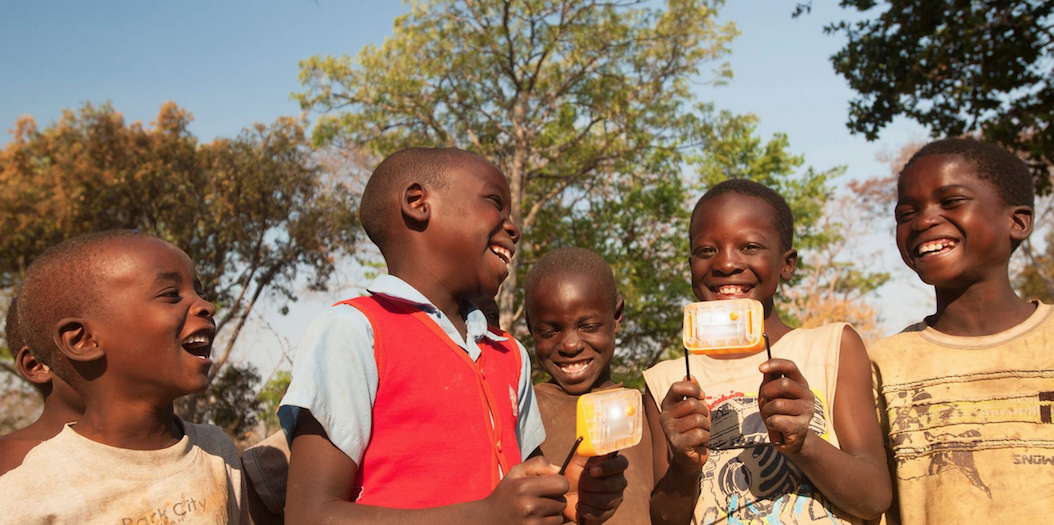
Solar may soon be the region’s most reliable — and cheapest — source of renewable energy
By Akinyi Ochieng and Fadekemi Abiru, from Africa Expert Network
Life without electricity can be dangerous and difficult. While Scranton, Pennsylvania earned the moniker “Electric City” in 1880, 90% of rural Americans still lacked power by the 1940s. When the wealthiest nation is just a few decades removed from full electrification, does this make electrifying Africa, where nearly 600 million live without it, the world’s most urgent yet daunting developmental challenge?
Based on current trends, the World Bank predicts that even by 2040 over half a billion people in Sub-Saharan Africa will still lack electricity. Although energy use across sub-Saharan Africa has risen by 45% since 2000, supply has not kept pace with demand. However, the emerging potential of cost-competitive solar solutions may soon propel Africa into a bright future. Across the continent, entrepreneurs have driven the growth of the world’s most attractive green energy market by developing ambitious off-grid and utility-scale solar projects.
Africa has emerged as a hotbed for solar investment. In the last three years, solar has been one of the most popular sectors for development institutions and private sector investors targeting areas with significant potential for social and economic returns. In October, M-KOPA, one of East Africa’s leading pay-as-you-go energy providers, secured a total of US$80 million to finance solar installations in one million homes over the next three years.
Hitachi wants its nuclear cake
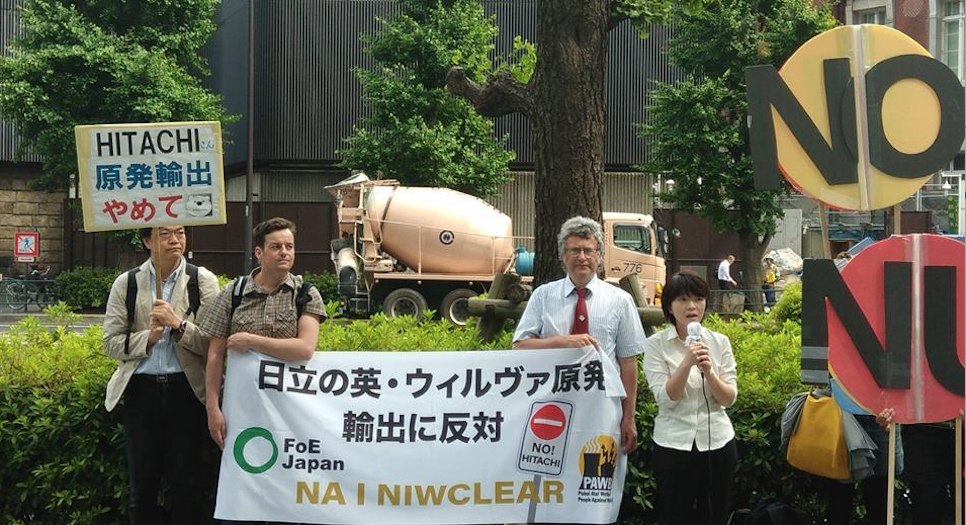
And the UK government is happy to add the icing
By Linda Pentz Gunter
So let’s see. Construction costs for uneconomically and globally fading nuclear power plants continue to soar. The timeframes for building them stretch out endlessly like an Alice in Wonderland hallucinogen. The public don’t want them. The grid doesn’t need them.
But there is a nuclear power plant that Japanese corporation, Hitachi, wants to build on a spectacular piece of Welsh coastline. It’s likely to cost at least $28 billion and climbing. And it’s still going ahead.
Just another day in the insane world of blind nuclear evangelism, in which there is nothing in it for anyone except possibly the continued ability to claim nuclear pre-eminence somewhere in the world.
Hitachi’s nuclear project is Wylfa B, consisting of two Hitachi-designed so-called Advanced Boiling Water Reactors to be constructed by its subsidiary, Horizon Nuclear Power Ltd. Japan’s government sees this project as the “touchstone for exports of nuclear power technology.” The UK government sees it as a face-saving imperative, even though it makes zero sense from either an energy or an economic perspective. And it’s so desperate to keep nuclear power alive, it’s willing to hand over an outrageously generous bag of goodies to sweeten the deal and hold Hitachi’s interest.
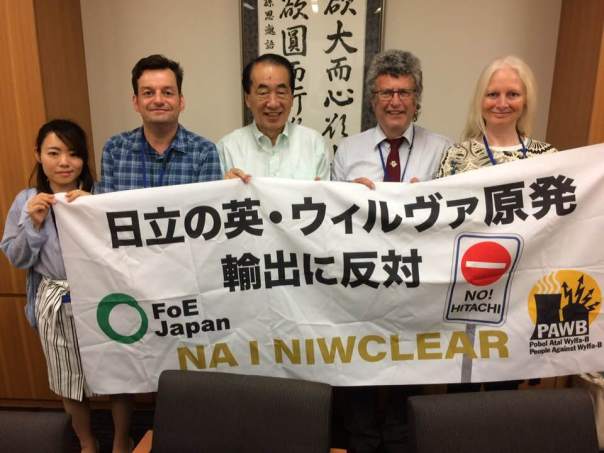
Meilyr Tomos, Robat Idris and Linda Rogers with Nato Kan (center) during their speaking tour in Japan.
Fukushima mothers at UN tell their story
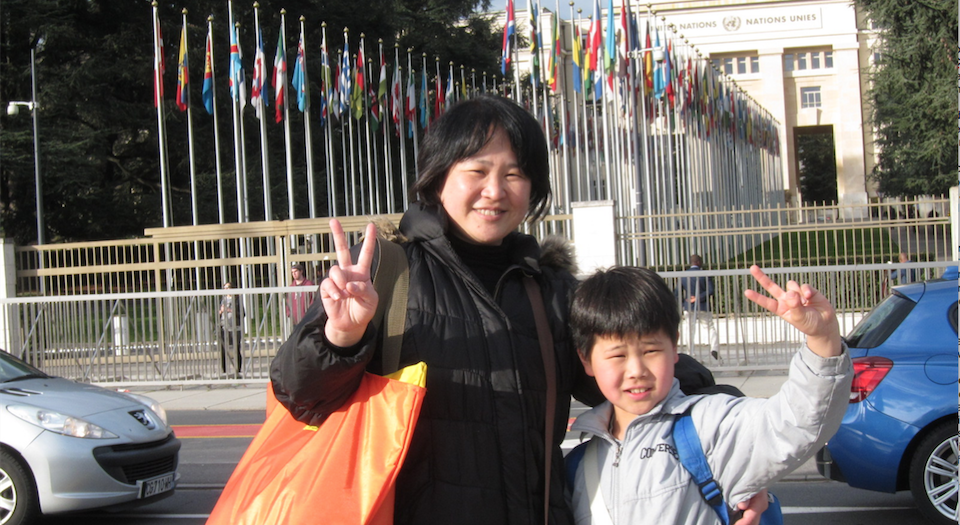
Evacuees from nuclear disaster urge the Japanese government to comply with UN Human Rights standards
By Linda Pentz Gunter, with contributions from Kurumi Sugita and Akiko Morimatsu
When Kazumi Kusano stood in the CRIIRAD radiological laboratory in Valence, France listening to lab director, Bruno Chareyron, describe just how radioactive the soil sample taken from a school playground back home in Japan really was, she could not fight back the tears.
“This qualifies as radioactive waste,” Chareyron told them. “The children are playing in a school playground that is very contaminated. The lowest reading is 300,000 bequerels per square meter. That is an extremely high level.” (CRIIRAD is the Commission for Independent Research and Information about Radiation, an independent research laboratory and NGO).
Kazumi, a Japanese mother and Fukushima evacuee who prefers not to use her real name, was in France with two other mothers, Mami Kurumada and Akiko Morimatsu — all of whom also brought their children — as part of an educational speaking tour. Morimatsu was also invited to testify before the UN Commission on Human Rights in Geneva, to launch an appeal for the rights of nuclear refugees.
In Japan, seven years since the March 2011 Fukushima nuclear disaster began to unfold, the government is requiring some refugees to return to the region. Says Chareyron, whose lab has worked extensively in the Fukushima zone, “the Japanese government is doing everything to force citizens to return to lands where the radiation doses that citizens and children should be subjected to are largely over the typically acceptable norms.”
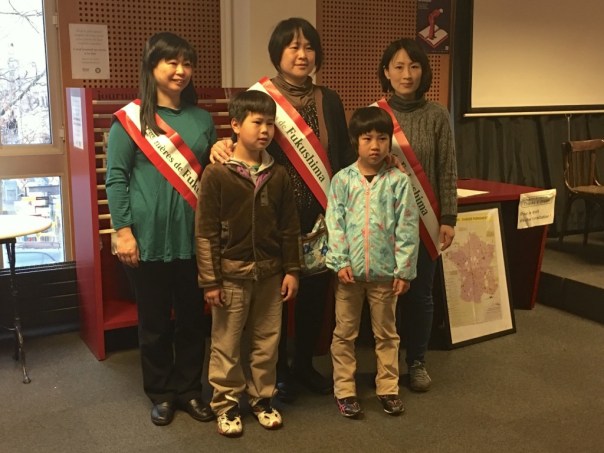
Kazumi Kusano, Akiko Morimatsu and Mami Kurumada (l to r) and Morimatsu’s two children during their speaking tour in France

