 Beyond Nuclear International
No use in the climate crisis
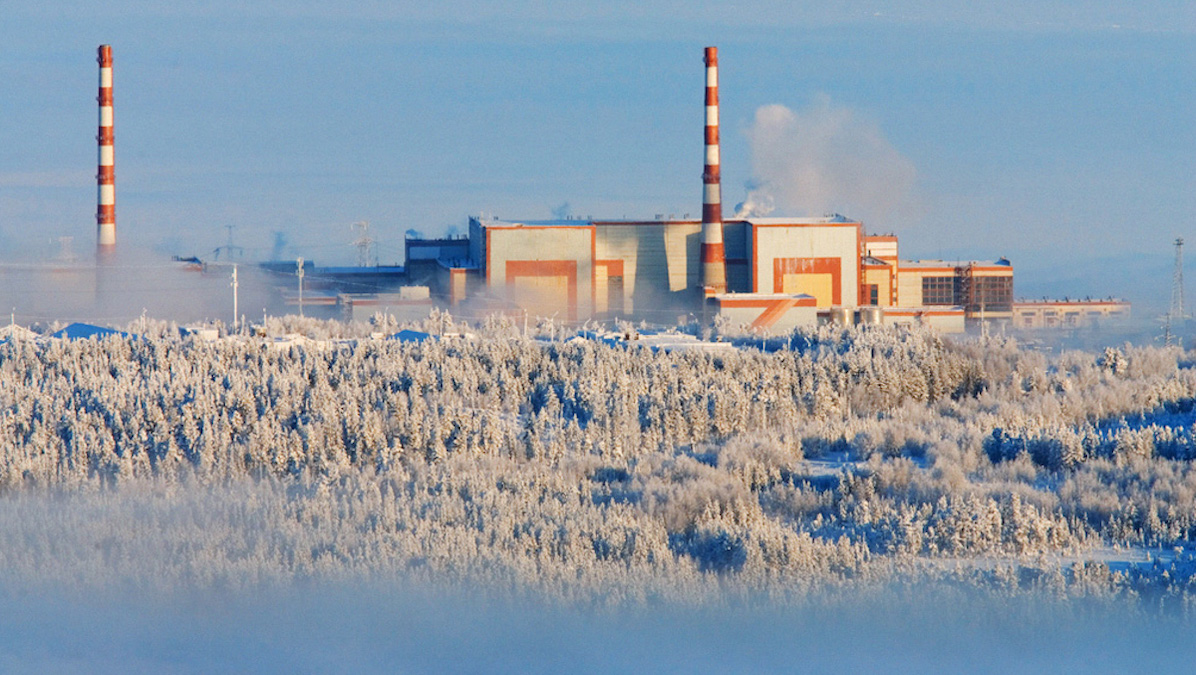
New Talking Points delivers all the reasons why small modular reactors have no role to play for climate change
By Linda Pentz Gunter
We’ve written a lot on these pages about small modular reactors (including again last week) and there’s a reason. Even though SMRs are a mirage, languishing as aspirational power point reactors loaded with false promises, there is a tsunami of license applications coming down for them.
And we are saddled with a compliant Congress, White House and nuclear regulator, all of whom have bought into the Great Lie that SMRs can do something — anything — for the climate crisis. So they will likely rubber stamp the lot. Unless we stop them.
On December 2 it will be 80 years since the first human-made self-sustaining chain reaction occurred, at the Chicago Pile-1 under the leadership of Enrico Fermi and his team. That generated the first cupful of radioactive waste, which, along with the numerous other attendant problems of nuclear energy, has never been solved. Here we are, 80 years later, still relentlessly tilting at nuclear windmills. By now, we ought to know better.
You would think it would be obvious to anyone giving this technology a second thought, that given the immense lead times, high costs, uncertainties about design and safety, and the complete absence of a radioactive waste management plan, any nuclear reactor, large or small, is a climate liability, not a solution.
Nevertheless, the empirical evidence is being drowned out by denial. “We don’t get to net zero by 2050 without nuclear power in the mix,” US Special Climate Envoy, John Kerry, unhelpfully, and untruthfully, told a press conference during the COP27 climate summit while announcing SMR deals with Romania and Ukraine.
It’s possible that our illustrious leaders know better. They just prefer to maintain the creature comforts of the status quo, content to be the puppets of big polluters — fossil fuels and nuclear power — where the votes and, more importantly, the money are.
We can’t compete with the money. But we can change the votes. Elected officials want to stay elected. That means pleasing their electorate. So they need to hear from us. Because when it comes to pushing small modular reactors, we aren’t at all pleased.
Read MoreIn the grip of the energy crisis
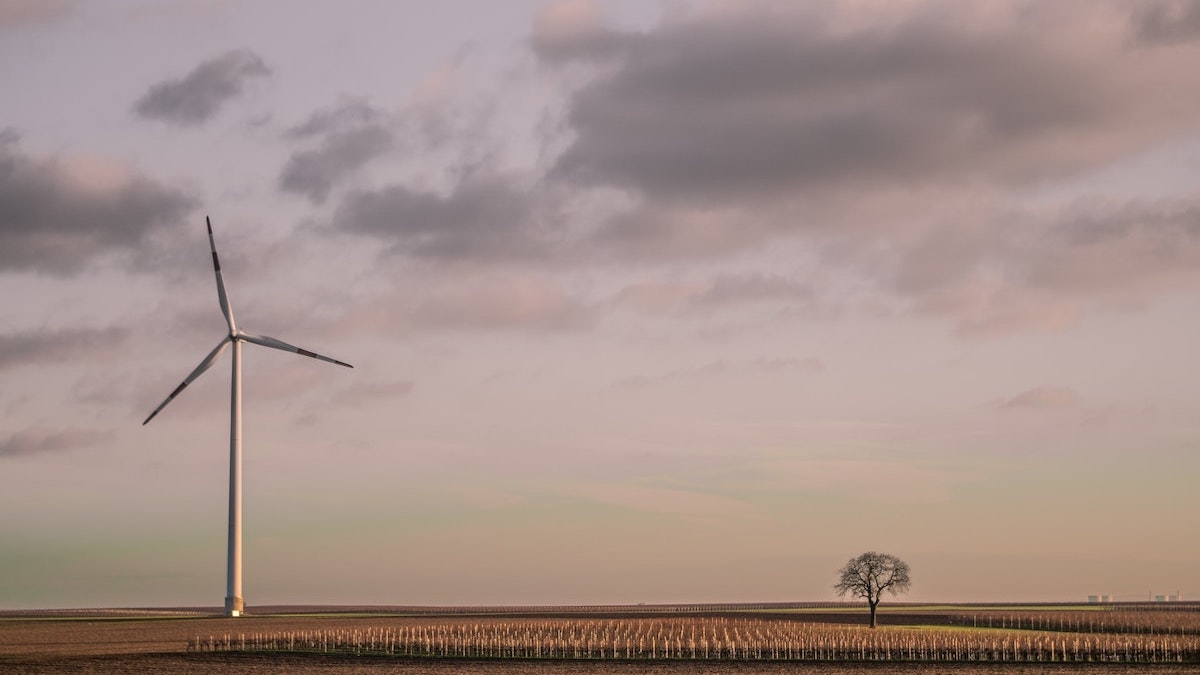
How has the Russian war impacted Germany’s renewable revolution?
By Sören Amelang, Clean Energy Wire
The energy crisis fueled by Russia’s war against Ukraine is dealing a heavy blow to Europe’s biggest economy Germany, due to its large dependence on Russian fossil fuels. Policymakers, businesses and households alike are struggling to cope with skyrocketing prices, which are fanning fears of irreparable damages to the country’s prized industries, economic hardships for its citizens, and social unrest. The long-term impact on the country’s landmark energy transition remains uncertain, as Germany redoubles efforts to roll out renewables, but also bets on liquefied natural gas (LNG), a temporary revival of coal plants and a limited runtime extension for its remaining nuclear plants to weather the storm. This article provides an overview of the state of play of Germany’s shift to climate neutrality, which is now dominated by its response to the crisis. It will be updated regularly. [UPDATE: Government earmarks 83 billion euros for gas and power price subsidies.]

What’s the energy crisis’ impact on the economy and households?
- The energy crisis is set to push Germany into a recession, as rising energy prices put a damper on industrial production and inflation means citizens will buy less. Both the government and the country’s leading economic research institutes expect the economy to shrink in 2023. The government forecasts an inflation rate of 8 percent in 2022, and 7 percent in 2023.
- Many German industrial companies have relied on cheap Russian pipeline gas, among them key producers of basic materials needed for many other products. These firms are particularly concerned about the energy crisis, as permanently higher gas prices threaten competitiveness and long-term survival.
- The government has launched massive relief packages for citizens and companies (see below). Without these, many households would face additional energy costs running into thousands of euros per year, with retail gas prices multiplying for many citizens, and retail power prices also rising steeply.
- Policymakers, consumer protection groups, and social care services have warned that the energy price hike could result in social hardships and even unrest if households are overburdened. But so far, protests have remained limited in scope and scale, and mainly limited to regions notorious for their rejection of government policies.
- Most citizens blame the energy price hike on external factors such as the pandemic and the war on Ukraine, and generally approve of the government’s handling of the crisis, according to surveys. They also say that they are ready to contribute to energy savings. But rising prices have become the biggest concern for a vast majority of the population.
Holtec loses its bid to reopen Palisades
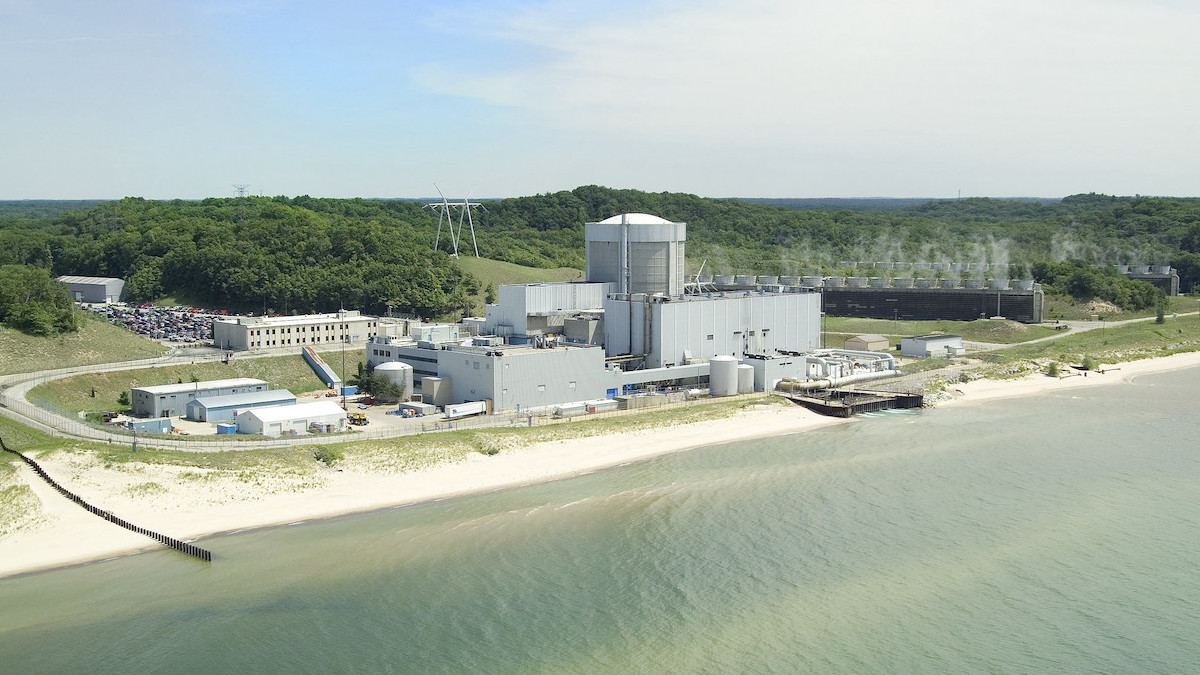
Cracked and dangerous reactor should be ‘autopsied’ as part of decommissioning
By Linda Pentz Gunter
Sometimes good things happen. Or at least the right thing. Sometimes we win one.
Last May, Entergy Corporation, the owner of the Palisades single unit nuclear power plant in Covert, Michigan, announced it was closing the reactor for good. This was a huge relief because Palisades was — and is —arguably the most dangerously degraded reactor in the United States.
At 51, the Palisades reactor was having more than a mid-life crisis. It was in possession of the most embrittled reactor pressure vessel in the country; it had a severely degraded reactor lid; and its steam generators were worn out — all key safety components.
As my Beyond Nuclear colleague, Kevin Kamps, who’s from Michigan said, “we are thankful that this reactor has indeed been shut down before it melted down.”
But there was a wrinkle. The reactor was sold to Holtec, a notorious US company with a spotty track record, which has been buying up reactors in order to decommission them. It has already faced a number of accusations over its decommissioning procedures at the closed Oyster Creek reactor site in New Jersey.
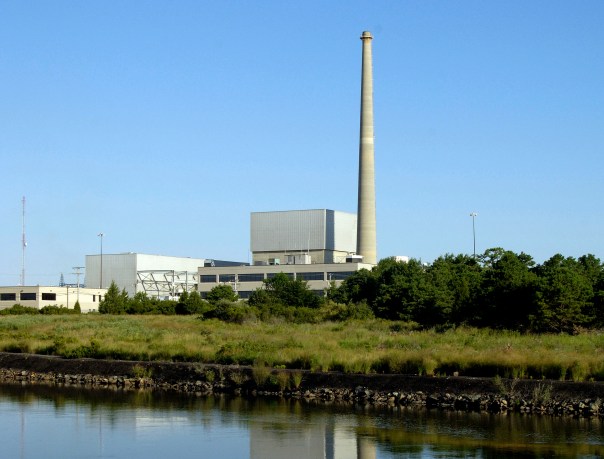
However, when the Biden administration started dangling $6 billion in funding via the Civil Nuclear Credit program in front of struggling reactor owners — in an effort to keep nuclear power plants running —Holtec made a grab for a share of the handout.
Luckily, there was a problem. Holtec does not have an operating license for Palisades. Nor has it ever operated a nuclear reactor so another company would need to be found to do that. The reactor was out of fuel. And of course there were all those technical and safety problems that would have to be addressed and, presumably, paid for.
Late last week, the US Department of Energy turned down Holtec’s request for funding from the Civil Nuclear Credit program, which would potentially have given the green light to Holtec to reopen Palisades.
Read MoreTime isn’t on their side

Why is the US government still pouring tax dollars into SMRs?
By Linda Pentz Gunter
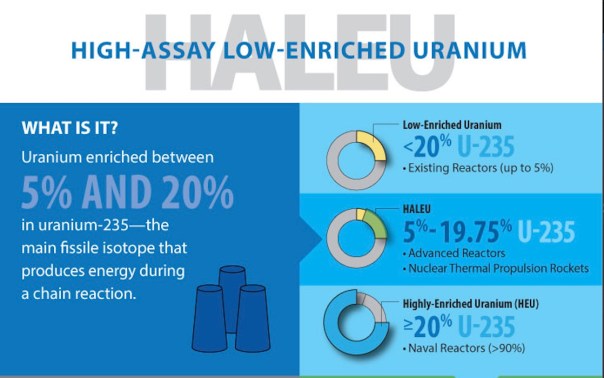
Among the myriad problems of the ever-promised-but-never-quite-here Small Modular Reactors (SMR)—aside from the fact that there is no economic rationale or established demand for ordering them — is access to the fuel most of the models would require.
With the exception of the NuScale reactor design, which is based on the traditional light water reactor, many of the remaining American SMRs on the drawing board would use High Assay Low Enriched Uranium (HALEU) fuel, something only Russia commercially manufactures currently. (The “low enriched” in the name is misleading as the uranium is actually enriched to close to 20% which borders on weapons-usable.)
On the one hand, the US and European Union countries appear to have no “energy security” concerns about continuing to import raw uranium and nuclear fuel from an increasingly hostile Russia already at war in Ukraine amid tightening fuel embargoes.
On the other hand, the need to import HALEU from Russia has suddenly prompted an attack of conscience in at least one quarter.
“We didn’t have a fuel problem until a few months ago,” Jeff Navin, director of external affairs of the Bill Gates owned company, TerraPower, told Reuters. “After the invasion of Ukraine, we were not comfortable doing business with Russia.”
Before the invasion, Russia was in the habit of exiling, imprisoning, poisoning and assassinating its detractors, including Russian journalists. But that, apparently, was no deterrent to Terrapower and others.
Read MoreBill Gates and techno-fix delusions

When elites try to change the world, it’s not usually for the better for the rest of us
By M.V. Ramana and Cassandra Jeffery
Note: The original version of this article includes endnotes. In the interests of space — and consistent with our formatting — we have not included these here. However, please refer to the original publication of this article in Against the Current, to see these references.
Bill Gates, the businessman, made one of the world’s biggest fortunes by designing, selling and marketing computer technology. It shouldn’t come as a surprise that when it comes to climate change, he’s pushing more technology.
When wealthy people push something, the world pays attention. Practically all major media outlets covered his recent book, How to Avoid a Climate Disaster, and Gates has been interviewed dozens of times. All this pushing came with the pre-emptive caveat expressed in his book that the “world is not exactly lacking in rich men with big ideas about what other people should do, or who think technology can fix any problem.”
In his account of how elites try to “change the world,” journalist Anand Giridharadas explained: “All around us, the winners in our highly inequitable status quo declare themselves partisans of change. They know the problem, and they want to be part of the solution. Actually, they want to lead the search for solutions…the attempts naturally reflect their biases.”

Gates is no exception to the rule; his bias favors maintaining the current economic and political system that has made him into one of the richest people in the world. The same bias also underpinned his stance on preserving intellectual property rights over Covid-19 vaccines, even at the cost of impeding access to these vaccines in much of the world.
Just as the pandemic was accentuated by insisting on the rights to continued profits for pharmaceutical companies, climate change is exacerbated by the current economic system that is predicated on unending growth.
A focus on technical solutions without fixing the underlying driver of climate change will not help. What is worse, some of the proposed technologies are positively dangerous.
Exhibit A: untested nuclear reactors like the ones that Gates is developing and endorsing.
Read MoreThe Kerry COPout
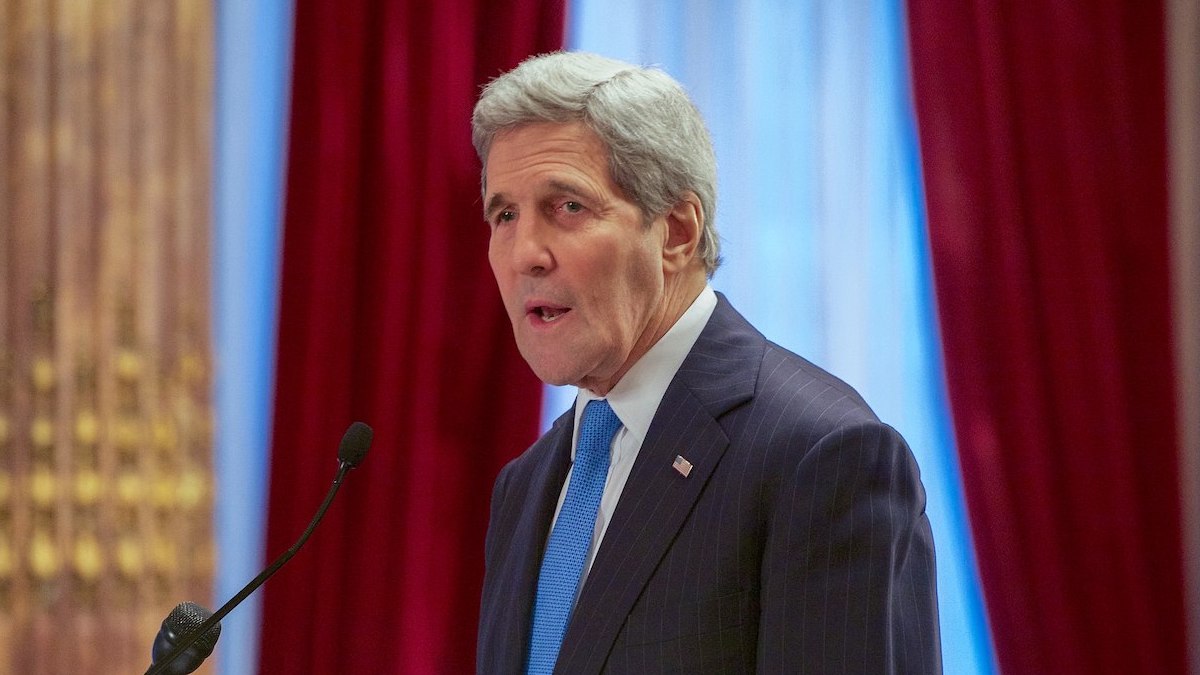
John Kerry uses last-chance climate summit to tout nuclear power
By Linda Pentz Gunter
“Russia’s seizure earlier this year of Ukraine’s Zaporizhzhia nuclear energy facility is shining a new light on the safety and security risks of the atomic export policies of the United States and other technologically advanced countries,” began a promising November 8 article in Roll Call.
However, that light seems to have blinded those in power to any common sense.
What has the alarm over the vulnerabilities of Ukraine’s reactors caught in a war zone actually taught any of them? Let’s start with the International Atomic Energy Agency.
“The problem is not nuclear energy,” IAEA Director General Rafael Grossi told the BBC recently. Nuclear power, Grossi said,“can provide a safe, clean source of energy and this is why many countries in Africa and in other places are turning to nuclear.” It’s just war that’s the trouble, Grossi said.
That’s like the gun lobby claiming it’s bad guys, not guns, that do the killing. Sorry, but no. Bad guys without guns can’t shoot people. Broken solar panels and fallen wind turbines can’t release massive amounts of radioactivity. The problem here very definitely IS nuclear energy. Period.

The IAEA position isn’t disingenuous of course. It’s a necessity borne of the agency’s massive conflict of interest, bound, as it is, to further and expand the use of nuclear power across the world. And then enforce safety at plants that are inherently dangerous.
“You will see that nuclear energy has a really solid, very consistent safety record,” said Grossi as the COP27 climate summit got underway in Egypt.
Except of course when there is a war, a prolonged loss of power, a natural disaster, a major human error or a catastrophic technical failure. Then, all of a sudden, having nuclear power plants is, according to Grossi, “playing with fire.”
Read More
