 Beyond Nuclear International
Tireless advocacy delivers victory
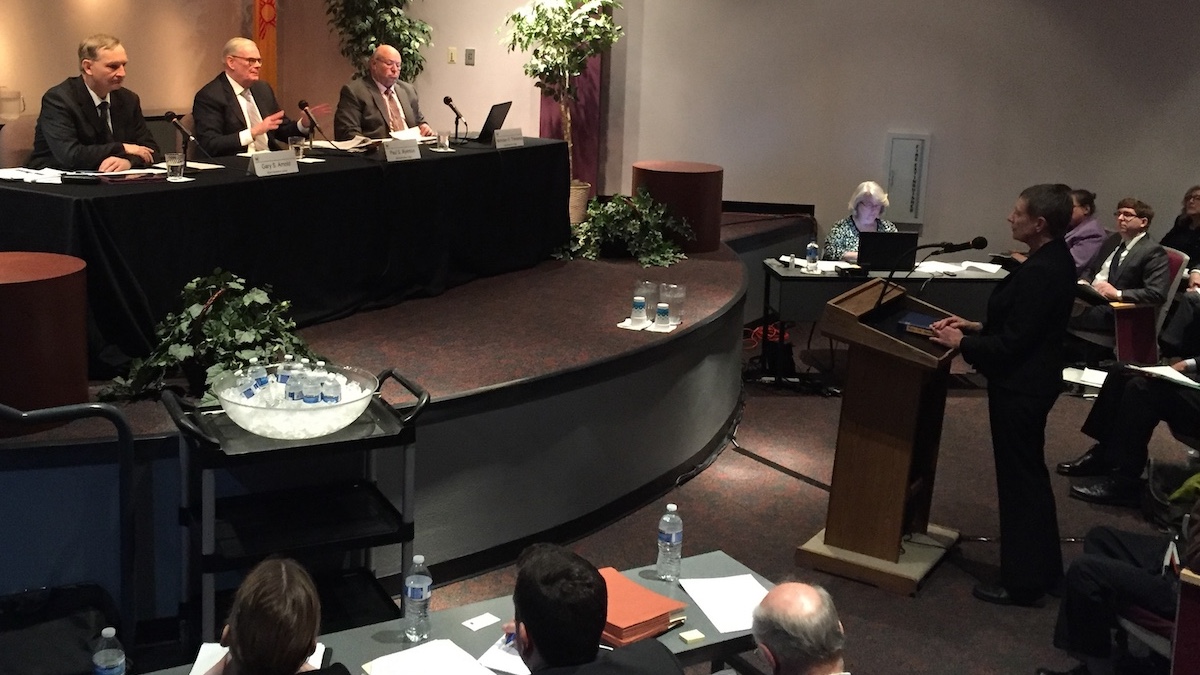
A grand coalition and legal support won a hard-fought struggle to stop Holtec’s radioactive waste dump, writes Kevin Kamps
Holtec International and Eddy-Lea Energy Alliance’s (ELEA) joint scheme to construct and operate the world’s largest high-level radioactive waste dump, midway between Hobbs and Carlsbad, has been terminated. This is a hard-won environmental justice (EJ) victory, and brought about by the tireless work of countless Indigenous, as well as grassroots EJ, environmental, and public interest allies for more than a decade.Together they have successfully blocked a dangerous dump scheme and the many thousands of “Mobile Chornobyl” radioactive waste shipments its opening would have launched nationwide.
Beyond Nuclear has fought against this Holtec-ELEA consolidated interim storage facility (CISF) since it was first launched on “Nuclear Fool’s Day” (April 1), 2017, when Holtec’s CEO, Krishna Singh, publicly unveiled the CISF license application just submitted to the U.S. Nuclear Regulatory Commission (NRC), at a Capitol Hill press conference.
In fact, Beyond Nuclear and coalition allies wrote the NRC in October 2016, warning that CISFs — such as Interim Storage Partners’ (ISP) in Texas, some 40-miles east of Holtec’s site — were illegal on their face, and urging the agency to cease and desist from processing such applications. NRC ignored our own warnings and those of others and proceeded with docketing the license applications.
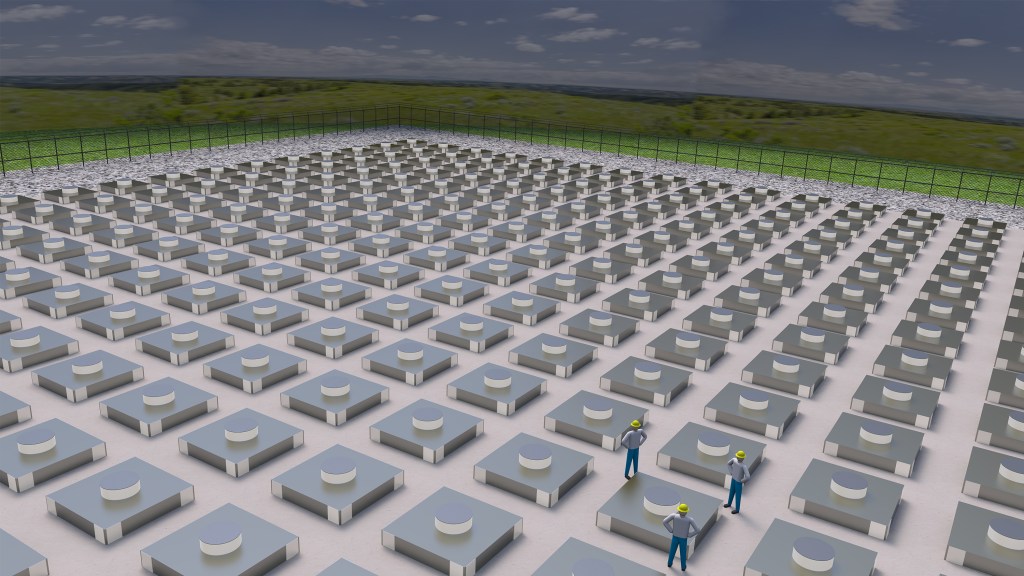
Many years of intense NRC licensing proceedings on both Holtec and ISP’s CISFs, and related environmental reviews, followed. Our coalition engaged at every step, alongside environmental allies in New Mexico, Texas, and across the country. For example, we broke records, in terms of the number (many tens of thousands) of public comments opposing both dumps, at the environmental scoping, as well as the Draft Environmental Impact Statement stages, despite the latter taking place during the Covid-19 pandemic.
The grassroots environmental coalition partners included Don’t Waste Michigan, et al. (Citizens’ Environmental Coalition of New York, Citizens for Alternatives to Chemical Contamination in Michigan, Demanding Nuclear Abolition (formerly Nuclear Issues Study Group) of New Mexico, Nuclear Energy Information Service in Illinois, Public Citizen’s Texas Office, San Luis Obispo Mothers for Peace of California, and Sustainable Energy and Economic Development Coalition in Texas), as well as Sierra Club chapters in New Mexico and Texas. Together, we generated many dozens of contentions in NRC Atomic Safety and Licensing Board proceedings, all of which were rejected, with those rulings rapidly upheld by the NRC Commissioners despite our appeals.
Read More‘Solar for All’ should mean just that
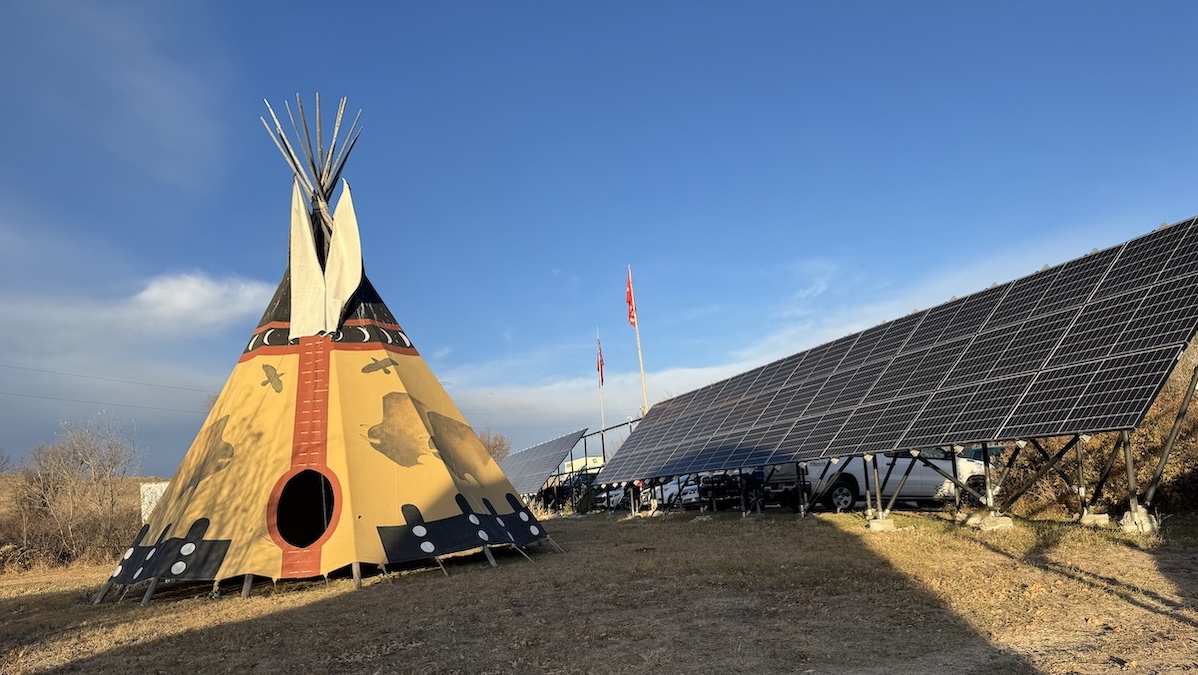
An EPA decision to cancel a solar grant to tribal nations is a hard hit, writes Cody Two Bears
The EPA’s decision to cancel its Solar for All grant to our coalition of tribal nations is more than a policy reversal—it’s a gut punch to communities that believed they were finally being seen.
Our coalition of 14 tribal governments spanning North Dakota, South Dakota, Montana, Wisconsin, and Wyoming came together around a once-in-a-generation opportunity: to deploy $100 million in solar infrastructure to more than 3,500 tribal homes, while training Native youth and veterans in a clean energy workforce that could serve their own communities.
That promise is now gone. And we are not alone.
This past month, dozens of other states, cities, and communities—red and blue alike learned that their own Solar for All awards contracts will be terminated. Across the country, tens of thousands of low-income households are being told that the solar systems they were promised won’t be installed. That the jobs and training they applied for may not materialize. That another chance to turn energy burden into energy security has slipped away.
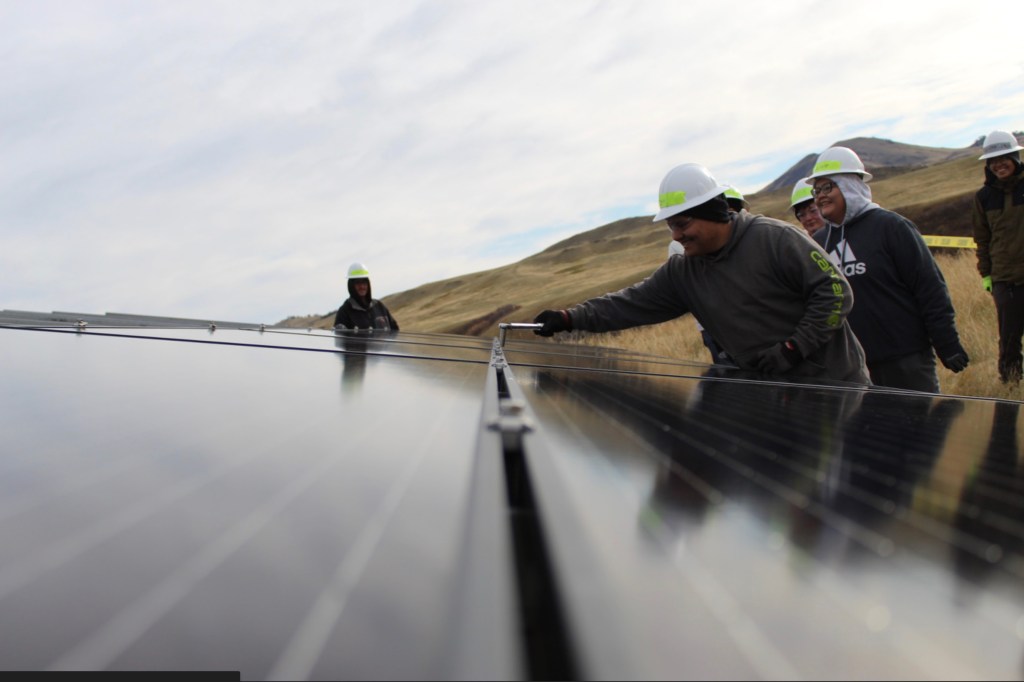
In Indian Country, the pain is particularly deep. We’ve been here before. Our communities are used to being promised opportunities that never arrive. But that doesn’t make this one hurt any less.
Read MoreThe play’s the thing

Atomic Bill and the Payment Due, Libbe HaLevy’s new play, uncovers a shocking secret of journalistic malpractice and more, writes Karl Grossman
Can a play influence public perception of our shared atomic history enough to shift the conversation away from a presumed nuclear “renaissance” and into a more critical, life-protective examination of what this technology is and could do to us all?
Playwright and podcaster Libbe HaLevy believes it can. She spent 13 years researching and writing that play—Atomic Bill and the Payment Due—which had its premiere staged reading on September 9th as a featured presentation of the 50th anniversary celebration of the establishment of the Peace Resource Center at Wilmington College in Ohio.
For 14 years, HaLevy has hosted the podcast Nuclear Hotseat, aired on 20 Pacifica affiliate radio stations throughout the United States and, as its website (NuclearHotseat.com) says, has been tuned into and downloaded by audiences in over 124 countries around the world.
It was while working on a 2012 episode focusing on the Trinity atomic bomb test in New Mexico that she became aware of journalistic irregularities around that event that piqued her interest.
The play is “a true story about media manipulation at the dawn of the Atomic Age and the New York Times reporter who sold his soul to get the story.”

That reporter is William Laurence, a Pulitzer Prize-winning science reporter at the Times. In 1945, General Leslie Groves, director of the Manhattan Project, arranged with Times publisher Arthur Hays Sulzberger, and Edwin James, its managing editor, to have Laurence secretly inserted into the Manhattan Project. He was the only journalist embedded in the crash program to build the first atomic bombs– a position he relished.
Read MoreThe “Golden Age of Nuclear” is all a veneer

Once again, working people — this time in Britain –have been betrayed with false promises about jobs in an industry that is actually making climate change worse, writes Linda Pentz Gunter
At this point there is no need for any of us who are inclined toward commentary to further point out the utter dereliction of the UK government led by Sir Keir Starmer. It is doing a perfectly fine job on its own. The faux pas have now reached such a fever pitch that we’ve almost forgotten the free flats and fancy gifted suits.
As scandal after scandal swirls around members of Starmer’s ever diminishing inner circle, the craven subservience to war mongers continues. In September, the British government managed to kowtow to two in the space of a single week — first welcoming Israeli President Isaac Herzog to British soil, then US President Donald Trump.

On his arrival, Herzog might have heard the distant slamming of a door behind the departing deputy prime minister, Angela Raynor, or he may have passed disgraced former UK ambassador to the US, Peter Mandelson, slipping back into Britain.
Next came renewed turmoil around accusations that Starmer’s Chief of Staff, Morgan McSweeney, might have used an undeclared Labour Together “secret slush fund” to support Starmer’s ultimately successful campaign to become the new Party Leader in 2020. Labour Together was the entity used to mount a smear campaign against former Labour Party Leader Jeremy Corbyn, falsely accusing him of anti-Semitism.
Investigative journalist Paul Holden’s soon to be released book —The Fraud, Keir Starmer, Morgan McSweeney, and the Crisis of British Democracy — is likely to shine an even brighter light on the details and will be celebrated by both the left and the right.
Read MoreDanger déjà vu
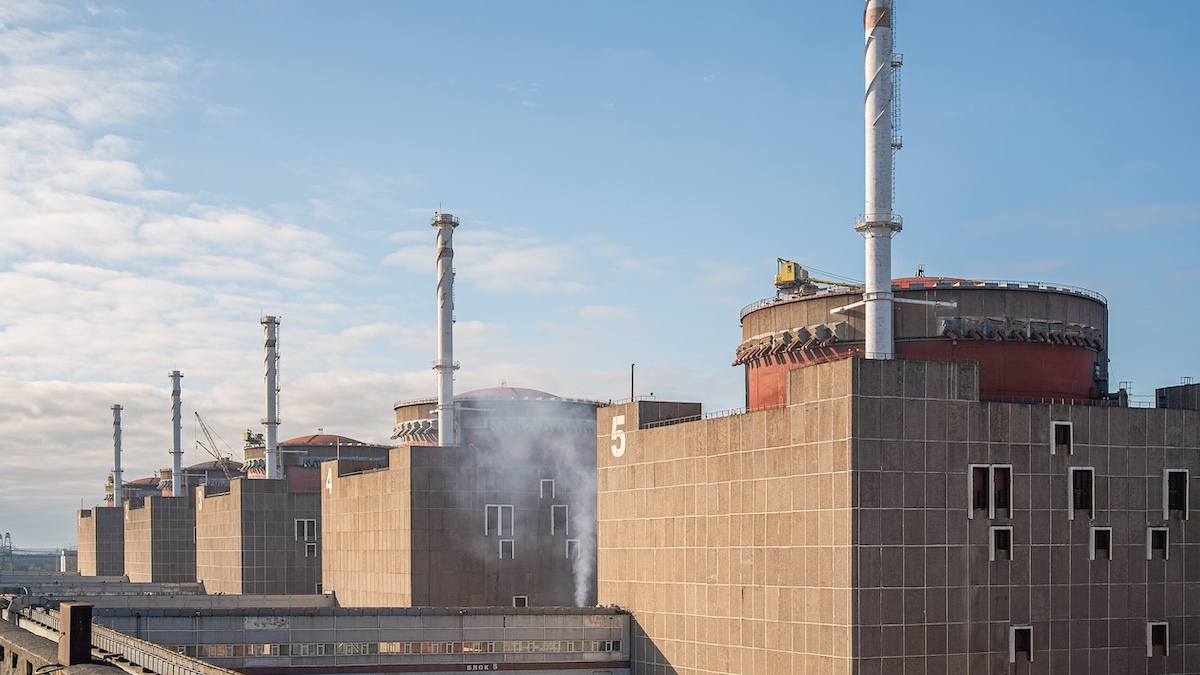
With offsite power cut, peril returns to the Zaporizhzhia nuclear power plant in war-torn Ukraine, writes Linda Pentz Gunter
We have been here before, nine times. External power provided by the grid has been lost, backup diesel generators have been called into duty, and Ukraine and the rest of the world has held its collective breath, hoping we are not about to witness another major nuclear disaster.
This is once again the situation at the six-reactor Zaporizhzhia nuclear power plant (ZNPP) in southeast Ukraine, where for the tenth time external power has been lost. By September 30, that blackout had lasted seven days, the longest such stretch since the plant was first occupied by Russian forces on March 4, 2022, ten days after Russia invaded Ukraine and provoked a war that shows no sign of ending anytime soon.
Alarm is especially high at the Zaporizhzhia site given its size — the largest nuclear power plant in Europe — and enormous radioactive waste inventory of more than 2,000 metric tons. The plant has been embroiled in some of the worst of the fighting and has already suffered previous damage.
Meanwhile, Ukraine’s other nine reactors at three other sites are by no means immune to the dangers of being caught up in an indefinite war zone. In late September, a drone detonated just 875 yards from the perimeter of the South Ukraine three-reactor nuclear power plant. Monitors from the International Atomic Energy Agency (IAEA) said they observed at least 22 drones close to the facility.
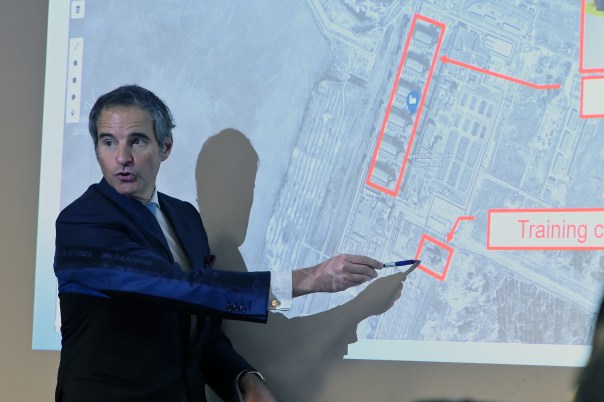
“Once again, drones are flying far too close to nuclear power plants, putting nuclear safety at risk,” wrote the IAEA’s director general, Rafael Grossi in a September 25 statement after the drone incident. “Fortunately, last night’s incident did not result in any damage to the South Ukraine Nuclear Power Plant itself. Next time we may not be so lucky.” The IAEA nevertheless continues ardently to promote the use and expansion of nuclear power around the world.
Read MoreRadioactive waste in a landfill?
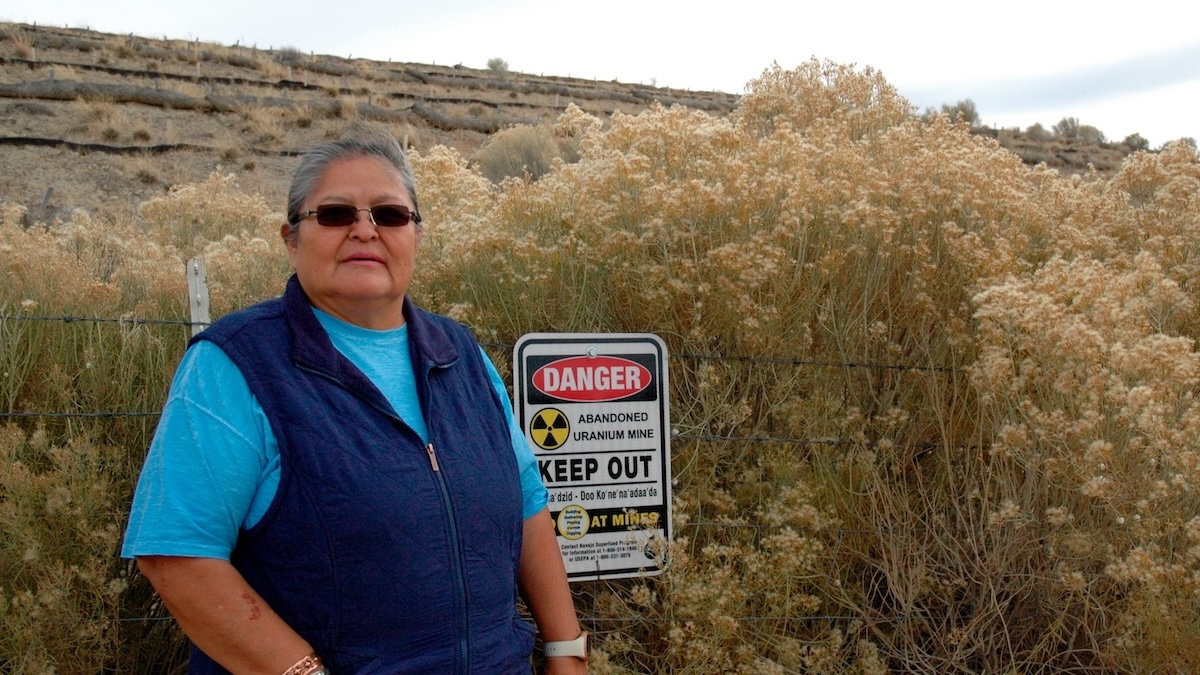
Navajo communities want pros and cons delivered in language all can understand, writes Kathy Helms
Explaining the rationale of burying low-level radioactive waste in a solid waste landfill to Navajo elders, especially if English is not their first language, obviously would be a bit daunting. Regulators relish acronyms like one would a yummy bowl of alphabet soup – RCRA, SMCRA, NORM, TENORM. Elders, not so much.
Regulators need to bring the discussion down to the people’s level, Judy Platero, secretary/treasurer of Thoreau Chapter, told federal, state and tribal officials during an August 14 tour of the Red Rock Landfill.
“A lot of our community members are not here because they don’t understand this,” Platero said. “There’s no understanding of this because all of this language, all of this information that’s being disseminated, is all technical. We’ve asked many times, ‘Bring it to us in our own language.’”
Not against cleanup
Platero made it clear that the people of Thoreau are not against cleanup of the former Quivira uranium mine near Church Rock. They understand the need for the removal of 1.1 million cubic yards of radioactive waste rock and sand from within the Red Water Pond Road community. Residents have been saddled with those Cold War remnants for more years than they care to remember.

“What we are trying not to have happen is the transport and the storage here in Thoreau. That’s what we are talking about. “We want everybody, all our people, to be safe,” Platero said.
The proposed removal plan means that an estimated 76,710 truckloads – over 60 truckloads a day – will travel a 44-mile haul route along New Mexico Highway 566 to Interstate 40E, across the Continental Divide to and through downtown Thoreau to the Red Rock Landfill. Another 3,300 truckloads of waste from Sections 32 and 33 mines in Casamero Lake are expected to travel a more rural haul route, including a private toll road, according to the U.S. Environmental Protection Agency’s Region 9.
If the landfill “test pilot” for the waste is successful, the state of New Mexico could approve the disposal of more waste in other areas of the landfill on a case-by-basis in the future, tour-goers were told.
Read More Beyond Nuclear International