 Beyond Nuclear International
Poland’s nuclear folly
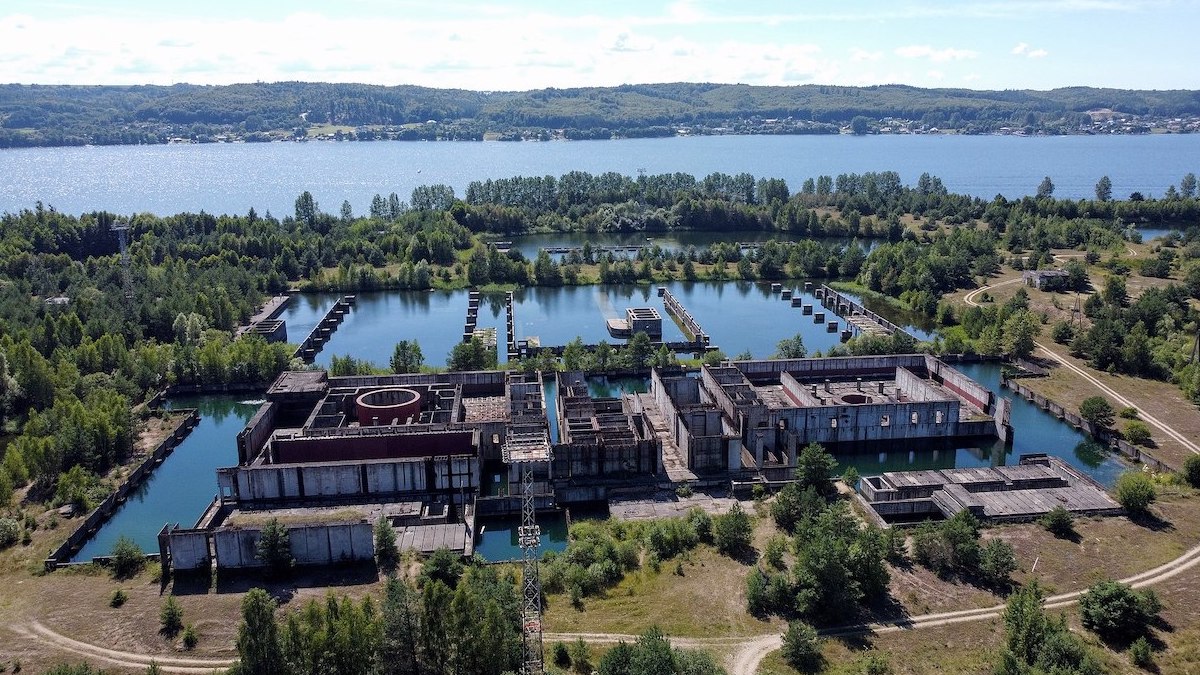
Refusing to learn the lessons from Chernobyl, Poland embarks on a rash nuclear power program
By Beata Cymerman
It was April 28, 1986, early morning in Poland. The radiation monitoring station in Mikołajki, Mazury area (north-eastern region of Poland) showed that the radioactivity in the air was 550,000 times higher than the day before. The radioactive cloud from Chernobyl had travelled to Poland. The story of the catastrophe began here.
The Chernobyl disaster in Poland
The government of Poland didn’t immediately release an official statement regarding the catastrophe. Poland was a satellite state of the Soviet Union. After the day of the explosion, April 26, no information was presented by the Polish media. One of the first people informed about the catastrophe was Prof. Jaworowski – Chairman of the Scientific Council of the Central Laboratory for Radiological Protection (CLOR) in Warsaw. He obtained information about the catastrophe from BBC radio and connected it to the unusual measurements from the Mikołajki station.
Together with the President of Polish National Atomic Agency, he set out to monitor the situation. After taking several more measurements on the same day, it became clear that they were dealing with a high radiation risk. Despite the obstacles presented by the Soviet bureaucratic system and with the help of Jaworski’s wife, who was affiliated with the Polish Academy of Science, they managed to directly inform the Prime Minister of their findings.
On April 29, members of the Political Bureau of the Central Committee of the Polish United Workers’ Party (KC PZPR) and the government appointed Government Commission took measures to combat the crisis. The priority was overcoming the effect of exposure to the radioisotope I – 131, which greatly increases the risk of thyroid cancer. The rapid action of administering iodine, which began on the afternoon of April 29, serves as a model for action in the event of a radioactive crisis. It was the largest preventive action in the history of medicine performed in such a short time. In just three days, 18.5 million people were administered iodine solution, adults as well as children. In comparison, in Russia, iodine was distributed a month after the catastrophe.
From personal stories from our parents, I know that we were told not to eat salad, mushrooms and not to drink milk, while friends told us about the radioactive cloud coming to Poland. But there weren’t any official restrictions. Children had to go to school as normal. Moreover, the national bank holiday on May1, and the obligatory march that was customarily held on that day, went on as planned. That shows how the Soviet Union worked, placing political interests over human health.
Read MoreVested interests
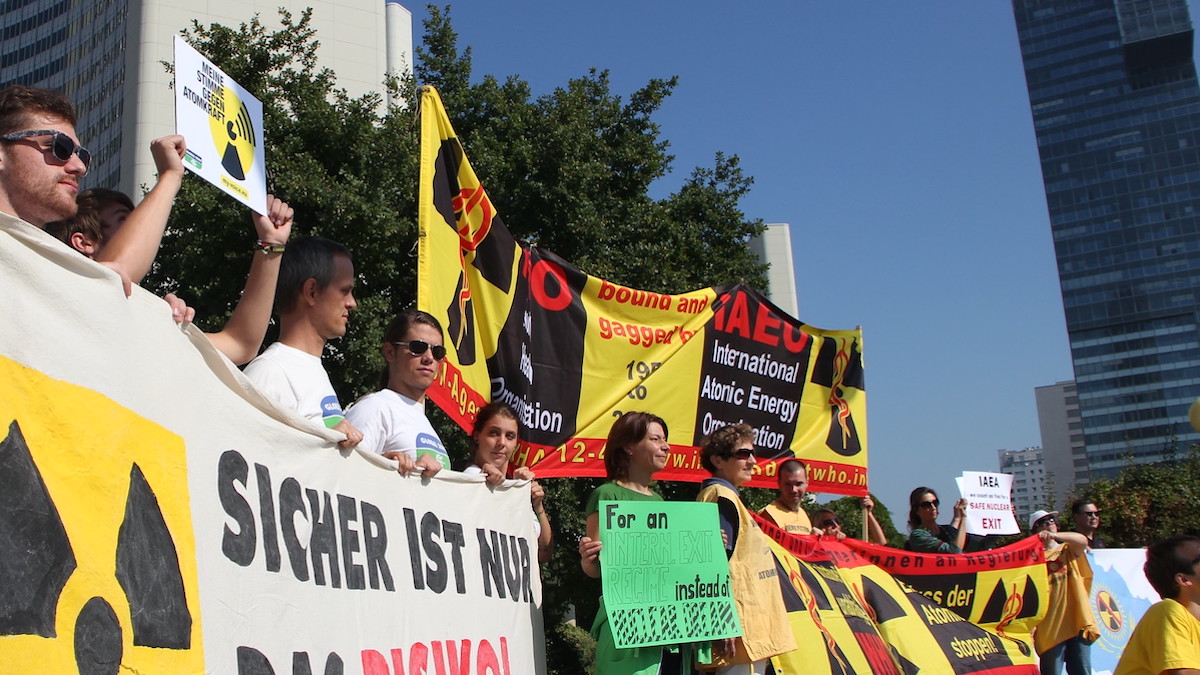
How monolithic institutions decide what is safe for the rest of us
By Christine Fassert and Tatiana Kasperski
In December 2020, twenty years after the final closure of the Chernobyl nuclear power plant, the Ministry of Culture of Ukraine announced its intention to prepare an application to include certain objects in the exclusion zone around Chernobyl in the UNESCO World Heritage List.
The ministry planned to submit its application in the spring of 2021, as a way to mark the 35th anniversary of the accident on April 26.
This project would allow the establishment of a scheme to preserve the site, but above all to highlight its universal historical importance.
On the UNESCO list
Two sites linked to the dark nuclear past are already on the UNESCO list: the Hiroshima Peace Memorial and the Bikini Atoll Nuclear Test Site.
The Chernobyl site would symbolize the long history of accidents that have marked the atomic age, from Kychtym and Windscale (1957), to Three Mile Island (1979) and Fukushima (2011), whose tenth anniversary we commemorated this year.
Moreover, the Chernobyl accident constitutes a particular moment in this history, namely the beginning of the institutionalization of the international management of the consequences of nuclear accidents, whose impact became fully apparent at the time of the Fukushima accident.
A small group of organizations
If the origins of accidents are most often explained by factors related to the development of the nuclear industry and its regulatory bodies at the national level, the “management” of their consequences gradually extends beyond national borders.

In this respect, Chernobyl established the monopolization of the authoritative knowledge of ionizing radiation by a small group of organizations — the International Atomic Energy Agency (IAEA), the International Commission on Radiological Protection (ICRP) and the United Nations Scientific Committee on the Effects of Atomic Radiation (UNSCEAR).
Through a series of alliances and co-options, these organizations formed a monolithic bloc on the issue of radiological risk.
Read MoreThe Lorax and the Peregrine

“When you break a single strand, you weaken the entire web”. Simon Barnes, On The Marsh*
NOTE: Join our web event, New Nuclear: What’s at Stake for Wildlife, to learn more about the destructive impacts of nuclear power plants on ecosystems, habitats and the creatures who live and depend on them. Our event is on October 7. Register here to join, see local time and special guests.
By Linda Pentz Gunter
When the Walrus and the Carpenter were “walking close at hand” on Lewis Carroll’s fantastical beach, the predatory pair lured the trusting and abundant oysters from their beds to their own demise. They also:
“…wept like anything to see
Such quantities of sand:
If this were only cleared away,
They said, it would be grand!”
They strolled along the shore in a world where the sun shone at night and where:
“No birds were flying overhead —
There were no birds to fly.”
These wily and unlikely companions of nonsense verse were, in many ways, all too recognizably human, their birdless world thrown out of whack — the one later warned of by Rachel Carson.
The companionable pair’s luring and then devouring of every last oyster was indeed “a dismal thing to do.” But we’ve been doing it, metaphorically, ever since. How much habitat have we cleared away, how many dark nights extinguished by light pollution? How many species have we preyed upon to extinction, how many birds silenced?

Theodor Geisel, under his more familiar pen name, Dr. Seuss, warned of this unfettered environmental destruction in his children’s book, The Lorax, the title character a marvelous environmental champion who “speaks for the trees”. Geisel was angry when he wrote The Lorax and viewed it as his best work — with which many of us might agree. The book warns that our greed-driven destructive behavior will lead to extinctions, to a natural world erased and replaced by choking, smoking towers of pollution and death. And here we are.
Read MoreGroups call for no US nuclear bailouts

240 organizations ask Congress to eliminate nuclear subsidies from the budget
Note: Beyond Nuclear was among 240 organizations who have signed a letter sent to the House and Senate Majority and Minority leaders urging them to omit nuclear bailouts from the federal budget and instead direct funds toward investment in carbon-free, nuclear-free clean energy.
This moment is our opportunity to launch a wholesale transformation of our economy and our energy systems to save our country and the world from the rapidly advancing climate crisis. Yet, legislation now before Congress would provide billions of dollars in subsidies to aging and uneconomical nuclear power plants, an effort that will cause us to miss the narrow window of opportunity we have left to act effectively on climate.
If the events of the last year have taught us anything, it is that we must marshal our national resources to address structural inequities and injustices that undermine our safety, health, economic security, and sustainability. We can achieve the goals of racial, economic, environmental, and climate justice upon which the Biden administration and Congressional leaders have promised to deliver—but not if we continue to invest billions of dollars in nuclear power and other false solutions.

Both the energy legislation proposed for the larger reconciliation package (S.2291/H.R.4024) and the bipartisan infrastructure bill would grant up to $50 billion to prop up old, increasingly uneconomical nuclear reactors for the next decade. The electricity generated by these reactors will need to be replaced by renewable energy in the coming years anyway, so every dollar we spend to prolong their operation has an opportunity cost in terms of dollars, jobs, and environmental pollution.
As a July 2021 report by Dr. Mark Cooper finds, the best investments to phase out greenhouse gas emissions in the electricity sector are the same in the short-term, medium-term, and long-term: renewable energy, efficiency, storage, and grid modernization. Money slated for nuclear bailouts would be much better spent on these resources instead.
Read MoreThe nuclearization of space

Defense Department signals growing interest
By Karl Grossman
“BACK TO THE FUTURE NASA’S NEW NUCLEAR VISION” was the headline emblazoned on the cover of the May 3-16, 2021 edition of the leading U.S. aerospace trade publication, Aviation Week & Space Technology.
“More than sixty years after the U.S. began serious studies into nuclear propulsion for space travel, NASA is taking the first steps on a new path to develop nuclear-powered engines for crewed missions to Mars by the end of the next decade,” it began.
“Nuclear enabled space vehicles would allow NASA to keep the round-trip crewed Mars mission duration to about two years, versus more than three years with the best chemical rockets and even longer with solar electric propulsion,” the extensive five-page piece declared.
Also, it said, “other factors strengthening the case for nuclear power include growing interest from the Defense Department in using the technology to extend operational capability in space.”
Further, nuclear power—either through nuclear thermal propulsion (NTP) or nuclear electric propulsion (NEP)—would “provide power for future crewed and robotic deep-space exploration missions as well as faster, more responsive resupply flights to lunar and Martian outposts.”

The article was accompanied by a two-page addition providing a military link. “Draco Embarks on Quest To Revive Nuclear Space Propulsion,” was the headline of this piece. Draco stands for “Demonstration Rocket for Agile Cislunar Operations.” It’s a program of the Defense Advanced Research Projects Agency (DARPA), a U.S. Department of Defense agency that develops technologies for the military.
Read MoreThe French nuclear complex

The all too easy alliance between the civil and military sectors
From the Swiss Energy Foundation
...et sans nucléaire militaire, pas de nucléaire civile (“and without the military nuclear sector, no civilian nuclear sector”). These were the words of French head of state, Emmanuel Macron, during his visit at the end of the year to Le Creusot, a hotspot of the French nuclear industry. Indeed, the civil and military uses of nuclear energy were, are, and will remain, inextricably linked. This is exemplified by the French reactor research project NUWARD.
The year 2020 ended with a declaration of love from Emmanuel Macron to the French nuclear industry: “Our energy and ecological future depends on nuclear energy”. He added: “Our economic and industrial future depends on nuclear energy. ” Macron addressed these words in a well-received speech delivered at Le Creusot, Burgundy, the very heart of the nuclear industry. The industrial town of Le Creusot is an important production site for components for nuclear power plants as well as for nuclear weapons systems for military use.
The nuclear industry in crisis
However, the last few years have not been a time of joy for the French nuclear industry, but rather a time of crisis. To stay with Le Creusot: The reactor forge facility there, which among other things manufactures the safety-relevant components for nuclear power plants, drew attention to itself in 2016 with a series of irregularities: it emerged that, for years, there had been systematic forgeries. Faulty forged parts were produced. Instead of discarding the rejects, reports were falsified and quality assurance undermined. France’s new-build project, the Evolutionary Power Reactor (EPR), was also affected. The former showcase project sank steadily into a billion-dollar grave.
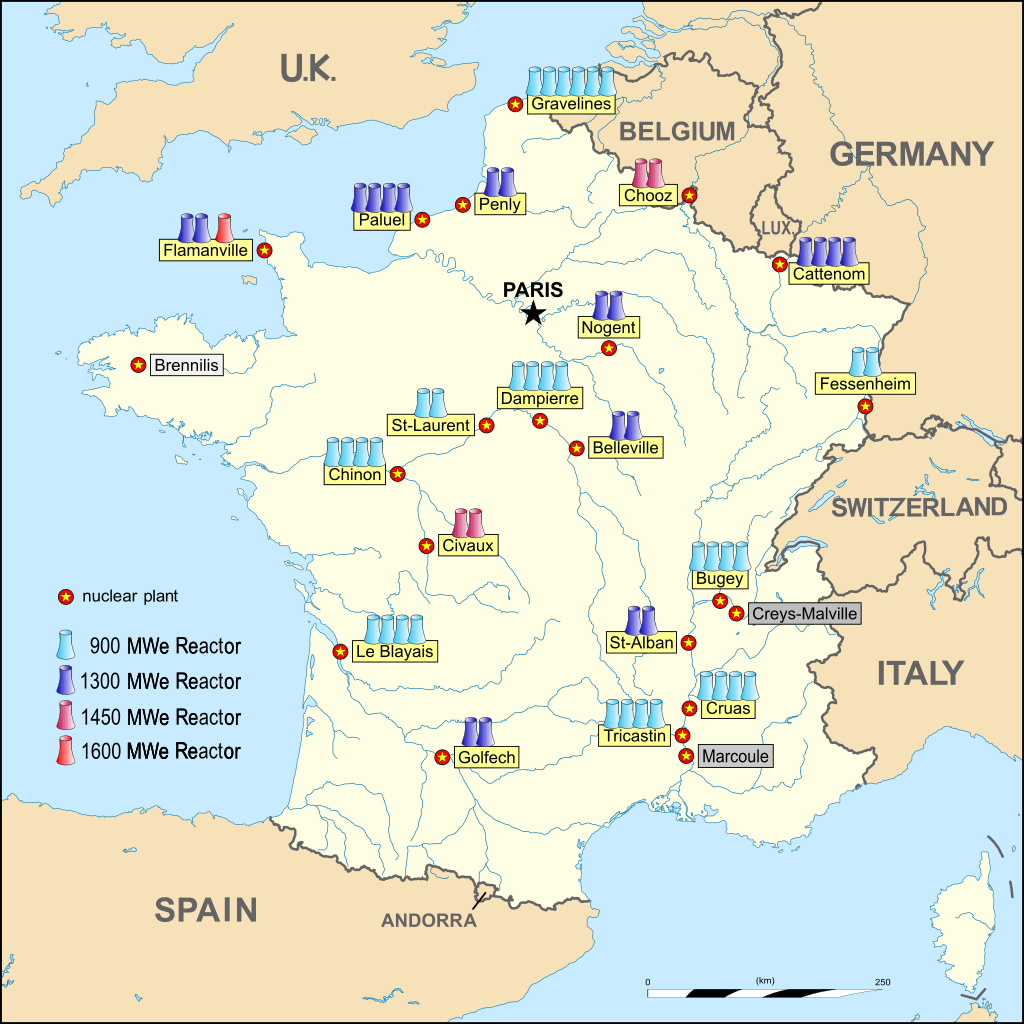
Along with the Le Creusot scandal, numerous other miscalculations and breakdowns cast a bad light on the French nuclear industry. The construction of the new EPR in Flamanville, as well as other construction projects abroad, made headlines with years of delays and cost explosions. The builder is the French quasi-state nuclear giant EDF. It did not want to bear the cost debacle alone, but also pointed the finger at EPR nuclear giant Areva. However, since 2018, Areva has ceased to exist.
Read More Beyond Nuclear International