 Beyond Nuclear International
European Union should join ban treaty

Europe would face the greatest level of destruction in the event of a nuclear conflict
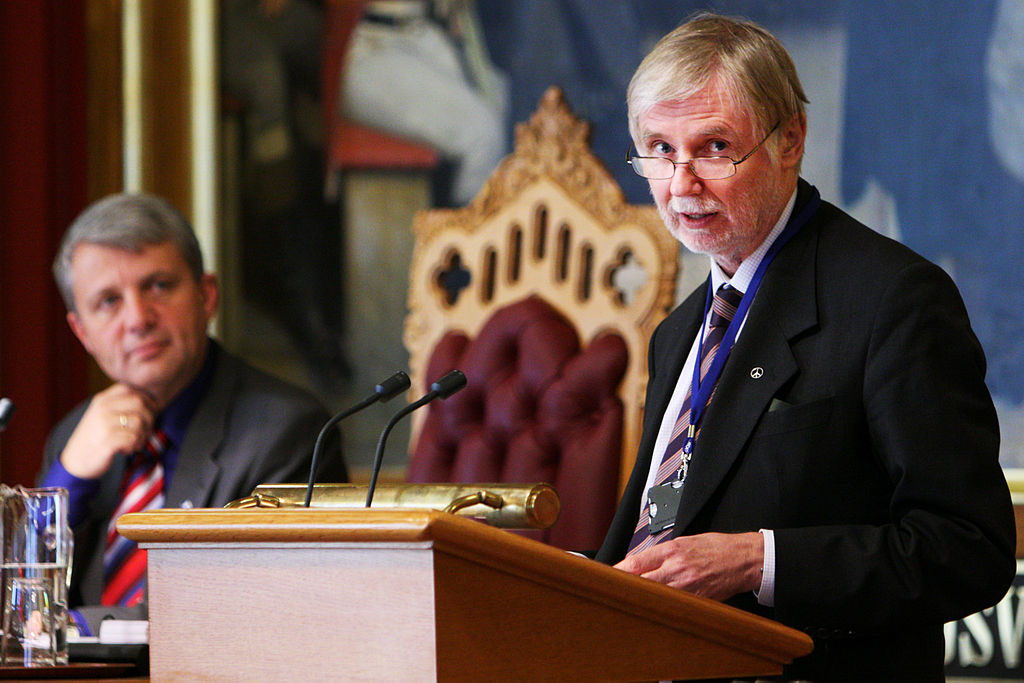
By Erkki Tuomioja
In July 2017, an overwhelming majority of the UN General Assembly adopted a landmark global agreement to ban nuclear weapons, known as the Treaty on the Prohibition of Nuclear Weapons. Ratification by the fiftieth country took place this year, on the day the United Nations celebrated its 75th anniversary. The treaty will now enter into force on January 22. Those countries that have ratified the treaty include Austria, Ireland, and Malta – three member states of the European Union – and it is to be hoped that others in Europe will soon follow.
Finland did not participate in the negotiations leading up to the treaty, and it did not vote for it. Public opinion is, however, in favour of the treaty, with one poll showing that 84 per cent of Finns would support signing up. Three parties in Finland’s coalition government also want the country to join. Foreign ministry officials have argued in hearings of the Finnish parliament’s Foreign Relations Committee that joining would weaken the Non-Proliferation Treaty (NPT) – a faulty reasoning that the Committee unanimously rejected.
A cruel loss
Covid-19 takes the life of Russian anti-nuclear activist at just 40
By Linda Pentz Gunter
It’s hard enough to be an anti-nuclear activist in Russia. As stories on this website have already illustrated, it takes guts and persistence and an immense amount of unwavering integrity.
Some have had to flee the country for their own safety. But one who stayed, and faced the intimidation and arrests, was Rashid Alimov from Greenpeace Russia.
Now a more deadly force has taken Alimov, at just 40 years old, when he succumbed on December 17, 2020 to covid-19.

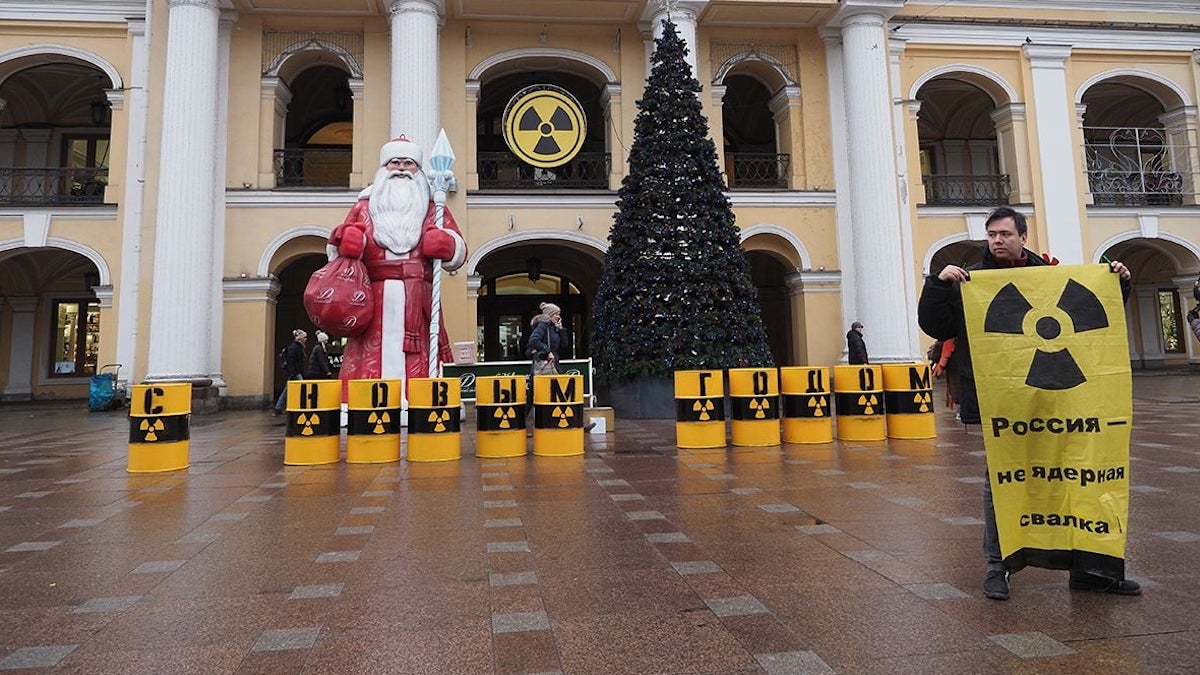
Exactly one year earlier, Alimov had stood in protest “in the center of Saint Petersburg (see headline picture). Later the same day, two police officers together with six other people without uniform detained Alimov in front of his house. He then faced charges and a substantial fine. Charges were later dropped,” wrote the Russian Social Ecological Union in their report and our article, Standing up to Rosatom.
A journalist, before he became an activist, Alimov helped found the Russian-language environmental magazine, Ecology and Rights, before joining Greenpeace.
Read MoreUninhabitable

Booklet by citizen scientists uncovers true extent of radioactive contamination in Japan’s soil and food
From Minna-no Data Site, a citizen’s collaborative radioactivity monitoring project
Minna-no Data Site (Everyone’s Data Site) is a network of 30 citizens’ radioactivity measurement laboratories from all over Japan.
After the 2011 Fukushima accident, many independent citizen-operated radioactivity measurement laboratories sprang up across Japan.
In September 2013, a website called “Minna-no Data Site” was established in an effort to integrate all of the radioactivity measurement data into a common platform and disseminate accurate information in an easy-to-understand format.
As of July 2019, the Data Site website is home to approximately 16,000 cases of food measurement data, more than 3,400 cases of soil measurement data, and 1,700 cases of environmental samples (ash, river water, etc).
This English language version of the book is a digest version of our bestselling Japanese book, Illustration: 17 Prefecture Radioactivity Map & Close Analysis which was self-published in November 2018, and was awarded the Japan Congress of Journalists Prize in July 2019.
Read MoreDid a research reactor in Jordan leak?
When a whistleblower sounded the alarm, Basel Burgan reposted, then retracted it. But he may still go to jail.
Jordan has no commercial nuclear power plants although it had aspired to having two 1,000 MWe nuclear power units in operation by 2025. However, these were canceled and the country is now considering the use of small modular reactors. X-energy, a company based in Rockville, Maryland, signed a letter of intent (LOI) in November 2019 with Jordan’s Atomic Energy Commission as part of that country’s plan to develop a civilian nuclear power program.
By Jack Cohen-Joppa
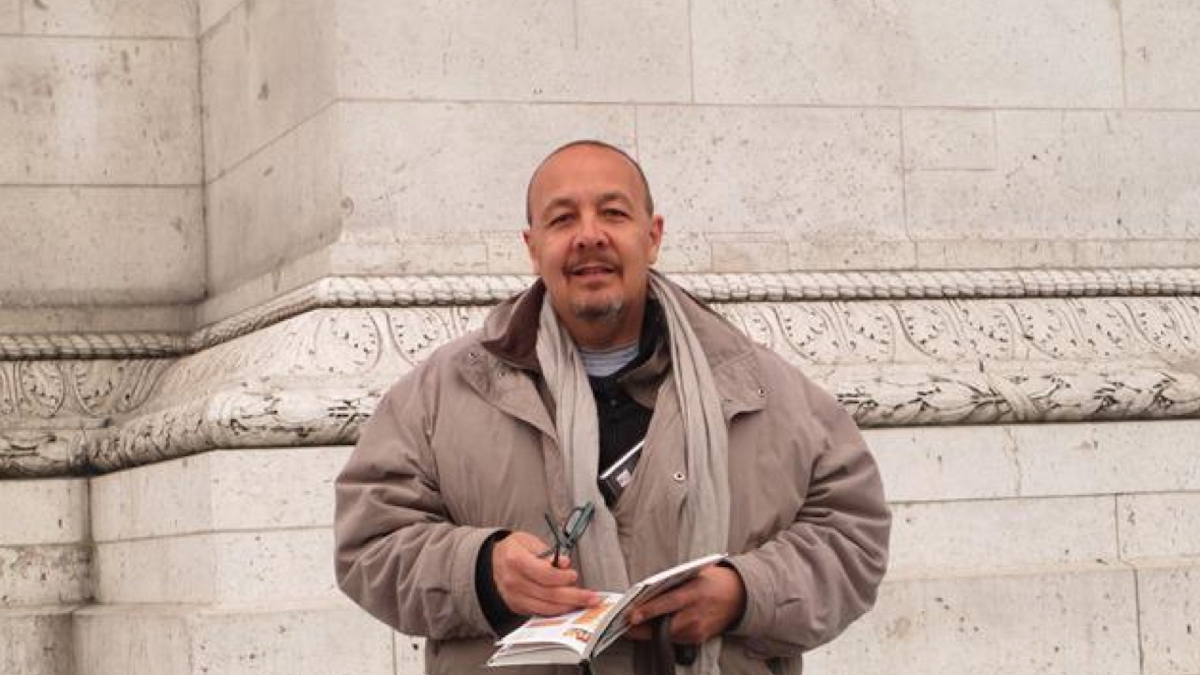
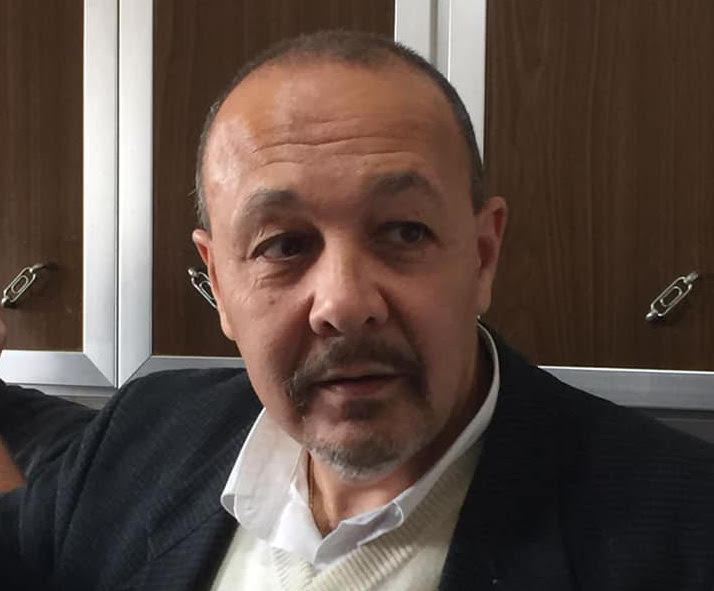
Basel Burgan, the head of a successful family pharmacy business and a prominent environmental champion in Jordan, is accused of cyber crimes and spreading rumors “that damaged a government institution.” Hearings in the case against him began in September, continuing every other week. Unless the case is dismissed, and barring additional delay due to the COVID-19 pandemic, a verdict by next spring could lead to a sentence of 6-24 months in prison for Burgan.
Burgan is trained as a pharmacist, and in 1992 he became the owner of the family pharmacy business his father started in 1952. Since then, he has published articles about nuclear power, environmental preservation, sustainable energy, and other topics in Arabic and in English in Jordan’s press and he has appeared many times on Jordanian television as an expert on environmental issues.
When the Jordan Atomic Energy Commission was established in 2007 to promote uranium mining and the construction of five large reactors to make the country a net energy exporter, Burgan founded the National Committee Against the Nuclear Project. The National Committee met some success as only two large reactors were ordered, then cancelled, and despite uranium exploration and mining contracts signed with French, Saudi Arabian and Russian agencies, no mines have been opened.
Burgan’s commitment to sustainability led to him co-founding Karak Star Recycling in 2015, and pioneer the paper and carton recycling industry in the kingdom. The enterprise now converts tons of paper waste each day into poultry egg trays and cartons.
Read MorePathway of the peacemakers
Walking the long road from law to justice with the Kings Bay Plowshares
By Paul Magno
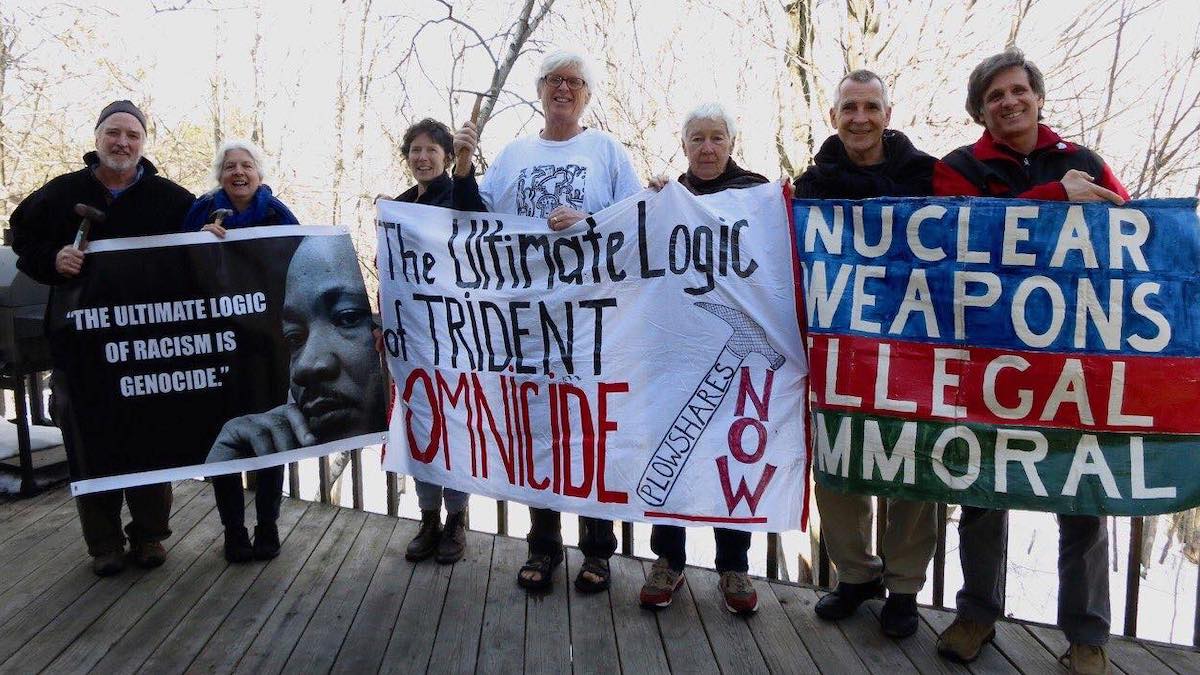
For the past two-and-a-half years it has been my privilege to support the Kings Bay Plowshares. They are seven disarmament activists who entered the Kings Bay Naval Submarine Base in Georgia by night on April 4, 2018 — the anniversary of Martin Luther King Jr.’s martyrdom — to confront the Trident nuclear weapon system and engage in an act of disarmament. The seven poured human blood on signs and missile models, unfurled peace banners and used household tools to begin symbolic disarmament of Trident, a submarine based first strike nuclear missile, termed by the Navy as a “strategic” weapon.
The seven have subsequently been charged and convicted in a jury trial of three felonies and a misdemeanor in federal court. All but one have been sentenced, to date, by Federal Judge Lisa Godbey Wood in Brunswick, Georgia. Their legal odyssey has been protracted, in part by important legal proceedings and in part by the limitations imposed by the COVID-19 pandemic.
My invitation to walk with these peacemakers came in 2018 as an outgrowth of longstanding personal friendships with each of them. It also came as a result of my own experience and commitment to explaining and supporting the basic idea of these Plowshares actions, as they have proliferated a hundred-fold since 1980.
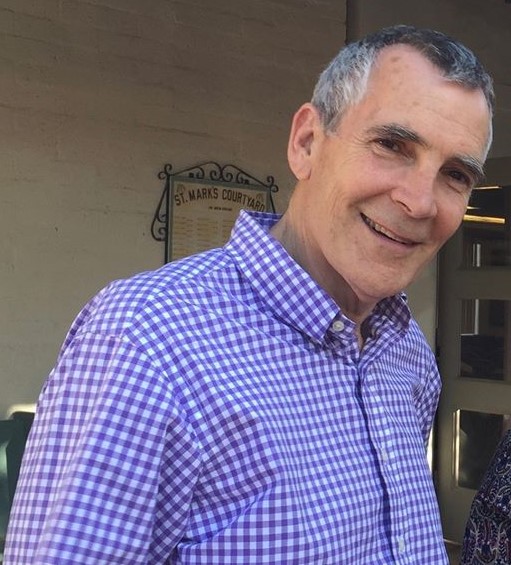
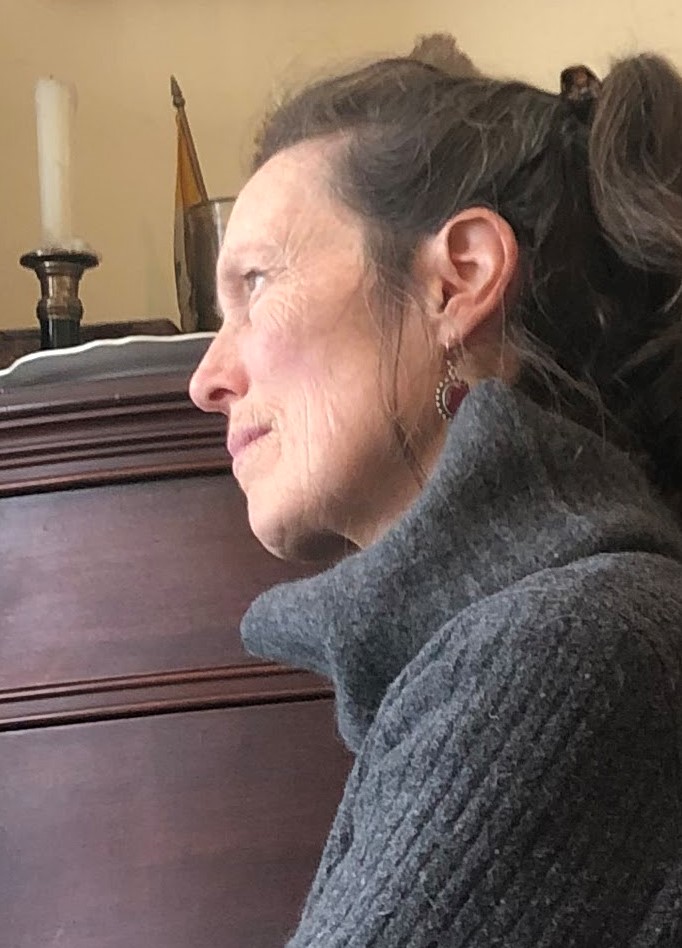
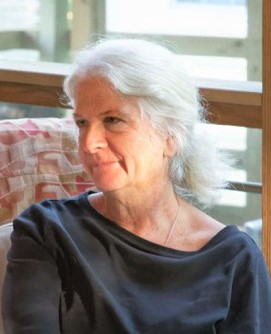
Left to right: Kings Bay Plowshares defendants, Fr. Steve Kelly, Clare Grady and Martha Hennessy. (Photos courtesy of KBP7.)
Patrick O’Neill, a participant in the Kings Bay action, and I were involved together with six others in the 1984 Pershing Plowshares action at Martin Marietta (now Lockheed Martin) in Orlando, Florida. I also served as a primary support person for the three Transform Now Plowshares activists who similarly acted at the Y12 nuclear weapons facility in Oak Ridge, Tennessee in 2012. They won a federal appeal of their sabotage conviction and were released from prison after two years.
Read MoreDear people of Anglesey

Don’t be led up the garden path on the nuclear road to nowhere
By Linda Pentz Gunter
Dear people of Anglesey:
The announcement that a US consortium, consisting of American companies Bechtel, Southern Company and Westinghouse, could take over the Wylfa B nuclear power project in North Wales, may sound like a much-needed jobs panacea, but it is another cruel joke on the people of Anglesey.
Horizon/Hitachi’s legacy of broken promises, destroyed homes and landscapes, and a 100% failure to deliver the promised two-reactor Wylfa B project, is already a bitter pill. Inking a new nuclear deal with the American consortium would turn it into a poison one. Trust me, we know. We’ve already swallowed it.
Here in the US, the track record of Bechtel, Southern Company, Westinghouse and the AP1000 reactor design, now being proposed for Wylfa B, should send a dire warning to Wales.
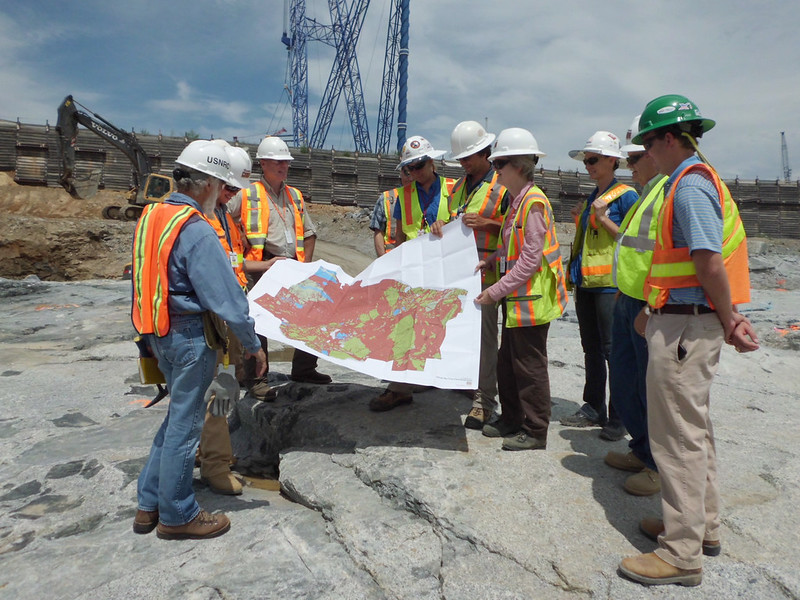
Westinghouse’s AP1000 two-reactor project at the V.C. Summer site in South Carolina ballooned to $9 billion in costs and bilked ratepayers of $2 billion before it was abandoned in 2017 after a 9-year debacle. The project’s director, Stephen Byrne, pled guilty to a massive nuclear conspiracy that defrauded ratepayers, deceived regulators and misled shareholders, but not before pocketing a tidy $6 million for himself.
The company’s former CEO, Kevin Marsh, has agreed to plead guilty to federal conspiracy fraud charges, will go to prison for at least 18 months, and will forfeit $5 million in connection with the $10 billion nuclear fiasco.
Read More Beyond Nuclear International