 Beyond Nuclear International
Nuclear power in the Green New Deal?
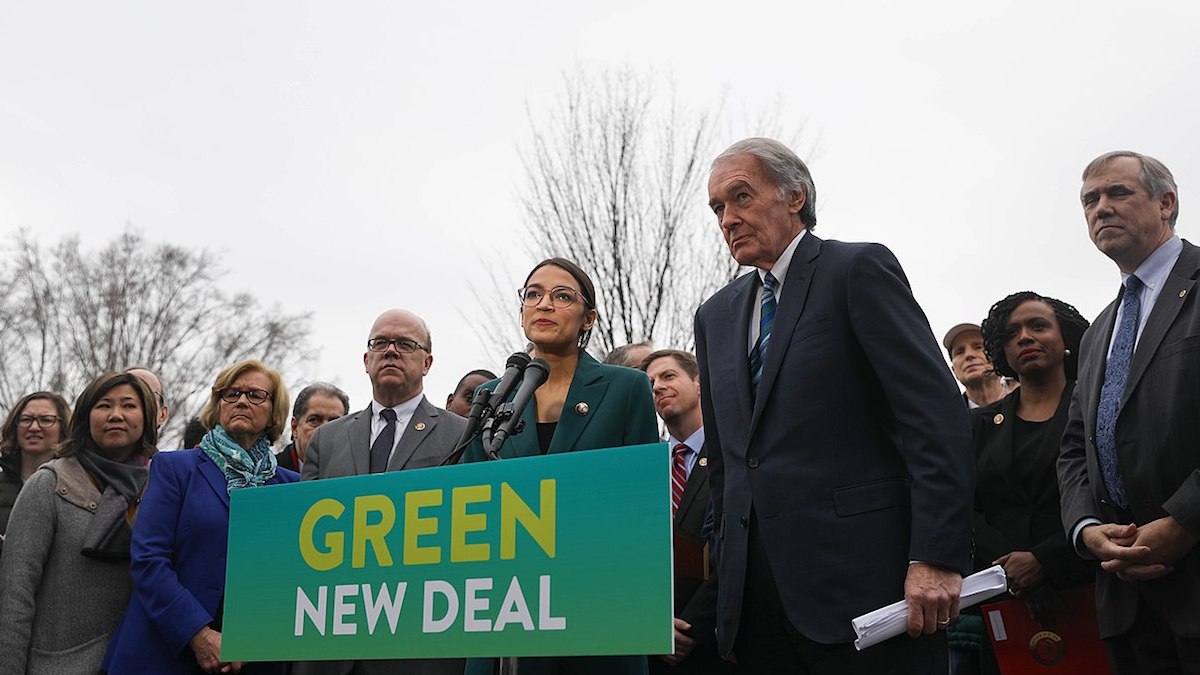
The arguments against it
By M.V. Ramana and Schyler Edmunston
Over the last few years, there has been a growing interest in a Green New Deal and there are many versions proposed in different countries. At the same time, there has also been criticism of these proposals on many counts, including the fact that they typically don’t include nuclear energy.
This criticism misses a basic point: a Green New Deal is, by its very definition, much more than an emissions reduction plan. As we argue below, the other attributes that characterize Green New Deals, rule out nuclear energy as an option.
Like the original New Deal of U.S. president Franklin D. Roosevelt in the 1930s, all Green New Deal proposals emphasize the creation of new jobs. Canada’s New Democratic Party version, for example, calls for “a New Deal for Climate Action and Good Jobs.”
Nuclear power is not a good job creator. One widely cited study found that for each gigawatt-hour of electricity generated, solar energy leads to six times as many jobs as nuclear power. This is compounded by the fact that solar power plants are far cheaper to build and maintain than nuclear reactors.
Visions for peace

At 91, Joanna Macy still sees the good in — and hope — for all of us
By De Herman
One is never too old to be a catalyst for positive change. Indeed, the voices of our elders are needed now more than ever. Joanna Macy is a prime example.
“The most remarkable feature of this historical moment is not that we are on the way to destroying our world—we’ve actually been on the way quite a while. It is that we are beginning to wake up, as from a millennia-long sleep, to a whole new relationship to our world, to ourselves, and to each other. Active Hope is waking up to the beauty of life on whose behalf we can act. We belong to this world.”

(Picture of Macy, above, at home in Berkeley, by De Herman.)
This is how Joanna Macy, Ph.D., sees humanity at this time in the story of our existence.
Macy is a visionary, anti-nuclear activist, writer, deep ecologist, systems theorist, teacher, Buddhist scholar and, at 91, a wise elder. It’s been a long and circuitous life journey, woven by the threads of spiritual seeking, insatiable curiosity and passion for justice and activism. Her work, as described on her website, “addresses psychological and spiritual issues of the nuclear age, the cultivation of ecological awareness, and the fruitful resonance between Buddhist thought and postmodern science.”
In 1978, taking lessons from grassroots activism, wisdom from East and West, and her spiritual stirrings, Macy initiated the workshops that would eventually be known as the Work That Reconnects. More than 40 years later, the workshop exercises invite participants of all ages and backgrounds “into fresh relationships with our world, and not only arouse our passion to protect life, but also steady us in a mutual belonging more real than our fears and even hopes.”
Read MoreA judge again denies Virginia Uranium Inc.
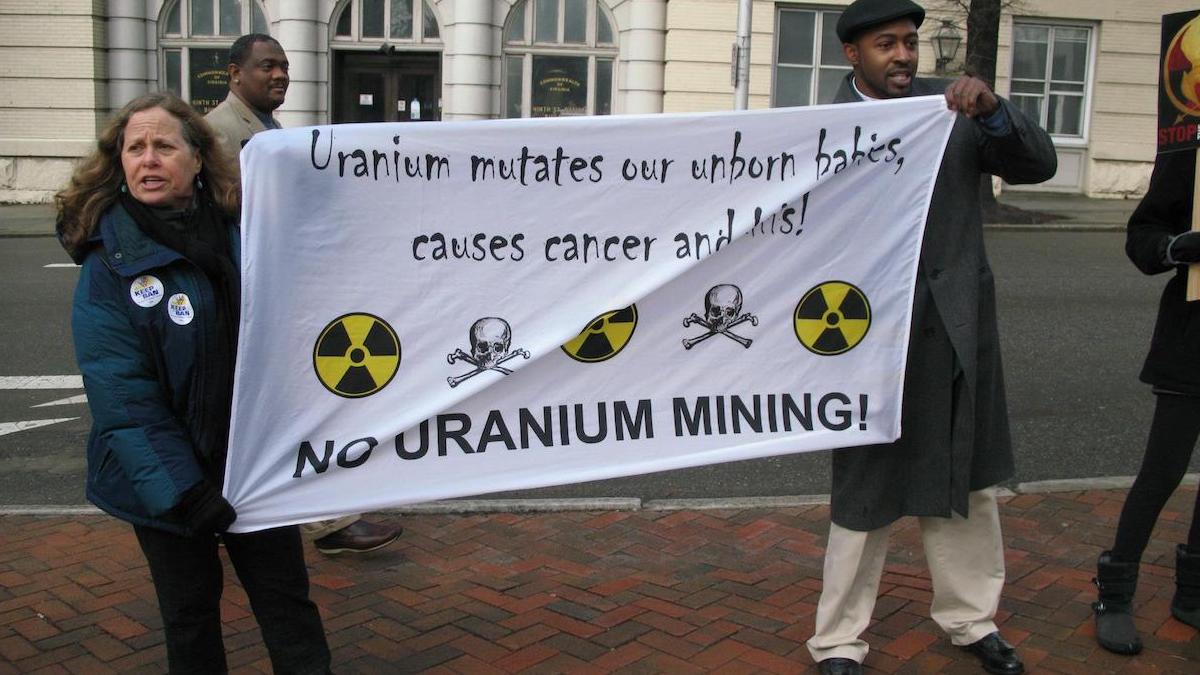
Will the latest court ruling uphold Virginia’s uranium mining ban for good?
By Kay Patrick
On a damp January day earlier this year, I went with two members of a group called Keep the Ban (KTB) on a little tour through the Coles Hill area, just outside the town of Chatham, Virginia.
Coles Hill is the site of this country’s largest uranium deposit — a surprising discovery given most US uranium mines are to be found in the arid climate of the American Southwest.
Keep the Ban is a coalition of environmental groups and Virginia residents organized in 2008 to uphold Virginia’s moratorium on uranium mining and keep the Coles Hill uranium mining threat at bay. With good reason. As we surveyed the sodden terrain, there were so many reminders of why uranium mining is a bad idea anywhere, but especially here.
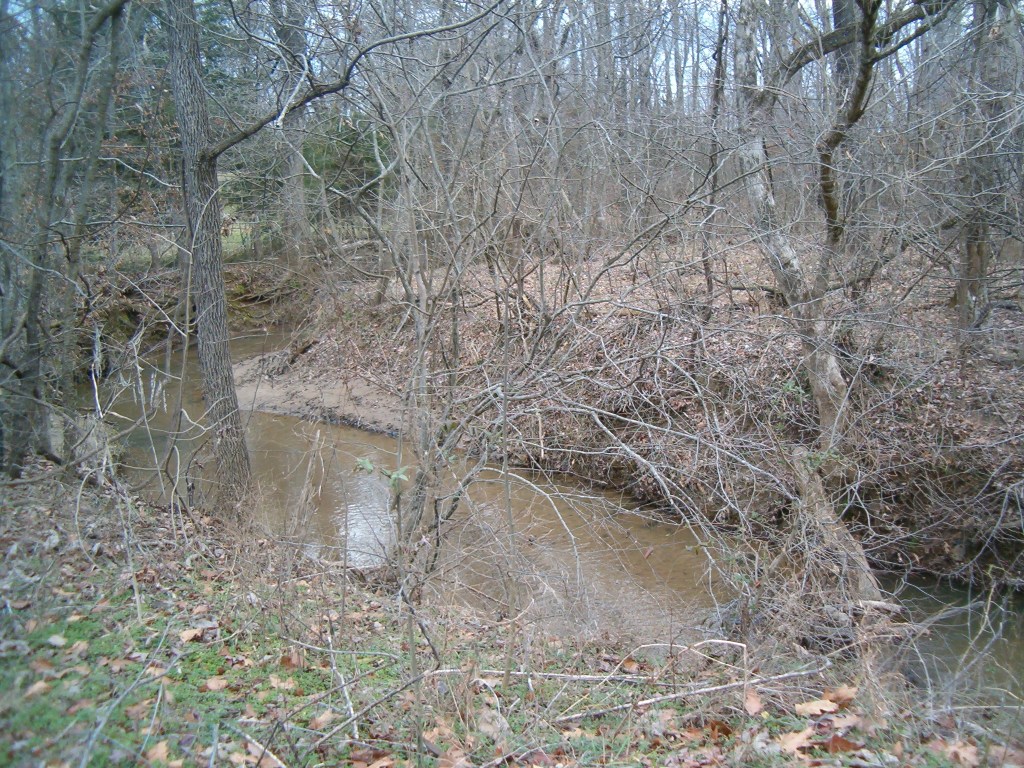
The Coles Hill area is criss-crossed with streams, ponds, springs, creeks and rivers. On that January day, the brown hay fields, flecked with patches of new-growth green, were singing with a chorus of peepers. There was standing water everywhere, while fallen trees decayed quietly on the banks of gurgling streams, all of it testimony to the frequent torrential rains that occur in this area.
The next day, schools were forced to close early and remained closed the day after that due to flooding.
Assurance that uranium mining could be done safely in this environment is a hard sell.
Read MoreFiji’s bold step for peace

Ratification of United Nations treaty banning atomic weapons honors a half-century of anti-nuclear activism
By Vanessa Griffen and Talei Luscia Mangioni
On the streets of Suva in the 1970s it was the young who carried the cause. In afros, headbands and bell-bottom jeans they handed out pamphlets and printed newsletters, performed skits and variety shows, gave lectures, and led rallies on the streets of Fiji’s capital.
Crowds heard firebrand speeches from church leaders, trade unionists, university staff and student leaders.
The Atom (Against Testing on Mururoa) committee, formed in Fiji in 1970, was dedicated to educating, creatively but powerfully, the Fijian public of the dangers of radioactive fallout from French testing and colonialism in the Pacific.
They were resisting what Father Walter Lini, later Vanuatu’s first prime minister, described as “nuclearism” – an amalgamation of “nuclear” and “colonialism” – in the Pacific island territories by the United States, Britain, and France with their nations’ permanently harmful nuclear weapons testing.
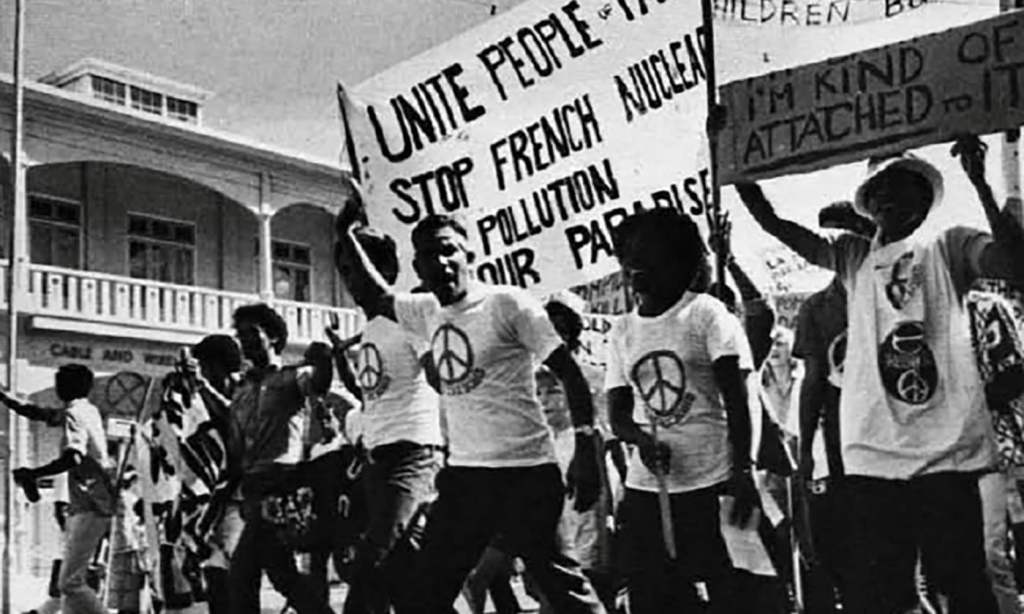
The fight has been long. France would continue nuclear testing on atolls in Tahiti until 1996, and Pacific islanders fought too for justice over the radioactive legacy of US and British tests in the 1950s in the Marshall Islands and Kiribati. Their damaging environmental, social and health inheritance remains today.
Read MoreNuclear power goes South in South Carolina
Executive admits fraud in fleecing ratepayers and shareholders
By Linda Pentz Gunter
“It looks like crime might well pay after all.”
That was the weary and only slightly tongue-in-cheek conclusion drawn by longtime anti-nuclear campaigner, Tom Clements recently, after a former South Carolina nuclear utility executive pled guilty to fraud in federal court.
Clements is the director of Savannah River Site Watch, but his activism has, for decades, extended well beyond the perimeter of that vast nuclear site.
For years, Clements and others have followed — and attempted to stand in the way of — the forced march of South Carolina ratepayers toward nuclear fiasco. When it finally unraveled in late July, there was only cautious cause for celebration.
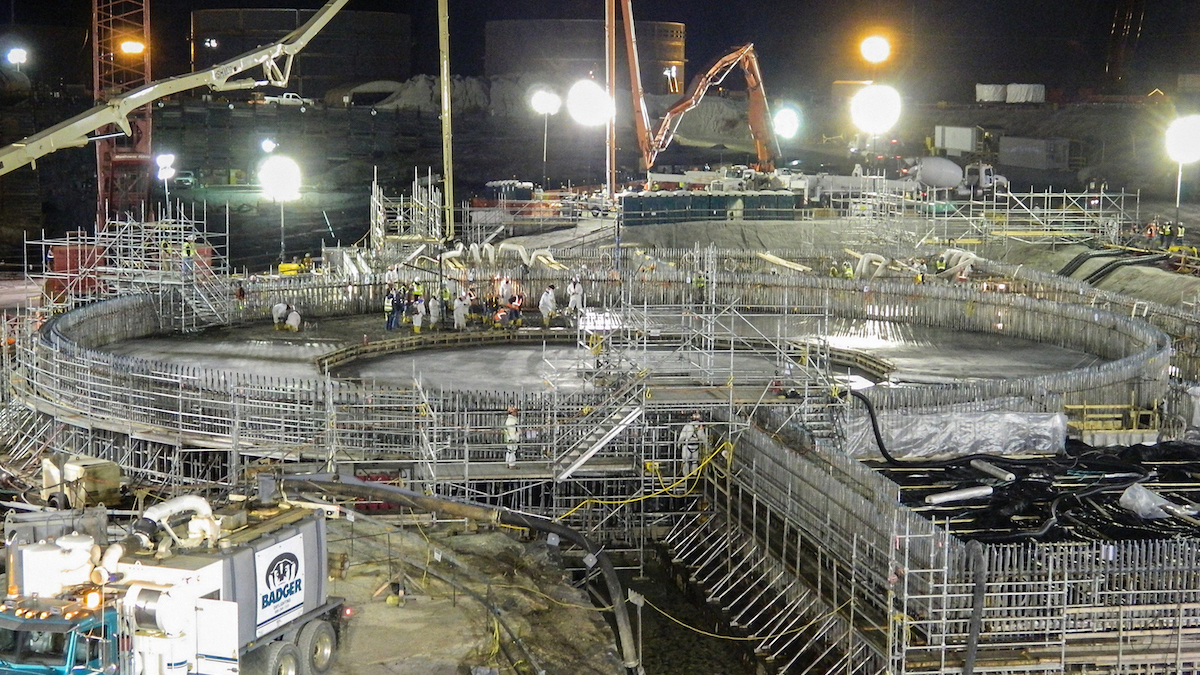
On July 23, Stephen Byrne, the former COO of SCANA, the South Carolina utility originally in charge of the construction of two new nuclear reactors in the state, pled guilty in a massive nuclear conspiracy that defrauded ratepayers, deceived regulators and misled shareholders.
Byrne is charged with lying about progress on two Westinghouse AP 1000 reactors under construction — and since abandoned — at the V.C. Summer site, where costs ballooned to more than $9 billion.
The lies — or “intentional misrepresentations” as court documents described them — were necessary to make the case that the two new reactors would be finished on time, thereby qualifying the company for $1.4 billion in future federal tax credits.
But when Clements did the math, Byrne still came out ahead. “One of the court filings says Byrne earned $6.3 million from 2015-2017,” Clements said. “The project originally started with a filing with the SC Public Service Commission in 2008 and ended in July 2017. His plea agreement says he will pay a $1 million fine, though the judge could make it higher.”
So yes, crime still pays.
Read MoreNuclear blackmail in Illinois

Exelon stranglehold on energy legislation runs long and deep
By David Kraft
Breaking news update: Today, August 10, a putative class of Commonwealth Edison customers filed a civil racketeering lawsuit against Illinois Speaker of the House Michael Madigan, Commonwealth Edison Company (“ComEd”), ComEd’s parent Exelon Corporation, and several other defendants. Read all the details here.
The recent Illinois lobbying corruption scandal involving Exelon Corporation, its subsidiary Commonwealth Edison and Democratic House Speaker, Michael Madigan, demonstrates the extent to which nuclear “power” is about more than electrons.
The FBI arrests of the Ohio House Speaker and five others in a $60 million bribery/corruption scheme; the $10 billion Exelon nuclear bailout in New York; the questionable circumstances surrounding Exelon’s 2016 PepCo merger; and the South Carolina $9 billion SCANA fraud case, suggest that this may be a national pandemic.
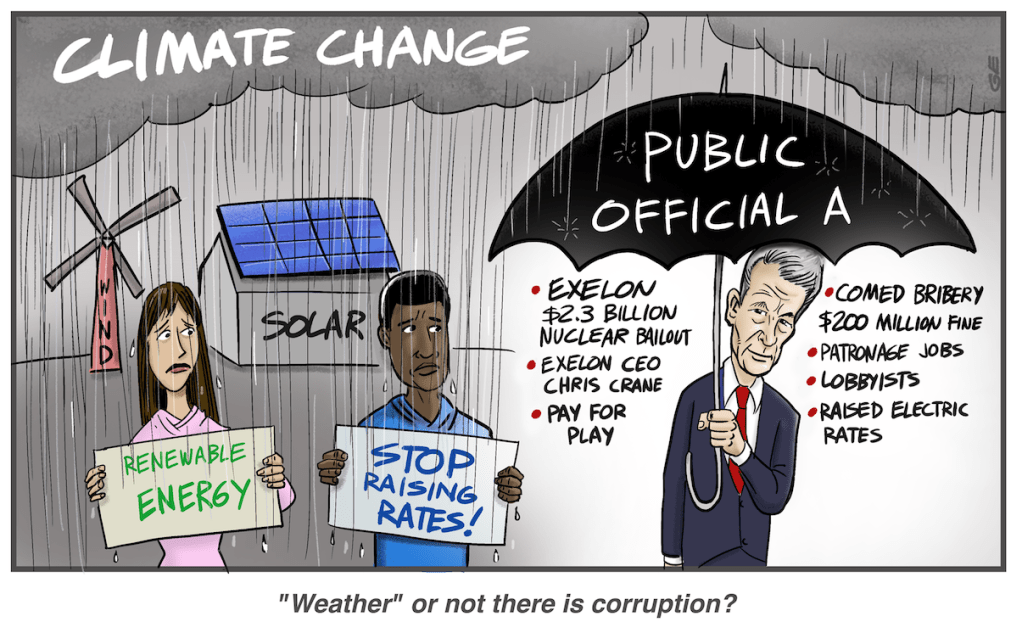
All of this was summarized nicely in a recent New York Times opinion column, “When Utility Money Talks,” (8/2/20).
However, the situation in Illinois with Exelon, and its subsidiary ComEd, has been longstanding and particularly egregious.
Read More Beyond Nuclear International