 Beyond Nuclear International
Hiroshima Fallout
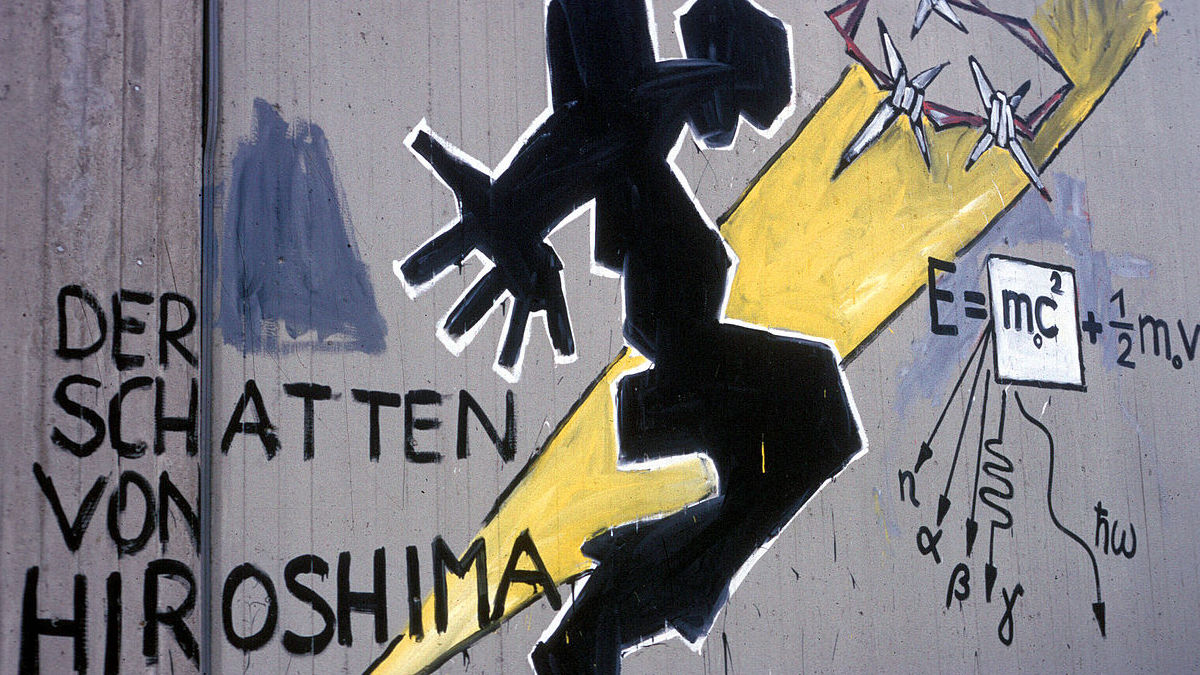
The atomic bombing cover-up and the reporter who revealed it to the world
The following is a review of Lesely M.M. Blume’s new book about John Hersey, author of “Hiroshima”.
By John Loretz
In 1946, John Hersey wrote a magazine article that changed the world. On the 75thanniversary of the events he described so vividly in Hiroshima, (Hersey 1946) journalist Lesley M. M. Blume has given us Fallout, a timely reminder that Hersey’s courageous and influential reporting is as important today as it was when the facts about nuclear weapons were still shrouded in secrecy.
Blume depicts a diligent and resourceful wartime reporter struggling to uncover suppressed facts and disclose essential truths. She takes us into the musty offices of The New Yorker, at the time an upstart humour and society magazine, as Hersey and his editors plot to outmanoeuvre the postwar military censors who, under Gen. Douglas MacArthur, had closed off media access to Hiroshima and Nagasaki to all but the most cooperative journalists.
Through a combination of careful preparation, his reputation for integrity, fortunate timing, and a certain amount of luck, Hersey himself had little trouble getting permission to enter Hiroshima, moved about freely, and was able to leave without interference, unlike colleagues who had their notes and film confiscated. (Hersey, Blume tells us, actually took no notes during his interviews as a means of evading the censors, and did not begin writing until he got home. Remarkably, he retained everything his subjects told him, and quoted them at length, with uncanny accuracy and respect for their stories.) Getting the story past the censors and into print once he had written it was a more daunting challenge, which Blume recounts with enthusiasm.
In an age when our news arrives electronically almost as it happens, it’s charming to learn that every copy of the magazine, comprising solely this one 31,000-word article, sold out on newsstands in a matter of hours, and that people descended upon the offices of The New Yorker begging for copies.
Read MoreA peace ambassador passes
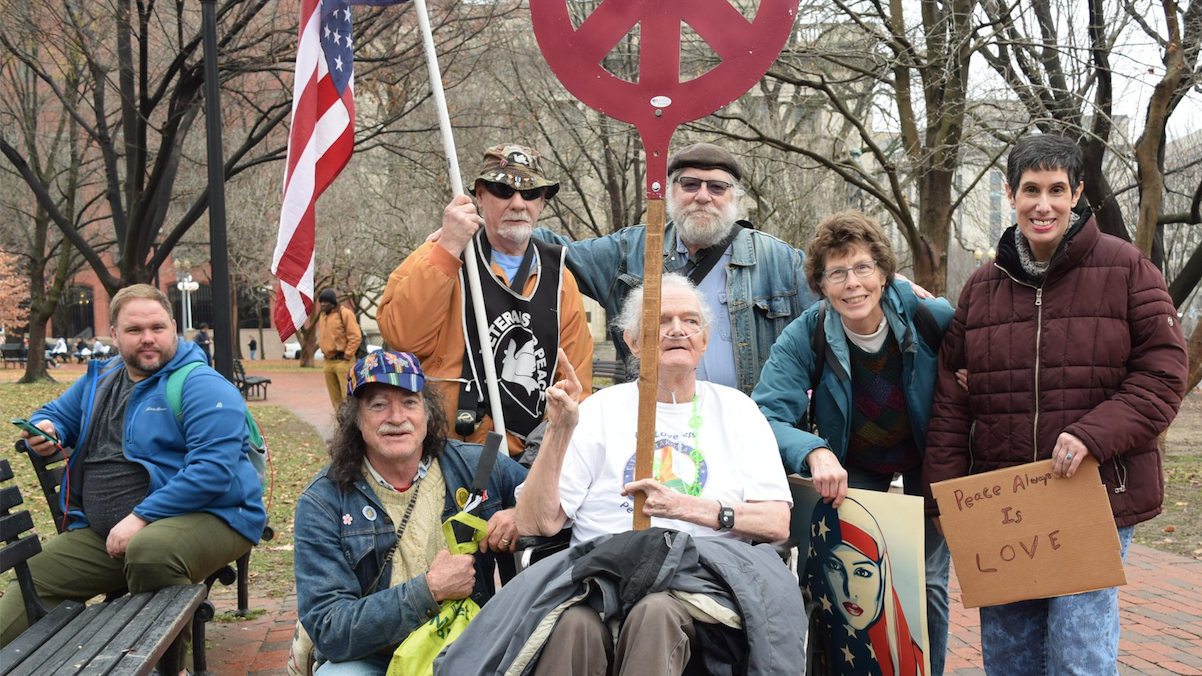
Blind and wheelchair-bound, Pat Loveless never stopped fighting for peace and justice
By Linda Pentz Gunter
Takoma Park, Maryland, the US city where Beyond Nuclear is headquartered, was one of the first nuclear-free cities in the country. It is known for its individuality, its progressive politics, and a few eccentricities as well.
Takoma Park is a Sanctuary City. All residents can vote in city elections, regardless of their immigration status. Local youngsters successfully lowered the city voting age to 16. It once had a socialist mayor after whom the city hall is named.
On the quirkier side, it also had a motorcycle riding cat, replete with leather helmet, a man walking around with a dead fox in a trap to protest that cruelty (he also ran the local tool-lending library), and a wandering rooster, Roscoe, who is immortalized in bronze in the town center.
Utne Reader named Takoma Park “the Leftiest burb in America” — satisfying those eager to one-up Berkeley, CA.
And we had our own Peace Delegate. Pat Loveless, a familiar figure, blind and in a wheelchair, carrying a giant peace sign, died on March 20 at age 64. A cause was not given. He was an unmissable presence in Takoma Park for 24 years. And he was indeed the official Takoma Park Peace Delegate, declared so in a May 17, 2010 city council resolution.
Pat’s last name could not have been less appropriate — everyone who knew Pat loved him, even as he challenged us all to do better and to do more. And everyone knew him, at least by sight, with his ubiquitous peace symbol. He went to almost every city council meeting for 17 straight years. Often he spoke, too. Former Takoma Park City Councilman, Ruben Snipper, remembered how Loveless “used to come every session and give his take on current events and the agenda. Always supported and encouraged the best in Takoma Park. His heart was in the right place.”
“We should stand up for what’s just,” Loveless often admonished the council. (The video below is one example of many issues he championed.)
As current Takoma Park mayor, Kate Stewart, observed, “Council meetings and our City will not be the same.”
Read MoreThe most useless of arsenals
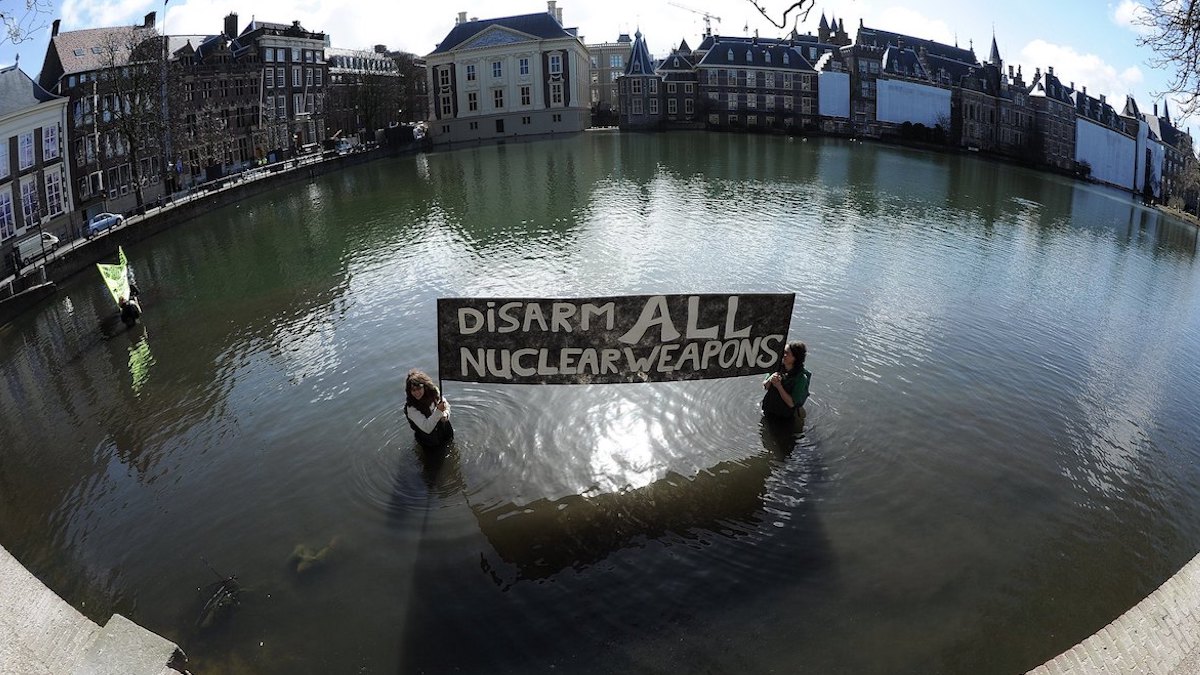
Nuclear nations have handled COVID-19 the worst
By Tilman Ruff
The Covid-19 pandemic has demonstrated that massive arsenals are useless in a pandemic. The countries that have spent obscene sums on nuclear weapons have failed to provide the most basic of protective equipment against the coronavirus, putting their citizens in danger every day.
New pathogens will continue to evolve, spread and disrupt our world. Indeed as we deplete habitats for other species, wreak climate havoc, and grow food industrially, we can expect new infectious diseases more often.
COVID-19 is just the latest; it will certainly not be the last. Bad enough it is, but far from the worst we could expect.
Exposing vulnerability
COVID-19 has caught even the wealthiest nations unprepared; their massive armaments useless against a small, mindless aggregation of single stranded RNA, a few proteins and a thin lipid envelope about 120 nm across.
Nations investing obscene sums in nuclear weapons that must never be used have been unable to provide the most basic of protective equipment – gowns, gloves, and facemasks for their frontline health professionals putting themselves in danger every day.

The best funded public health organization in the world, the Centers for Disease Control and Prevention of the United States, went from recommending N95 respirators for doctors and nurses at risk to recommending improvised bandanas in the face of severe shortages of the most basic protection costing a fraction of a dollar.
The US government rejected international assistance with test kits and was then left with woefully inadequate numbers of its own faulty kits.
Read MoreIt’s been 75 years
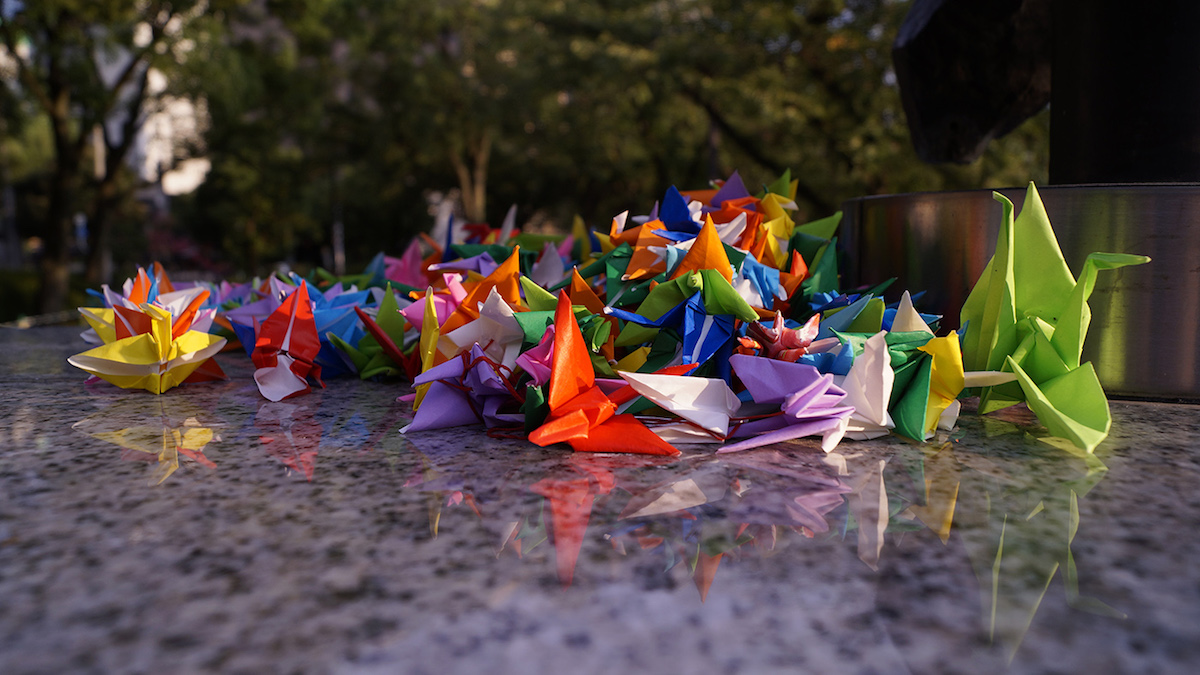
Why are we still planning for the ultimate planet-ending act?
By Ray Acheson
Reaching Critical Will, a program of the Women’s International League of Peace and Freedom, has released its new report — Assuring Destruction Forever: 2020 edition. This is its introduction, (edited here for publication timing), a powerful reminder of the lessons humanity has yet to learn, 75 years after the US dropped atomic bombs on the Japanese cities of Hiroshima and Nagasaki.
It’s August 2020. Seventy-five years since a US president sitting in Washington, DC decided to drop two atomic bombs on the people of Japan—one on the city of Hiroshima, the other on Nagasaki. Thus began the nuclear age, marked with the construction of multiple “doomsday machines” programmed for unwinnable wars and global conflagration; astonishing wastes of human and financial resources; bullish, masculinised conflicts among states that deploy violence here and there while dancing around their potential for planet-ending acts; and the relentless peddling of all this as completely, totally, and undeniably rational.
Seventy-five years of apocalyptic potential
But it is not rational. And the continued investment by certain governments in not just the maintenance but also the “modernisation”—the upgrading, updating, and life- extending—of nuclear weapons is absurd, dangerous, and immoral. Fortunately, during the COVID-19 crisis, people are starting to take notice of where all of the money—in many cases, taxpayers’ money—has gone; of why their governments cannot provide basic protective equipment and medical supplies and services during a global pandemic. And even more fortunately, there is something we can do to get rid of the threat of nuclear weapons and release trillions of dollars to deal with real, rather than imagined, crises of security, safety, and stability: we can divest, and we can disarm.
For seventy-five years, the world has lived under the threat of radioactive blast and firestorm, the effects of which are immediately devastating and punishingly intergenerational. For seventy five years, from production to testing and use to storage of radioactive waste, nuclear weapon activities have contaminated land and water—and will continue to do so for thousands of years more. For seventy-five years, a very few governments—nine, at current count—have decided to invest trillions of dollars into these instruments of death and destruction. For seventy-five years, corporations like Lockheed Martin, Boeing, and Bechtel have reaped incredible profits from government contracts for bombs and bombers. Certain academics, politicians, and bureaucrats have risen through the ranks of think tanks or government administrations in positions bankrolled by the nuclear profiteers, spinning theories of “nuclear deterrence” and “strategic stability” to justify this massive, unconscionable investment in technologies of massive violence.
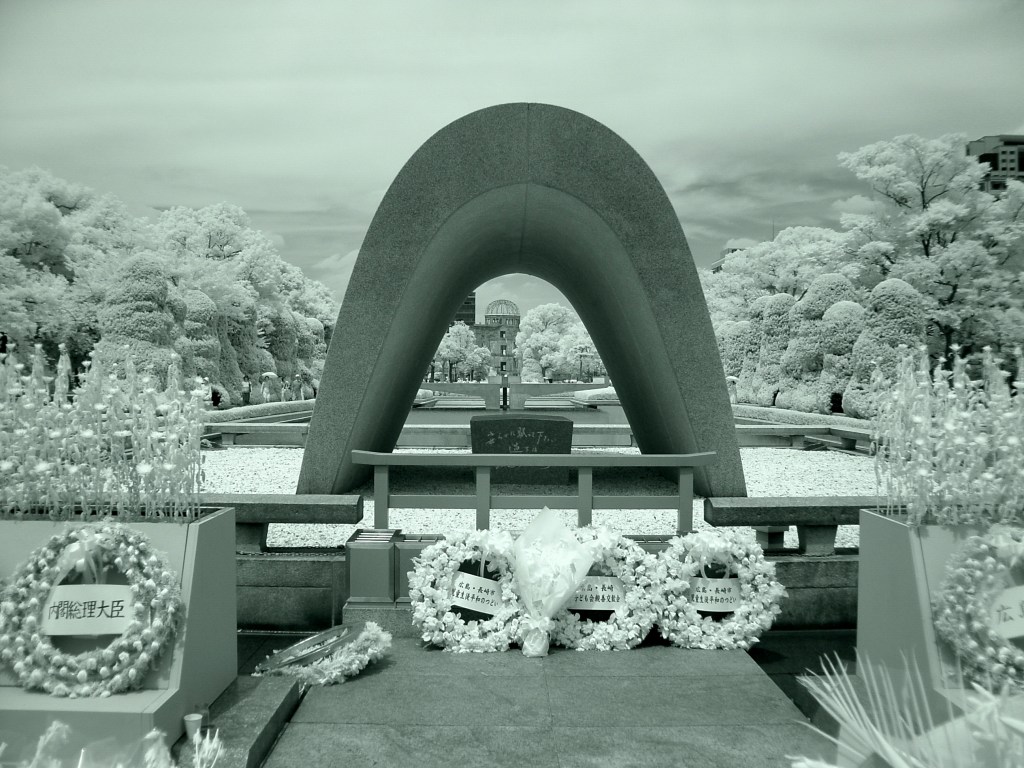
It’s been seventy-five years. Will we reach one hundred if we continue on like this? Can we survive a century with nuclear weapons? Can we survive a century of wasted money and ingenuity; a century of tensions between human beings armed to the death with the capacity to destroy entire cities, countries, the world, in moments; a century of living with this existential threat while another, that of climate change, promises even more damage and uncertainty ahead?
The question of can we, though, is not as relevant as should we. Should we just keep going, the way the nuclear war mongers want? They say we’ll be fine. Better than if we were to disarm, they argue. Eliminating nuclear weapons will “destabilise” international relations, they assert. It will mean another global conflict, invasions and occupations, “dogs and cats living together.”
Read MoreNuclear power in the Green New Deal?
The arguments against it
By M.V. Ramana and Schyler Edmunston
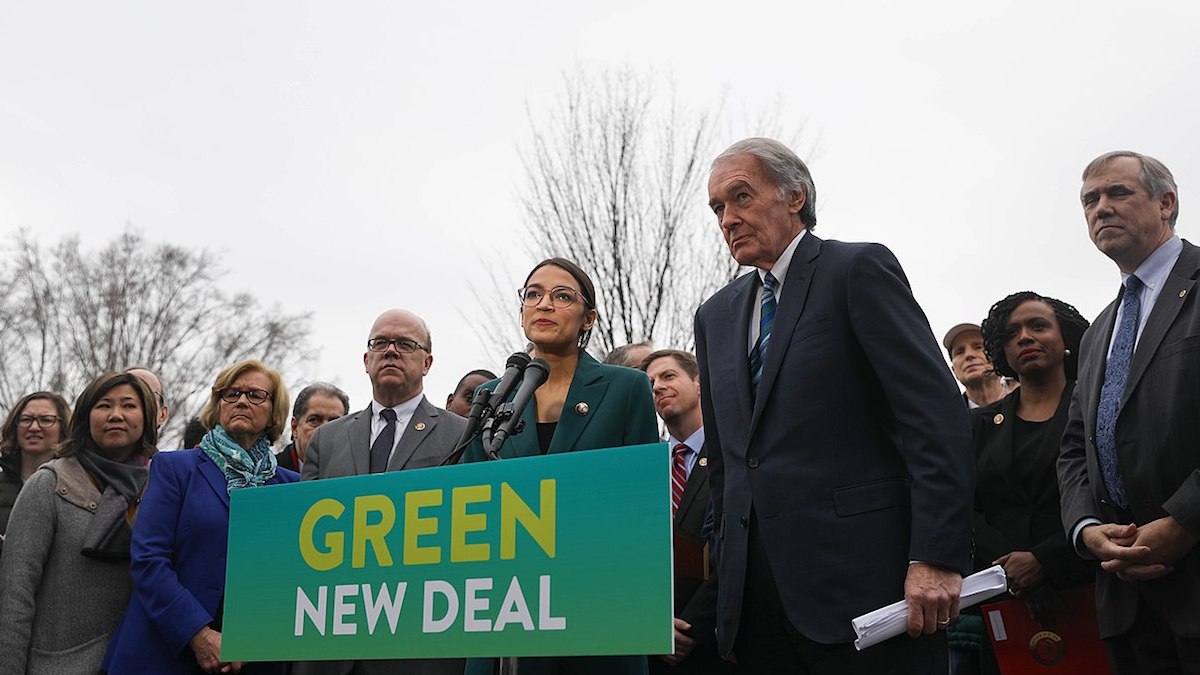
Over the last few years, there has been a growing interest in a Green New Deal and there are many versions proposed in different countries. At the same time, there has also been criticism of these proposals on many counts, including the fact that they typically don’t include nuclear energy.
This criticism misses a basic point: a Green New Deal is, by its very definition, much more than an emissions reduction plan. As we argue below, the other attributes that characterize Green New Deals, rule out nuclear energy as an option.
Like the original New Deal of U.S. president Franklin D. Roosevelt in the 1930s, all Green New Deal proposals emphasize the creation of new jobs. Canada’s New Democratic Party version, for example, calls for “a New Deal for Climate Action and Good Jobs.”
Nuclear power is not a good job creator. One widely cited study found that for each gigawatt-hour of electricity generated, solar energy leads to six times as many jobs as nuclear power. This is compounded by the fact that solar power plants are far cheaper to build and maintain than nuclear reactors.
Visions for peace

At 91, Joanna Macy still sees the good in — and hope — for all of us
By De Herman
One is never too old to be a catalyst for positive change. Indeed, the voices of our elders are needed now more than ever. Joanna Macy is a prime example.
“The most remarkable feature of this historical moment is not that we are on the way to destroying our world—we’ve actually been on the way quite a while. It is that we are beginning to wake up, as from a millennia-long sleep, to a whole new relationship to our world, to ourselves, and to each other. Active Hope is waking up to the beauty of life on whose behalf we can act. We belong to this world.”
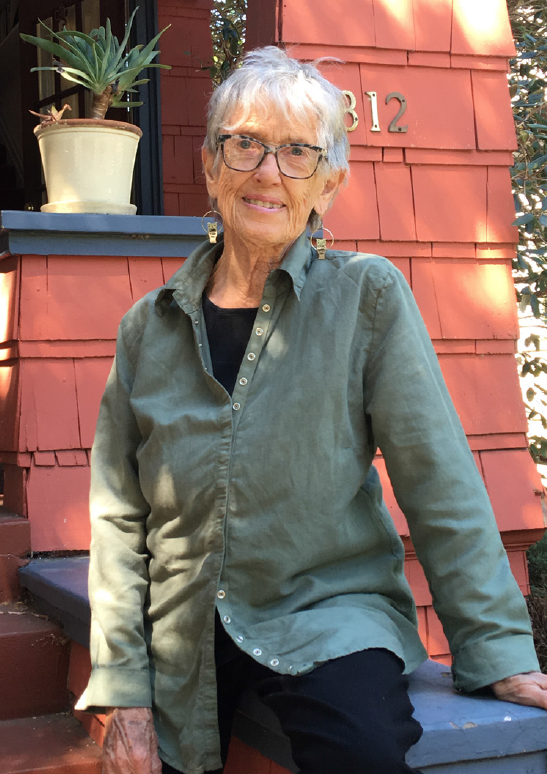
(Picture of Macy, above, at home in Berkeley, by De Herman.)
This is how Joanna Macy, Ph.D., sees humanity at this time in the story of our existence.
Macy is a visionary, anti-nuclear activist, writer, deep ecologist, systems theorist, teacher, Buddhist scholar and, at 91, a wise elder. It’s been a long and circuitous life journey, woven by the threads of spiritual seeking, insatiable curiosity and passion for justice and activism. Her work, as described on her website, “addresses psychological and spiritual issues of the nuclear age, the cultivation of ecological awareness, and the fruitful resonance between Buddhist thought and postmodern science.”
In 1978, taking lessons from grassroots activism, wisdom from East and West, and her spiritual stirrings, Macy initiated the workshops that would eventually be known as the Work That Reconnects. More than 40 years later, the workshop exercises invite participants of all ages and backgrounds “into fresh relationships with our world, and not only arouse our passion to protect life, but also steady us in a mutual belonging more real than our fears and even hopes.”
Read More
