 Beyond Nuclear International
The big spender we don’t need

Trump administration plans vast expansion of military budget
By Lawrence Wittner
In late May of this year, President Donald Trump’s special envoy for arms control bragged before a Washington think tank that the U.S. government was prepared to outspend Russia and China to win a new nuclear arms race. “The president has made clear that we have a tried and true practice here,” he remarked. “We know how to win these races and we know how to spend the adversary into oblivion.”
This comment was not out of line for a Trump administration official. Indeed, back in December 2016, shortly after his election, Trump himself proclaimed that the United States would “greatly strengthen and expand” the U.S. government’s nuclear weapons program, adding provocatively: “Let it be an arms race. We will outmatch them at every pass and outlast them all.”
In a fresh challenge to Russia and China, delivered in October 2018, Trump again extolled his decision to win the nuclear arms race, explaining: “We have more money than anybody else, by far.”
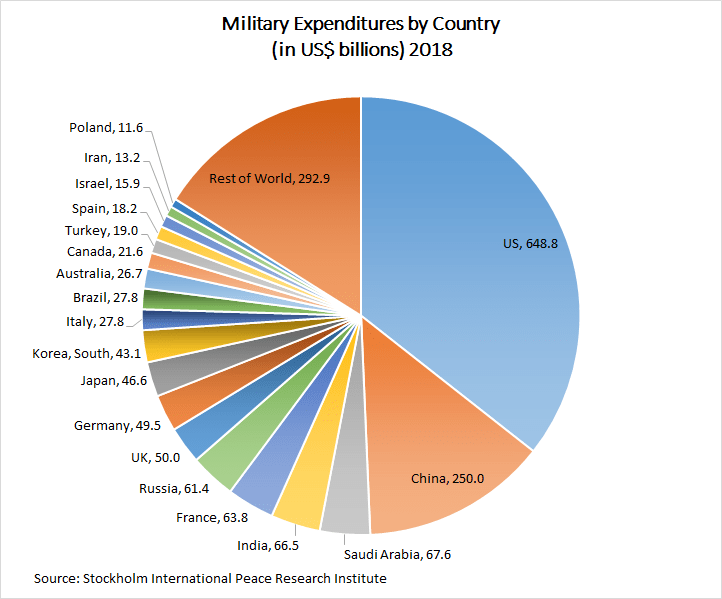
And, in fact, the Trump administration has followed through on its promise to pour American tax dollars into the arms race through a vast expansion of the U.S. military budget. In 2019 alone (the last year for which worldwide spending figures are available), federal spending on the U.S. military soared to $732 billion. (Other military analysts, who included military-related spending, put the figure at $1.25 trillion.)
As a result, the United States, with about 4 percent of the world’s population, accounted for 38 percent of world military spending. Although it’s certainly true that other nations engaged in military buildups as well, China accounted for only 14 percent of global military spending that year, while Russia accounted for only 3 percent. Indeed, the United States spent more on its military than the next 10 countries combined.
Read MoreNucleargate in Ohio

Huge criminal racketeering conspiracy orchestrated reactor bailouts
By Linda Pentz Gunter
It’s been a bit of a Watergate week for nuclear power, with individuals in two states arrested for criminally defrauding the public to keep nuclear power alive. In Ohio, it was public officials, believed to be backed by nuclear company money, who illegally orchestrated a massive subsidy. In South Carolina, it was the arrest of an energy company official who has pled guilty to a $9 billion nuclear fraud. This week, we feature the Ohio story. Next week, it will be South Carolina’s turn.
If you were going to pull someone out of central casting to play a thuggish villain, you would choose Larry Householder. But he wouldn’t need any acting skills.
On July 21, Householder, along with four others, was arrested for his alleged involvement in what amounts to the biggest criminal racketeering conspiracy in Ohio history. Somehow it’s not a surprise that it revolved around pots of money to keep two aging and unaffordable nuclear power plants open.
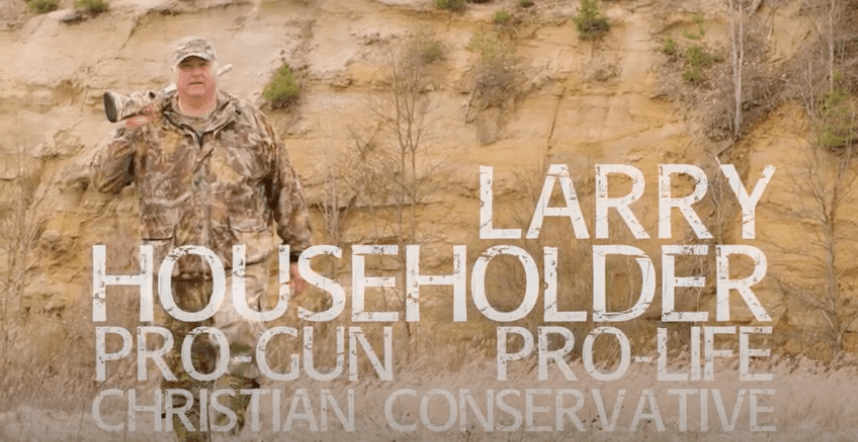
While Householder may physically embody everyone’s idea of a gangster, it’s not his official profession. He is — and presumably that will soon be a “was” — the Speaker of the Ohio House of Representatives.
The scheme is laid bare in an 81-page criminal complaint. It was busted open by a year-long, detailed and covert investigation by the US Attorney’s office and the FBI, and involves the flow of $61 million of dark money directed toward activities that would ensure the passage of legislation in Ohio guaranteeing the bailout of the Davis-Besse and Perry nuclear reactors to the tune of $1.5 billion. The subsidy is being funded via a surcharge on electricity customers.
The bill, known as HB6, also slashed mandates for wind and solar energy and eliminated energy efficiency requirements. It was, as David Roberts described it on Vox just after the bill passed in July 2019, “the worst piece of legislation in the 21st century” and “the most counterproductive and corrupt piece of state energy legislation I can recall in all my time covering this stuff.”
FirstEnergy Solutions, the then owner of the plants, had threatened their closure if the subsidy was not forthcoming.
Read MoreA dark legacy

Western Shoshone land stolen for nuclear weapons tests and waste dump
By Ian Zabarte
Shoshone land was illegally seized by the U.S government, breaking a historic treaty, first for the atomic test site in Nevada, and then for the planned — but still canceled — Yucca Mountain high-level radioactive waste dump. Throughout, the Shoshone people have paid a terrible price.
As a Shoshone, we always had horses. My grandfather always told me, “Stop kicking up dust.” Now I understand that it was because of the radioactive fallout.
To hide the impacts from nuclear weapons testing, Congress defined Shoshone Indian ponies as “wild horses.” There is no such thing as a wild horse. They are feral horses, but the Wild Horse and Burrow Acts of 1971 gave the Bureau of Land Management (BLM) the affirmative act to take Shoshone livestock while blaming the Shoshone ranchers for destruction of the range caused by nuclear weapons testing.
My livelihood was taken and the Shoshone economy destroyed by the BLM. On the land, radioactive fallout destroyed the delicate high desert flora and fauna, creating huge vulnerabilities where noxious and invasive plant species took hold.
Nuclear weapons testing at the Nevada National Security Site has left a dark legacy of radiation exposure to Americans downwind from the battlefield of the Cold War. Among the victims are the Shoshone people, who, by no fault of our own, were exposed to radiation in fallout from more than 924 nuclear tests.
The Shoshone people never consented to the nuclear weapons testing.
Mapping uranium
What is it? Where does it come from? And who, if anyone, benefits?
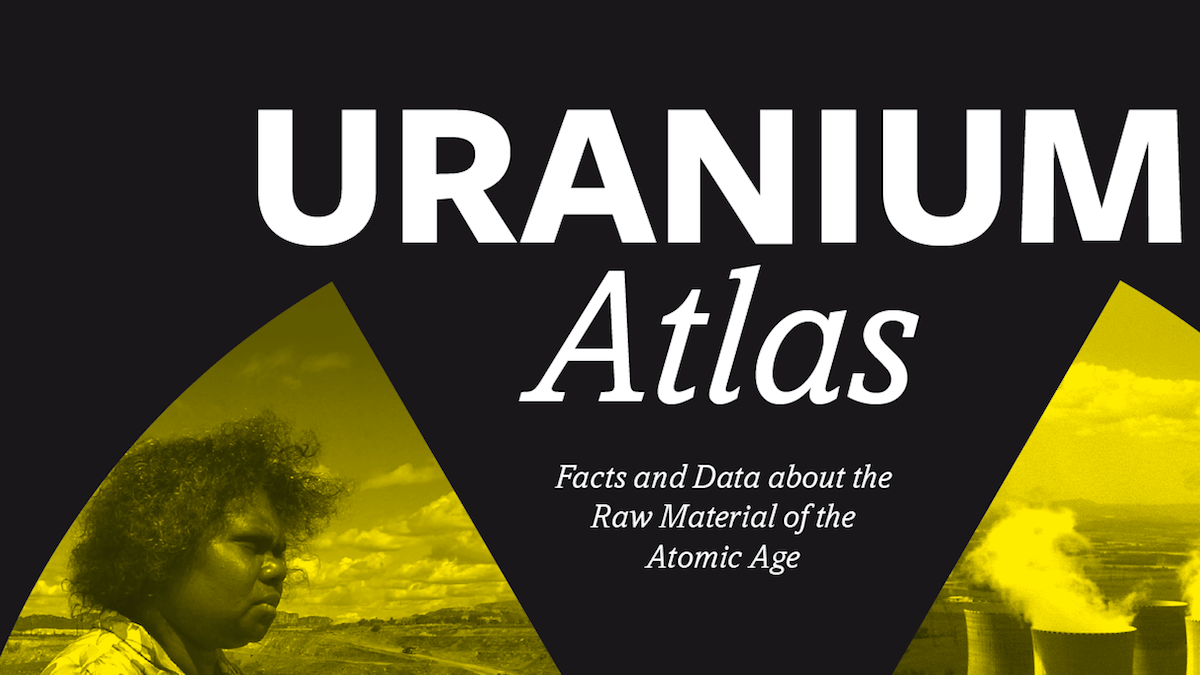
This week marks the official launch of the Uranium Atlas, English edition, with new and expanded content. Beyond Nuclear was part of the editorial team, which includes the Nuclear Free Future Foundation, (which earlier published a German language edition) the Rosa Luxemburg Stiftung and IPPNW Germany. Beyond Nuclear is grateful for the generous support from Honor the Earth, which sponsored the printing and distribution costs for North American readers of the Uranium Atlas.
The Uranium Atlas is, as its title suggests, a collection of maps indicating everywhere that uranium was — or is still — extracted and used. It effectively maps the journey of uranium, from mining and milling to the production of electricity and nuclear bombs, the testing and use of the latter, and the unsolved and unending problem of the radioactive waste left at the end of this (mis)use.

Over the course of 21 concise, two-page chapters we see where uranium was mined — almost exclusively on Indigenous lands; who was in harm’s way during atomic tests — almost exclusively communities of color; and where nuclear industries want to dump their waste — in the case of North America and Australia, once again on indigenous lands.
Read MoreRadioactive rail wreck
Dangerous nuclear waste casks should stay off roads and rails
By Laura Watchempino
If the Nuclear Regulatory Commission’s (NRC) conclusion that it’s safe to move spent nuclear fuel from nuclear power plants across the country to a proposed storage facility in Lea County sounds vanilla-coated, it’s because the draft environmental impact statement for a Consolidated Interim Storage Facility submitted by Holtec International did not address how the casks containing the spent fuel would be transported to New Mexico.
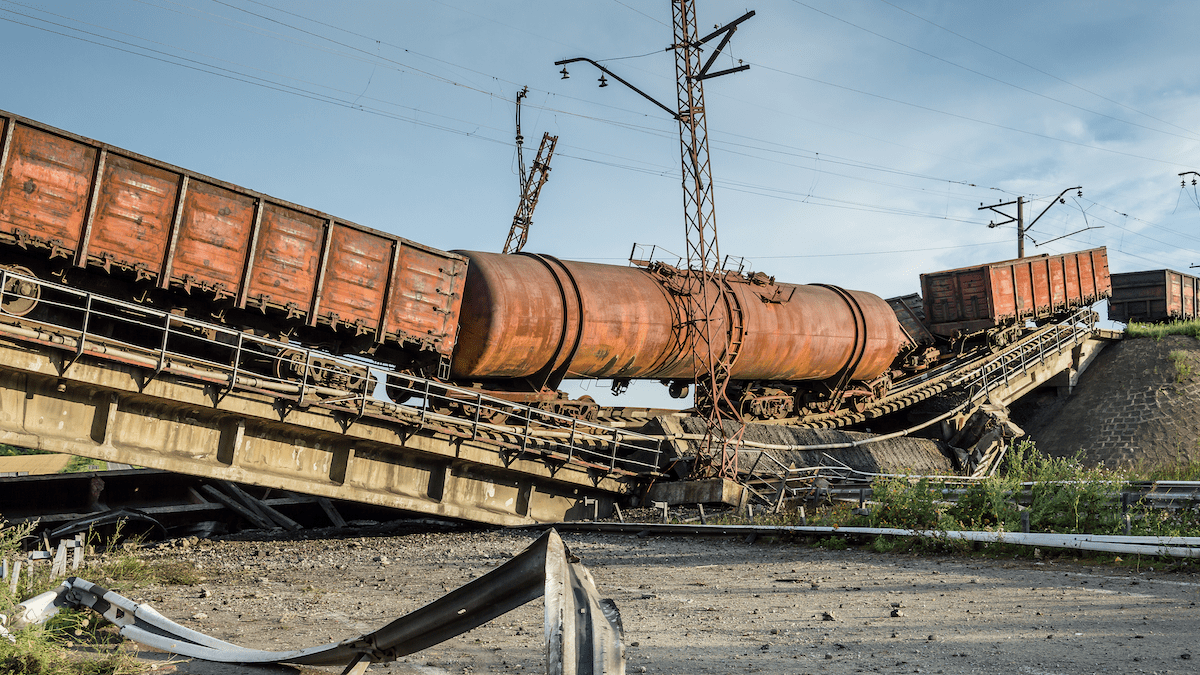
It’s likely the casks would be transported primarily by rail using aging infrastructure in need of constant repair. But our rail systems were not built to support the great weight of these transport casks containing thin-wall fuel storage canisters.
Nor was the potential for cracked or corroded canisters to leak radiation studied because an earlier NRC Generic EIS for the Continued Storage of Spent Nuclear Fuel assumed damaged fuel storage canisters would be detected during an intermediary dry transfer system or a pool.
But Holtec’s proposal only addresses a new destination for the high-level nuclear waste – not the removal and transport of the fuel storage canisters from nuclear power plants to New Mexico.
Read MoreCuba, Chernobyl and COVID-19

Cuba’s doctors have been to the rescue before — to save Chernobyl’s children
By Linda Pentz Gunter
“We do not give what we have in excess; we share all that we have,” said Dr. Julio Medina, director of a Cuban medical program outside Havana that treated children from Chernobyl, in a May 2009 article in The Guardian. “It is simple.”
Today, as Cuban doctors travel the world treating the patients of COVD-19, it is still simple. It is, as the Chernobyl program was before it, “a commitment of solidarity.”
Yet Cuba is not without cases of the viral pandemic at home. In fact, the UK-based Cuba Solidarity Campaign (CSC) recently set up a fundraiser to “provide urgent medical aid to help Cuba during the coronavirus pandemic,” and specifically to purchase “ventilators, testing kits and personal protective equipment to support Cuban health workers in the fight against COVID-19 on the island.”
The CSC, Code Pink, actor Danny Glover and others are calling on the Nobel Committee, via a petition, to award the Cuban doctors — known as the Henry Reeve Brigade — the Nobel Peace Prize, not only for their efforts today, but for their previous rescue missions when ebola struck in West Africa, and cholera in Haiti.
The story of Cuba’s involvement in helping the children of Chernobyl, however, is less well known if at all. It was a free program that lasted an astonishing 21 years, beginning in 1990. In 2019 it resumed, this time to help “the sons and daughters of the victims, who are showing ailments similar to those of their parents,” according to Miguel Faure Polloni, writing in Resumen.


