 Beyond Nuclear International
What caused radioactive releases from Russia?
If plume is so “harmless”, why deny it?
By Linda Pentz Gunter
What happened last month in Russia?
Beginning in early June, sensors in Sweden, Norway and the Netherlands began detecting unusually high levels of cesium-134, cesium-137, ruthenium-103, cobalt-60 and iodine-131 coming from Western Russia and passing across Europe. By mid-June, monitors in Finland showed similar readings.
Because these are manmade isotopes and do not occur naturally, they have clearly come from a nuclear installation. And because the levels are far higher than normal, these releases are also clearly the result of some kind of accident.
But an accident to what?
The Russians so far insist there is no problem with their nuclear power plants in the Baltic region —- Kola and Leningrad — the geographical origin of the release. But Friends of the Earth Norway is not so ready to accept this as fact. “We are concerned that we do not know the origin of the radionuclides,” the organization said in a statement quoted by the Russian NGO website, Activatica. “We are concerned that the Leningrad and Kola NPPs cannot be excluded as potential sources.”

Vitaliy Servetnik, co-chair of the Russian Social Ecological Union, also does not rule out the Kola and Leningrad nuclear power plants as the source, pointing out that more than 70% of Russia’s aging nuclear power plants are operating well beyond their design basis timeframes.
Read MoreThe true story behind ‘Z’
Immortalized in a fictional film, the real Lambrakis is unforgotten by the Greek peace movement
By Maria Arvaniti Sotiropoulu
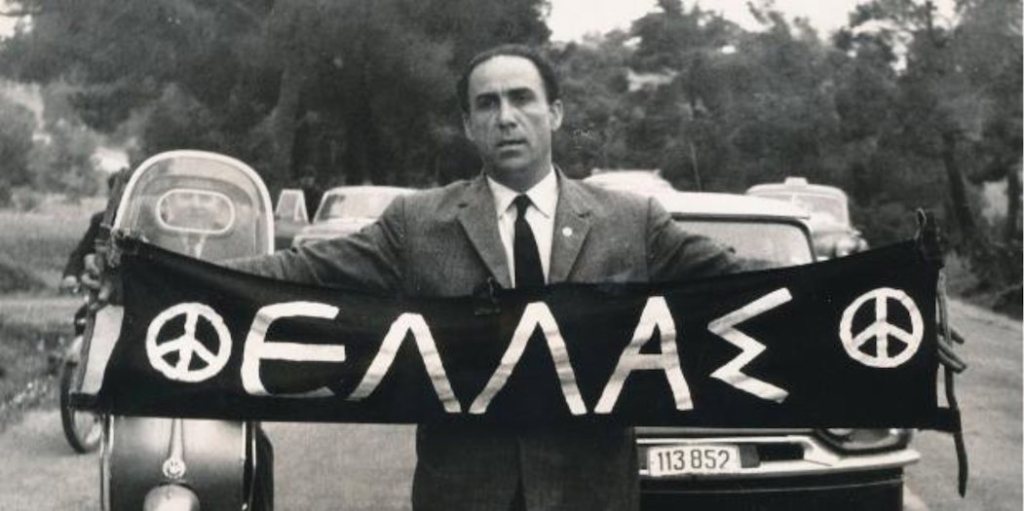
On 27 May every year, the Greek Affiliate of IPPNW and the Peace movement in Greece commemorate the anniversary of the assassination of Grigoris Lambrakis in Thessaloniki in 1963.
The life and death of Grigoris Lambrakis inspired the author Vassilis Vassilikos to write the political novel “Z”. The title stands for the first letter of the Greek word “Zi” which means “[He] Lives!”. In 1969, the Greek-French film director Costa-Gavras made the film Z, which found international acclaim. “Z” appeared in graffiti all over Athens and became an international symbol for peace and democracy. Unfortunately, the younger generation of peace activists today know little of the life and death of Lambrakis which could serve as an example to us all.
Grigoris Lambrakis (3 April 1912 – 27 May 1963) was a medical doctor, a Member of Parliament, an athlete and a member of the faculty of the School of Medicine at the University of Athens. He is also a peace martyr and inspiration for the international peace and anti-nuclear movement.
Born into a poor family in the small village of Kerasitsa, Lambrakis was a champion athlete throughout his life. He held the Greek record for long jump for twenty-three years (1936–1959). He also earned several gold medals in the Balkan Games. He competed in the men’s long jump and the men’s triple jump at the 1936 Summer Olympics. He used athletics to promote, in difficult times, the brotherhood between Balkan nations, and he was a close friend of the Turkish champion in triple jump, Tafic.
During the Axis occupation of Greece from 1941 to 1944, Lambrakis participated actively in the Greek Resistance. In 1943 he set up the Union of Greek Athletes and organized regular competitions. He used the revenue from these games to fund public food banks for the starving population.
Read MoreSeeing stars

Did blotting out the night sky dull our drive to stop climate change?
By Linda Pentz Gunter
Our skies are clear. For now. But not at night. Light pollution still blocks out the universe for most of us. If we could see the night sky, would we regain our sense of wonder in our world, and work harder to save it?
Many decades ago I went camping with my family on a wild and lonely beach on the Camargue in the South of France. There was nothing there but sea and sand, bordered by dunes and a reed-lined canal. No cafes or hotels, no facilities, no lights. Nothing.
On one particularly clear night, my father encouraged us all to float on our backs in the warm sea and look up at the dazzling array of stars in the deep night sky. “What do you think about when you look up there?” he asked us.
My stepmother said she felt overwhelmed at how small and insignificant we are in that vast and endless unknown and how frightening that was. My father, ever the scientist, said he felt amazed at how much humans did already know, and continued to discover, about the universe and how exciting that was.
Today, a depressing “two-thirds of the world’s population — including 99 percent of people living in the continental United States and western Europe — no longer experience a truly dark night, a night untouched by artificial electric light.”
That revelation, among many, is contained in the lyrical and literary non-fiction work, The End of Night. Searching for Natural Darkness in an Age of Artificial Light. It is written by Paul Bogard, who teaches creative non-fiction writing, a skill reflected in the vivid style of this work, which is no dry text book.
Follow the Yellowcake Road
A journey from Tokyo to Mirrar country
By Alexander Brown
On 19 July 2019 I boarded a plane in Tokyo and headed to Cairns for two weeks of fieldwork connected with my research on transnational activism in the Asia-Pacific. My purpose was to learn about the pathways via which uranium travels from Australia to Japan and the resistance movements and grassroots connections which have formed along the way.
Prior to the Fukushima disaster, Australia supplied approximately one third of Japan’s uranium needs, something I first became aware of when anti-nuclear activists from Australia came to Japan in 2012 for the Global Conference for a Nuclear Power Free World.
Since that time I have pondered the nature of the nuclear relationship between my birthplace and my second home in Japan. After delving into the history of this relationship from my dusty office in Tokyo, it was time to make the physical journey along the yellowcake road and see where it might take me.
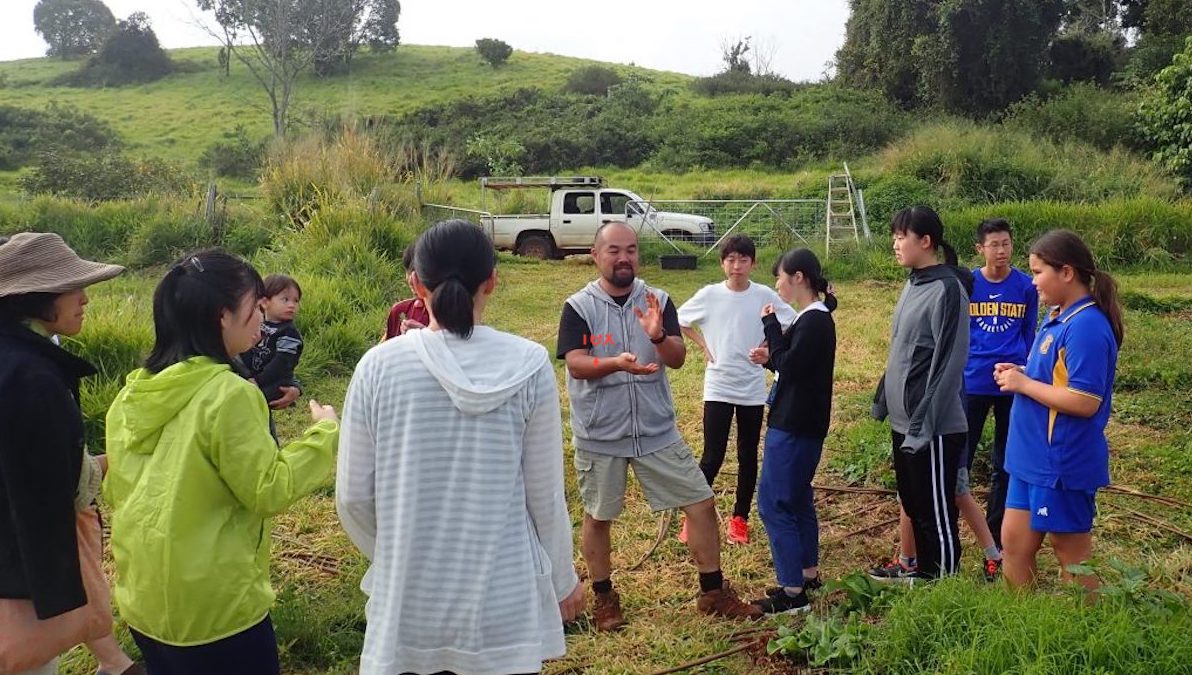
In Cairns I met with local Japanese-Australian people who organise Smile with Kids, a registered charity which brings junior high school students from Fukushima prefecture, whose lives have been disrupted in multiple ways by the March 2011 earthquake, tsunami and nuclear disaster, for a ten-day visit to Cairns.
The children’s visit happened to coincide with a visit to the city by Peace Boat, a cruise ship with a difference which holds peace and sustainable development education activities onboard during its global and regional voyages.
The ship is part of an NGO which campaigns around these issues and has played a significant role in fighting nuclear power in post-Fukushima Japan. Local activists took advantage of this fortuitous timing to organise a welcome event for Peace Boat passengers and staff at which the Fukushima children spoke about their experiences growing up in the wake of the nuclear disaster.
Read MoreStanding up to Rosatom

Anti-nuclear resistance in Russia: problems protests, reprisals
The following is a report from the Russian Social Ecological Union (RSEU)/ Friends of the Earth Russia, slightly edited for length. You can read the report in full here. It is a vitally important document exposing the discrimination and fear tactics used against anti-nuclear organizers in Russia and details their courageous acts of defiance in order to bring the truth of Russia’s nuclear sector to light.
Rosatom is a Russian state-owned corporation which builds and operates nuclear power plants in Russia and globally. The state-run nuclear industry in Russia has a long history of nuclear crises, including the Kyshtym disaster in 1957 and Chernobyl in 1986. Yet Rosatom plans to build dozens of nuclear reactors in Russia, to export its deadly nuclear technologies to other countries, and then to import their hazardous nuclear waste.
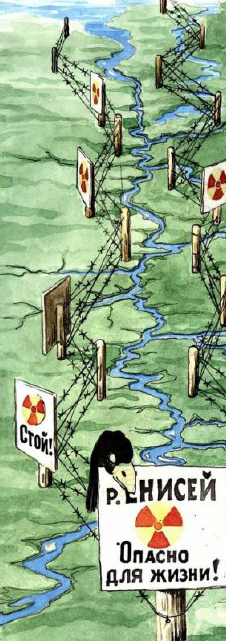
This report is a collection of events and details about the resistance to Russian state nuclear corporation, Rosatom, and other activities that have led to the pollution of the environment and violation of human rights. Social and environmental conflicts created by Rosatom have been left unresolved for years, while at the same time, environmental defenders who have raised these issues, have consistently experienced reprisals.
Nuclear energy: failures and Lies
- In the autumn of 2017, the International Atomic Energy Agency (IAEA) discovered a concentration of the technogenic radionuclide ruthenium–106 in the atmosphere of several European countries. A number of experts linked the ruthenium release to the Mayak plant in the Chelyabinsk Region2 3, but Rosatom continues to deny this.
- On the 8th of August 2019, an explosion occurred during a test of a liquid rocket launcher at a marine training ground in Nenoksa Village of Arkhangelsk Region. The administration of the city of Severodvinsk, 30 km from the scene, reported an increase in radiation levels, but later denied the claim. The Ministry of Emergency registered an increase of 20 times (to2 μSv/h) around Severodvinsk, while the Ministry of Defense reported the radiation level as normal. Only two days later, Rosatom reported that five employees were killed and three were injured at the test site. According to media reports, two employees of the Ministry of Defense were also killed and three were injured, and medical personnel who helped the victims were not informed about the risk of radiation exposure.
Invisible Fallout
New film helps us find it, measure it and understand it
By Linda Pentz Gunter
There are many ways to teach people about radiation. But if you want to make that lesson accessible, compelling and even moving, then this film is the way to do it.
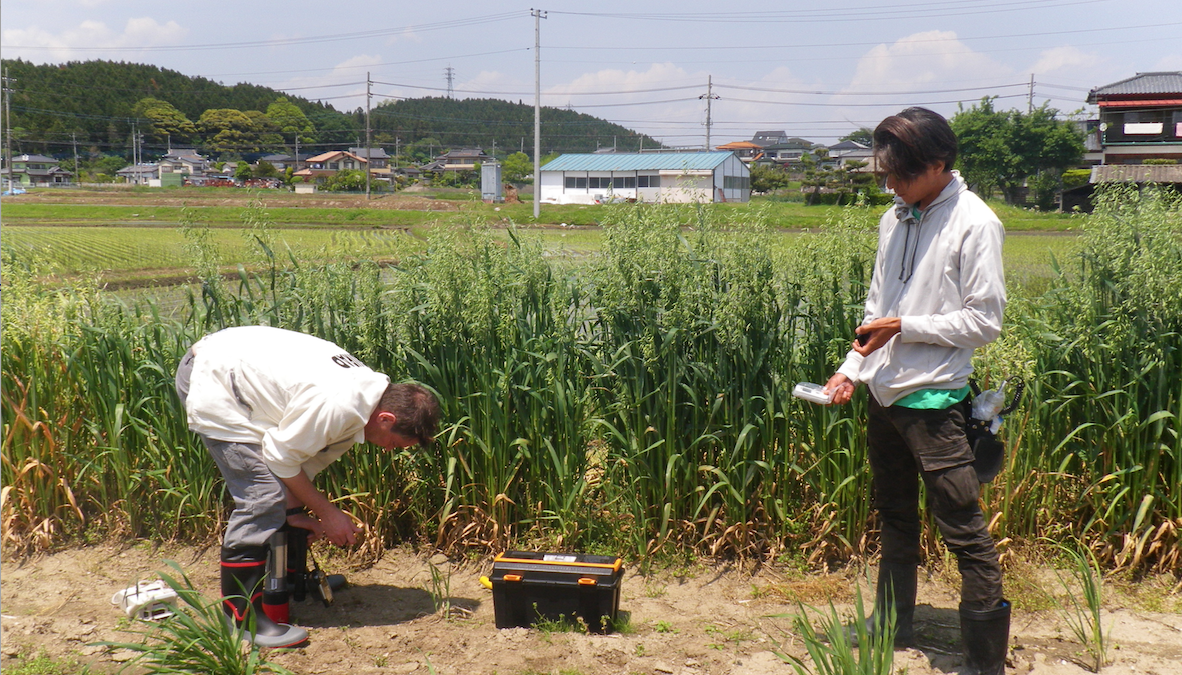
Let’s go on a journey. A journey to learn about radiation exposure from fallout after a nuclear power plant accident. We have the perfect guide. It is the independent French radiation research laboratory known as CRIIRAD, and its director, Dr. Bruno Chareyron.
The organization’s full name in French is Commission de Recherche et d’Information Indépendantes sur la RADioactivité, hence the acronym. In English it is translated as Commission for Independent Research and Information about RADiation.
For those not familiar with CRIIRAD, our journey begins with a little history, and so does CRIIRAD’s brilliant new 45-minute film — Invisible Fallout (Invisibles retombées is the French title), which can be viewed in its entirety on YouTube and below. The film, written and produced by CRIIRAD staff and directed by Cris Ubermann, is in French and Japanese with English subtitles.
When the Chernobyl nuclear disaster hit in April 1986, the French government engaged in a notorious cover-up, claiming that France “has totally escaped any radioactive fallout.” The whole thing was a lie. Five days before the government denial, Chernobyl’s radioactive cloud had covered all of France.
As Invisible Fallout recounts, after Chernobyl, it took 15 years until the French government published accurate fallout maps of France. But the CRIIRAD laboratory, formed right after Chernobyl precisely to establish that France’s immunity was a myth, had already done the work that debunked the official line that the disaster was just a Soviet problem. French citizens not only got dosed by Chernobyl fallout, but would live in perpetual danger of a similar catastrophe at home, with a country almost 80% reliant on nuclear-generated electricity from its 58 reactors.
But Invisible Fallout does not linger long in the past. It segues quickly to the next nuclear catastrophe — the 2011 Fukushima-Daiichi meltdowns in Japan — and it is there that the CRIIRAD team, led by Chareyron, take us to learn about the effects of radiation exposure from nuclear power plants.
Read More
