 Beyond Nuclear International
Lives well lived. The legacy of anti-nuclear campaigning in Tahiti
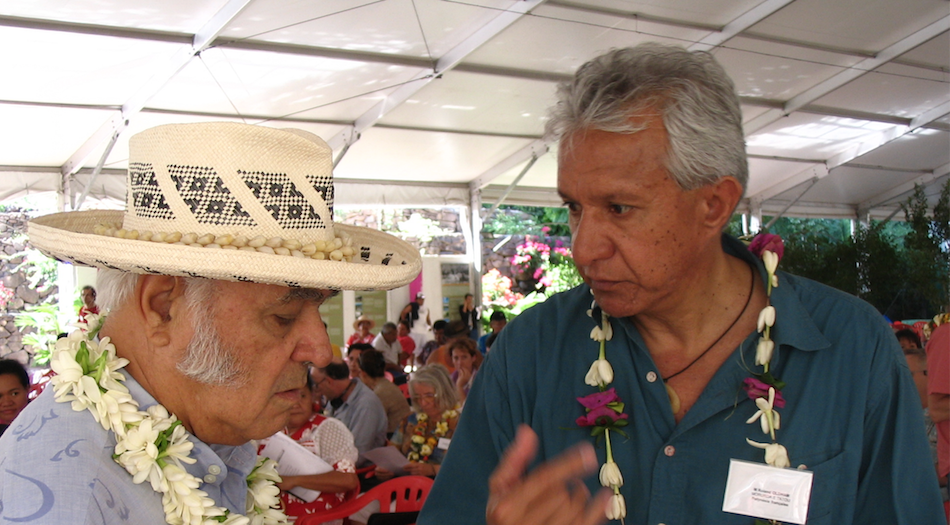
Three men campaigned for decades to raise awareness of the health and environmental consequences of France’s nuclear testing program in the Pacific
By Nic Maclellan
But the deaths of John Doom, Bruno Barrillot and Roland Oldham mean others must pick up their work, to support the thousands of Maohi workers who staffed the nuclear test sites.
Tanemaruata Michel Arakino was born on Reao, an island not far from Moruroa Atoll in the Pacific territory of French Polynesia. From the 1980s, Arakino worked for 17 years with the French military unit responsible for collecting biological samples at the French nuclear test site, to determine the spread of radioactive particles. Working as a scuba diver, he plunged into the lagoon at Moruroa Atoll to collect samples of water, seaweed and sediments, just hours after underground nuclear tests had been detonated deep in the atoll.
Arakino reported: “In my job, I was regularly in the so-called ‘hot spots’ to gather samples from the ground and the sea for biological testing on Moruroa and Fangataufa Atolls. It is likely that while diving to gather plankton above ground zero, I swallowed or breathed in radioactive particles. In no case did my senior officers inform me of the risks I might incur.”
Arakino later died of cancer. He was just one of thousands of workers who laboured in support of the French nuclear testing program, with Algerians and Pacific islanders often allocated the most dirty, difficult and dangerous jobs.
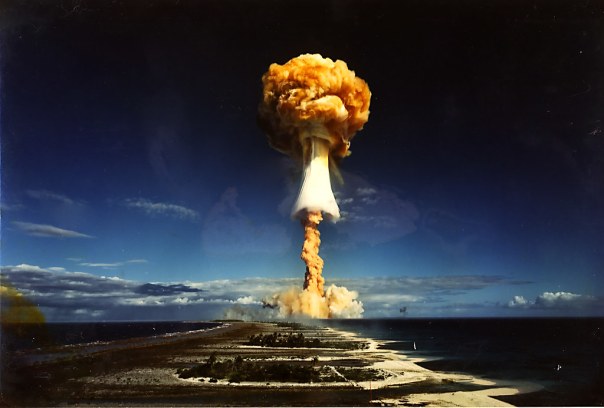
A scan of a (digitally restored) hardcopy of a French army picture of the Licorne thermonuclear test in French Polynesia. (Photo: Pierre J. https://www.flickr.com/photos/7969902@N07/511287693)
An open letter to the people of Japan
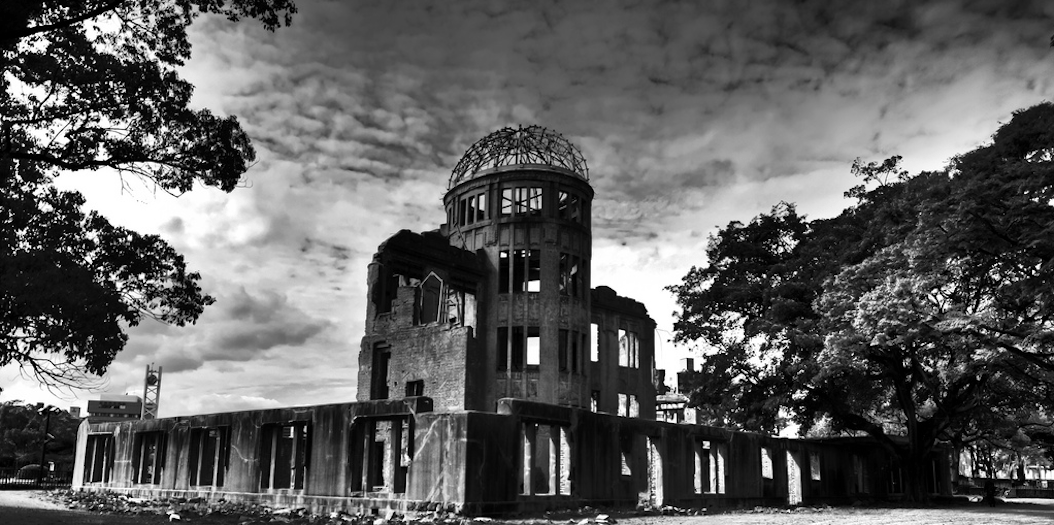
In observance of the 74th Anniversary of the Atomic Bombings of Japan
We, the undersigned, representing a coalition of concerned peace organizations and citizens of the United States are advocating for abolition of nuclear weapons globally. We are gathering here, in front of the Consulate General of Japan in New York, with a bouquet of flowers to express our sincere regrets and apologies for our nation’s atomic bombings in Hiroshima and Nagasaki, Japan. Although our government hasn’t apologized officially for this war crime and crime against humanity, the members of our coalition would like to extend our deepest condolences to the atomic bomb survivors (Hibakusha) who have endured great mental and physical hardships for over seven decades.

A peaceful gathering in front of the Consulate General of Japan in New York to mark the anniversary of the atomic bombings of Hiroshima and Nagasaki.
Back in 1987, President Reagan and Secretary General Gorbachev signed the Intermediate-Range Nuclear Forces (INF) Treaty, which banned all land-based ballistic and cruise missiles with ranges between 500 and 5,500 kilometers. In February 2019, President Trump formally suspended the U.S. obligations for this treaty. Considering the fact that the U.S. and Russia hold more than 90% of nuclear warheads in the world, President Trump’s policy could insinuate unnecessary tension not only between these two countries, but also amongst the countries around the world.
After more than seven decades of nuclear deterrence policy, it has been an undeniable global consensus that the world became more dangerous under such policy. We promise to keep raising our voices to our government regarding the importance of keeping arms control treaties and signing and ratifying of the Treaty on the Prohibition of Nuclear Weapons, which was adopted by the United Nations in 2017 with overwhelming support from 122 member states. We also hope that Japan will be the first country in the U.S. nuclear alliance to give up the U.S. nuclear umbrella by swiftly signing, ratifying and playing a leadership role in promoting the Treaty. Our coalition also calls on Japan to preserve its peace constitution and to support the peace process on the Korean Peninsula.
核問題に憂慮する米国の市民ならびに米国の 平和団体から日本の市民への公開書簡
日本の原爆投下74周年を思い出す
私たちは核問題に憂慮するアメリカの平和団体と市民の連携グループです。この地球上から核兵器が廃絶されることを訴えています。広島と長崎の原爆投下によって殺された方々へ、遺憾と謝罪の意を心からこめて慰霊の花束を捧げるために、ここ在ニューヨーク日本総領事館の前に集まりました。戦争犯罪であり人道に対する罪であった原爆投下に対し、私たちの政府は今まで正式に謝罪をしていませんが、70年以上に渡って精神的及び身体的苦難を受忍せざるを得なかった被爆者の方々へも、私たちは謹んで心よりお見舞いとお詫びを申し上げます。
ニューヨークの日本総領事館前での平和な集まりは、広島と長崎の原爆を思い起こさせます。
1987年には、射程500キロから5500キロの地上配備型ミサイルを禁じる中距離核戦力全廃条約に、レーガン大統領とゴルバチョフ書記長が調印しました。今年の2月、トランプ大統領はこの条約に基づく履行義務を停止することを正式に表明しました。アメリカとロシアが合計9割以上の核弾頭を所持していることを考慮すると、トランプ大統領によるこの方針は、米ロ間だけではなく、世界各地の国家間で不必要な緊張をほのめかし兼ねません。
70年以上も続いた核抑止政策によって、世界はより危険になったというのが世界的に一致した意見です。私たちの政府に対し、武器の使用を制限する条約を維持することの重要性を求めながら、122か国から絶賛され2017年に国連で採択された核兵器禁止条約に署名と批准をするよう、私たちは声を上げ続けることをここに約束致します。同時に、日本が同条約に署名、批准、及び推進にリーダーシップを発揮することで、米国の同盟国の中では米国の「核の傘」から脱却する最初の国になることを切望します。また、日本が平和憲法を守り、朝鮮半島における平和体制の構築を支持することを私たちは強く求めます。
A winnable nuclear war?
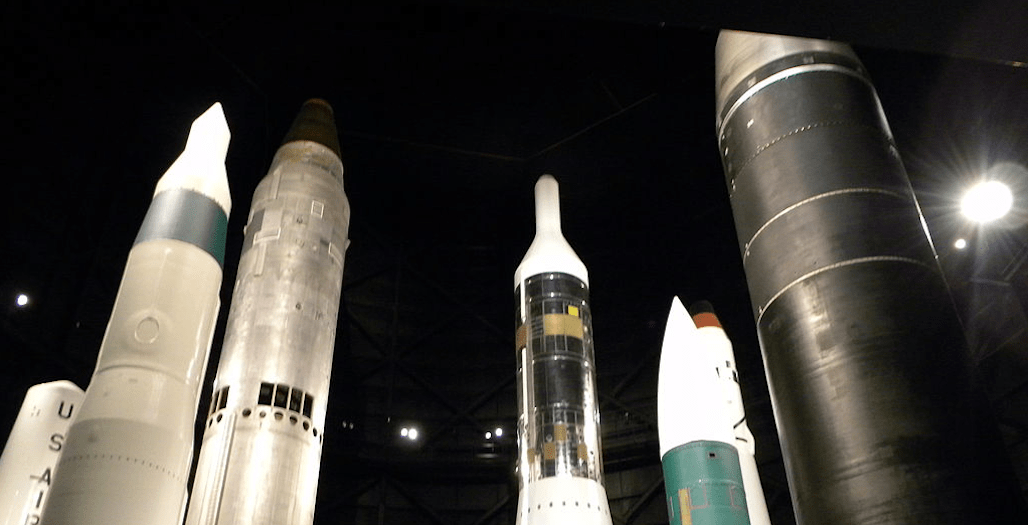
Trump revives his general’s dreams
By Paul Rogers
The July 22 White House visit by Pakistan’s prime minister, Imran Khan, was a step towards ending the 18-year war between the Taliban and the US. The diplomacy was overshadowed, however, by President Trump’s remarkable assertion that the US could end that war in a matter of days. As he put it:
“If we wanted to fight a war in Afghanistan and win it, I would win that war in a week. I just don’t want to kill 10 million people. Does that make sense to you?”
Reinforcing the comment, he added:
“I have plans on Afghanistan that, if I wanted to win that war, Afghanistan would be wiped off the face of the earth, it would be over literally in 10 days. I don’t want to go that route.”
For a number of commentators, this had to mean the use of nuclear weapons, a prospect that seems incredible with the Cold War era now thirty years in the past.

Pakistani premier, Imran Khan, has talked about abolishing nuclear weapons. US president, Donald Trump talks about using them. (Photo: Mustafa Mohsin for Creative Commons/Flickr)
The denuclearization of the world?
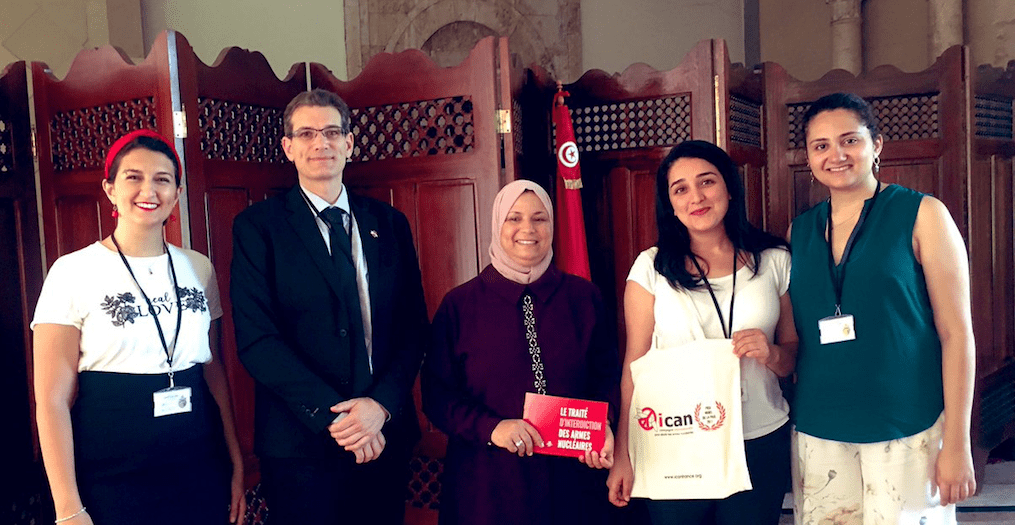
Tunisia also has something to say!
By Amel El Mejri, Mariem Oueslati, Lobna Bachta, Sirine Barbirou, Aziza hanafi, Nour El Imen Gharbi, Oumayma Jabnouni
Our generation faces a host of urgent challenges which our parents and grand parents could never have imagined: climate crises, social crises, security and nuclear crises. Urgent action is needed on all fronts. However, there is one that, to us young Tunisians, seems the most vital: put an end to nuclear weapons!
Tunisians cannot imagine that their cities are nuclear targets. We have the good fortune to live in a country that does not possess nuclear weapons. As a member of the nuclear Non-Proliferation Treaty, as well as the Pelindaba Treaty, which makes the continent of Africa a nuclear-free zone, Tunisia has shown itself to be a good actor on the international and African stages and in nuclear non-proliferation. (See Le Temps, La Tunisie un nouveau pas vers le désarmement nucléaire, 21 Septembre 2018).
Meanwhile, despite this asset, we are confronted with a reality: the revelation on June 17 by the prestigious SIPRI (Stockholm International Peace Research Institute) that almost 2,000 nuclear weapons are in a permanent state of readiness to be used by the United States, Russia, France or even the United Kingdom. The other states (like China, Israel, Pakistan, India and North Korea) need only a few hours to prepare before using theirs.
La Dénucléarisation du monde?
La Tunisie a aussi son mot à dire!
Par Amel El Mejri, Mariem Oueslati, Lobna Bachta, Sirine Barbirou, Aziza hanafi, Nour El Imen Gharbi, Oumayma Jabnouni
Notre génération fait face à une multitude de défis urgents que nos parents et grands-parents n’auraient jamais imaginés: crise climatique, crise sociale, crise sécuritaire et crise nucléaire. L’urgence est à mener sur tous les fronts. Pourtant, il y en a une qui nous apparaît, nous jeunes tunisiennes, vitale: mettre un terme aux armes nucléaires!
Les Tunisiens ne peuvent imaginer que leurs villes soient la cible de puissances nucléaires. Nous avons la chance de vivre dans un État qui ne possède pas d’arme nucléaire. Membre du Traité sur la non-prolifération des armes nucléaires ainsi que du Traité de Pelindaba faisant du continent africain une zone exempte d’armes nucléaires, la Tunisie s’est montrée être un bon acteur de la scène internationale et africaine de la non-prolifération nucléaire (Voir Le Temps, La Tunisie un nouveau pas vers le désarmement nucléaire, 21 Septembre 2018).
Cependant, malgré cet atout, nous sommes face à une réalité: comme vient ce 17 juin de le révéler le très renommé SIPRI (Institut international de recherche sur la paix de Stockholm) près de 2000 armes nucléaires sont en permanence prêtes à être utilisées par les États-Unis, la Russie, la France ou encore le Royaume-Uni. Les autres États (comme la Chine, Israël, le Pakistan, l’Inde et la Corée du Nord) n’ont quant à eux besoin que de quelques heures de préparation avant toute utilisation.
 Beyond Nuclear International