 Beyond Nuclear International
Orkney’s uranium reprieve
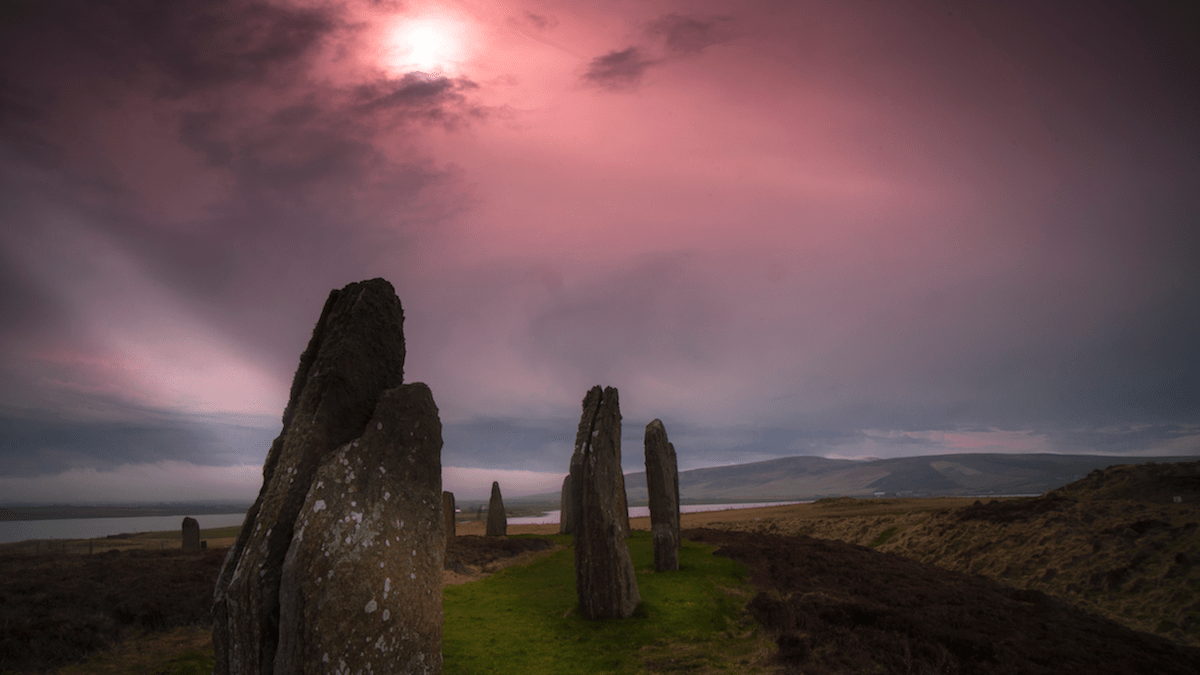
Maxwell Davies’ music memorializes an important victory
By Linda Pentz Gunter
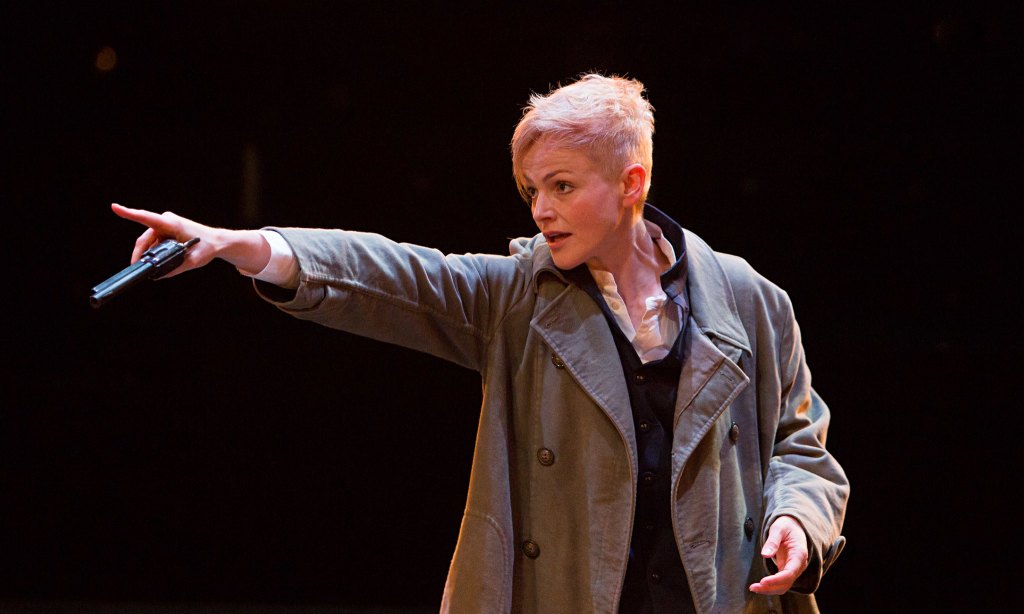
On a midsummer day on Saturday, June 21, 1980, in a Victorian Hotel on the Orkney Islands, resident composer Peter Maxwell Davies and actress Eleanor Bron performed the composer’s newest piece — The Yellow Cake Revue. It was part of the Islands’ annual St. Magnus Festival, founded by Maxwell Davies, poet George Mackay Brown and Archie Bevan.
“Yellow cake” or uranium ore, seemed like an unlikely subject matter for a cabaret. But Maxwell Davies was an unlikely kind of musician — deeply connected to causes including gay rights, anti-war and the environment.
I first learned of the music of Maxwell Davies through Donald Ranvaud, another renaissance polymath, who was teaching at the University of Warwick when I was a student there and inspired in me a passion for Italian cinema, especially Bertolucci and Pasolini.
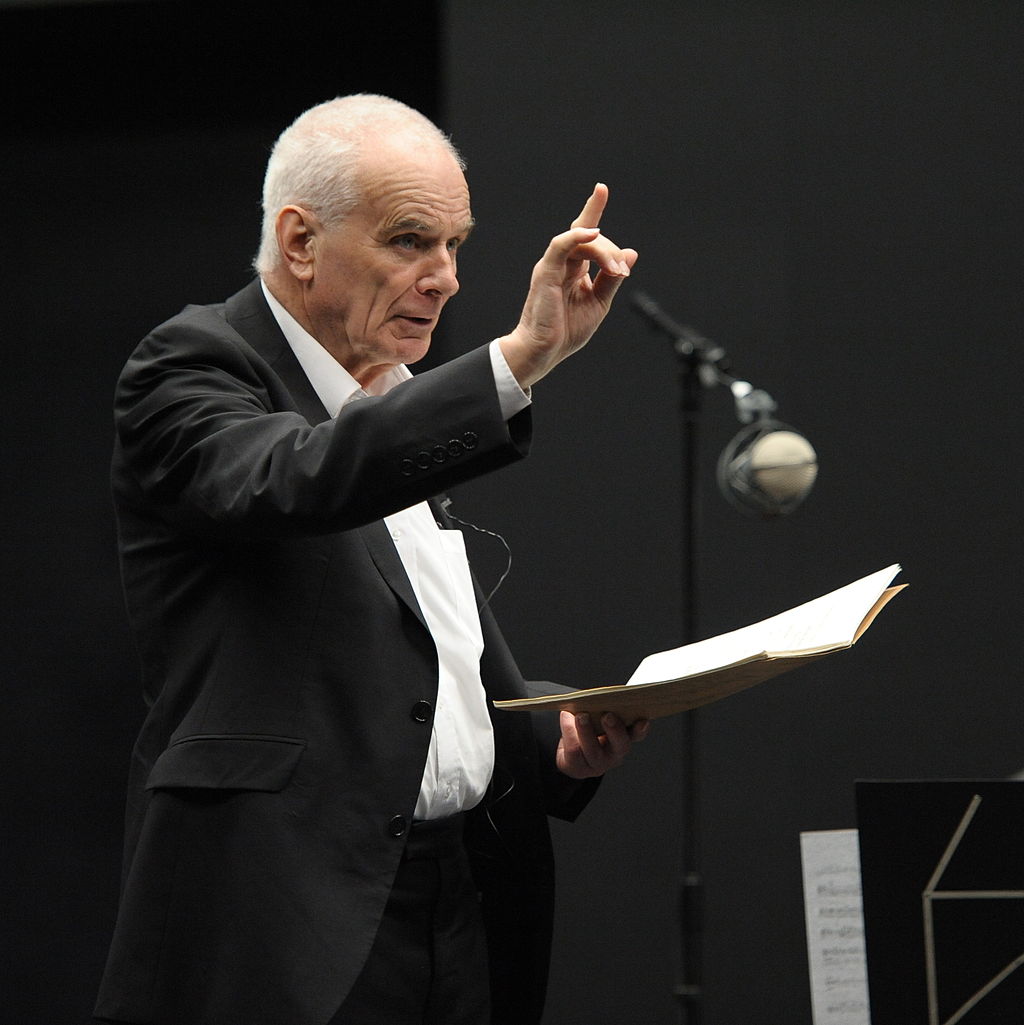
Don, who went on to become an internationally celebrated film producer, was also determined to introduce me to the music of “Max,” as he called the composer, and who he obviously knew personally, one of many leading lights in the arts who would become friends of Don’s — Bertolucci was another. (Ranvaud and Maxwell Davies died in 2016 and Bertolucci two years later.)
So off I went to London to hear the latest Maxwell Davies work, performed by the chamber ensemble, The Fires of London, co-founded by Maxwell Davies and fellow avant garde composer, Harrison Birtwistle.
That concert — bold, wild, different — was in 1975. But unbeknownst to me at the time, Maxwell Davies and his fellow residents of the Orkney Islands, — an archipelago located just off the northeastern coast of Scotland and where the Salford-born Maxwell Davies had chosen to settle — were already confronting an ominous new threat that would consume the islands for several years.
Read MoreKeeping it short…and right

New Talking Points lay out key messages against nuclear power
Beyond Nuclear is developing a new series of handy Talking Points. You can find these in a special Talking Points section on this website and also under Publications on the Beyond Nuclear website. Look for others in the series in the coming months.
By Linda Pentz Gunter
Closing a costly US nuclear power plant — which will only get costlier the older it gets — and buying efficiency instead, would actually save considerably more carbon than continuing to run that nuclear plant.
That’s a pretty significant statement. It tells us that the argument that we need to keep current nuclear plants running — because they are here, now, and, in the operational stage, low carbon emitters — is invalid. It would only be valid to argue for the continued use of current, aging nuclear power plants if every other alternative was more carbon-intensive, and more expensive and slower.
The same is true for the argument that we must develop and build new nuclear power plants to address climate change, because, argues the nuclear lobby, renewables just aren’t here now in great enough numbers to fill the gap.
In reality, diverting funds from real solutions, and spending these instead on developing slow, expensive, untested new nuclear plants, just makes this argument a self-fulfilling prophecy. With the same allocation of funds, renewables would have saved more carbon far faster and more cheaply.
All this is argued effectively — and laid out simply —in the first of our series of Talking Points — a double-sided single page handout called Why nuclear power slows action on climate change.
We’ll be doing a series of these Talking Points, on different topics, drawn from the many excellent studies and reports out there, but which are sometimes a lot to take on board. However, when condensed down, they can provide a useful, empirically-supported script for our work, whether writing opeds or letters to the editor, educating and lobbying our elected officials, or doing media outreach. (If you’d like to support future such Talking Points, we gratefully accept donations to help pay for them.)
Read MoreBelieving in the impossible

Working for a weapons of mass destruction-free Middle East
UPDATE: Join the CND event on May 22 — Working for Peace in the Middle East — featuring METO’s Sharon Dolev (Israel) and Emad Kiyaei (Iran). Register here.
By Linda Pentz Gunter
Hunkered down in the Covid isolation that so many of us have struggled with, three individuals got together. Not in person, but to consolidate and formalize an idea. It was an idea that Israel and the Arab States, some of which latter are at enmity with each other, not only should, but can, live at peace in the region.
And so it was that an Israeli, an Iranian and a Brit came to formalize an earlier conception— the Middle East Treaty Organization (METO). For many years just a campaign, METO became its own entity when its three founders — Sharon Dolev of Israeli, Emad Kiyaei of Iran, and Paul Ingram of the United Kingdom — found themselves with pandemic-induced time on their hands.
Accordingly, they registered METO as its own organization and set up a website. Then they told their story to the international news agency, Pressenza. (Beyond Nuclear is a partner organization with Pressenza.)
Their inspiration came from the discovery that they were, says Dolev, “campaigning on something that everybody believes has no solution.” She asked herself: “it seems like everybody is asking for something impossible to happen while they believe that it’s impossible. How can you campaign on something that everybody believes that it’s impossible?”?
So she, Ingram and Kiyaei decided to find a way make it “possible.”
In the days when getting together was another thing that was still “possible,” Dolev met with Ingram and they “just mapped out everything that they said was impossible,” and started to “imagine” the zone — a Middle East free of weapons of mass destruction, including nuclear weapons. A Middle East at peace.
Read MoreLiving with Chernobyl
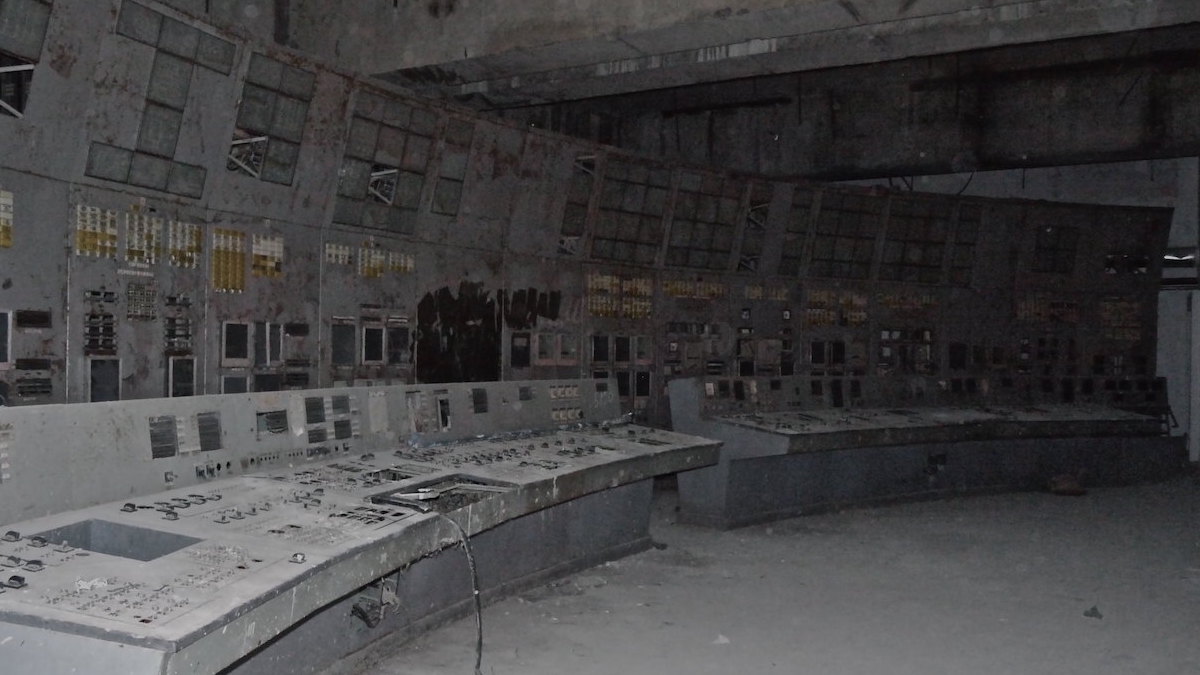
Personal stories from the world’s worst nuclear disaster
By Linda Pentz Gunter
Join an online event with Maxine Peake, Kate Brown, Darragh McKeon and Linda Walker on Sunday, April 25 to learn more, engage with the panelists and ask questions. Register here.
What was it like to live through the April 26, 1986 Chernobyl nuclear power plant disaster in Ukraine? And now, 35 years later, what are the health, environmental and social repercussions of that disaster?
And if you had lived through the event — or chose to research it later — how would you tell the story?
On Sunday April 25, from 12 noon to 1:15pm Eastern US time, learn how those involved with the disaster, or who suffered from it later, responded.
For some, it was a grueling experience. Journalist, Svetlana Alexievich decided it was important to record those testimonials. Her resulting book — called Voices from Chernobyl or Chernobyl Prayer, depending on where it was published — lets those who were there tell you what it was like, in often harrowing and heart-rending detail. Man Booker Prize-winning novelist, Arundhati Roy, said of the experience of reading Alexievich’s book: “it’s been years since I had to look away from a page because it was just too heart-breaking to go on”.
Alexievich, who won the Nobel Prize for Literature for the book, worked for years to chronicle the eye-witness, lived accounts of 500 people including liquidators, nearby residents, firefighters, evacuees and families, these latter often split apart.
On April 25, renowned British actor, Maxine Peake, will read from Chernobyl Prayer as part of a global public reading of the book by women around the world.
How many birds are killed by wind turbines?
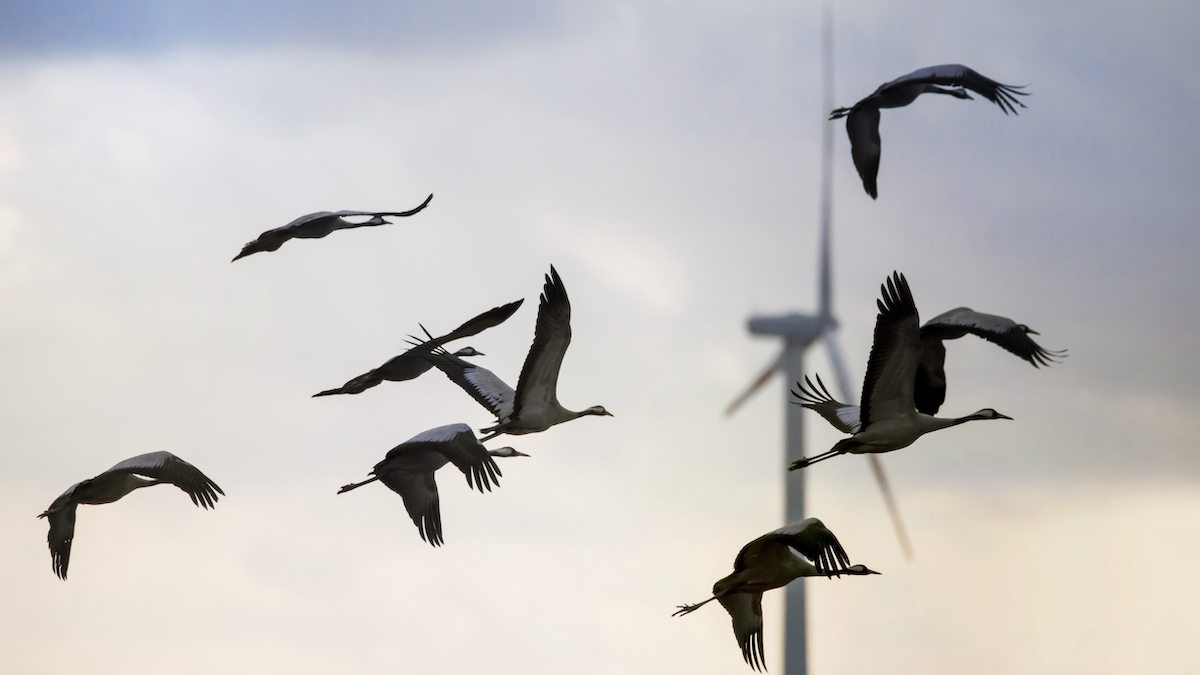
Too many for now, but renewables and birds can co-exist
By Joel Merriman
Countless studies have shown that climate change will cause far-reaching and devastating impacts to wildlife and humans alike. Renewable energy development is a critically important component of the transition away from fossil fuels, making our air cleaner and reversing the effects of climate change. Unfortunately, we have also learned that wind energy development has a substantial negative impact on birds.
But just how many birds are killed by wind turbines?
A Google search can turn up a wide array of answers to this question, with a nearly fivefold difference between the smallest and largest estimates.
The truth is, it has been a while since these estimates were updated, and the wind energy industry has grown a lot in the meantime. So, we thought it was time to take a close look at the numbers, and see what a current estimate might look like.
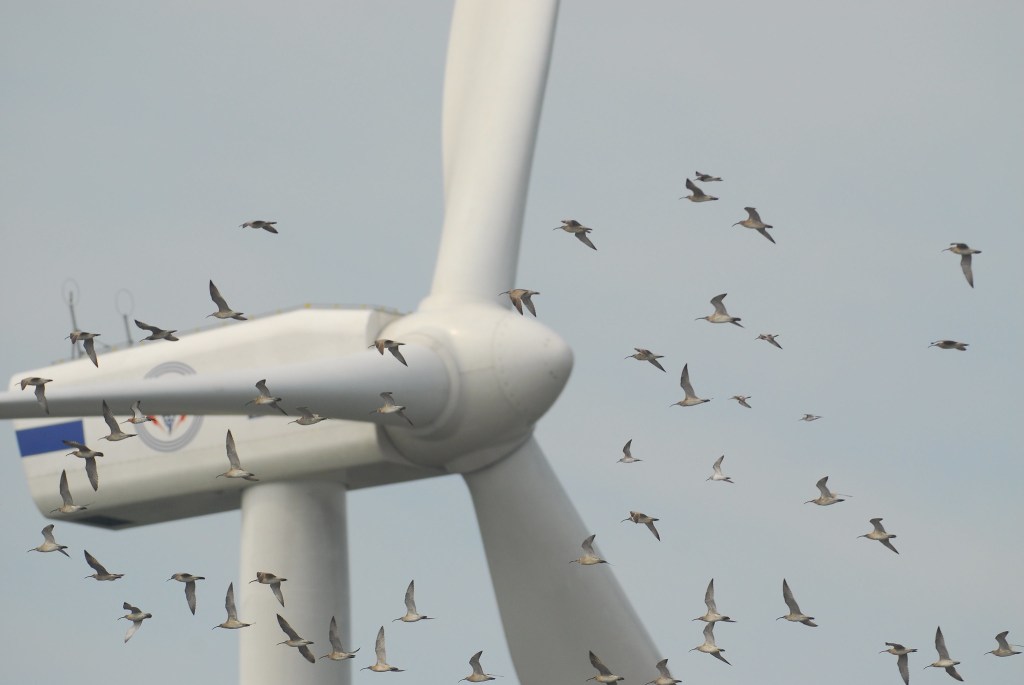
The best estimates of the number of birds killed by wind turbines in the U.S. each year are based on a trio of studies published in 2013 and 2014, all reporting on data from 2012. Each study was unique in its methods, resulting in varying estimates. (There is actually a fourth paper just to compare their methods.) The results from these studies are provided in the table below.
| Study | Year Published | Average Bird Fatalities/Year | Minimum – Maximum/Year |
| Loss and others | 2013 | 234,000 | 140,000 – 328,000 |
| Smallwood | 2013 | 573,093 | 467,097 – 679,089 |
| Erickson and others | 2014 | 291,000 | 214,000 – 368,000 |
Rather than going down the proverbial rabbit hole to decide which study might be the most accurate, let’s take the average of the results from these studies. This gives us an estimate of approximately 366,000 birds killed by wind turbines in the U.S. in 2012.
Read MoreNuclear power is now irrelevant
Desperate times (for nuclear) call for criminal measures
Ten years have gone by since the Fukushima Daiichi accident began. What happened in the United States, historically leading the world’s nuclear power programs and still operating the largest reactor fleet in the world? What are global developments in energy policy increasingly dominated by renewable energy?
By Mycle Schneider
“The debate is over. Nuclear power has been eclipsed by the sun and the wind”, Dave Freeman wrote in the Foreword to the World Nuclear Industry Status Report 2017.
The renowned industry thinker the New York Times called an “energy prophet”, passed away last year at age 94. He had seen nuclear power coming and going. President Carter appointed him as Chairman of the only fully public federal electricity utility in the United States, the Tennessee Valley Authority (TVA) in 1977. Construction had started on two nuclear reactors in the State in 1972. It took until 1996 to complete the first one and until 2016 for the second one—almost 44 years after construction start, a world record. Those were the last units to start up in the United States.
Construction began on four units in 2013, but in 2017, the bankruptcy of builder Westinghouse led to the abandonment of the V.C. Summer two-unit project in South Carolina. Steve Byrne, former Vice-President of the utility that spent more than $10 billion on the failed project and raised electricity consumer rates nine times, later pleaded guilty to fraud charges in federal court.
The U.S. Attorney for South Carolina told the Federal District Court in Columbia that Byrne “joined a conspiracy… to defraud customers of money and property through… false and misleading statements and omissions.”
Construction cost estimates for the only other active construction site in the U.S., the two-unit Vogtle project in Georgia, have been multiplied by a factor nearing five from $6.1 billion in 2009 to $28 billion by 2018. And still, a 2020-monitoring report found that the component “test failure rate is at an unacceptably high rate of roughly 80%”. The startup continues to be delayed.
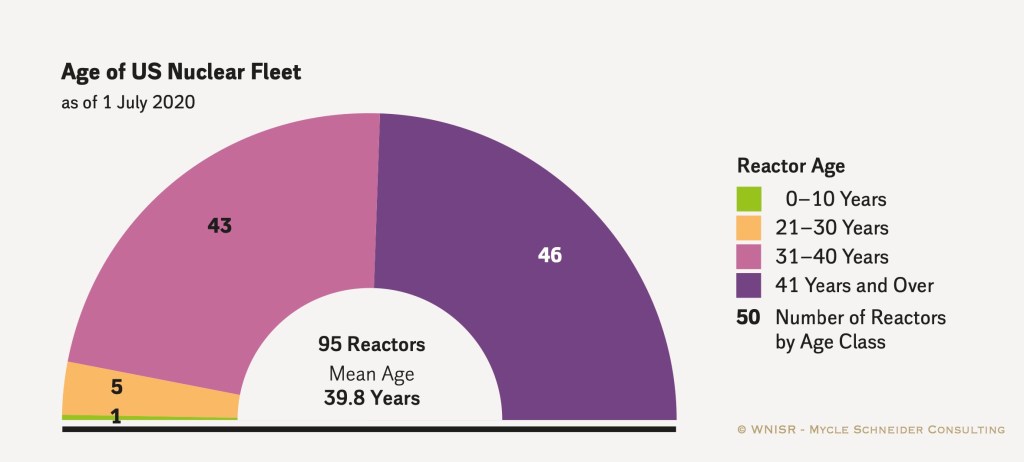
Meanwhile, lacking newbuild, the U.S. nuclear fleet is ageing and the 94 still operating reactors now exceed an average age of 40 years. Although the U.S. nuclear industry claims to have achieved decreasing operation and maintenance costs since 2012—the only nuclear country to do so—the utilities are still struggling to compete with fierce competitors from the renewable energy sector.
Read More Beyond Nuclear International