 Beyond Nuclear International
A grim reality
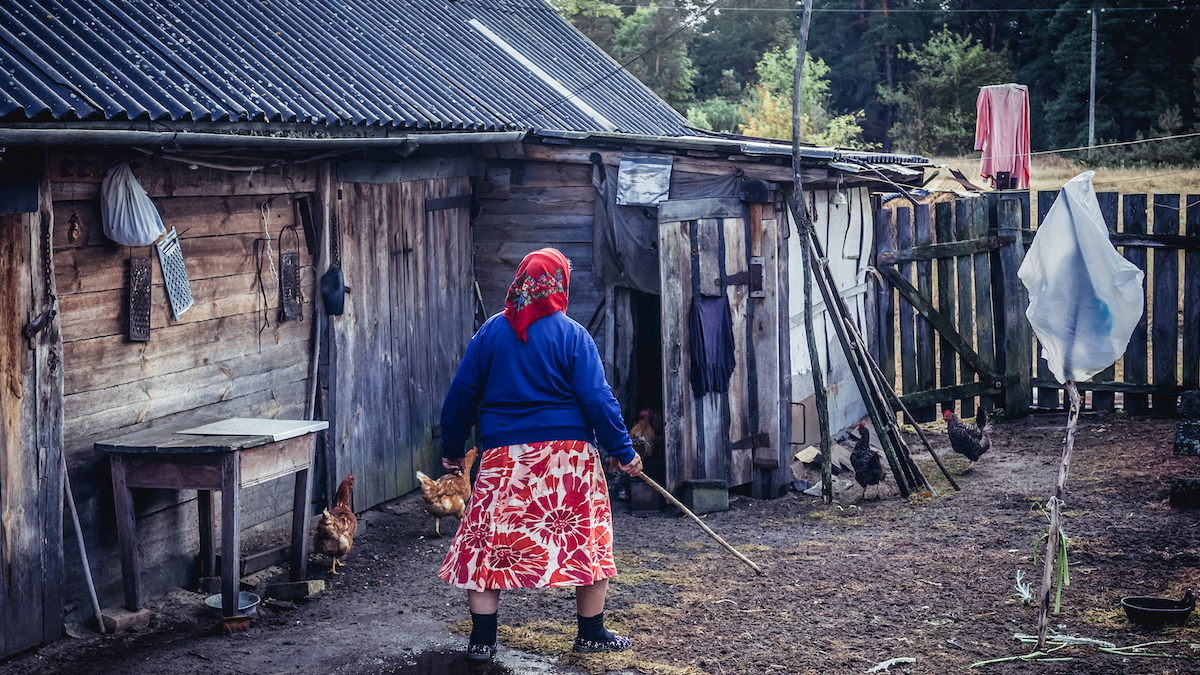
Living longterm in radioactively contaminated areas damages our health
By Cindy Folkers
A growing body of evidence supports a grim reality: that living in radioactively contaminated areas over multiple years results in harmful health impacts, particularly during pregnancy.
This is borne out in a recent study by Anton V. Korsakov, Emilia V. Geger, Dmitry G. Lagerev, Leonid I. Pugach and Timothy A. Mousseau, that shows a higher frequency of birth defects amongst people living in Chernobyl-contaminated areas (as opposed to those living in areas considered uncontaminated) in the Bryansk region of Russia.
Because the industry and governments are pushing to spend more money on new nuclear reactors — or to keep the old ones running longer — they have been forced to come up with a deadly workaround to surmount the strongest argument against nuclear power: its potential for catastrophic accidents.
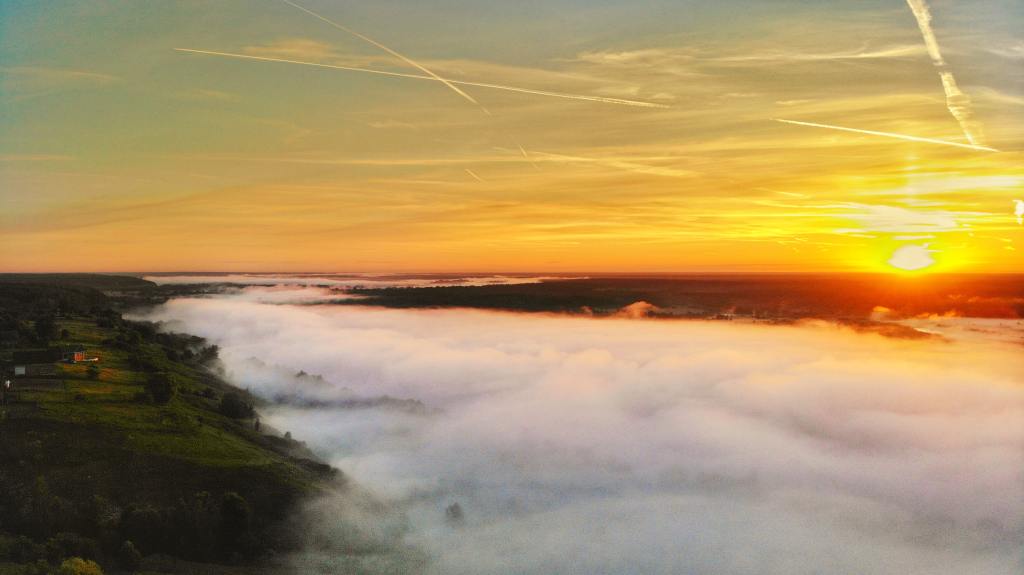
Even the nuclear industry and the governments willing to do its bidding understand that you cannot really clean up after a nuclear catastrophe. For example, in Japan, where the March 2011 nuclear disaster has left lands radioactively contaminated potentially indefinitely, there is an attempt to mandate that people return to live in these areas by claiming there are no “discernible” health impacts from doing so.
Bodies that are supposed to protect health and regulate the nuclear industry, including the U.S. Environmental Protection Agency, the International Commission on Radiological Protection and Nuclear Regulatory Commission are raising recommended public exposure limits, considering halting evacuations from radiation releases, and encouraging people to live on, and eat from, contaminated land.
Read MoreNo nukes in Asia…or anywhere

Groups call for a nuclear power ban and no radioactive water dump at Fukushima
By No Nukes Asia Forum Japan • Citizens’Nuclear Information Center • Friends of the Earth Japan
On the 10th Anniversary of the Fukushima nuclear disaster, groups in Japan have initiated an international signature campaign against the discharge of contaminated water and calling for the discontinuation of nuclear power plants now! Please join this campaign by signing the petition.
The Japanese government is planning to release Fukushima’s radioactive contaminated water into the ocean. Japanese citizens, from Fukushima Prefecture and beyond, are strongly opposed to this plan.
The Fukushima Prefecture Fishermen’s Association, with the backing of the Fishermen’s Association from all over Japan, have submitted an opinion of opposition to the government. The Fukushima Prefecture Agricultural Cooperatives and Forestry Associations along with 43 local governments in Fukushima Prefecture also participated in this campaign, and 450,000 citizens from across Japan have signed a petition against the government plan.
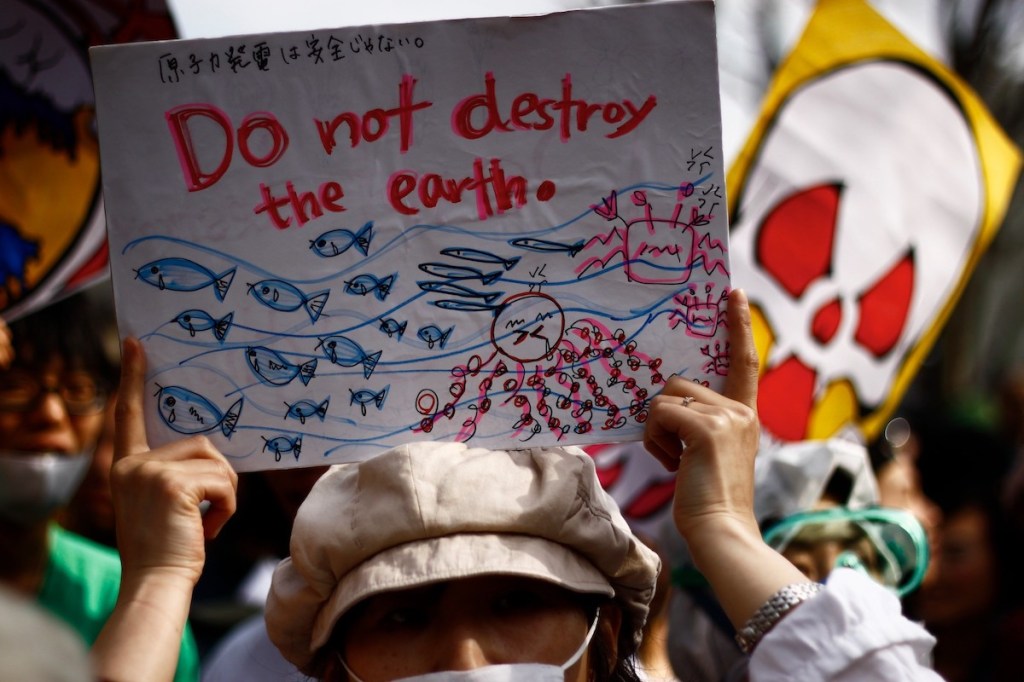
The threat of the release of contaminated water has triggered much concern and opposition among citizenry overseas as well, including those from neighboring countries.
Contaminated water from Japan’s Fukushima nuclear plant has already exceeded 1.24 million tons. We are deeply concerned about the adverse effects the water will have on the human body by way of consuming fish and shellfish, which are staples in the region’s diet.
We demand the Japanese government keep the contaminated water stored in the tanks until the water’s levels of radioactivity are significantly reduced. The government could also adopt mortar-induced radioactive waste solidification technology.
Read MoreNukes are illegal, now what?

The necessity for total nuclear disarmament—including American disarmament—is more urgent than ever
By Robert C. Koehler
Let’s not forget: We are standing at the edge of global change. I believe what’s visible in this fleeting moment is our own evolution.
Let’s not let this moment flicker and die, to be replaced, with a despairing shrug, by business as usual. Donald Trump shattered the centrist political norms, sent chaos rippling through the corridors of power. Now he’s gone. We have to look through the cracks—these cracks in American exceptionalism—and see what’s possible. We have to make sure Joe Biden sees it as well.
And what’s possible is geopolitics beyond borders. What’s possible is addressing the truly profound threats that the planet—and the future—face, among them climate change and, with even more immediacy, nuclear war. The necessity for total nuclear disarmament—including American disarmament, for God’s sake—is more urgent than ever. This is bigger, by far, than reinstating the Iran nuclear agreement, necessary as that is. We must move beyond the world’s fragile pseudo-peace maintained by the threat of Armageddon. The time to move beyond this insanity is now.

Consider this tidbit of logic: Since nuclear war would respect no borders—its outbreak would inflict hell on every occupant of Planet Earth—why should their use and, indeed, their existence, be at the whim of the nine national leaders whose nations possess nuclear weapons?
Because that’s the way it is?
Read MoreUnacceptable suffering

Beyond banning the bomb, new treaty recognizes its victims
By Kate Hudson
New treaties are not often greeted with the recognition and enthusiasm that they merit.
They can seem dry and legalistic, overladen with clauses and dusty formulations.
But the reality is that treaties are often the bringing into law of profoundly humanitarian principles, of significant advances in human rights, of steps towards peace and to protect all communities.
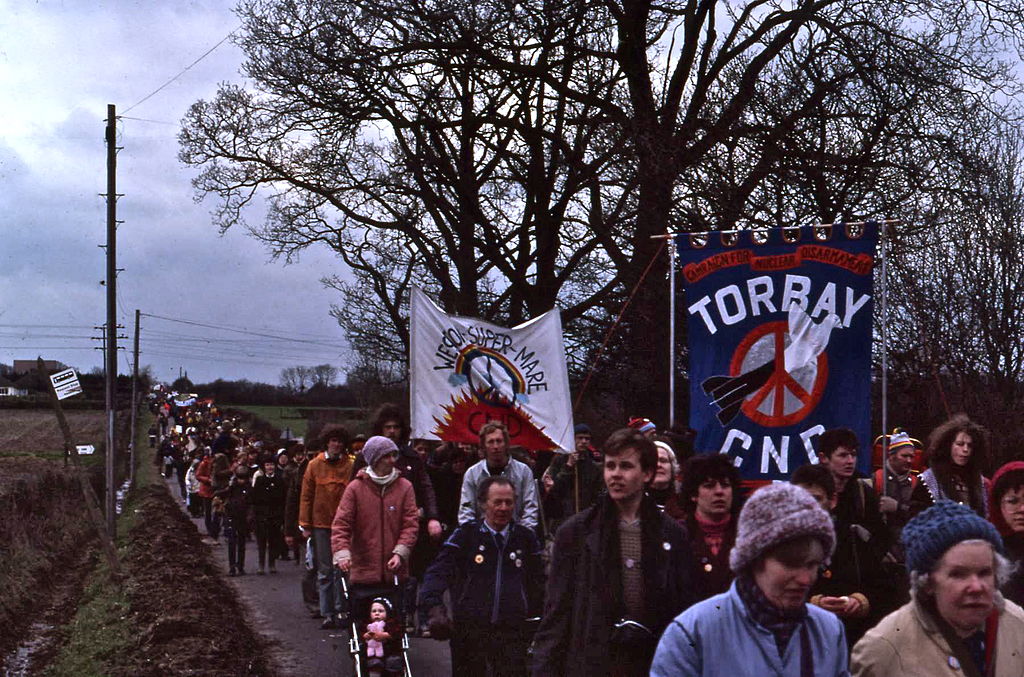
And they are often the result of years of campaigning, of lobbying, marching, and direct action.
The Treaty on the Prohibition of Nuclear Weapons (TPNW), which came into force on January 22, is just such a treaty. The result of over 60 years of anti-nuclear campaigning it is a remarkable and path-breaking achievement.
The Treaty bans the use, production, possession and deployment of nuclear weapons, along with specific activities that could enable or assist anyone to use or threaten to use nuclear weapons.
For the first time, nuclear weapons are declared illegal under international law. In the past, the World Court ruled that their use would be unlawful under virtually all circumstances, but this is the first time that their production and possession — indeed their very existence — has been ruled illegal.
Read MoreOff to a good START

The US and Russia have extended the treaty, but it’s not about disarmament
This story was prepared by Linda Pentz Gunter largely derived from information provided by ICAN
The United States and Russia have agreed on extending New START for another five years.
Extending New START is an important action by these two countries after four years that saw both countries undermining arms control agreements. However, it is important to remember that it is not a disarmament step, but rather an extension of the current levels of nuclear arsenals.
Nevertheless, it is a welcome development to see the new US administration and Russia return to where they left off four years ago rather than escalate. It also comes at an auspicious time, as the world has just witnessed the entry into force on January 22, 2021 of the first global treaty to ban nuclear weapons, the Treaty on the Prohibition of Nuclear Weapons (TPNW).
The United States and the Russian Federation agreed on January 26, 2021 to extend the bilateral cap on U.S. and Russian nuclear arsenals, the New Strategic Arms Reduction Treaty (New START) for five additional years.
The plundering of Greenland
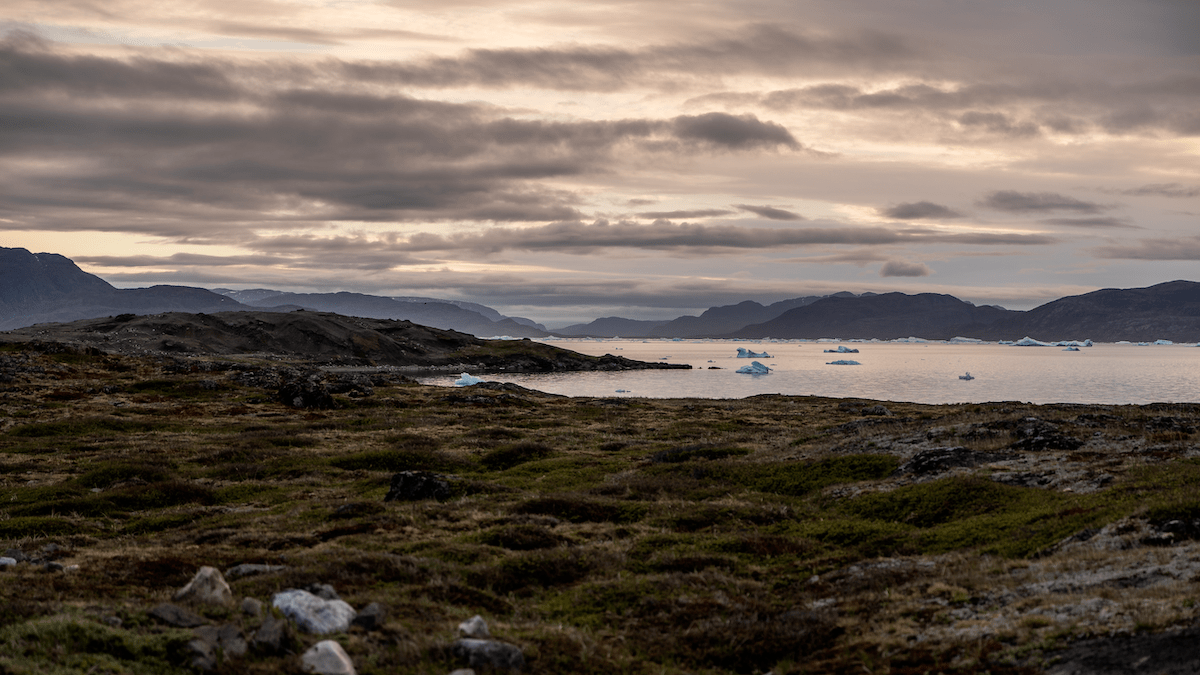
Uranium and other resources the latest threat to precious sub-arctic ecosystems
By Niels Henrik Hooge
Update: Local media source Sermitsiaq reported on January 27 that the Government of Greenland has granted the French nuclear giant Orano (former Areva) two uranium exploration permits for areas located in southwest and southeast Greenland.
The first area is 1,042 square kilometers and located north of Arsuk and Kangiinnguiet and north of Narsarsuaq. The second area is 2,485 square kilometers and consists of two sub-areas around the Ilulileq and Paatsusoq fjords and the Kangerlussuatsiaq fjord, respectively.
The governments of Greenland and Denmark are encouraging large-scale mining in Greenland, including what would be the second-largest open pit uranium mine in the world. Now groups are calling on those governments to halt such desecration and instead establish an Arctic sanctuary. Your organization can sign onto this petition. Read the petition here then send your organization name (and logo, optional) to either Niels Henrik Hooge at nielshenrik@noah.dk or to Palle Bendsen at: pnb@ydun.net.
No or few World Heritage Sites probably have more or bigger mining projects in their vicinity than the Kujataa UNESCO World Heritage Site (WHS) in Southern Greenland. The property was inscribed on UNESCO’s world heritage list in 2017.
It comprises a sub-arctic farming landscape consisting of five components that represent key elements of the Norse Greenlandic and modern Inuit farming cultures.
On one hand they are distinct, on the other they are both pastoral farming cultures located on the climatic edges of viable agriculture, depending on a combination of farming, pastoralism and marine mammal hunting. The landscape constitutes the earliest introduction of farming to the Arctic.
Some of the world’s biggest mining projects are located near Kujataa
Kujaata is situated in Kommune Kujalleq, the southernmost and smallest municipality of Greenland with its rich mineral resources. These include zinc, copper, nickel, gold, diamonds and platinum group metals, but first and foremost substantial deposits of rare earth elements (REEs) and uranium.

Greenland is estimated to hold 38.5 million tons of rare earth oxides, while total reserves for the rest of the world stand at 120 million tons. Furthermore, Greenland has some of the world’s largest undiscovered oil and gas reserves and could develop into the next environmental frontline – not unlike the Amazon Rainforest in South America.
Read More Beyond Nuclear International