 Beyond Nuclear International
Science, or nuclear fiction?
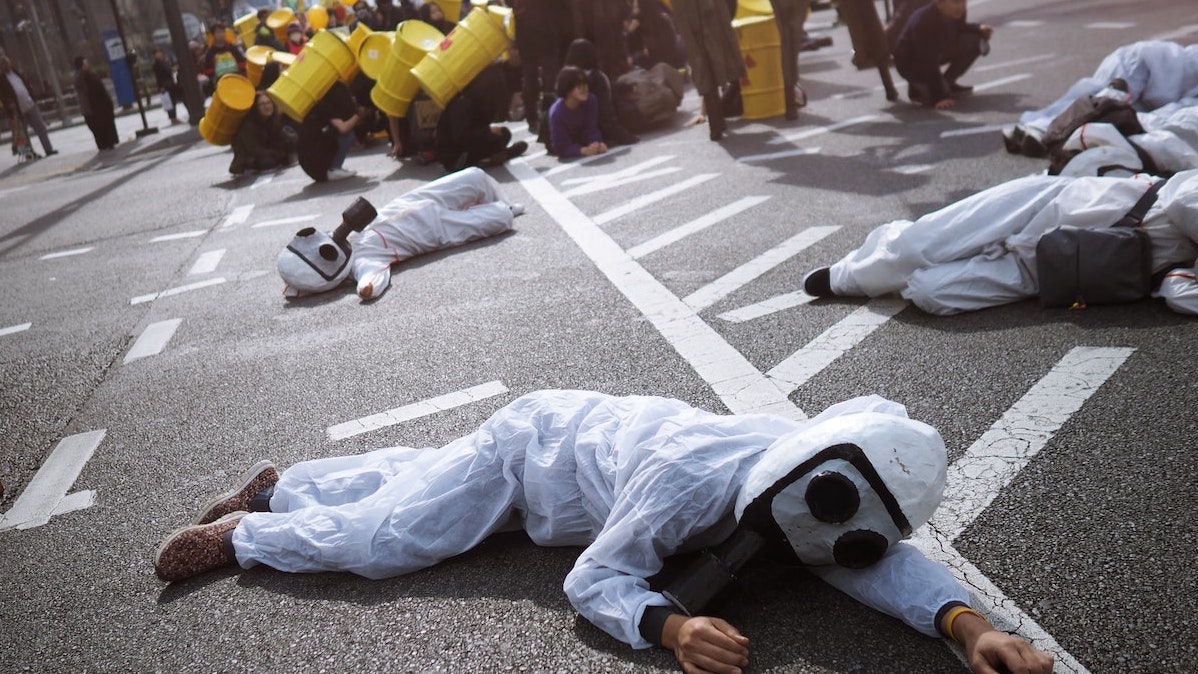
Biden-Harris must reject the nuclear path
By Linda Pentz Gunter
Although possibly a sad comment on his predecessors, incoming U.S. president, Joe Biden, is offering the most progressive climate policy so far of any who have previously held his position.
As Paul Gipe points out in his recent blog, the Democratic Party platform — and now the Biden-Harris climate plan — use the word “revolution” right in the headline — a bit of a departure from the usual cautious rhetoric of the centrist-controlled Democratic Party.
But ‘revolution’ is proceeded by two words which let us know we are still lingering in conservative ‘safe’ territory. They call it a “clean energy revolution”, which Gipe rightly refers to as “focus-group shopped terminology.” He goes on:
”Clean energy is a term forged by Madison Avenue advertising mavens in the crucible of focus groups. It ‘polls well,’ as they say. It means one thing to one interest group, something else to another. So it’s perfect for politics in America.
“To environmentalists, it means wind and solar energy, often only those two forms of renewable energy, and sometimes only solar. It also means good times to the coal and nuclear industry. (Ever hear of ‘clean coal’?)
“So clean energy is one of those misleading words that party leaders and, importantly, fundraisers can use to elicit money from donors of all stripes. Why say renewable energy, when you want to raise money from the coal and nuclear industries?”
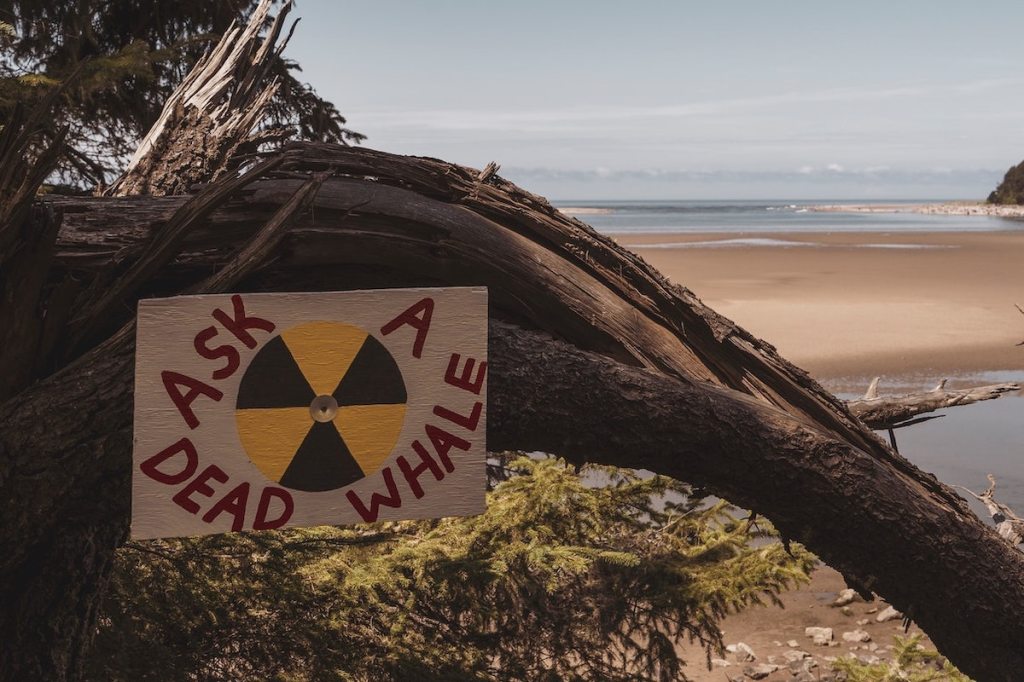
Schools of mass destruction

American universities in the US nuclear weapons complex
An ICAN report
Universities across the United States are identified in this report for activities ranging from directly managing laboratories that design nuclear weapons to recruiting and training the next generation of nuclear weapons scientists. Much of universities’ nuclear weapons work is kept secret from students and faculty by classified research policies and undisclosed contracts with the Defense Department and the Energy Department. The following is the executive summary from ICAN’s report: Schools of Mass Destruction, with some changes made for timeliness.
Over the next ten years, the Congressional Budget Office estimates U.S. taxpayers will pay nearly $500 billion to maintain and modernize their country’s nuclear weapons arsenal, or almost $100,000 per minute. A separate estimate brings the total over the next 30 years to an estimated $1.7 trillion. In a July 2019 report, National Nuclear Security Administrator Lisa Gordon-Haggerty wrote, “The nuclear security enterprise is at its busiest since the demands of the Cold War era.”
In addition to large amounts of funding, enacting these upgrades requires significant amounts of scientific, technical and human capital. To a large extent, the U.S. government and its contractors have turned to the nation’s universities to provide this capital.
At the same time, the United States is shirking its previous commitments to nuclear arms control and reducing nuclear risks despite its obligation under Article VI of the Nuclear Non-Proliferation Treaty to pursue good-faith measures towards nuclear disarmament.

Six million dead

The Congo Holocaust has its origins in minerals plunder and colonialism
By Linda Pentz Gunter
When you’ve lost family members to the Nazi death camps, it’s a pain that never goes away. Six of my relatives were killed there, four more shot in Polish ghettos and at Forlì. They died long before I was born and were people I never knew. But we have their photographs. Their pain stares out from those images, a perpetual ache.
But what use is endless mourning if no lessons are learned? The most important one surely is that no such Holocaust must ever be allowed to happen again? And yet it has. To almost universal silence. No one speaks of today’s six million dead. They lie beneath the mineral-rich soil of the Democratic Republic of Congo (DRC), invisible and unmourned by the world beyond their country’s borders.
“The Holocaust continues in DRC with the complicity of the international community,” Rodrigue Muganwa Lubulu wrote to me in an email exchange. “Women and girls are raped every day and the dead are counted by tens each day.” He is the program director for CRISPAL Afrique and gave a zoom talk recently hosted by ICAN Germany.

The tragedy of the DRC, the second largest country in Africa, began with the discovery in 1915 of the Shinkolobwe uranium deposit, the richest ever discovered at the time. Its plunder, from 1921 until its closure in 2004, “has been a curse for the powerless community” around the mine, said Lubulu, “because not only have they been forced to abandon their lands, houses and fields in favor of uranium mining, but also all the men were forced to dig out those extremely radioactive materials without protective equipment.”
The cancers and other illnesses that killed those uranium workers are still harming the community today, Lubulu says, even though the mine is now shut down.
Read MoreA secret military-energy agenda

UK defence policy is driving energy policy – with the public kept in the dark
By David Thorpe
The UK government has for 15 years persistently backed the need for new nuclear power. Given its many problems, most informed observers can’t understand why. The answer lies in its commitment to being a nuclear military force. Here’s how, and why, anyone opposing nuclear power also needs to oppose its military use.
“All of Britain’s household energy needs supplied by offshore wind by 2030,” proclaimed Prime Minister Boris Johnson at a recent online Conservative Party conference. This means 40 per cent of total UK electricity. Johnson did not say how, but it is likely, if it happens, to be by capacity auctions, as it has been in the recent past.
But this may have been a deliberate distraction: there were two further announcements on energy – both about nuclear power.
16 so-called “small nuclear reactors”
Downing Street told the Financial Times, which it faithfully reported, that it was “considering” £2 billion of taxpayers’ money to support “small nuclear reactors” – up to 16 of them “to help UK meet carbon emissions targets”.
It claimed the first SMR is expected to cost £2.2 billion and be online by 2029.

The government could also commission the first mini power station, giving confidence to suppliers and investors. Any final decision will be subject to the Treasury’s multiyear spending review, due later this year.
The consortium that would build it includes Rolls Royce and the National Nuclear Laboratory.
Support for this SMR technology is expected to form part of Boris Johnson’s “10-point plan for a green industrial revolution” and new Energy White Paper, which are scheduled for release later in the autumn.
Read MoreLosing paradise

Atomic racism decimated Kiribati and the Marshall Islands; now climate change is sinking them
This is an extract from the Don’t Bank on the Bomb Scotland report “Nuclear Weapons, the Climate and Our Environment”.
Kiribati
In 1954, the government of Winston Churchill decided that the UK needed to develop a hydrogen bomb (a more sophisticated and destructive type of nuclear weapon). The US and Russia had already developed an H-bomb and Churchill argued that the UK “could not expect to maintain our influence as a world power unless we possessed the most up-to-date nuclear weapons”.
The governments of Australia and New Zealand refused to allow a hydrogen bomb test to be conducted on their territories so the British government searched for an alternative site. Kiritimati Island and Malden Island in the British Gilbert and Ellice Islands Colony in the central Pacific Ocean (now the Republic of Kiribati) were chosen. Nine nuclear weapons tests – including the first hydrogen bomb tests – were carried out there as part of “Operation Grapple” between 1957 and 1958.

Military personnel from the UK, New Zealand and Fiji (then a British colony) and Gilbertese labourers were brought in to work on the operation. Many of the service personnel were ordered to witness the tests in the open, on beaches or on the decks of ships, and were simply told to turn their backs and shut their eyes when the bombs were detonated. There is evidence that Fijian forces were given more dangerous tasks than their British counterparts, putting them at greater risk from radiation exposure. The local Gilbertese were relocated and evacuated to British naval vessels during some of the tests but many were exposed to fallout, along with naval personnel and soldiers.
Read More#ICANSAVE my city!

Your country might not endorse the ban treaty, but your city can
From the International Campaign to Abolish Nuclear Weapons (ICAN)
In the blink of an eye a nuclear detonation will wipe a metropolitan center off the map, laying waste to countless lives, destroying all infrastructure and poisoning the environment. This isn’t hypothetical: cities are the main targets of nuclear weapons.
Nuclear weapons are designed to inflict comprehensive damage upon their targets. It is the very nature of the nuclear threat to a rival country’s most important places that underpins the theory and practice of nuclear deterrence, which is promoted as a legitimate defense strategy by all nine nuclear-armed states, and the several dozen more that endorse the use of nuclear weapons.
These governments are putting their citizens’ lives at risk by subscribing to this strategy, which has been undermined time and again by near misses and miscalculations which very nearly unleashed nuclear war. Local governments bear a special responsibility for the safety of their residents. It is therefore incumbent upon cities to speak out against nuclear weapons.
Engaging the cities is an important way to pressure governments to be responsive to the will of their people. When cities call on their governments to join the Treaty on the Prohibition of Nuclear Weapons, it’s a tangible reminder that citizens are against these weapons of mass destruction and that governments are consistently ignoring this view. A new coalition of cities and towns around the world will amplify these voices and compel governments to ditch any involvement with nuclear weapons and encouraging their peers to follow suit.


 Beyond Nuclear International