 Beyond Nuclear International
Uranium. What is it?
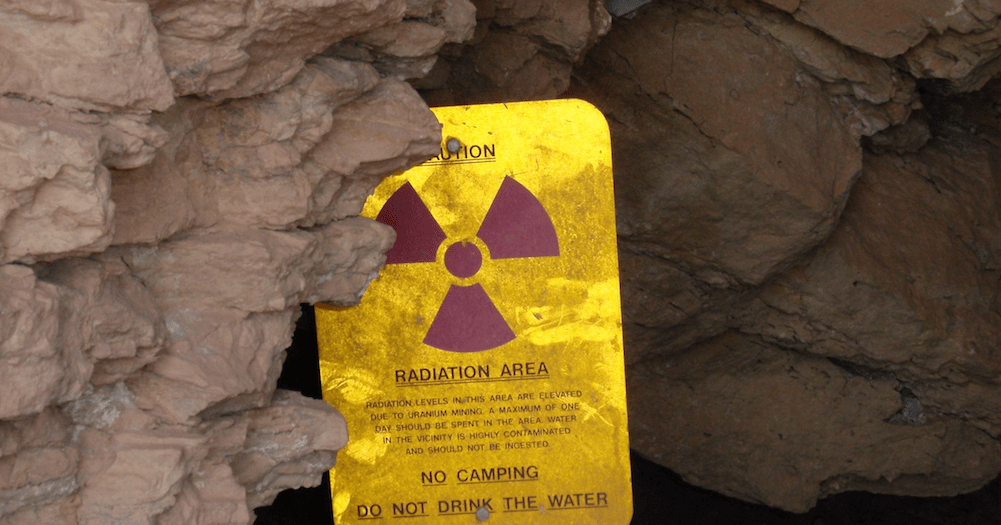
Why is it harmful and why do we even use it?
Do people really understand what uranium is or how it is used to generate electricity? The Uranium Network decided to produce a short film — Uranium Mining — what are we talking about? — that explains it, step by step. A booklet of the same name is now also available to accompany the film.
From The Uranium Network:
When in 2007 / 2008, the price of uranium skyrocketed from around US$ 20 per pound to nearly US$ 140 per pound, mining companies from all over the world set out to find uranium – a new uranium rush had started.
Local populations were unprepared for the onslaught of the mining companies – and for the most part, people were unaware of what uranium is, let alone knowing about its uses or impacts from mining.
Africa became a major target for uranium exploration.

Golden Misabiko (left) of the Democratic Republic of Congo, and Almoustapha Alhacen of Niger, are active against uranium mining human rights violations in Africa. (Photo: © Orla Connolly)
The general public in the vast majority of African countries had no experience or knowledge about uranium or its exploitation; thus, it was easy for interested companies to veil their intentions when exploring for uranium; Governments instead emphasized the jobs which would be created, and the energy that might be generated, rather than the risks and dangers associated with uranium and its exploitation.
The half lives of the abandoned
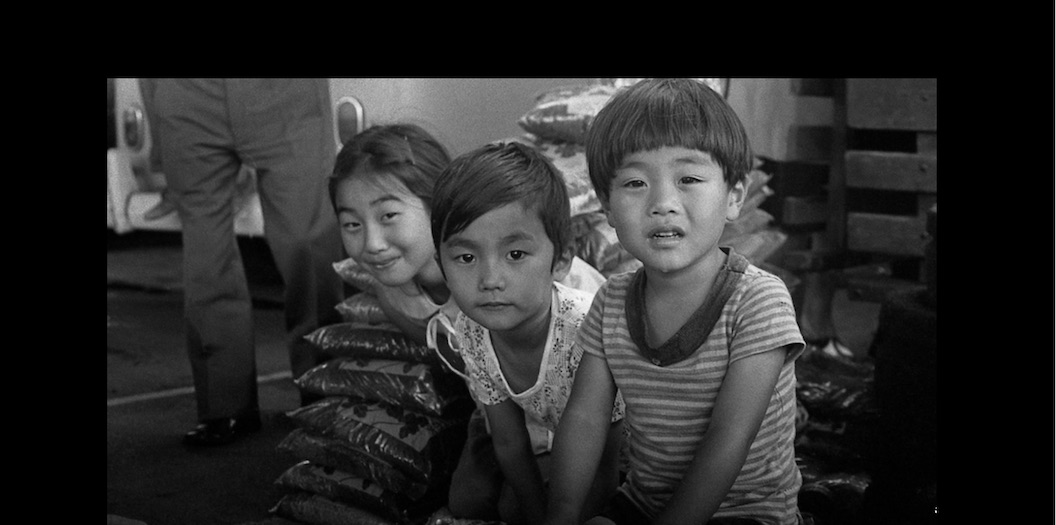
Daily life in Fukushima’s radioactive environment
By Cindy Folkers
“Whatever I do, all pleasure has disappeared from my life…we are living with a narrow range of activities.”
Akemi Shima was a resident of Date (duh-tay) City when the reactors at Fukushima exploded, spewing radioactive particles into the air, across the land, and into the waters. (She tells her story in her own words this week as well. See here.)
Her family had moved there years earlier to live closer to nature. It was supposed to be healthy. But for residents of Date City, still blanketed nine years later by radioactive contamination, the struggle for protection of health continues amid accusations of scientific error, betrayal and abandonment.
Shima, now 50, has been living through these accusations and her children’s health issues, while trying to keep her family safe in a contaminated land that has caused fractures within her community. Her experience is not only shared by other victims of Fukushima, but is a cautionary tale for any communities that have nuclear reactors in their midst. We share pieces of her story here for the first time in English.
“The victims have been unable to talk about the damage. … I don’t want to cry. I don’t want to be dismissed… Let me say that something is wrong.”
Instead of establishing mandatory evacuation zones based on contamination level, the government of Japan limited mandatory evacuation to 20 km from the destroyed reactors. Date City had highly contaminated areas but was 60 km away. Therefore, the residents were left to their fate as the City, under direction from the national government, had decided to recommend specific “spots” for evacuation. “Spots” actually meant individual houses and the recommendation to evacuate was based on a number of inconsistent and confusing criteria. This caused division among residents because a “recommended spot” (house) was eligible for evacuation aid, while a house that was often next door received none.
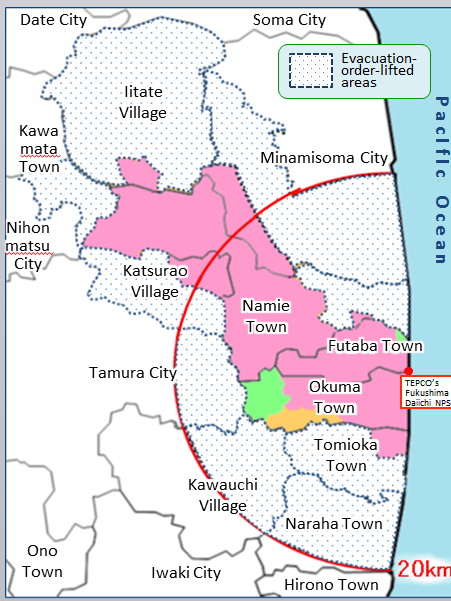
Evacuation map. Pink area denotes “difficult to return” zones, dots where evacuation orders have been lifted.
The price of staying

Evacuation was not mandatory for these now suffering Fukushima victims
By Akemi Shima
This is a statement of opinion that I, a resident of the city of Date, Fukushima Prefecture, presented to the Tokyo Regional Court as part of an on-going lawsuit.
“We had the desire to raise our children in an environment close to nature and enriching. That’s why we moved from Fukushima City to buy land in the town of Date, where we currently live, to build a house. Loan repayments were heavy but, we lived simply and we were happy.
“Eight years after the construction of our house, on March 11, 2011 the accident of the power plant occurred, and our family life was turned upside down. My husband and I were 42 years old, my son was in elementary school 4th grade (12 years old) and my daughter was in elementary school 3rd grade (10 years old).
“At that time, I had no knowledge about nuclear or radioactive substances. If I had had some knowledge in this area, by running away from it we probably could have avoided being irradiated. I am burdened by this regret. Without any financial leeway, with my sick children and my parents who are here, I could not resolve myself to get away from Date.
“From the 11th of March all life lines were cut and I had to go to the water stations where I took the children. To find food we had to walk outside sometimes soaked in the rain. After several days as we still had no water, we had to go to the town hall to use the toilet, where the water was not cut. It was then that I saw a group of people dressed in white protective suits entering the town hall. We thought that they were probably coming to help the victims of the tsunami. But now, I understand that the radioactive pollution was such that protections were necessary and we, without suspecting anything, were exposed.
Americans support a nuclear ban
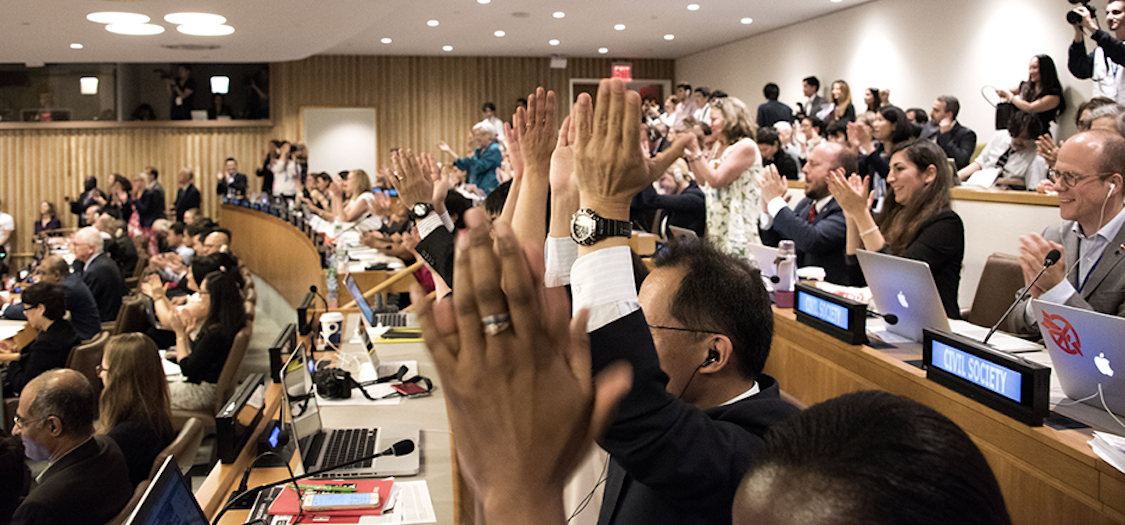
Half the US population favors the nuclear abolition treaty
By Lawrence Wittner
Although today’s public protests against nuclear weapons can’t compare to the major antinuclear upheavals of past decades, there are clear indications that most Americans reject the Trump administration’s nuclear weapons policies.
Since entering office in 2017, the Trump administration has withdrawn the United States from the nuclear agreement with Iran, scrapped the Intermediate-Range Nuclear Forces (INF) Treaty with Russia, and apparently abandoned plans to renew the New START Treaty with Russia.
After an overwhelming majority of the world’s nations agreed on a landmark UN Treaty on the Prohibitions of Nuclear Weapons in July 2017, the Trump administration quickly announced that it would never sign the treaty.
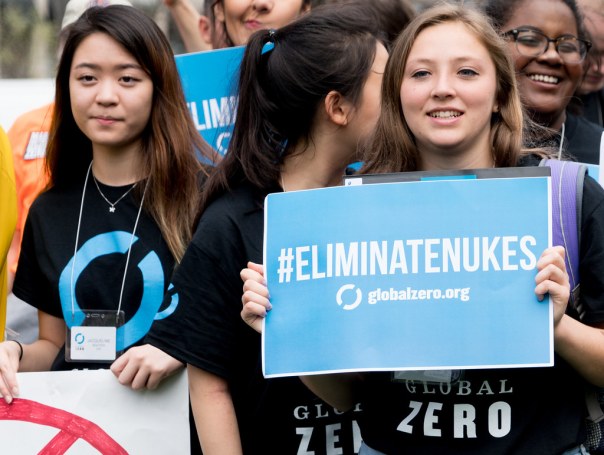
Popular support for a nuclear ban is widespread. (Photo: “Nuclear Summit protest” by vpickering is licensed under CC BY-NC-ND 2.0)
The only nuclear arms control measure that the Trump administration has pursued―an agreement by North Korea to abandon its nuclear weapons program―appears to have collapsed, at least in part because the Trump administration badly mishandled the negotiations.
Moreover, the Trump administration has not only failed to follow the nuclear arms control and disarmament policies of its Democratic and Republican predecessors, but has plunged into a renewed nuclear arms race with other nations by championing a $1.7 trillion program to refurbish the entire U.S. nuclear weapons complex. Perhaps most alarming, it has again and again publicly threatened to initiate a nuclear war.
These policies are quite out of line with U.S. public opinion.
This is not your grandfather’s planet
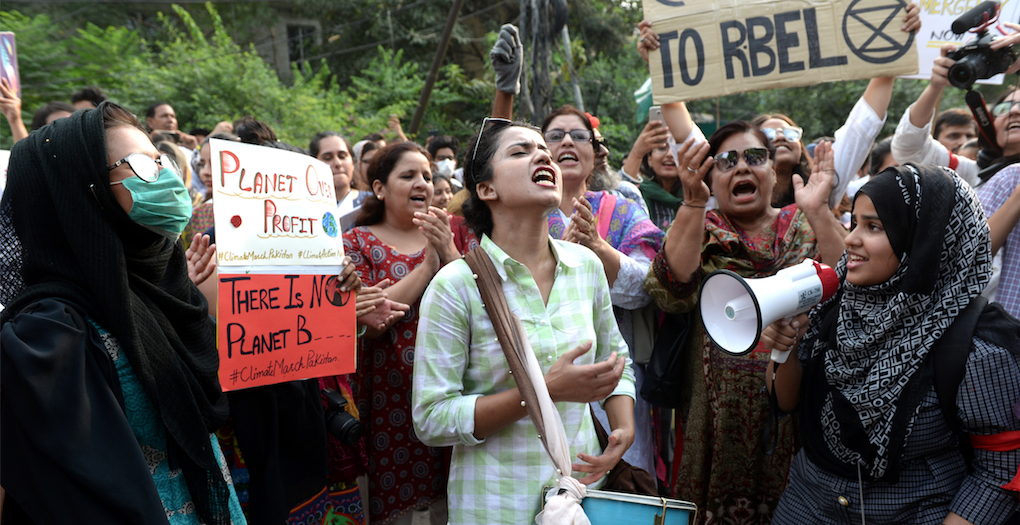
The climate crisis is job one and we all need to sign up
By Linda Pentz Gunter
Jay Inslee staked his whole presidential campaign on one issue: climate change. His campaign began on March 1, 2019. By August 21, 2019, it was over.
Whatever the merits or not of Inslee as a candidate, the Democratic governor of the State of Washington was right about one thing. Climate change — or, more accurately, the climate crisis — is the single most important issue of our time. (Alongside the potential for instant annihilation under nuclear war.)
The presidential debates tussle endlessly and repetitively over health care, racial equality and immigration. Of course these issues are not unimportant, or at least they weren’t under normal conditions.
Nevertheless, we can argue until the cows come home about Medicare-For-All and gun control, but if we don’t address our climate emergency right away, none of that will matter. We will be in chaos, damage control and survival mode.
Widespread gun ownership will make climate chaos more dangerous. Lack of access to affordable health care means that the poor — who are already disproportionately impacted by climate change — won’t have the same access to the ensuing care needed as the climate emergency spawns its own health crisis.

Jay Inslee staked his entire presidential campaign on climate change. It didn’t work. (Photo:Phil Roeder/Wikimedia Commons)
Let’s call SMRs what they are

Leaving out “nuclear” doesn’t minimize the danger, or the cost
By Gordon Edwards, Michel Duguay and Pierre Jasmin
On Friday the 13th, September 2019, the St John Telegraph-Journal’s front page was dominated by what many gullible readers hoped will be a good luck story for New Brunswick – making the province a booming and prosperous Nuclear Energy powerhouse for the entire world.
After many months of behind-the-scenes meetings throughout New Brunswick with utility company executives, provincial politicians, federal government representatives, township mayors and First Nations, two nuclear entrepreneurial companies laid out a dazzling dream promising thousands of jobs – nay, tens of thousands! – in New Brunswick, achieved by mass-producing and selling components for hitherto untested nuclear reactors called SMNRs (Small Modular Nuclear Reactors) which, it is hoped, will be installed around the world by the hundreds or thousands!
On December 1, the Saskatchewan and Ontario premiers hitched their hopes to the same nuclear dream machine through a dramatic tripartite Sunday press conference in Ottawa featuring the premiers of the provinces. The three amigos announced their desire to promote and deploy some version of Small Modular Nuclear Reactors in their respective provinces. All three claimed it as a strategy to fight climate change, and they want the federal government to pledge federal tax money to pay for the R&D. Perhaps it is a way of paying lip service to the climate crisis without actually achieving anything substantial; prior to the recent election, all three men were opposed to even putting a price on carbon emissions.
Motives other than climate protection may apply. Saskatchewan’s uranium is in desperate need of new markets, as some of the province’s most productive mines have been mothballed and over a thousand uranium workers have been laid off, due to the global decline in nuclear power. Meanwhile, Ontario has cancelled all investments in over 800 renewable energy projects – at a financial penalty of over 200 million dollars – while investing tens of billions of dollars to rebuild many of its geriatric nuclear reactors. This, instead of purchasing surplus water-based hydropower from Quebec at less than half the cost.
 Beyond Nuclear International