 Beyond Nuclear International
Murky politics pollute the Pacific
Radioactive water at Fukushima should be stored not dumped
By Linda Pentz Gunter
Last week, Japan’s then environment minister, Yoshiaki Harada, made news with a pronouncement that wasn’t news. The storage tanks at the stricken Fukushima Daiichi nuclear site, filled with radioactive water, were reaching capacity. By 2022 there would be no room for more tanks on the present site. Japan would then have to dump the radioactive water stored in the tanks into the Pacific Ocean, he said.
Although likely unrelated to those remarks, a day later, Prime Minister Shinzo Abe dispatched 19 of his cabinet ministers, including Harada. Harada was replaced as environment minister by rising star, Shinjiro Koizumi, the son of former primer minister, Junichiro Koizumi. Both father and son are opposed to nuclear energy, and on his first day in office, the younger Koizumi told reporters that he believed Japan should end its use of nuclear energy and close its nuclear power plants.
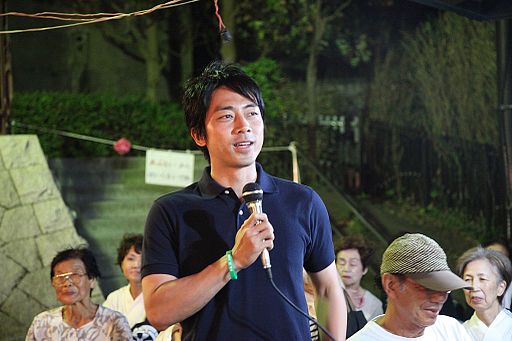
Shinjiro Koizumi, Japan’s new environment minister, says Japan should cease using nuclear power. (Photo: R2d2ki for Wikimedia Commons)
“I would like to study how we scrap them, not how to retain them,” Reuters reported him saying. This is a surprising position from someone inside the fervently pro-nuclear Abe government and it remains to be seen whether he will be allowed to translate his position into policy.
Hanford’s Dirty Secret
And it’s not 56 million gallons of nuclear waste
Reported by ICAN
Building nuclear weapons requires materials and labor, not just from scientists, but also from the men and women living in communities nearby. After the Cold War, many of the United States’ most crucial nuclear weapons production sites ‘closed’ and were forgotten, but not by workers and local communities, who were left to deal with the devastating, toxic legacy of these sites.
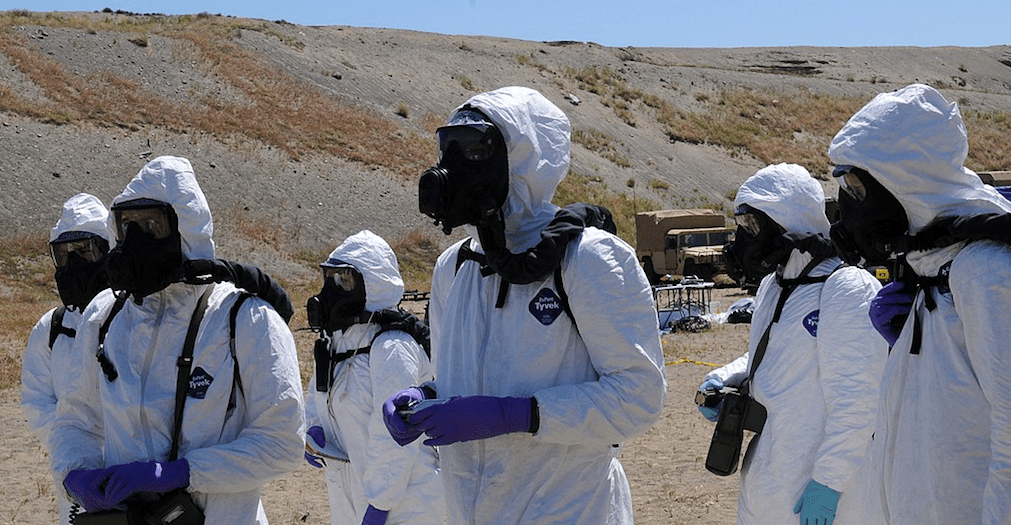
This is obvious at Hanford Waste Management Site, Washington. It is sometimes referred to as “the most toxic place in America,” yet most people will never have heard of it. While the workers and activists of Hanford speak out, their stories are dismissed because they demonstrate the real cost of nuclear weapons.
What happened at the Hanford site?
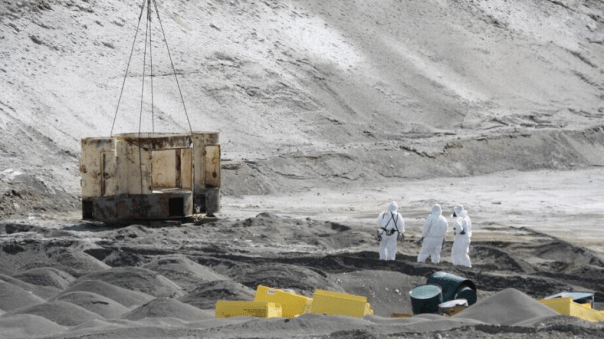
Hanford site was one piece of the Manhattan Project puzzle. It developed plutonium for the Trinity Test, the bomb dropped on Nagasaki, and Cold War weapons. By 1965, there were nine weapons reactors, five reprocessing plants, hundreds of support and research buildings, and 177 underground waste tanks. Ultimately, Hanford produced 74 tons of plutonium, roughly two-thirds of the US’s stockpile. The production facilities were phased out as the Cold War ended and the Dept. of Energy delegated cleanup to various private companies.
The decline and fall of nuclear power
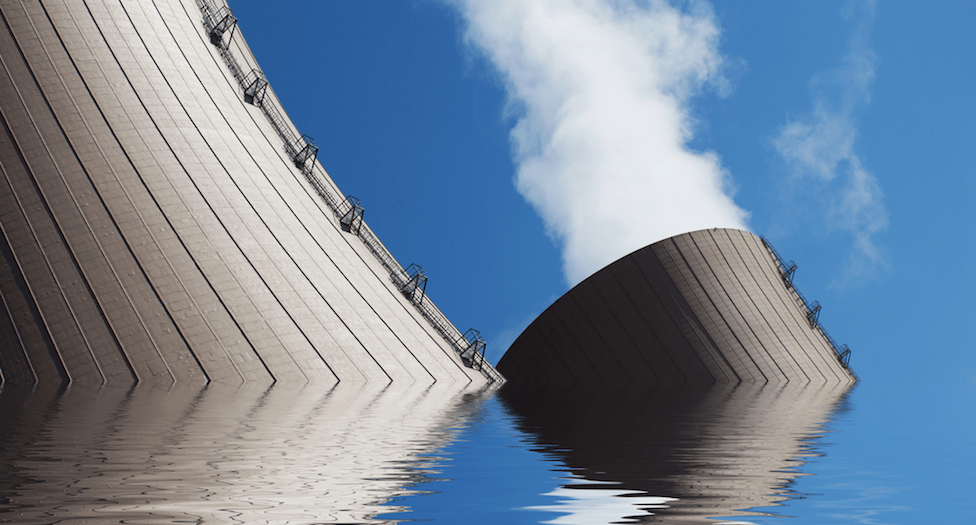
“Nuclear energy has never been a clean economical energy source and will not be in the future”
By Linda Pentz Gunter
On August 25, 2019, the Washington Post published an editorial condemning Independent Vermont senator, Bernie Sanders, also a Democratic presidential candidate, for, among other things, excluding nuclear power from his version of the Green New Deal. The Post declared that:
“Mr. Sanders also promises to make his plan unnecessarily expensive by ruling out a long-established source of carbon-free electricity: nuclear power. Not only would he halt the building of new plants, but he also would deny re-licensing to the existing ones that now provide about 20 percent of the nation’s electricity.”
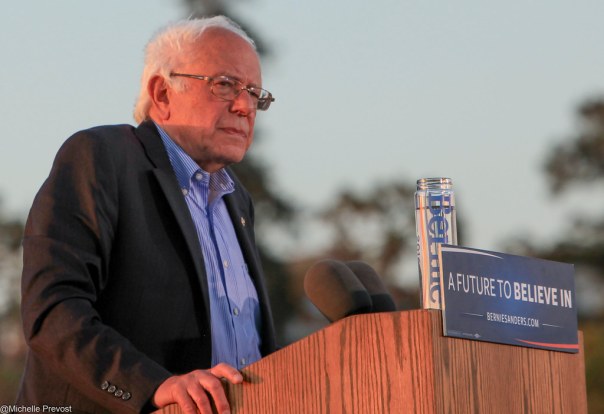
The Washington Post condemned Bernie Sanders’s anti-nuclear Green New Deal. We disagreed. (Photo: Michelle Prevost through photogism, licensed under CC BY 2.0)
As one anti-nuclear colleague said on reading that: “he gets my vote right there!”
Specifically, Sanders’s $16.3 trillion climate plan included this:
“Phase out the use of non-sustainable sources. This plan will stop the building of new nuclear power plants and find a real solution to our existing nuclear waste problem. It will also enact a moratorium on nuclear power plant license renewals in the United States to protect surrounding communities. We know that the toxic waste byproducts of nuclear plants are not worth the risks of the technology’s benefit, especially in light of lessons learned from the Fukushima meltdown and the Chernobyl disaster. To get to our goal of 100 percent sustainable energy, we will not rely on any false solutions like nuclear, geoengineering, carbon capture and sequestration, or trash incinerators.”
How much is a trillion dollars?
And why the world shouldn’t spend it on nuclear weapons
By Linda Pentz Gunter
How much is a trillion dollars? An unimaginable amount? Uncountable?
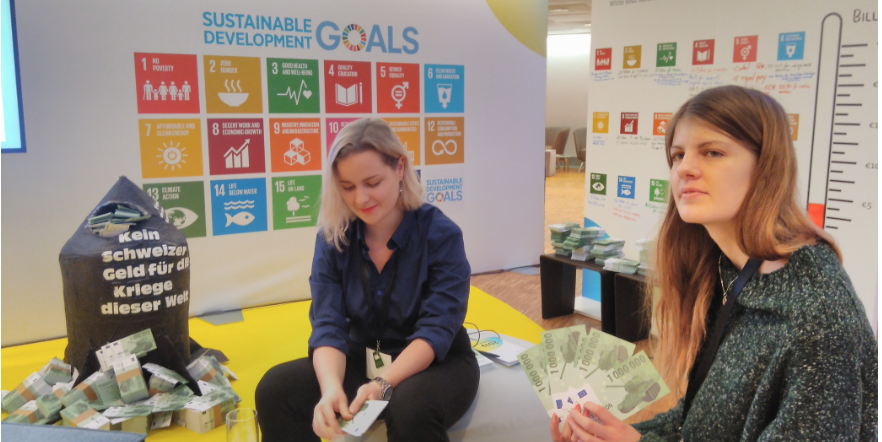
Not the latter. That’s exactly how much money will be counted out, in front of the United Nations in October. It will take seven days and seven nights to count it all. (And you can help count it).
Why one trillion? That is the staggering amount of money that the world’s nuclear armed countries plan to spend on the nuclear arms race over the next ten years. The action is an offshoot of the campaign — Move the nuclear weapons money — and is designed to let the world know just how obscene a number that is. And all the far better things that money could be spent on.
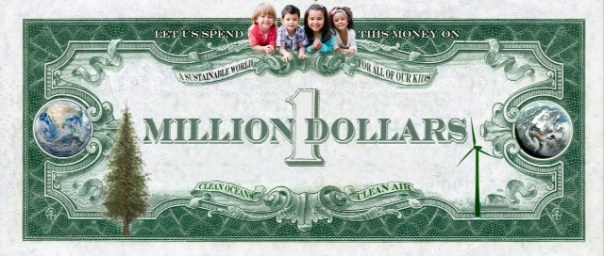
A version of the bank notes to be counted envisions better use of one trillion dollars. (Image courtesy of Counting the Nuclear Weapons Money)
Is the push for nuclear power a covert push for nuclear weapons?
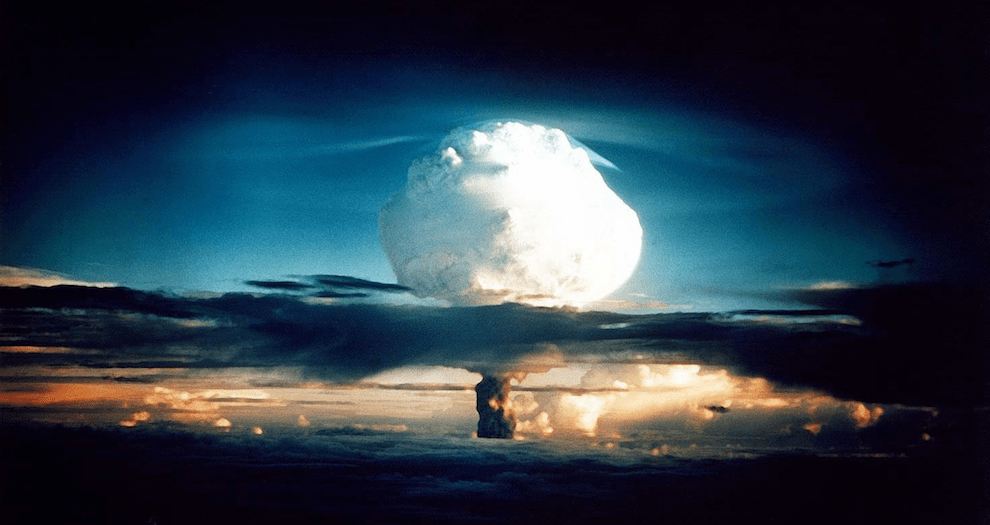
Pro-nuclear power arguments are predictably optimistic — and inaccurate
By Mark Diesendorf and Richard Broinowski
A recent push for nuclear power in Australia has been promoted by the usual public advocates and amplified by the Murdoch press.
The arguments are predictable both in their optimism and inaccuracy: nuclear power reactors are claimed to be safe and cheaper than electricity generation from wind and sun; new generation mini-reactors are claimed to be even cheaper and safer and can be adapted to power a factory or a town.
Australia has uranium, and can easily acquire the technology. Advocates for nuclear power are calling for ‘informed’ public debate to quell public fear about nuclear power.
In reality, informed public debate has been going on for some time. The latest iteration was the South Australian Royal Commission of 2015-16, which found that “nuclear power would not be commercially viable to supply baseload electricity to the South Australian subregion of the NEM from 2030 (being the earliest date for its possible introduction).”
But advocates are not deterred, claiming, despite the evidence to the contrary, that nuclear power is cheaper and cleaner than other forms of electricity generation.
Nuclear is still at least 2.5 times the cost of wind and solar
The fact is that electricity from new wind and solar farms is much cheaper than from nuclear power stations. According to the multinational investment consultancy, Lazard, the costs of energy from on-shore wind farms in the USA are in the range 29-56 USD per megawatt-hour (US$/MWh), from solar farms 36-46 US$/MWh and from conventional nuclear 112-189 US$/MWh.
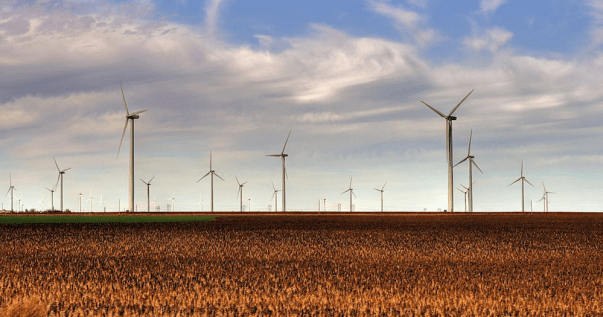
US onshore wind farms cost 29-56 USD per megawatt-hour compared to nuclear at 112-189 USD/MWh. (Photo: adrenaline for Wikimedia Commons)
Work of artist who opposed nuclear war finally finds recognition

A son refuses to let his father’s art slip into the shadows
By Linda Pentz Gunter
By day his life could not have been more utilitarian. He was a “Hod Carrier,” hauling bricks and mortar on his back up ladders; mixing sand and cement; clocking in and out as a member of the Laborers’ International Union of North America (LIUNA).
But by night, Paul Martin Butkovich reignited the true flame of his inspiration. He made art. Lots of it, almost to the day he died aged 76 on January 8, 1996.
It was only then that his family uncovered dozens of drawings rendered in crayon, pastels, pencil, chalk and markers, on subjects that ran the gamut from racehorses to nuclear warfare. The existence of Butkovich’s art was not a surprise. But the volume was. Yet, he had never attempted to sell a single piece.
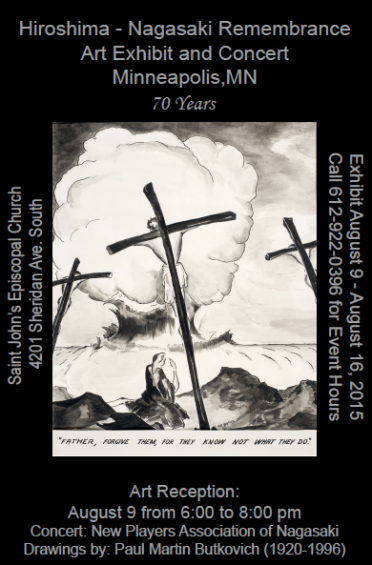
Butkovich was a basement artist. In 1939, he had spent one year at the Corcoran School of Art in Washington, DC, before being called home to help with the family business while his older brothers served in the military. His career as an artist never took flight, even as he harbored dreams of becoming a political cartoonist. (A friend even submitted his work for consideration for a Pulitzer Prize.) Living and working in Madison County, Illinois, not far from St. Louis, MO, he was inspired by then St. Louis Post-Dispatch editorial cartoonist, and two-time Pulitzer Prize-winner, Daniel Fitzpatrick.
 Beyond Nuclear International