 Beyond Nuclear International
Where are the national anti-war monuments?
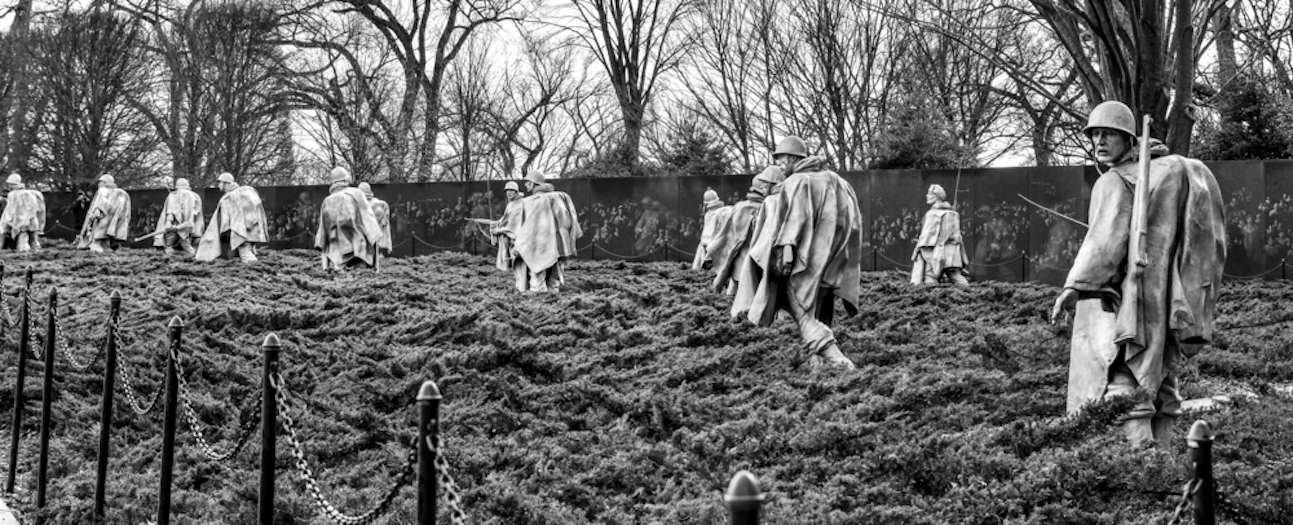
It’s time to memorialize peace in our public spaces
By Dr. Michael Knox
I travel frequently and have seen the many monuments to soldiers and to wars that occupy our city squares and parks. In the summer of 2005 my son James and I visited Washington, DC after he finished his first year of college. We made the standard tour of the city, visiting museums, the White House, the Vietnam Veterans Memorial, the Korean War Veterans Memorial, and the newly dedicated National World War II Memorial.
These memorials exist to reinforce the notion that war efforts or activities are highly valued and rewarded by our society. In this and other visits to the National Mall, I have encountered dozens of war veterans discussing their combat experiences with their children, grandchildren, other relatives and friends. I imagine that most of the listeners were proud of the speaker’s military service and some viewed the war veteran as a potential role model.

“There is no public validation of antiwar activities and no memorial.” (Photo: Women in Black, by Camilla Hoel, licensed under CC BY-NC-SA 2.0)
Suddenly, with my son present, I realized that all of my own personal memories and stories in this realm were of antiwar activities. I was immediately struck by the fact that there are no National Monuments here to convey a message that our society also values peace and recognizes those who take action to oppose one or more U.S. wars. There is no public validation of antiwar activities and no memorial to serve as a catalyst for discussion regarding courageous peace efforts by Americans over the past centuries.
This realization led to the organization of the US Peace Memorial Foundation in 2005 and my retirement in 2011 so that I could devote the remainder of my life to creating this monument, initially online and later as a physical structure in our nation’s capital.
The insanity of punishing the good
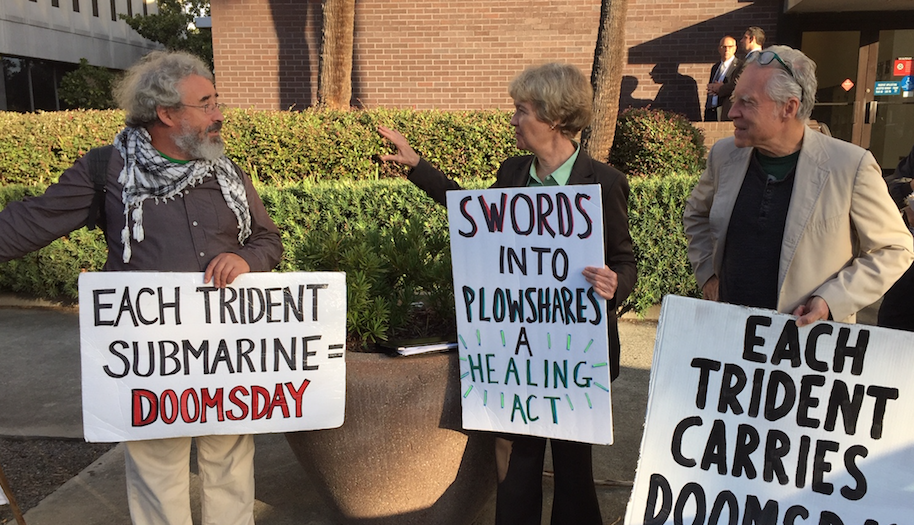
Why aren’t we exalting peace heroes and abolishing nuclear weapons?
By Linda Pentz Gunter
You’re liable to run into trouble if you try to suggest there is a greater threat to planetary survival than climate change. But there is. It’s called nuclear war.
Granted — and thank goodness — climate change is finally all the rage now. Rage has taken over, and rightly so, especially among the young whose future has been effectively ruined by the inaction of their elders.
There is no arguing that the climate crisis is an emergency. We have left it so late that the steps we must take have likely become unachievable — such as never extracting another drop of oil, another lump of coal, or another whiff of gas from the earth ever; starting now.
We are in a desperate scramble to save ourselves.
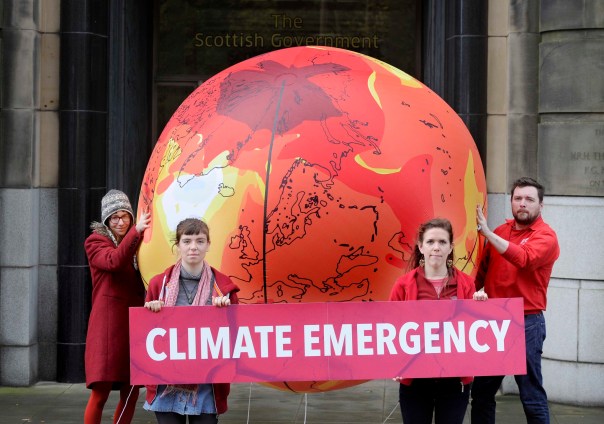
Photo by Friends of the Earth Scotland.
Meanwhile, the fact that we could set omnicide in motion with one deliberate or accidental push of the nuclear button is all but ignored.
The judge who assailed “worship of the Bomb”
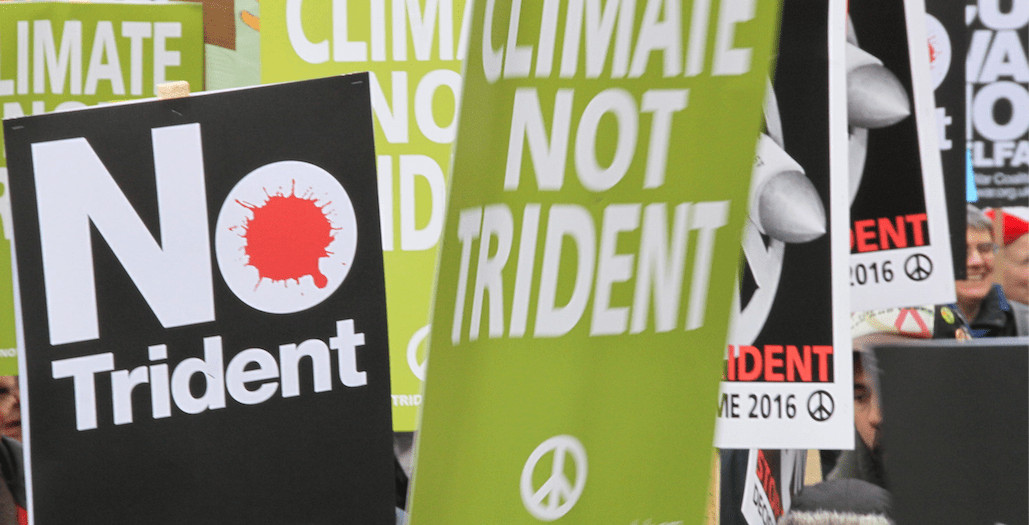
An opinion worth noting as more peace activists face sentencing
By John LaForge
Federal District Judge Miles Lord, who died December 10, 2016 at age 97, could have given me 10 years once. Instead, the famously outspoken judge, who was well known for protecting ordinary people from corporate crime and pollution, used the anti-nuclear case a group of us argued before him to deliver a remarkably scornful condemnation of nuclear weapons and of the corruption that protects them.
On August 10, 1984, Barb Katt and I did more than $36,000 damage to launch-control computers being built for Trident missile-firing submarines by Sperry Univac (now Unysis) in Eagan, Minnesota. It was the 9th in a series of 100 so-called Plowshares actions, one we’d planned for two years.
After walking into the Sperry plant dressed in business suits, we used household hammers to smash two of the company’s missile-guidance computers then under construction.
We “named” the wreckage by pouring blood over it because, as the philosopher Simone Weil said, “Nuclear weapons kill without being used by forcing people to starve.”
We didn’t run away but waited for the authorities, explaining to workers in the room that we’d disarmed part of the government’s first-strike nuclear war machinery.
One worker said later as a trial witness, “I’ve heard the word ‘Trident’ but I don’t know what it means.”
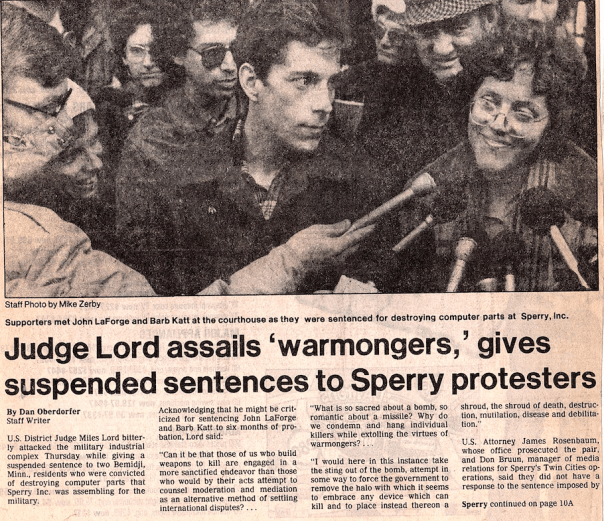
A 1984 Star Tribune news clip about LaForge and Kate from the author’s archives.
Doctors’ prescription for the Tokyo Olympics

Breaking: IPPNW has launched a petition to “Keep the Olympic Games out of radioactive regions”. You can sign it here.
Statement of IPPNW Germany regarding participation in the Olympic Games in Japan
In July 2020, the Olympic Games will start in Japan. Young athletes from all over the world have been preparing for these games for years and millions of people are looking forward to this major event.
We at IPPNW Germany are often asked whether it is safe to travel to these Olympic Games in Japan either as a visitor or as an athlete or whether we would advise against such trips from a medical point of view. We would like to address these questions.
To begin with, there are many reasons to be critical of the Olympic Games in general: the increasing commercialization of sports, the lack of sustainability of sports venues, doping scandals, the waste of valuable resources for an event that only takes place for several weeks and corruption in the Olympic organizations to name just a few. However, every four years, the Olympic Games present a unique opportunity for many young people from all over the world to meet other athletes and to celebrate a fair sporting competition – which was the initial vision of the Olympic movement. Also, the idea of Olympic peace and mutual understanding between nations and people is an important aspect for us as a peace organization.
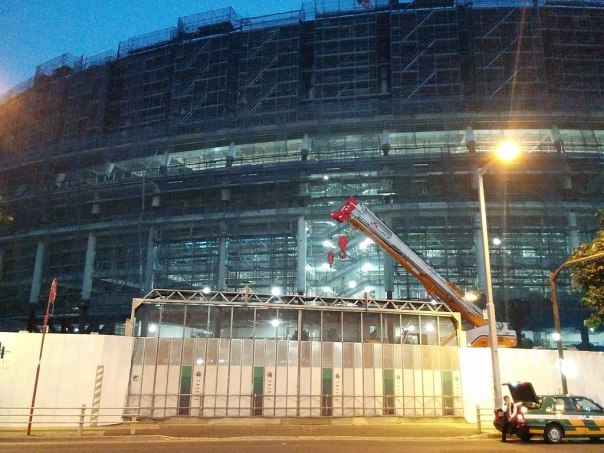
The Olympic stadium in Tokyo under construction. (Photo: Syced for Wikimedia Commons)
The radioactive Olympics?
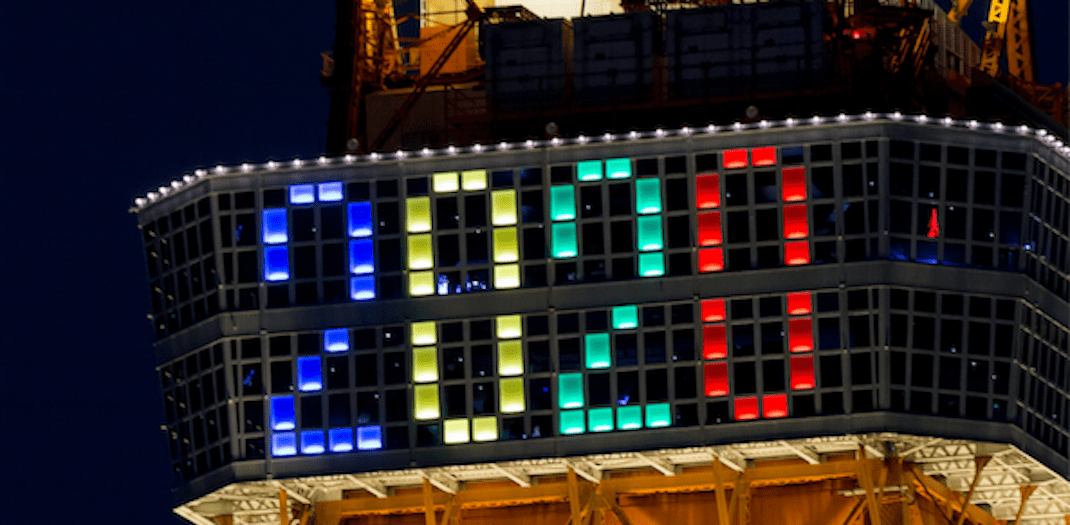
Breaking: IPPNW has launched a petition to “Keep the Olympic Games out of radioactive regions”. You can sign it here.
Concern mounts over events to be held in Fukushima
IPPNW has launched a “Nuclear-Free Olympic Games 2020” campaign to call for a worldwide phase-out of nuclear power and to sound the alarm about the Japanese government’s efforts to use the 2020 Tokyo Olympics to “normalize” the aftermath of the still on-going Fukushima nuclear accident. Here, four members of IPPNW Europe outline the campaign and the reasoning behind it.
By Annette Bänsch-Richter-Hansen, Jörg Schmid, Henrik Paulitz and Alex Rosen
In 2020, Japan is inviting athletes from around the world to take part in the Tokyo Olympic Games. We are hoping for the games to be fair and peaceful. At the same time, we are worried about plans to host baseball and softball competitions in Fukushima City, just 50 km away from the ruins of the Fukushima Dai-ichi nuclear power plant. It was here, in 2011, that multiple nuclear meltdowns took place, spreading radioactivity across Japan and the Pacific Ocean – a catastrophe comparable only to the nuclear meltdown of Chernobyl.
The ecological and social consequences of that catastrophe can be seen everywhere in the country: whole families uprooted from their ancestral homes, deserted evacuation zones, hundreds of thousands of bags of irradiated soil dumped all over the country, contaminated forests, rivers and lakes.
Dangerous radioactive hot particles span the globe

Citizen scientists are uncovering risks that governments would rather cover up
By Cindy Folkers
When reactors exploded and melted down at the Fukushima nuclear power complex in March 2011, they launched radioactivity from their ruined cores into the unprotected environment. Some of this toxic radioactivity was in the form of hot particles (radioactive microparticles) that congealed and became airborne by attaching to dusts and traveling great distances.
However, the Fukushima disaster is only the most recent example of atomic power and nuclear weapons sites creating and spreading these microparticles. Prior occurrences include various U.S. weapons sites and the ruined Chernobyl reactor. While government and industry cover up this hazard, community volunteer citizen science efforts – collaborations between scientists and community volunteers – are tracking the problem to raise awareness of its tremendous danger in Japan and across the globe.
After the Fukushima nuclear disaster began, one highly radioactive specimen, a particle small enough to inhale or ingest, was found in a private home where it should not have been, hundreds of miles from its source, in a vacuum cleaner bag containing simple house dust.
This “high activity radioactively-hot dust particle” came from a house in Nagoya, Japan – after it had traveled 270 miles from Fukushima. The only radioactive particle found in the home’s vacuum cleaner bag, it was an unimaginably minuscule part of the ruined radioactive core material from Fukushima – many times smaller than the width of a human hair. We know it came from Fukushima because it contained cesium-134, meaning that the particle came from a recent release, and we know it is a piece of core material specifically because it was so radioactive that it could not have come from any other material.
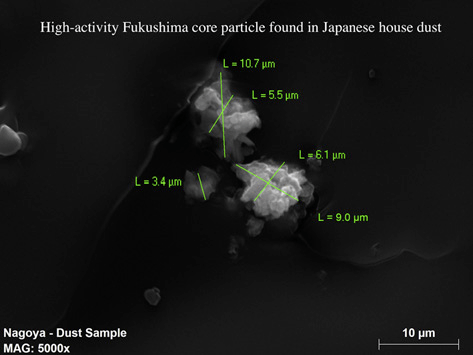
(Image courtesy of Arnie Gundersen/Fairewinds)

