 Beyond Nuclear International
How many birds are killed by wind turbines?

Too many for now, but renewables and birds can co-exist
By Joel Merriman
Countless studies have shown that climate change will cause far-reaching and devastating impacts to wildlife and humans alike. Renewable energy development is a critically important component of the transition away from fossil fuels, making our air cleaner and reversing the effects of climate change. Unfortunately, we have also learned that wind energy development has a substantial negative impact on birds.
But just how many birds are killed by wind turbines?
A Google search can turn up a wide array of answers to this question, with a nearly fivefold difference between the smallest and largest estimates.
The truth is, it has been a while since these estimates were updated, and the wind energy industry has grown a lot in the meantime. So, we thought it was time to take a close look at the numbers, and see what a current estimate might look like.
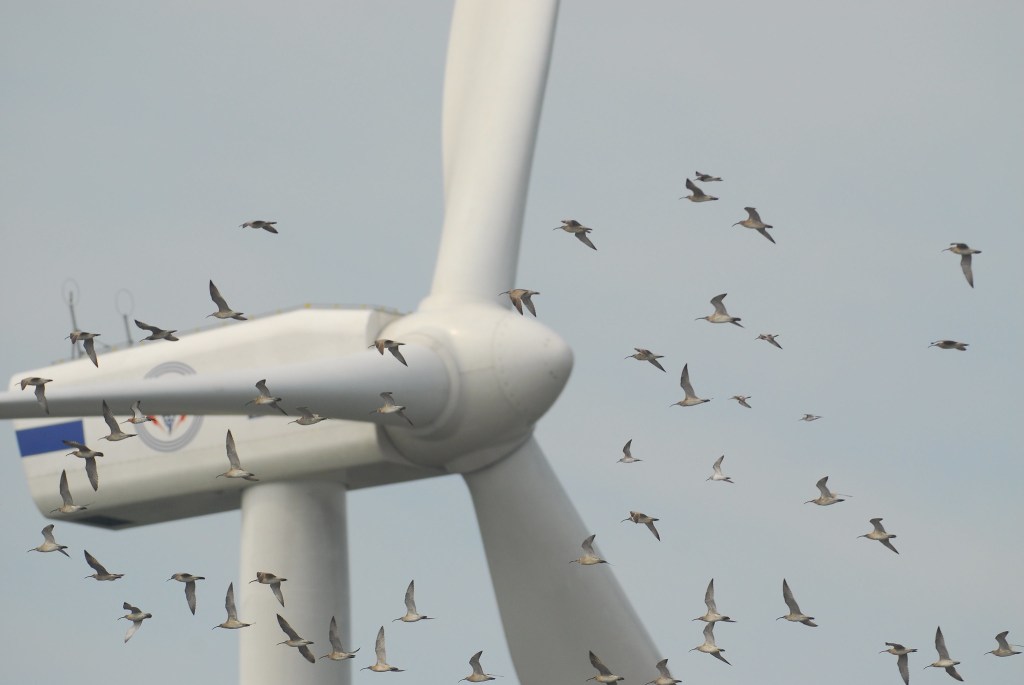
The best estimates of the number of birds killed by wind turbines in the U.S. each year are based on a trio of studies published in 2013 and 2014, all reporting on data from 2012. Each study was unique in its methods, resulting in varying estimates. (There is actually a fourth paper just to compare their methods.) The results from these studies are provided in the table below.
| Study | Year Published | Average Bird Fatalities/Year | Minimum – Maximum/Year |
| Loss and others | 2013 | 234,000 | 140,000 – 328,000 |
| Smallwood | 2013 | 573,093 | 467,097 – 679,089 |
| Erickson and others | 2014 | 291,000 | 214,000 – 368,000 |
Rather than going down the proverbial rabbit hole to decide which study might be the most accurate, let’s take the average of the results from these studies. This gives us an estimate of approximately 366,000 birds killed by wind turbines in the U.S. in 2012.
Read MoreNuclear power is now irrelevant
Desperate times (for nuclear) call for criminal measures
Ten years have gone by since the Fukushima Daiichi accident began. What happened in the United States, historically leading the world’s nuclear power programs and still operating the largest reactor fleet in the world? What are global developments in energy policy increasingly dominated by renewable energy?
By Mycle Schneider
“The debate is over. Nuclear power has been eclipsed by the sun and the wind”, Dave Freeman wrote in the Foreword to the World Nuclear Industry Status Report 2017.
The renowned industry thinker the New York Times called an “energy prophet”, passed away last year at age 94. He had seen nuclear power coming and going. President Carter appointed him as Chairman of the only fully public federal electricity utility in the United States, the Tennessee Valley Authority (TVA) in 1977. Construction had started on two nuclear reactors in the State in 1972. It took until 1996 to complete the first one and until 2016 for the second one—almost 44 years after construction start, a world record. Those were the last units to start up in the United States.
Construction began on four units in 2013, but in 2017, the bankruptcy of builder Westinghouse led to the abandonment of the V.C. Summer two-unit project in South Carolina. Steve Byrne, former Vice-President of the utility that spent more than $10 billion on the failed project and raised electricity consumer rates nine times, later pleaded guilty to fraud charges in federal court.
The U.S. Attorney for South Carolina told the Federal District Court in Columbia that Byrne “joined a conspiracy… to defraud customers of money and property through… false and misleading statements and omissions.”
Construction cost estimates for the only other active construction site in the U.S., the two-unit Vogtle project in Georgia, have been multiplied by a factor nearing five from $6.1 billion in 2009 to $28 billion by 2018. And still, a 2020-monitoring report found that the component “test failure rate is at an unacceptably high rate of roughly 80%”. The startup continues to be delayed.
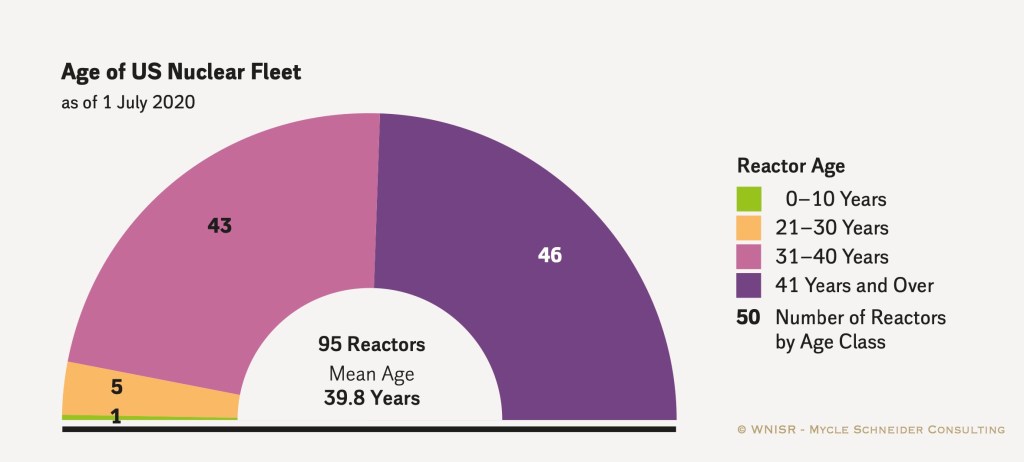
Meanwhile, lacking newbuild, the U.S. nuclear fleet is ageing and the 94 still operating reactors now exceed an average age of 40 years. Although the U.S. nuclear industry claims to have achieved decreasing operation and maintenance costs since 2012—the only nuclear country to do so—the utilities are still struggling to compete with fierce competitors from the renewable energy sector.
Read MoreA ‘deluded imperial fantasy’

Britain announces 40% increase in its nuclear arsenal
By Linda Pentz Gunter
It’s called Global Britain, a puffed up and pompous title from a government led by someone who comports himself like a puffed up and pompous overgrown schoolboy. America First may be fading with the exit of Donald Trump from the US presidency, but his British alter ego, UK prime minister, Boris Johnson, has quickly donned Emperor Trump’s discarded new clothes.
Global Britain is all post-Brexit bluster and illusion, a desperate lunge for global trading partners now that doors in Europe are closing, a result of Britain’s self-imposed isolation.
But on March 16 things took a more ominous turn. That is when Britain’s Conservative government announced a 40% increase in the country’s nuclear arsenal.
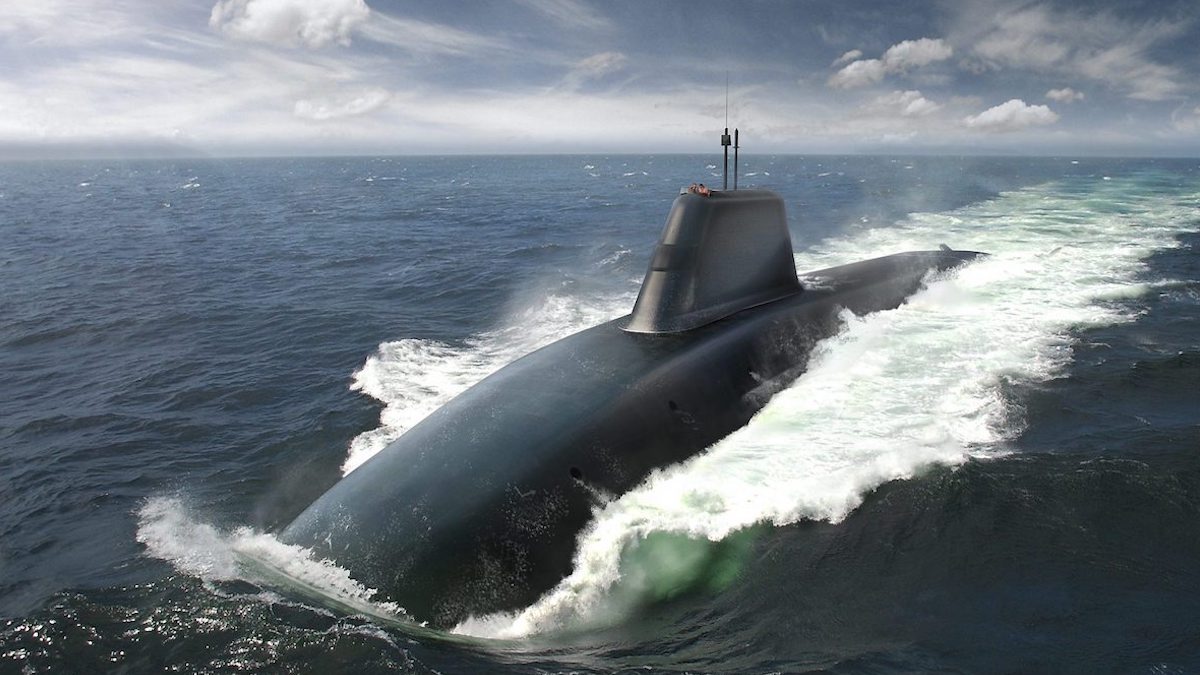
Specifically, they are proposing to raise the limit on the number of Britain’s total nuclear warheads carried by its four American Trident submarines from 180 to 260. And it marks a stark reversal of what had been a 30-year pathway toward (very) gradual nuclear disarmament.
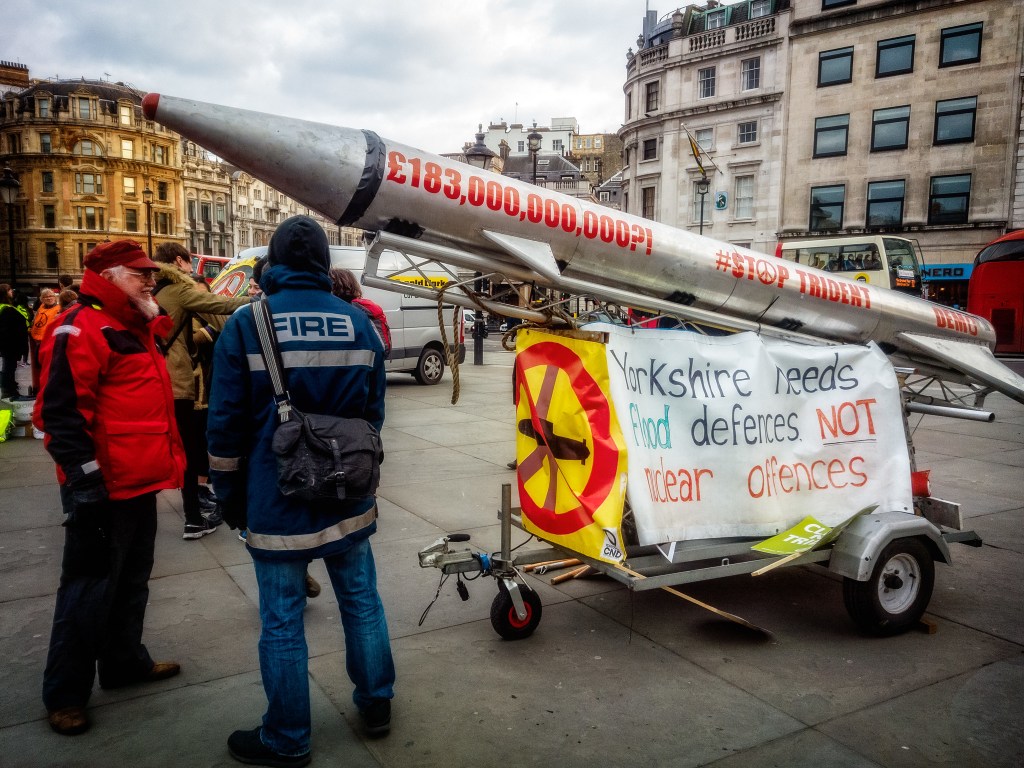
Yes, neither “40%” nor “increase” are misprints. Even as the Russian and US presidents are agreeing on New START, which will mean a continued — if too slow — reduction in their respective nuclear arsenals, Johnson is escalating Britain’s nuclear war-fighting inventory by adding another 80 warheads.
As was not unreasonably asked, how many more times can you kill everyone on Earth? Even the rightwing British tabloid, The Sun, ran a headline asking: “Aren’t 180 city-destroying bombs enough?”
All of this is contained in a vast new document called Global Britain in a Competitive Age: the Integrated Review of Security, Defence, Development and Foreign Policy.
Read MoreSomething worth fighting for
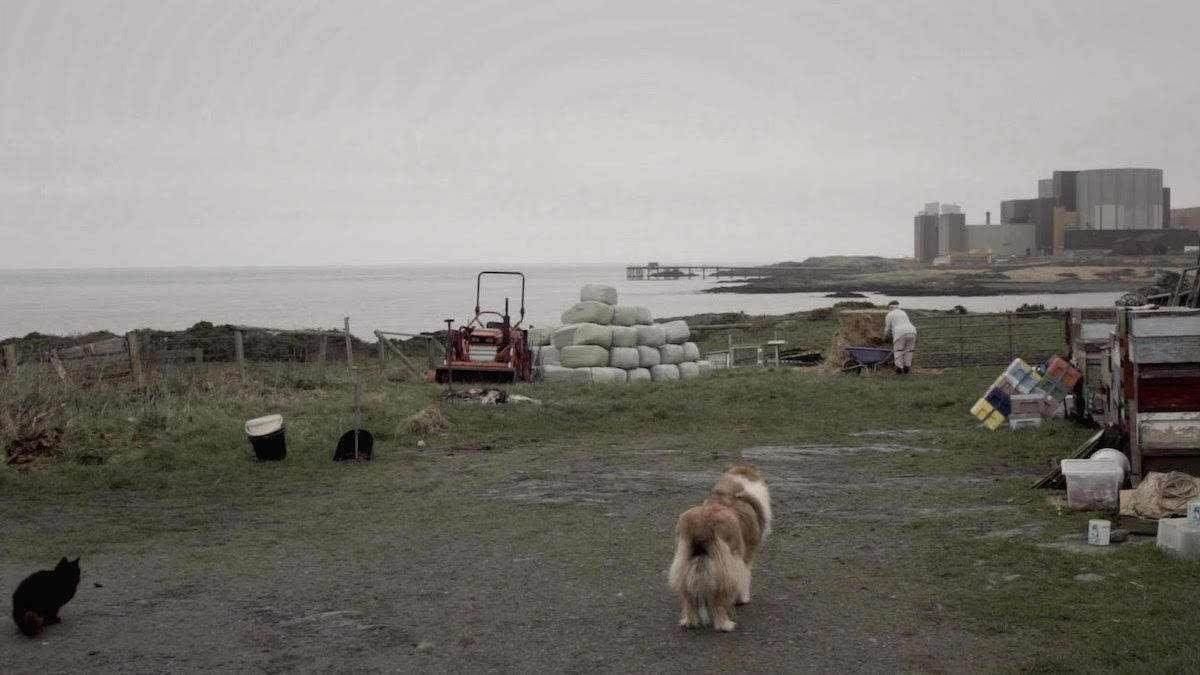
Two films tell contrasting stories about the struggle against nuclear power
By Linda Pentz Gunter
Update: Resistance on Film is now available to view online. https://youtu.be/D_B7hlCo8ls
“And at that point,” says Katie Hayward, halfway through Will McGregor’s short film, The Beekeeper, “I went cold”.
Hayward, the beekeeper of the film’s title, had just seen a news report showing the expanded footprint of the proposed two-reactor Wylfa B nuclear power project on the island of Anglesey in North Wales. Hayward’s home, which her family had tenanted since 1532, was right in the plan’s crosshairs. It would be bulldozed, and the farmland paved over.
Hayward’s fight to save her bees, her home and her rescue animals escalated, while her physical and mental health plummeted. As the farms around her sold out to Horizon — the nuclear subsidiary of site owner, Hitachi — Hayward found herself almost alone, a one-woman David against a corporate Goliath.

Neighbors shunned and even harassed her for her obstinate stance against the nuclear plant. But with not only her hives but a plethora of rescue animals, there was nowhere else to go. Hayward had to be able to look after her bees, she says in the film, “because these little creatures that are so important to our planet, they actually need us to help them live at the moment.” And we, as it turns out, also need them.
Read MoreThe deterrence myth
The naked emperor who’s still in power
By David Barash
In his classic The Evolution of Nuclear Strategy (1989), Lawrence Freedman, the dean of British military historians and strategists, concluded: ‘The Emperor Deterrence may have no clothes, but he is still Emperor.’ Despite his nakedness, this emperor continues to strut about, receiving deference he doesn’t deserve, while endangering the entire world. Nuclear deterrence is an idea that became a potentially lethal ideology, one that remains influential despite having been increasingly discredited.
After the United States’ nuclear bombings of Hiroshima and Nagasaki in 1945, war changed. Until then, the overriding purpose of military forces had ostensibly been to win wars. But according to the influential US strategist Bernard Brodie writing in 1978: ‘From now on its chief purpose must be to avert them. It can have almost no other useful purpose.’ Thus, nuclear deterrence was born, a seemingly rational arrangement by which peace and stability were to arise by the threat of mutually assured destruction (MAD, appropriately enough). Winston Churchill described it in 1955 with characteristic vigour: ‘Safety will be the sturdy child of terror, and survival the twin brother of annihilation.’ Importantly, deterrence became not only a purported strategy, but the very grounds on which governments justified nuclear weapons themselves. Every government that now possesses nuclear weapons claims that they deter attacks by their threat of catastrophic retaliation.

Even a brief examination, however, reveals that deterrence is not remotely as compelling a principle as its reputation suggests. In his novel The Ambassadors (1903), Henry James described a certain beauty as ‘a jewel brilliant and hard’, at once twinkling and trembling, adding that ‘what seemed all surface one moment seemed all depth the next’. The public has been bamboozled by the shiny surface appearance of deterrence, with its promise of strength, security and safety. But what has been touted as profound strategic depth crumbles with surprising ease when subjected to critical scrutiny.
Read MoreWhy Bill Gates is wrong

Billionaire’s nuclear ambitions would make climate disaster worse
By Linda Pentz Gunter
In an interview for the Washington Post Magazine during his current book tour, billionaire Bill Gates, whom we are now expected to accept as an authority on climate change, said: “I’ll be happy if TerraPower was a waste of money.” TerraPower is Gates’s nuclear power company pushing so-called “advanced” reactors. His book is called How to Avoid a Climate Disaster.
Well, Bill, I have some good news for you. You can start celebrating! Because, yes, TerraPower is indeed a colossal waste of money. It’s also a waste of precious time. And the idea that nuclear power could “lift billions out of poverty” as the TerraPower website boasts, is on a par with any number of outlandish theories, conspiratorial or otherwise, that are making the all too frequent rounds these days.

So has Gates really drunk the Kool-Aid (OK it wasn’t actually Kool-Aid but Flavor Aid that was consumed at the 1978 Jonestown massacre)? Does he really plan to throw away $1 billion of his own money, plus an equal match from investors and possibly some state funding, too, and then just shrug it off when the whole thing proves redundant? Is that really true stewardship of the climate?
You don’t need to be a mathematician to work out what $2 billion plus would buy in renewables, and how much faster that particular delivery would arrive at the doorsteps of the world’s poor, whom Gates claims he aims to protect.
Here are the prices that the eminent financial house Lazard calculated in 2019 for different ways to generate a megawatt-hour of electricity using new nuclear plants and other energy options, as laid out by Amory Lovins in his landmark Forbes article:
New nuclear power would cost $118–192/MWh (of which $29 is typical operating cost) while utility-scale solar power would cost $32–42/MWh and onshore windpower $28–54/MWh.
As Lovins has consistently pointed out: “To protect the climate, we must save the most carbon at the least cost and in the least time, counting all three variables—carbon and cost and time.”
And, “costly options save less carbon per dollar than cheaper options. Slow options save less carbon per year than faster options. Thus even a low- or no-carbon option that is too costly or too slow will reduce and retard achievable climate protection.”
Read More Beyond Nuclear International