 Beyond Nuclear International
Space Force is no laughing matter

What started as “a joke” his now deadly serious; and just plain deadly
Beyond Nuclear has been publishing a series of informational booklets that, taken together, comprise The Case Against Nuclear Power: Facts and Arguments from A-Z. To date, we have focused on nuclear power on Earth. But with Trump’s ominous creation of the U.S. Space Force, the possibility of nuclear-powered weapons — for the purposes of war — moved one, or possibly several, steps closer. Accordingly, we have shifted our horizons to include the heavens. Our newest handbook is about the Space Force.
Space Force has just launched. On Netflix. It’s a reboot of a chronically bad 1978 TV movie of the same name. The older version featured a crew of astronauts tasked with keeping “the galaxy from getting worse”. It was a comedy, or trying to be. So is the new series, starring Steve Carell, or at least it, too, is trying to be. (If only they had let Armando Iannucci write it).
(None of this is to be confused with the Saturday launch of SpaceX, another topic and possibly for another time).
The Carell series endeavors to poke fun at the real Space Force, an expensive and dangerous reality created by Trump last December. But even that Buffoon in Chief said the idea for an actual US. Space Force started out as a joke.
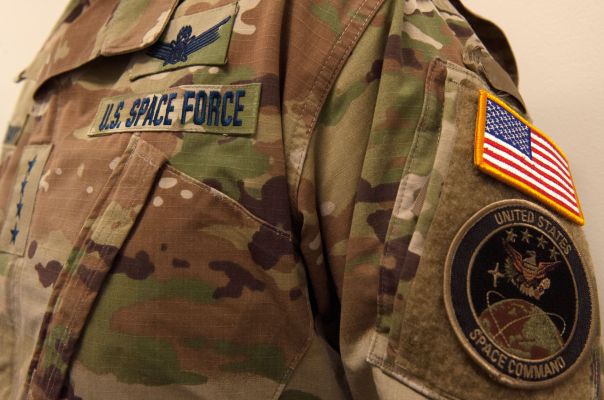
The Space Force will be wildly expensive and could lead to war — and the use of nuclear weapons — in space. (Photo: Wikimedia Commons)
Consequently, when space is viewed as “a warfighting domain” that could utilize nuclear-powered battle platforms and lasers, we have no choice but to extend our opposition to nuclear power beyond Earth’s boundaries.
The nuclear weaponizing of space has, to date, captured too little attention among politicians and the press. The new Beyond Nuclear booklet — The U.S. Space Force and the dangers of nuclear power and nuclear war in space— is intended, in some small way, to help redress that imbalance. You will find it on our Handbooks page.
Make Nuclear Great Again?
The claim that nuclear power is needed for national security is a masked money-grab
By Linda Pentz Gunter
The US Department of Energy’s assertions about Russian and Chinese supremacy in the nuclear sector is reminiscent of the “Commie plot” rhetoric of the 1950s. But it’s a thinly disguised ploy to feed at the federal subsidies trough and revive a moribund industry.
A few years ago I attended two days of the Nuclear Deterrence Summit, held just outside Washington, DC. In my defense, I’ll say it was a necessity. I really wanted to get inside how these people think. There was plenty of talk about the need for nuclear weapons, their range and potency, all done with a calm equilibrium devoid of conscience. It was chilling.
But it was also the theatre of the absurd. At one point there was actually talk about a “missile gap.” The Russians were getting ahead. This must be stopped. Was I on the set of a remake of Dr. Strangelove? Was this General ‘Buck’ Turgidson railing about “commie plots” and “mineshaft gaps”?
Life, as it turns out, is routinely stranger than any fiction. Turgidson is still with us, and he has extended his brief to include “civilian” nuclear power plants in the competition with the “Ruskies” and now, the Chinese.
U.S. Energy Secretary, Danny Ray Brouillette, whose parents, in christening him, must have intended a future for him at the Grand Ole Opry, recently bemoaned on air that “We’ve lost our leadership both on the technology side and on the market side… to the Russians and the Chinese”. That vanquished pre-eminence in both the development and export of nuclear technology, is “a national defense issue.”
So great is this national emergency, that I received an alert in my email inbox from the DOE trumpeting a new report that aims to set this foundering ship to rights.

The US Department of Energy announces its new plan to make nuclear great again.
Nowhere to run to
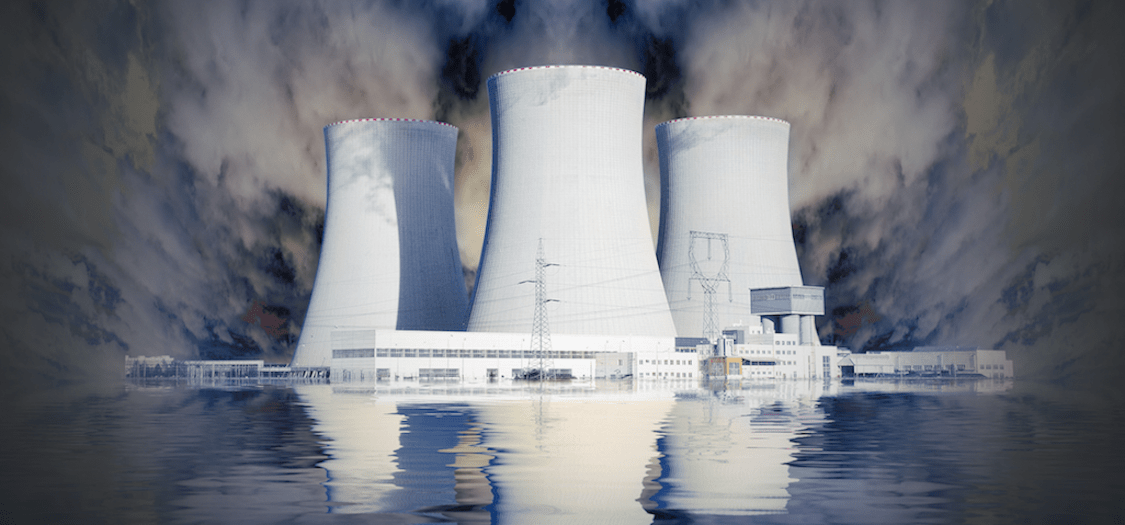
Michigan floods expose impossible challenges of mass evacuations during Covid-19
By Paul Gunter
Two dam failures and major flooding in central Michigan, which also prompted a low-level emergency notification (scroll to NCR event #54719) at a nearby nuclear research reactor in Midland, have exposed the almost impossible challenge of evacuating people to safety during simultaneous catastrophic events.
The sudden need to evacuate large numbers of people from severe flooding — also threatening to compromise a Dow chemical facility that uses a research reactor — during a time of national lockdown due to the Covid-19 pandemic, raises serious questions and concerns about the emergency response readiness and the viability of evacuation that might simultaneously include a radiological accident.
Michigan authorities were forced to face a “no-win compromise” between protecting the public from exposure to Covid-19 while at the same time moving people out of harm’s way after heavy rains caused failures at the Edenville and Sanford dams, leading to devastating floods.
The Dow plant insists there have been no chemical or radiological releases, but the situation will be evaluated once floodwaters recede. Fortunately, no full-scale commercial nuclear power plant was in the path of the Michigan floods.
Operating nuclear power stations are required by federal and state laws to maintain radiological emergency preparedness to protect populations within a ten-mile radius from the release of radioactivity following a serious nuclear accident. These measures include mass evacuations.
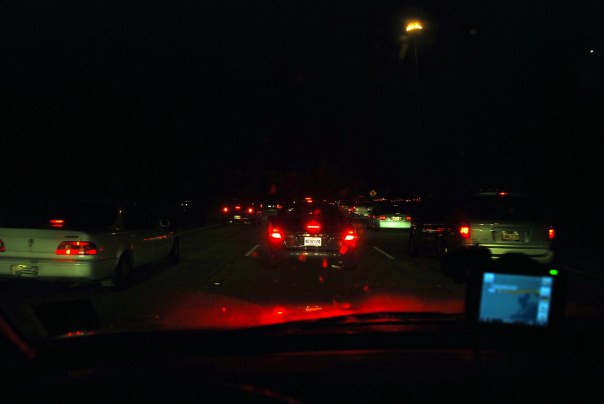
The prospect of evacuating during a triple-threat nuclear emergency, natural disaster and pandemic, raises serious concerns about practicability. (Photo: Adam Melancon/Creative Commons)
However, many communities around the nation’s 95 commercial reactors are presently sheltering-in-place at home as a protective action during the Covid-19 pandemic.
Fukushima’s radioactive water problem
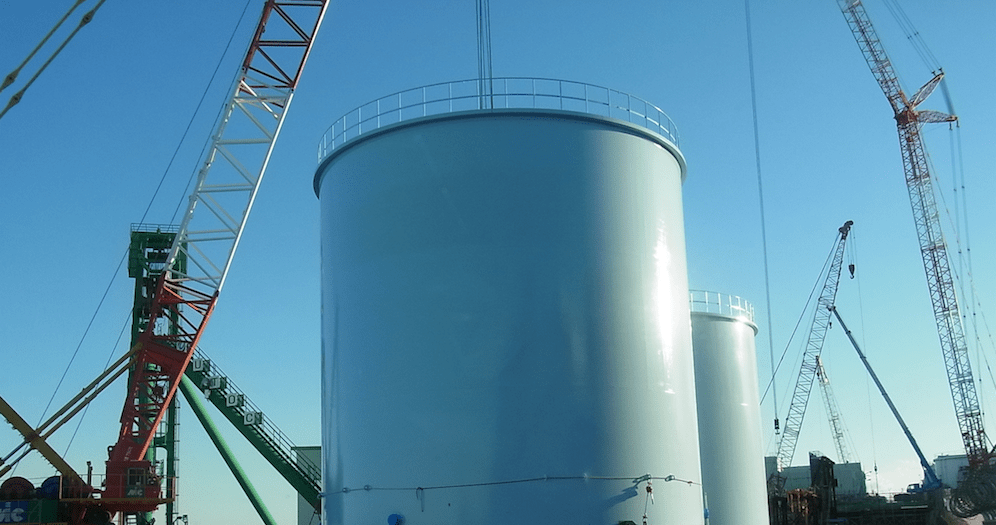
Water should be stored at nuclear site, not dumped in the Pacific
By Linda Pentz Gunter
We are republishing this story this week, as the Japanese government is now threatening the imminent dumping of the radiologically contaminated water, stored at the Fukushima nuclear site, into the Pacific Ocean. The article below provides the background on this issue and the alternative choices. Our Japanese activist friends are urging us all to sign onto their petitions — there is one for groups to sign and one for individuals — asking the Japanese government not to dump 1.2 million cubic meters of radioactive water into the ocean. Japan civil society groups and Fukushima fishing unions are strongly opposed to this needless ocean discharge. Groups please sign here. Individuals please sign here.
Original article, published September 15, 2019, follows:
Last week, Japan’s then environment minister, Yoshiaki Harada, made news with a pronouncement that wasn’t news. The storage tanks at the stricken Fukushima Daiichi nuclear site, filled with radioactive water, were reaching capacity. By 2022 there would be no room for more tanks on the present site. Japan would then have to dump the radioactive water stored in the tanks into the Pacific Ocean, he said.
Although likely unrelated to those remarks, a day later, Prime Minister Shinzo Abe dispatched 19 of his cabinet ministers, including Harada. Harada was replaced as environment minister by rising star, Shinjiro Koizumi, the son of former primer minister, Junichiro Koizumi. Both father and son are opposed to nuclear energy, and on his first day in office, the younger Koizumi told reporters that he believed Japan should end its use of nuclear energy and close its nuclear power plants.
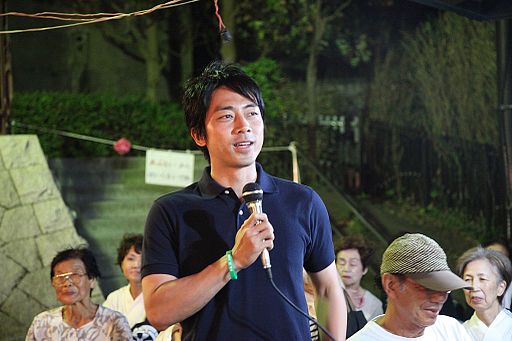
Shinjiro Koizumi, Japan’s new environment minister, says Japan should cease using nuclear power. (Photo: R2d2ki for Wikimedia Commons)
“I would like to study how we scrap them, not how to retain them,” Reuters reported him saying. This is a surprising position from someone inside the fervently pro-nuclear Abe government and it remains to be seen whether he will be allowed to translate his position into policy.
Invest in healthcare not militarization

A statement from the International Peace Bureau
IPB is calling for a dramatic reduction of military spending in favour of healthcare and meeting social needs. Sign their petition to the UN. (Link also provided at the end of this article.)
The world’s oldest peace NGO, the Nobel Prize-winning International Peace Bureau (IPB), has called on G20 world leaders to send a message of peace and solidarity to the world as they address the global health emergency.
This is a time to open a new page in global relations, to put geopolitical tensions to one side, to end proxy wars, for a ceasefire in those many conflicts around the world all of which stand to hamper a global solidarity effort.
We have to lift the shadow of war and military brinkmanship which has blighted global cooperation in recent years and work to ensure that a spirit of peace and solidarity prevails.

Humans are paying a terrible price for the diversion of funds away from health and welfare and into military spending. (Photo: “India, 2013” by Juanlu Sánchez/Creative Commons)
The IPB has long drawn the world’s attention to the increasing velocity of the global arms race.
Our communities are paying a high price for an arms race that has diverted resources from the basic health and welfare needs of the people.
We are all paying a heavy price for failed leadership and misplaced market-driven practices that have weakened our means to address this emergency, which has hit the weakest hardest.
Nuclear disarmament in fraught times
Balancing faith and hope in a time of violence
By Emily Welty
Before the Covid-19 assault, there was saber-rattling of the nuclear kind, and escalating violence around the world. Much of that has sadly not abated. But Emily Welty, traveling the world on her sabbatical, reflects on the hopeful signs, and inspiring people, she has encountered.
Working on nuclear disarmament feels like the intersection of two ventricles of the human heart awash in equal amounts of despair and progress. The whir of panic about the dangers of nuclear weapons and the encouraging movement towards a nuclear-free world both felt accelerated during the first weeks of 2020.
Nuclear saber-rattling and a political assassination that escalates violence both latent and overt between the United States and Iran; the Bulletin of Atomic Scientists moving the Doomsday Clock forward to one hundred seconds before midnight; nuclear states showing little introspection or shame about their stockpiles of horrific weaponry.
Nonetheless, rousing symbols of prophetic hope of a more generous, interdependent, trusting, and creative world abound. New York City, one of the largest cities in the world, had a hearing on January 29 to consider divestment from nuclear weapons and reaffirm the city as a nuclear weapon-free zone, joining other major cities taking local action on nuclear disarmament such as Toronto, Los Angeles, and Melbourne.
The majority of millennials support banning nuclear weapons entirely according to the latest poll from the International Committee of the Red Cross.
Some days it feels difficult to hold both of these truths in one human heart—the devastating risks and the courageous progress made by ordinary citizens to ameliorate these threats. For religious people, holding these tensions together in our souls and addressing them with our work is fundamental to our identity as people of faith who manage to live amidst suffering while not losing sight of the ultimate expectation that the world is beloved and meant for sublime goodness.
Pope Francis’ visit to Hiroshima and Nagasaki embodied the delicacy and skill of addressing both impulses. The pope’s denouncement that the use as well as the possession of nuclear weapons is a “crime not only against the dignity of human beings but against any possible future for our common home” acknowledges the serious moral violation of these weapons.
 Beyond Nuclear International