 Beyond Nuclear International
The denuclearization of the world?
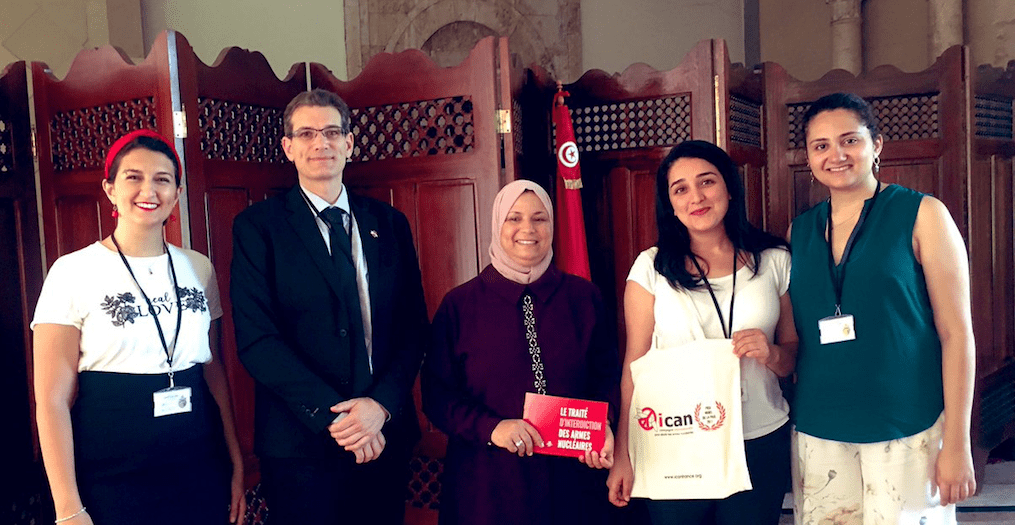
Tunisia also has something to say!
By Amel El Mejri, Mariem Oueslati, Lobna Bachta, Sirine Barbirou, Aziza hanafi, Nour El Imen Gharbi, Oumayma Jabnouni
Our generation faces a host of urgent challenges which our parents and grand parents could never have imagined: climate crises, social crises, security and nuclear crises. Urgent action is needed on all fronts. However, there is one that, to us young Tunisians, seems the most vital: put an end to nuclear weapons!
Tunisians cannot imagine that their cities are nuclear targets. We have the good fortune to live in a country that does not possess nuclear weapons. As a member of the nuclear Non-Proliferation Treaty, as well as the Pelindaba Treaty, which makes the continent of Africa a nuclear-free zone, Tunisia has shown itself to be a good actor on the international and African stages and in nuclear non-proliferation. (See Le Temps, La Tunisie un nouveau pas vers le désarmement nucléaire, 21 Septembre 2018).
Meanwhile, despite this asset, we are confronted with a reality: the revelation on June 17 by the prestigious SIPRI (Stockholm International Peace Research Institute) that almost 2,000 nuclear weapons are in a permanent state of readiness to be used by the United States, Russia, France or even the United Kingdom. The other states (like China, Israel, Pakistan, India and North Korea) need only a few hours to prepare before using theirs.
La Dénucléarisation du monde?
La Tunisie a aussi son mot à dire!
Par Amel El Mejri, Mariem Oueslati, Lobna Bachta, Sirine Barbirou, Aziza hanafi, Nour El Imen Gharbi, Oumayma Jabnouni
Notre génération fait face à une multitude de défis urgents que nos parents et grands-parents n’auraient jamais imaginés: crise climatique, crise sociale, crise sécuritaire et crise nucléaire. L’urgence est à mener sur tous les fronts. Pourtant, il y en a une qui nous apparaît, nous jeunes tunisiennes, vitale: mettre un terme aux armes nucléaires!
Les Tunisiens ne peuvent imaginer que leurs villes soient la cible de puissances nucléaires. Nous avons la chance de vivre dans un État qui ne possède pas d’arme nucléaire. Membre du Traité sur la non-prolifération des armes nucléaires ainsi que du Traité de Pelindaba faisant du continent africain une zone exempte d’armes nucléaires, la Tunisie s’est montrée être un bon acteur de la scène internationale et africaine de la non-prolifération nucléaire (Voir Le Temps, La Tunisie un nouveau pas vers le désarmement nucléaire, 21 Septembre 2018).
Cependant, malgré cet atout, nous sommes face à une réalité: comme vient ce 17 juin de le révéler le très renommé SIPRI (Institut international de recherche sur la paix de Stockholm) près de 2000 armes nucléaires sont en permanence prêtes à être utilisées par les États-Unis, la Russie, la France ou encore le Royaume-Uni. Les autres États (comme la Chine, Israël, le Pakistan, l’Inde et la Corée du Nord) n’ont quant à eux besoin que de quelques heures de préparation avant toute utilisation.
Мифы о Чернобыле. Нет, дикая природа не процветает в зоне вокруг АЭС
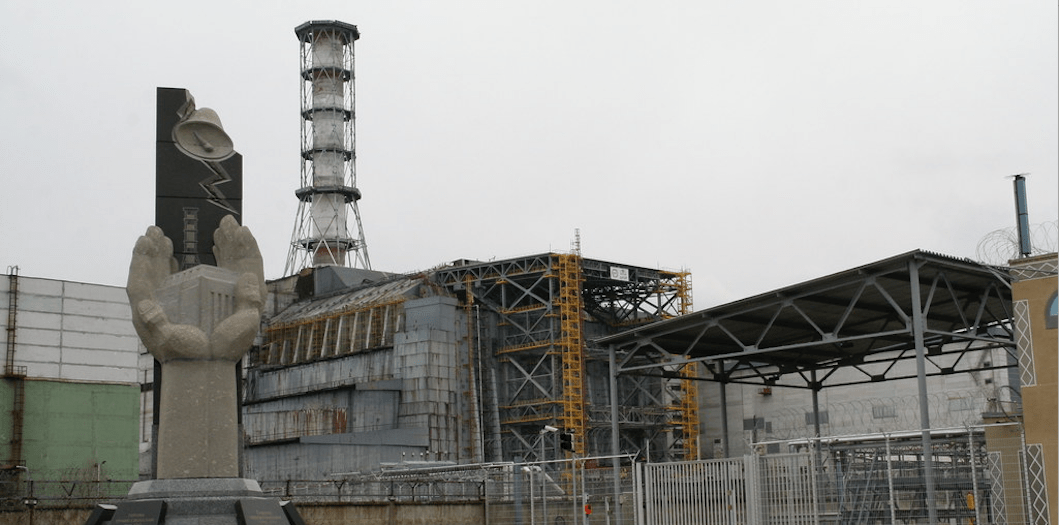
Более трех десятилетий назад взорвался реактор на Чернобыльской АЭС. В течение следующих двух недель длился пожар, в результате которого столбы радиоактивных газов и частиц разнеслись в разные стороны.
Авария – постоянный предмет восхищения – HBO недавно выпустил популярный мини-сериал, после выхода которого Зона стала популярным туристическим направлением. На днях было объявлено о том, что свой фильм про Чернобыл выпускает и Россия.
Между тем, художественное воплощение аварии привело к многочисленным предположениям и заблуждениям.
МИФ ПЕРВЫЙ. Авария привела только к нескольким жертвам
За последние три десятилетия официальные сообщения о жертвах и смертельных случаях в результате чернобыльской аварии были на удивление скромными. Два человека умерли сразу. Двадцать девять человек умерли в больницах, и гораздо позже 15 детей умерли от рака щитовидной железы, вызванного Чернобылем.
Эти цифры были повторены в последних статьях в Newsweek и LiveScience.
Оценки будущих последствий для здоровья Чернобыля также низки: в 2006 году исследователи из Международного агентства США по исследованию рака подсчитали, что количество случаев рака, вызванного Чернобылем, к 2065 году составит 41 тысячу, по сравнению с несколькими сотнями миллионов других видов рака по другим причинам.
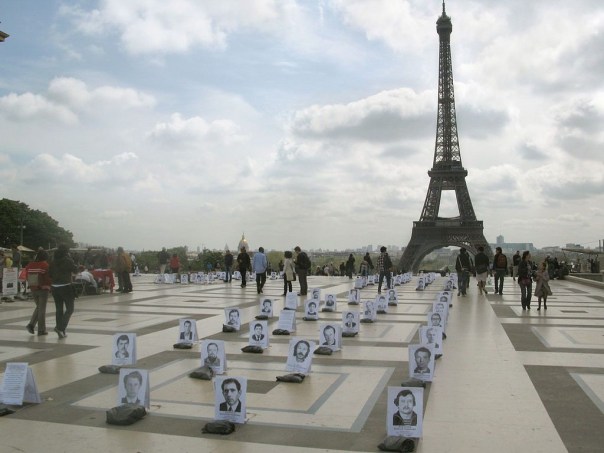
Фотографии чернобыльских ликвидаторов, представленные на независимой акции протеста ВОЗ 2010 года в Париже, Франция. (WikiCommons)
Nuclear-Free Forum in Japan calls for worldwide end to nuclear power
Voices of Fukushima power plant explosion victims strengthen call to ban nuclear energy
By Rachel Farmer, Anglican Communion News
Japanese parish priests shared stories of suffering from victims of the Fukushima nuclear disaster at a May 2019 International Forum for a Nuclear-Free World held in Sendai, Japan. A joint statement from the forum, issued in July 2019, strengthens the call for a worldwide ban on nuclear energy and encourage churches to join in the campaign.
The statement – Affirming the Preciousness of Life, in Order that Life may be Lived – For a World Free of Nuclear Power – noted that “We believe that it is highly important that this issue of nuclear power generation be considered from the perspective of the dignity of life.” The statement went on to point out the dangers of continued radioactive waste production and the connection between nuclear power and nuclear weapons — “two sides of a single coin.” It recommended that “No longer should we continue as a society with the economic priority of reliance upon nuclear power generation.”
The forum, organised by the Nippon Sei Ko Kai (NSKK) – the Anglican Communion in Japan – follows the NSKKs General Synod resolution in 2012 calling for an end to nuclear power plants and activities to help the world go nuclear free.
The disaster in 2011 followed a massive earthquake and tsunami which caused a number of explosions in the town’s coastal nuclear power station and led to widespread radioactive contamination and serious health and environmental effects. The Chair of the forum’s organising committee, Kiyosumi Hasegawa, said: “We have yet to see an end to the damage done to the people and natural environment by the meltdown of TEPCO’s Fukushima Daiichi Nuclear Power Plant. I do think this man-made disaster will haunt countless people for years to come. We still see numerous people who wish to go back to their hometowns but are unable to. We also have people who have given up on ever going home.”
Photographic art in the painted desert
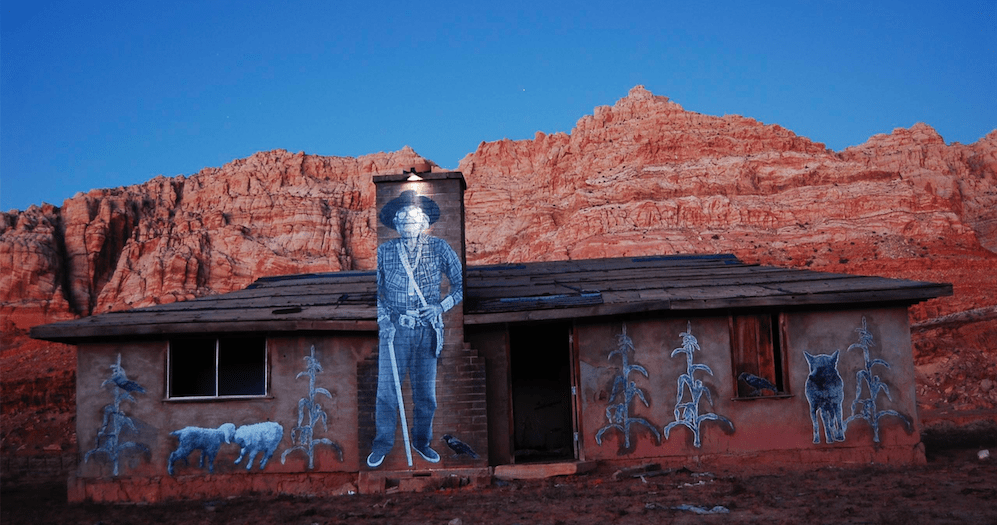
The dreaming doctor who is wide awake
By Linda Pentz Gunter
“The question I’m asked most frequently is how a black doctor in his 50s working on the Navajo reservation started doing street art on said reservation”, relates Chip Thomas on his website Jetsonorama — whose name itself begs yet another question (we’ll answer that one later in the story. Thomas is in his early 60s now).
Thomas has been asked this same question over and over the last few years, ever since his story caught fire in the (mainly) non-traditional media. Thomas is a medical doctor, but also a photographer who has applied that skill to wall art. Those two passions merged when he began treating Native American patients in 1987. His medical practice is at the Inscription House Health Clinic and he lives nearby.
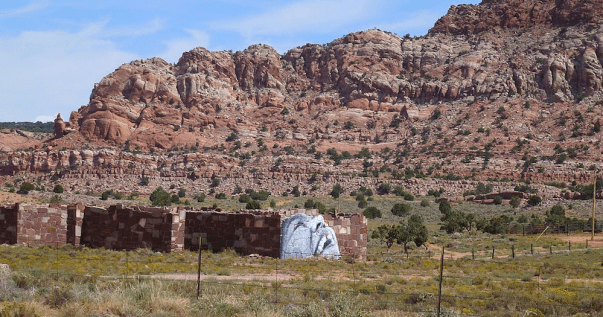
Chip Thomas wall art in the desert. Photo by Chris English, licensed in the Creative Commons/WikiCommons.
As a doctor, early experiences traveling, especially in Africa, convinced Thomas of the need for universal health care in the US. That led him to the Navajo Nation. His first dabbling in street art in cities like New York were, Thomas says on his website, of the more traditional kind, “largely text based saying things like ‘Thank you Dr. King. I too am a dreamer’ or ‘Smash Apartheid’ and so on.”
But inspired by the work of Gordon Parks, Eugene Smith and others, he soon realized that images of every day people could be equally powerful. Through his work, he told New Mexico PBS, he can now share their stories “in a way that honors them.” He says that “through my art I am attempting to uplift the human spirit to make the world a better place. So yeh, I’m a dreamer, but I’m a dreamer who’s wide awake.”
Chernobyl radiation proves harmful to vital forest mammal
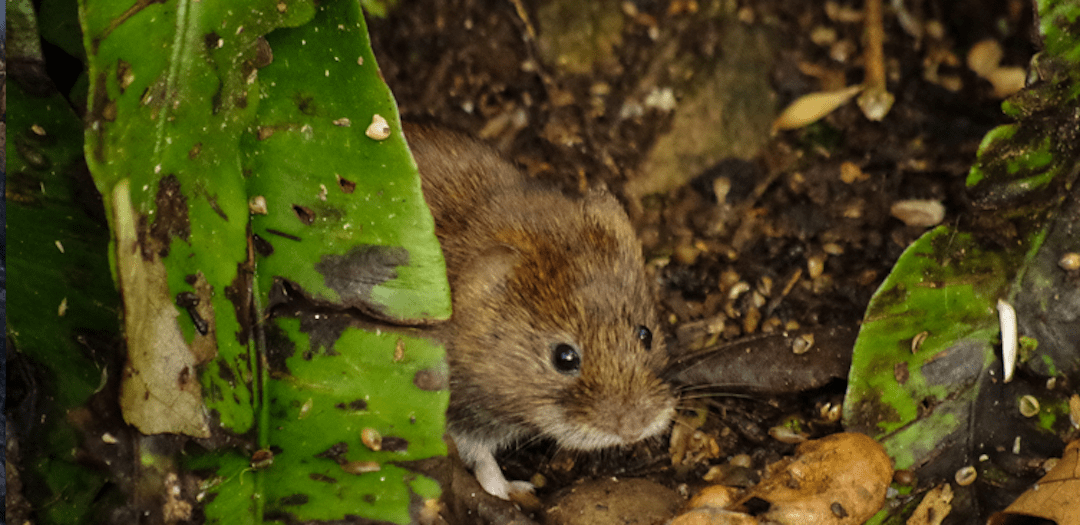
New study finds abundance and breeding in decline among exposed bank voles
By Linda Pentz Gunter
A team of scientists who studied a key forest mammal, the bank vole, living within 50 km of the Chernobyl nuclear power plant, have concluded that the animal’s reproductive success and abundance is impaired by chronic exposure to even “low” levels of radiation in the area, and that no dose is too low to cause these effects.
The large-scale, replicated study, by Mappes et al., and published in April 2019, “tested the hypothesis that ecological mechanisms interact with ionizing radiation to affect natural populations in unexpected ways.” The team found that bank voles showed “linear decreases in breeding success with increasing ambient radiation levels with no threshold below which effects are not seen.”
The bank vole was chosen because “it is a common and abundant terrestrial vertebrate that inhabits Eurasian forest ecosystems, which makes it an attractive indicator species for the health of forest ecosystems that may have been injured by anthropogenic activities,” wrote the authors.

Young bank voles in the nest. Reproduction declines, the higher the exposure to radiation, in voles within 50km of Chernobyl. (Photo: Plantsurfer/WikiCommons)
 Beyond Nuclear International