 Beyond Nuclear International
Uranium mining and my family’s story
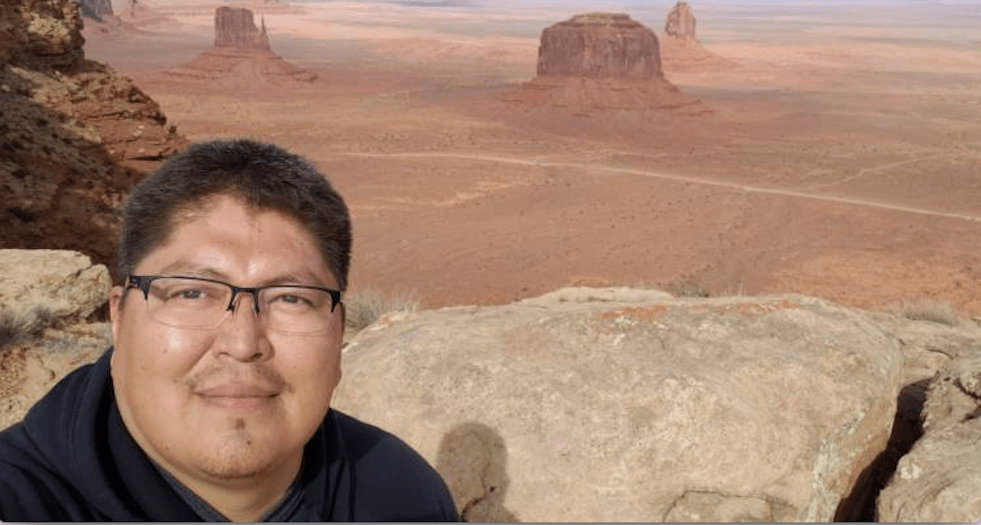
The 1,000 uranium mines of “John Wayne country” and their terrible legacy
By Tommy Rock, Ph.D.
My name is Tommy Rock, PhD., and I am from the Navajo tribe in the southwest U.S. I live in Monument Valley, Utah, which is in southeastern Utah near the Four Corners area (where the states of Colorado, New Mexico, Arizona, and Utah meet). Monument Valley is also on the Navajo Nation. Monument Valley was made famous by John Wayne and John Ford when it appeared in their western movies such as She Wore A Yellow Ribbon and Fort Apache, just to name a few. This place has a beautiful red stone hovering above the arid desert landscape.
Growing Up With My Grandparents
My story begins with my being raised by my grandparents. During the winter months, we lived in Copper Canyon, which is in the northwestern part of Monument Valley. Copper Canyon has a spring that flows year-round. We have our livestock there, our cattle and horses. The area is surrounded by redstone walls like a corral with two ways out. The area is also arid with desert shrubs. During the summer we went to our summer camp out of Copper Canyon.
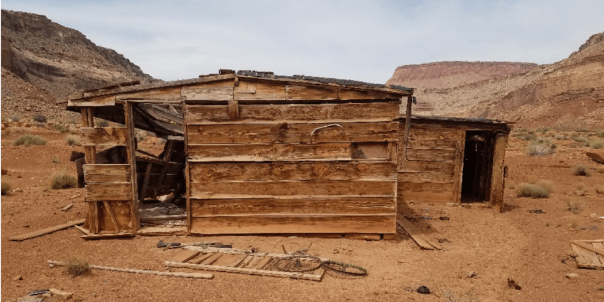
The wooden shack that I grew up in with my grandparents. Located in Copper Canyon. The cabin had no running water and no electricity. (Photo: Tommy Rock)
We lived in a wooden shack. I think my grandfather built it long ago. Seems like the structure was there an eternity because that is all I remember. My grandmother was the only one that had a bed. My grandfather and I had a sheepskin that we slept on. Every morning my grandfather would tell me to go run, and, if I did not get up, he poured water on me. He said that it would make me strong.
Humans of the Polygon
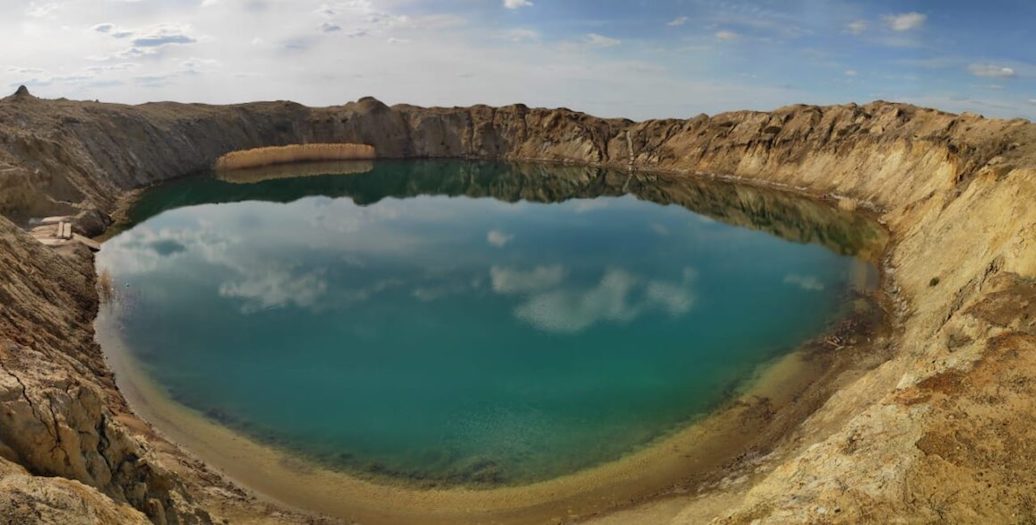
The dark legacy of Soviet atomic testing
By Dr. Togzhan Kassenova
It has been thirty years since the last Soviet test rocked the Semipalatinsk Polygon in Kazakhstan, but its dark legacy still haunts people who live nearby. The victims, now in their fourth generation, continue to pay the price for the Soviet nuclear might. Together, with two colleagues, we embark to meet them in the villages of Karaul, Znamenka (Kokentau), and Sarzhal.
The first and youngest victim we meet is a sweet six-month-old baby boy named after Kazakhstan’s first president. Nursultan has a benign tumor of bright red color on his head and six fingers on his left hand. His mom, a young woman in her 20s, tells us she heard that the extra limb could be removed with a laser. When I do my research later, I cannot find any references to that being possible with a laser. Instead, traditional surgery is recommended within the first month of birth.
We do not know if Nursultan’s parents will go for a surgery, but his mom worries that, if left like that, her boy will be teased later in life. Nursultan smiles at us with his happy toothless smile, unaware of his predicament. The disease, known by its scientific name of polydactyly, is caused by a genetic mutation.
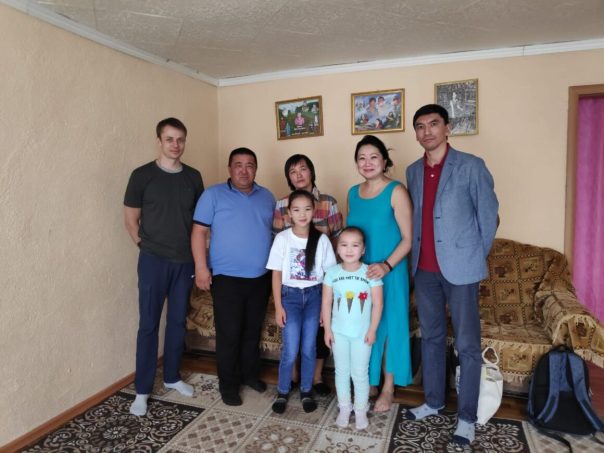
Visiting families in Karaul
The same day we meet a small girl who is missing four fingers on her hand, a genetic mutation similar to Nursultan’s. Her family is kind enough to receive us and share their story. Their other daughter faced cancer and survived after persevering through two years of chemotherapy. Now she is free of cancer but needs regular checks for the benign tumor that remains on her face bone. These checks can only be done in larger cities, and travel requires financial resources that the family does not have. “We reached out to a charity organization, but they told us because she was cancer-free, they couldn’t help,” they tell us. A few years ago, these parents already lost another daughter to sudden pneumonia. She was six.
Forget deterrence

Russia and the US must see each other as partners in survival
By E. Martin Schotz
Let us begin by examining two moments from the media in the past year. The first occurred on an NPR program during a segment exploring under what conditions the United States might launch nuclear weapons. At one point the host exclaimed, “Well we wouldn’t want to blow up the world, if we didn’t have a good reason to do so.” Put a check by that comment. We will come back to it.
The second moment was a question a reporter put to Senator Bernie Sanders as to whether he would be willing to push the nuclear button. The sense of the question was that to be qualified to be President of the United States you had to be willing to “push the button.”
How did we ever get into this situation, where we are planning to blow up the world and need to make sure we have a “good reason” to do so, and in which, in order to be considered competent to be President of the United States, you have to be willing to blow up the world?
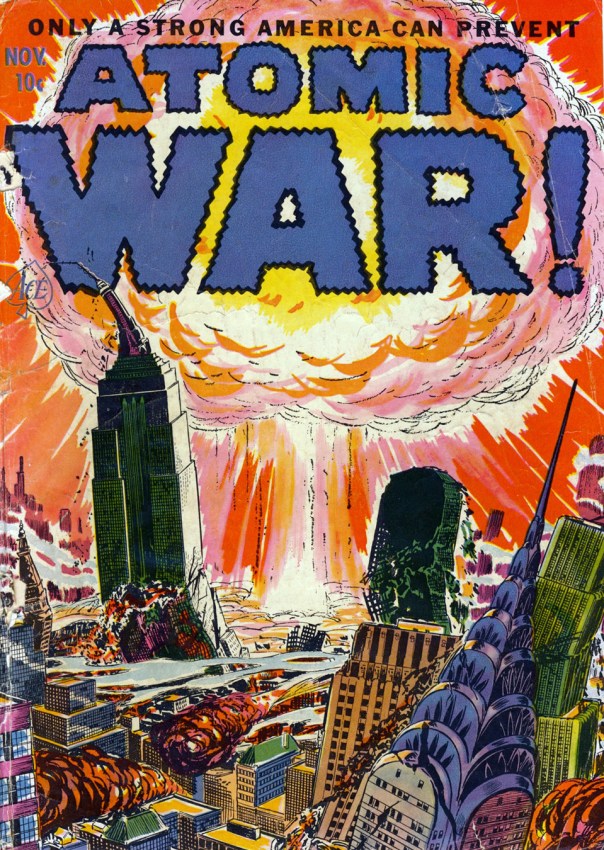
The persistent belief that nuclear weapons possession equates with strength. (Cover art of Atomic War! #1, November 1952, Published 1952-1953. Copyright expired. Wikimedia Commons.)
This is literally the absurd criminal insanity in which we are living with nuclear weapons. How has this come about? By what means have we, as otherwise sane human beings, allowed ourselves to be put in such a situation? How can political representatives and military officials who ordinarily appear sane participate in such a situation?
I want to suggest in this essay that one key to understanding this insanity rests on our failure to grasp the irrationality of the concept “nuclear deterrence.” Albert Einstein, at the dawn of the nuclear age, famously warned that “the splitting of the atom has changed everything in the world except our mode of thinking, and thus we drift toward unparalleled catastrophe.”
Deterrence is a word we have carried over from an earlier age. It is based on the idea that you are less likely to be attacked in war if the enemy that might attack you would be subjected to unacceptable destruction. It is with this simple logic that nuclear weapons have been developed, tested and deployed by the United States, by Russia, and by other nuclear powers. It is with this concept that our policy makers developed the policy of “Mutually Assured Destruction” as a way of preventing nuclear war.
Why not NATO?
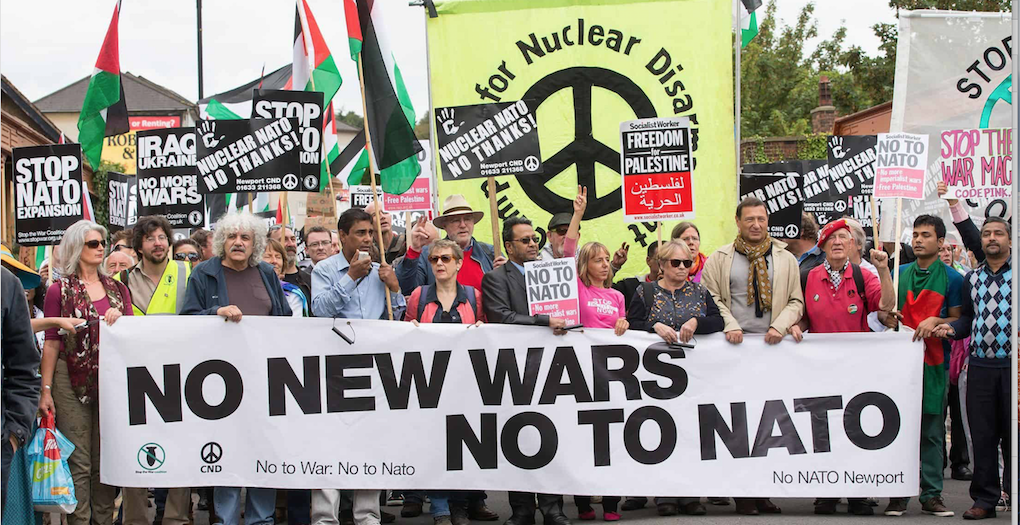
It’s an aggressive, expansionist nuclear and military alliance
By Kate Hudson
This month’s Queen’s Speech pledged to honour the NATO commitment to spend at least two percent of national income on defence. This vast sum of money, demanded by the US — and backed up by threats from President Trump — includes UK spending on Trident and its replacement.
Of the many statements in the speech, no doubt this one will be little commented on. Few people really get how negative and destructive NATO’s role in the world is, and even people who are opposed to nuclear weapons can be misled into thinking that NATO is a defensive alliance. If it was ever that, those days are long gone.
In reality, NATO is an aggressive, expansionist nuclear and military alliance, and it plays an increasingly dangerous global role. It’s still in Afghanistan 18 years on and is expanding its reach into Latin America and Africa, as well as through its alliances into Asia, Australasia and the Pacific.
We have a major opportunity to raise public awareness about this, as the next NATO Heads of State Summit is taking place on 3rd and 4th December in London. Donald Trump will be one of those participating.
EDF’s PR is as bankrupt as its reactors
But its mansplainers know how to throw a good insult
By Linda Pentz Gunter
I suppose I should have taken pity on him really. After all, what job could possibly be more thankless right now than UK public relations representative for Électricité de France (EDF)?
A company that is so thoroughly bankrupt fiscally, and so beset by safety flaws and technical failures, would likely never survive in any other market. But in the nuclear sector there are forces willing to superglue failing companies like EDF to a safety net that simply won’t let it fall. Or fail. And so by the same miracle that its reactors remain standing, so does its PR team. Just.
EDF is way behind schedule and wildly over-budget at its so-called flagship reactor at Flamanville in France, at its Hinkley C project in the UK and at Olkiluoto in Finland. Its reactor projects have been beset by faulty welds and a defective containment cover at Flamanville that EDF balked at replacing due to cost but which, due to the delays, may end up being replaced before the reactor ever starts up. The forge EDF uses has been beset by scandal for falsifying quality control and producing defective safety parts now installed in numerous reactors. There are almost 400 cracks in its Scottish reactors at Hunterston, yet EDF claims they can still run safely. Its shares are tumbling. It is saved only by being owned by the French government. As an independent corporation it would have been long finished.
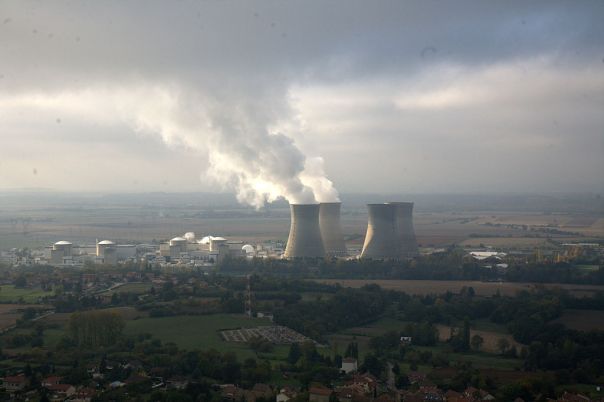
At least 10% of all French reactors have faulty parts installed by EDF, including Bugey, pictured. (Photo: Spiritrespect/Wikimedia Commons)
But the nuclear industry is seemingly unshameable. Accordingly, there was a fringe event at this year’s annual UK Labour Party Conference — Rediscover Nuclear: Why Net Zero Needs Nuclear. I went along, ready to be confronted with all the propaganda forces the nuclear lobby could muster.
Rebels with a very big cause
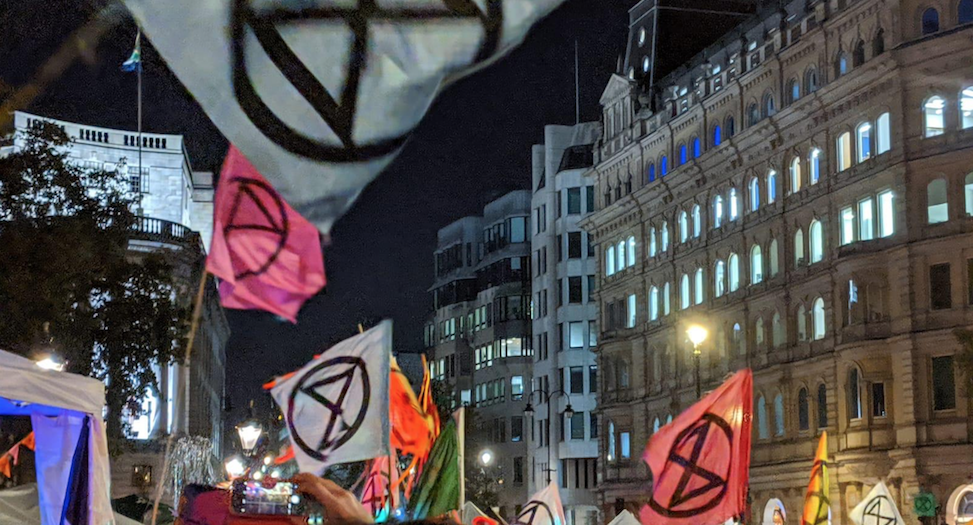
Part street theatre and all desperate passion, the Extinction Rebellion is blossoming everywhere
Actions are flourishing around the world as climate protesters mobilize. Below, we offer a taste of some of the actions by the Extinction Rebellion as Rebels describe their Day Two experiences in an on-going global action.
Republished with kind permission of the Extinction Rebellion.
News from XR
The seeds have been sewn. Compassion; awareness; courage.
They landed in cities, suburbs and farmland; in hearts and in minds, taking no account of age or occupation or background.
And now we’re growing: taking root.
In some cities we’re established on the roads and growing stronger by the day. Tents are assembled, flags are dangled, kitchens put together. In other places we’re meeting, painting, blocking: making our mark in other ways.
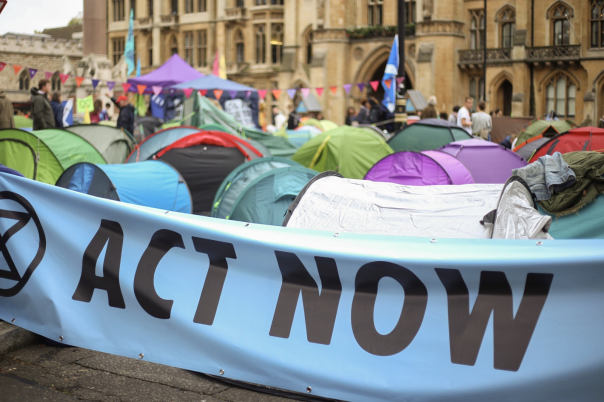
Rebel campers make it through the first night of Rebellion. (Photo: Extinction Rebellion)
But the deeper growth is not a thing which can be touched. It comes in the form of newly-made communities coming together to dance, sing, laugh and cry. In creativity, diligence and generosity combining into miraculous works of art.
In love. And in a rebellion – strong enough to fight and win against an ecocidal status quo.
The forces of ‘law and order’ will oppose us in the coming days. Their representatives will hassle us and threaten us and maybe even hurt us. The media establishment will slander, ignore and misconstrue us.
These things won’t stop us; won’t even slow us. If we won’t be heard, we’ll shout and sing our message louder. If disruption doesn’t stop the system, we’ll simply have to do it bigger and do it better.
We’re putting down roots – and no government can take them out.
London’s blooming rebellion
8 OCT | Westminster
After Monday’s exhilaration, rebels have been putting down roots and getting used to life in the capital. As we found in April, there comes a point at which it seems almost natural that we would be here in the roads.
Natural, but also nicer:instead of car engines — choirs and samba bands; instead of throngs of busy strangers — free food and open dialogue (not least from incorrigible truth-teller Jonathan Pie!)
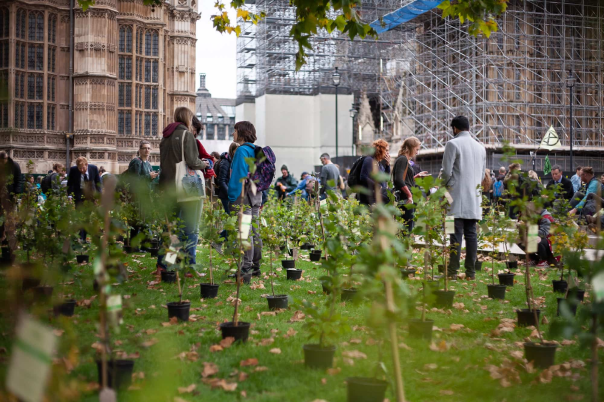
Many trees were planted at Westminster. (Photo: Extinction Rebellion)
Not everyone seems to agree with the improvement. The arrest count continues to climb — already at a staggering 550 — and it’s partly due to police pressure that several of our sites have merged together for greater cohesion.
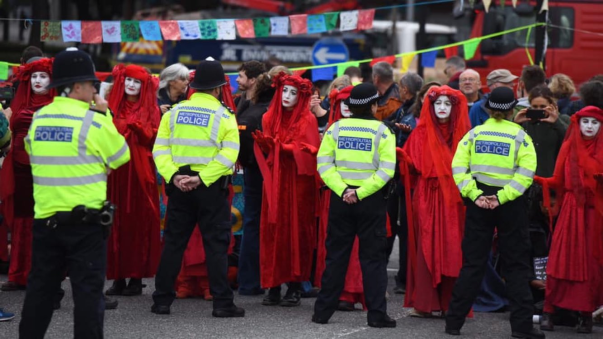
The “Red Brigade.” (Photo: Extinction Rebellion)
Despite all this, the police response has yet to really follow through on the earlier tough talk. The seriously questionable tactic of disrupting our infrastructure hasn’t yet managed to stop a gradual blossoming of gazebos (largely just in time for this afternoon’s biblical downpour!), kitchens and tents in various sites.
Calme avant la tempête in Paris?
8 OCT | Place de Chatelet
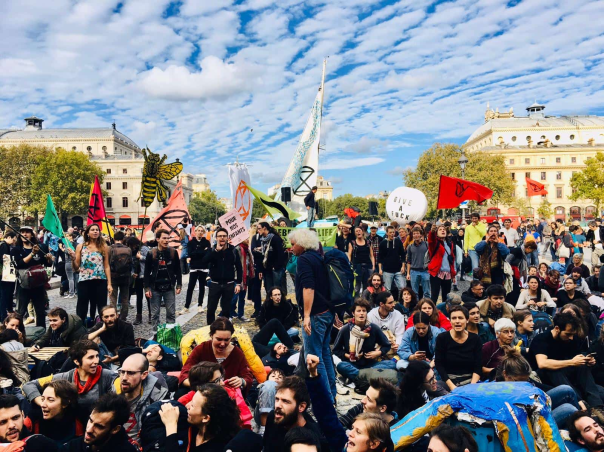
The occupation at the Place de Chatelet continues and thrives.
To the surprise of French rebels, no arrests or police force has yet been used to clear the crucial intersection of the capital.
Among strategic and logistical questions, general assemblies at the site guess at why this might be: to avoid a repeat of the backlash to their last repression? To split the environmental movement from the Yellow Vests? Nobody knows.
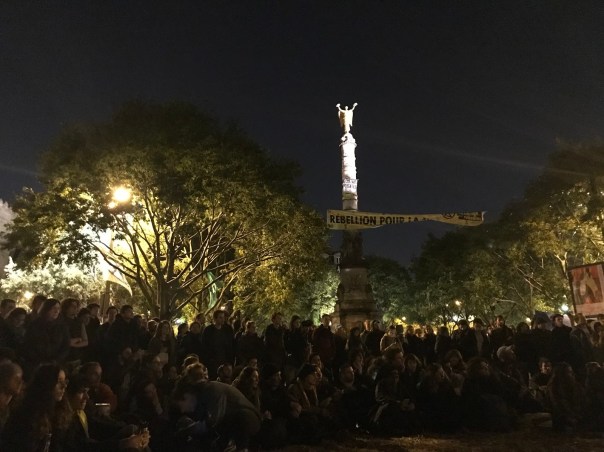
At nightfall, the site holds a giant General Assembly to organise logistics. (Photo: Extinction Rebellion)
In the meantime, the party is more alive than ever and rebels enjoy this calme avant la tempête to organise, hang a banner as high as the statue of the place de Chatelet can go, hold free classes on climate change by experts, and hold debates on solutions to combat our climate and ecological crisis.
And, of course, Parisians gather to dance.
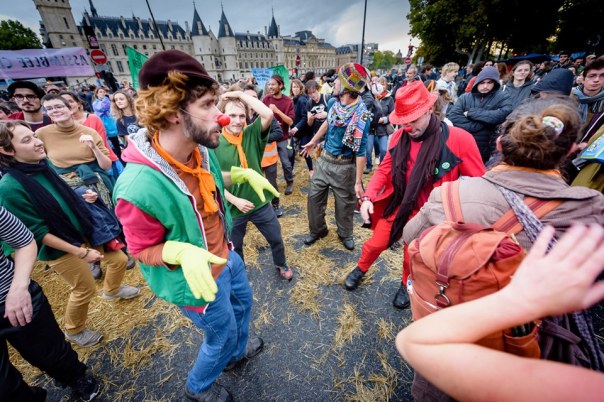
Heavy rain during the day did not stop the dancing! (Photo: Extinction Rebellion)
But perhaps the most ‘Parisian’ exploit of the rebels is the splendid Gazette d’Extinction Rebellion which appears almost four centuries after the first newspaper, the Gazette de France, was founded there in 1631.
Of course, the XR Gazette transforms the original royalist paper into a revolutionary call for love, fraternity, and consideration for nature. Its horoscope and its tone — satirical and light-hearted — revives rebels’ spirits and conversations at the end of the day, and the beautifully designed paper is enthusiastically distributed and shared around campsite.
For a condensed English version of yesterday’s Gazette, click here ; for those of you lucky enough to understand the tongue of Molière, you can find the original first issue here.
Berlin celebrates 40 hours of Rebellion
8 OCT | Berlin, Germany
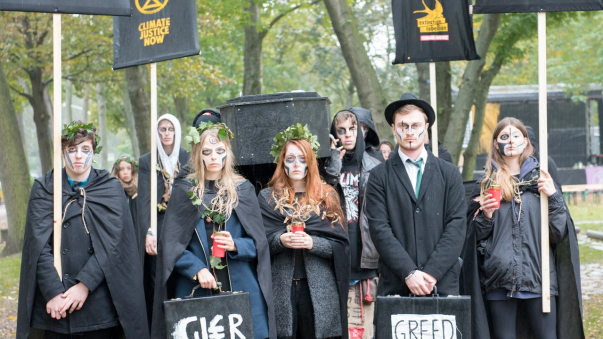
Berlin mock funeral. (Photo: Extinction Rebellion)
With the start of Rebellion, XR Germany successfully blocked two key parts of Berlin – the Big Star roundabout by the Siegessäule and a major junction at Potsdamer Platz.
At Potsdamer Platz, the police began clearing out rebels at dawn and, with the help of the fire brigade, even the lock-ons didn’t last long. The rebels split up and began a series of smaller actions across the city, including a blockade at the headquarters of the CDU political party and a funeral march with a symbolic burial of Mother Earth.
Rebels at the Big Star roundabout were still going strong with the help of space blankets and thermos flasks. By late morning, giant tarps had been erected to protect them from the rain.
The roundabout was suddenly a tented village, and the first lock-ons were in place by noon.
Police in the area started to multiply, and with nearly one police officer for every two protestors, the order soon came to clear out.
Some rebels were carried away and left in puddles, while others had pain compliance techniques used against them. But the lock-ons remained in place, and while some single-lane traffic was able to flow again, the police could only partially clear the junction.
The blockade lived on, the police withdrew, and not a single rebel had been arrested! By sunset, XR Germany was celebrating 40 hours of continuous, peaceful protest for this greatest of all causes.
Irish Rebels Have Had Enough
7 & 8 Oct | Dublin, Ireland
The last few days have been a difficult time for XR Ireland. In response to the Irish government pushing ahead with plans to build a U.S. fracked gas terminal in Shannon, rebels decided to add a demand for Rebellion Week: Stop the Shannon LNG Terminal plus any new fossil fuel infrastructure!
Rebels kicked off the week with a symbolic funeral of the Earth, a samba parade with a pink ‘Tell the Truth’ boat, a planting of seeds, and some passionate speeches.
The civil guards (police) allowed rebels to camp in one of the city’s central parks and the first day passed in a peaceful, family-friendly atmosphere.
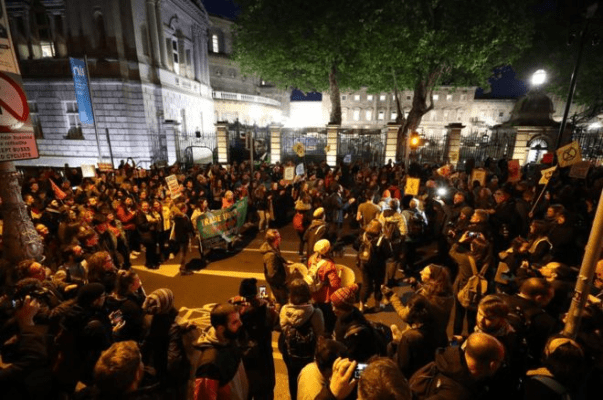
The sit-in at the Jail. (Photo: Extinction Rebellion)
There was a spontaneous sit-in at the gates of the Dáil (Ireland’s Parliament) that meant some politicians were locked in. XR Ireland decided to deliver their message to their political representatives: “We have had enough”. The rebels refused to move and chanted “We do it for your children’s future too”. The civil guards removed rebels, but made no arrests, and even thanked the protestors for their peaceful presence.
Quebec – Scaling the heights for climate justice!
8 OCT | Jacques Cartier Bridge, Montreal
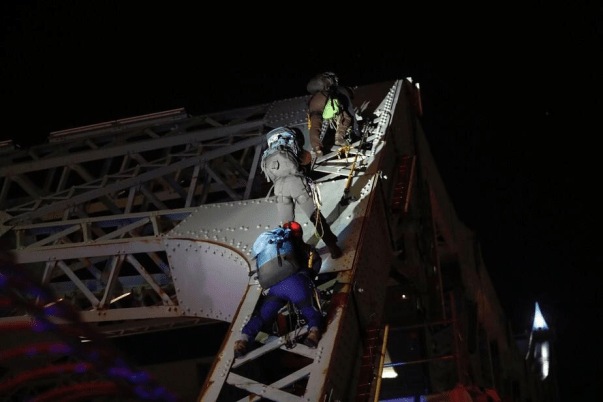
Scaling the bridge in Quebec. (Photo: Extinction Rebellion)
Three Quebecois rebels closed all five lanes of traffic on the busiest bridge in Montreal for over an hour. At rush hour.
Two women and a man scaled the huge metal structure in the middle of the night, forcing police to close the bridge to traffic. Sadly, the brave rebels were stopped before they could drop their 20m wide banner and were arrested once back on the ground.
A video of one rebel explaining the action has gone viral:
‘We are not the farfelus (crazy ones). Those who believe we can keep growing forever in a finite world are the ones who live in a fantasy land.’
New York
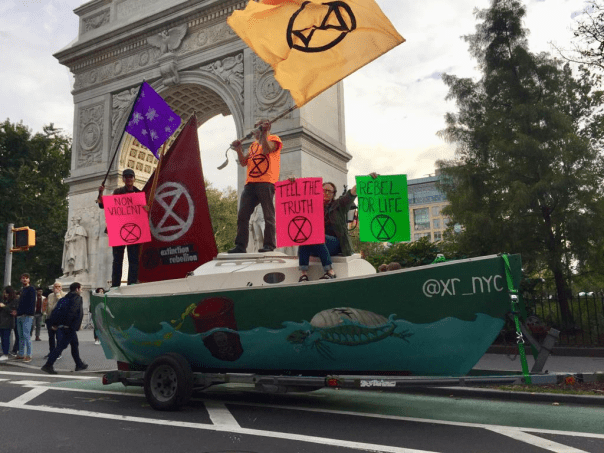
XR NYC debut their ocean-themed boat . (Photo: Extinction Rebellion)
A group of over 40 rebels joined Brother Fulfillment from Thich Nhat Hanh’s Plum Village in a meditative action calling on the government to Act Now. They blocked the entrance to City Hall by staging a seated meditation, a peaceful act of resistance rooted in historic acts of civil disobedience.
The mascot boat ‘Vaquita’ traveled through New York City, spreading the news of the Rebellion. Featuring images of the nearly extinct porpoise for which she is named and large Extinction symbol flags, her crew handed out flyers about the rebellion and talked to passersby stopped in traffic.
They declared their voyage a success and look forward to getting her back out in the city soon.
R.E.M. joins Roman rebels
8 OCT | Rome, Italy
15 rebels started a hunger strike in front of Parliament in Rome to raise awareness of the threat to food insecurity caused by the crisis.
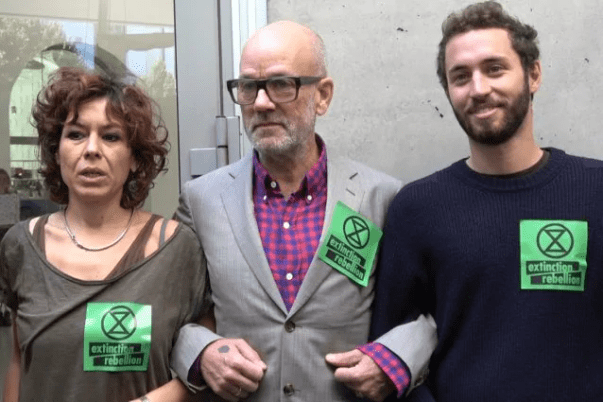
R.E.M.’s Michael Stipe joins Rome Rebels. (Photo: Extinction Rebellion)
Michael Stipe, of alt rock band R.E.M. fame, boosted morale in XR Rome by adding his voice to the chorus of rebels:
“I want my voice to be part of this change of consciousness. I believe we can start the change needed to improve our wonderful planet, our position and our place on earth!”
This came the day after a heartfelt performance in Piazza Venezia in front of the famous landmark “colonna Traiana”, titled the blood of our children. Rebels held hands as red “blood” was poured onto their exposed skin and was then wiped clean gently.
Don’t Frack With Greece
7 OCT | Syntagma Square, Athens, Greece
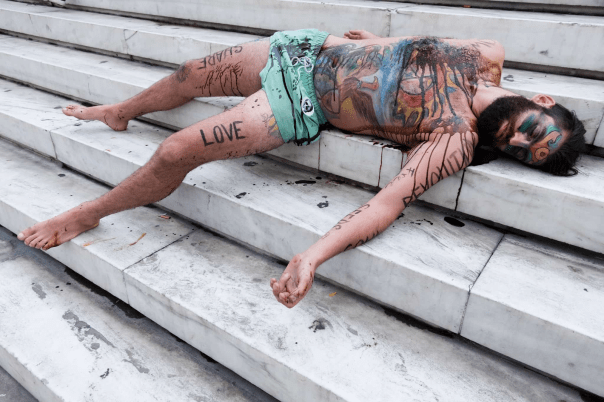
Greek rebels joined other climate emergency protestors to stage a die-in against fracking on the steps of Parliament. (Photo: Extinction Rebellion)
Earlier this month, the Greek government voted to allow the oil companies Total, ExxonMobil, Edison, Energean and Hellenic Petroleum, to extract oil and gas in sea beds around the country.
Greek Rebels demanded that their government repeal these concessions to the oil companies and tell the truth about the disastrous effects of oil exploitation on ecosystems, biodiversity, the local economy and public health.
XR Sri Lanka Is Born
6 OCT | Columbo, Sri Lanka
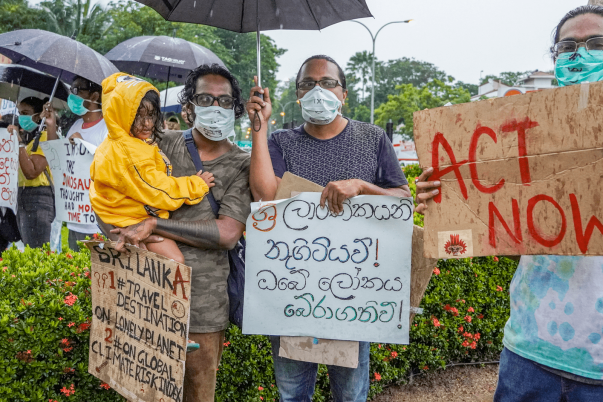
XR Sri Lanka (Photo: Extinction Rebellion)
XR Sri Lanka writes…
Sunday was our first rebellion. The Climate Emergency is ignored and not acted upon in our country, but there is a fast-growing movement of people who are beginning to join forces and bring about societal change.
Our original plan was to have an official Declaration of Climate Emergency, followed by a die-in, yoga training for “spiritual warriors”, music gathering with unplugged instruments, and putting up posters with QR codes that link to websites proposing solutions for change.
However, the weather decided otherwise. Torrential rain poured down throughout the day and we’re so proud of all the rebels who showed up regardless.
Despite an initial pledge to not use disruption, the group decided to walk through the rain and partially obstruct traffic in order to be more visible. The action got decent media coverage, and we all felt empowered with a hope that we will indeed make a change!
Sri Lankan rebels are now planning to assist local environmental causes while striking and spreading awareness at the same time! Our next action on Saturday will be an official Declaration and a mass die-in followed by a beach clean-up.
See more actions from the Extinction Rebellion from around the world. And if you’d like to help, please check out the XR guide and learn more about XR. To connect to rebels in your local area, get in touch with your nearest XR group. If there’s no active group near you, you can start your own! If you’d like to see previous newsletter issues, you can find them here.
Headline photo courtesy of the Extinction Rebellion.
 Beyond Nuclear International